The first leg of my recent adventure through Germany was a guided group tour with Globus. If you haven’t read all about that yet, go ahead and click the link. After concluding that segment of the trip, we took off on our own. We picked up a rental car at the Munich Airport (to be returned to the Berlin Airport) and headed west from Bavaria into Baden-Württemberg.
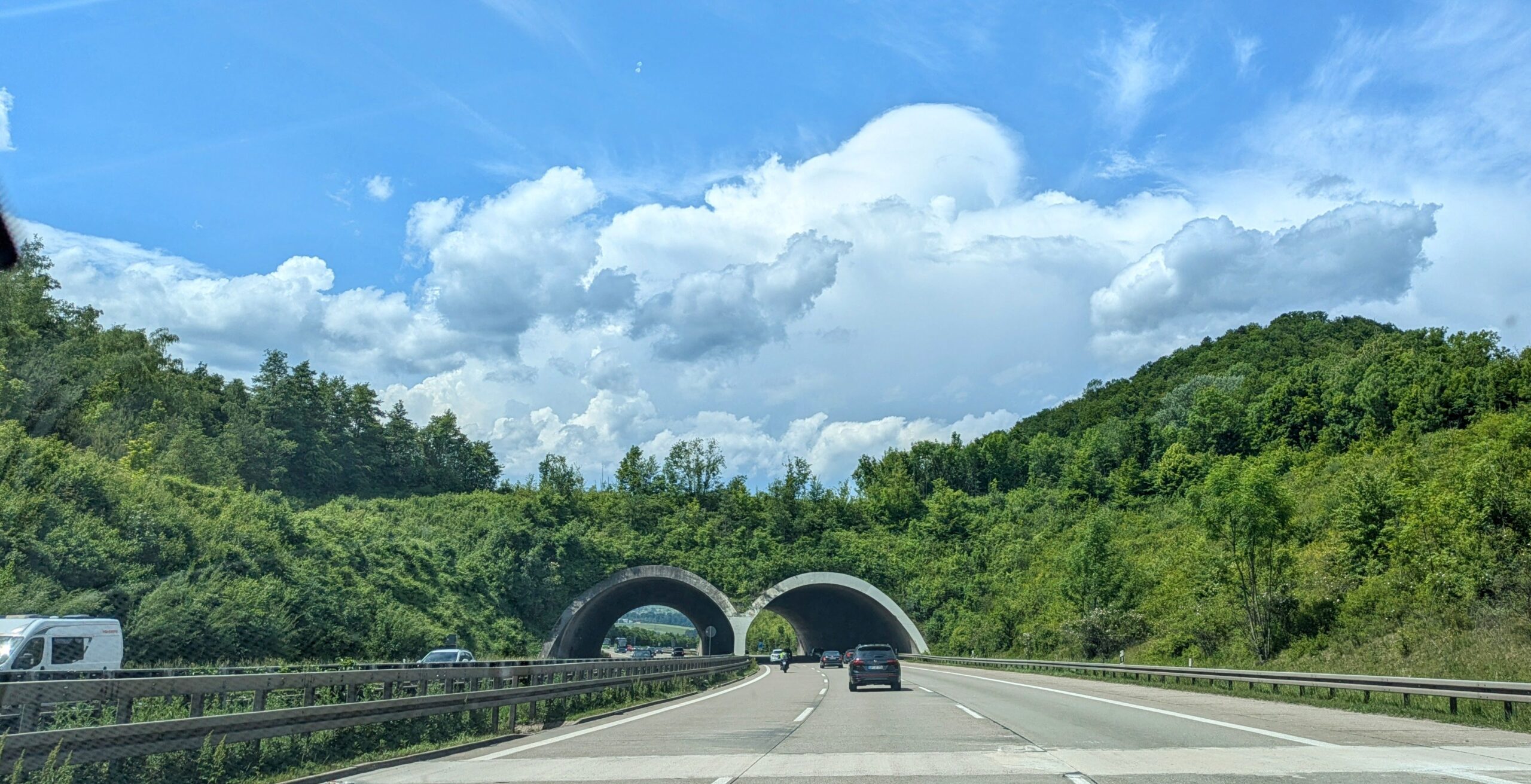
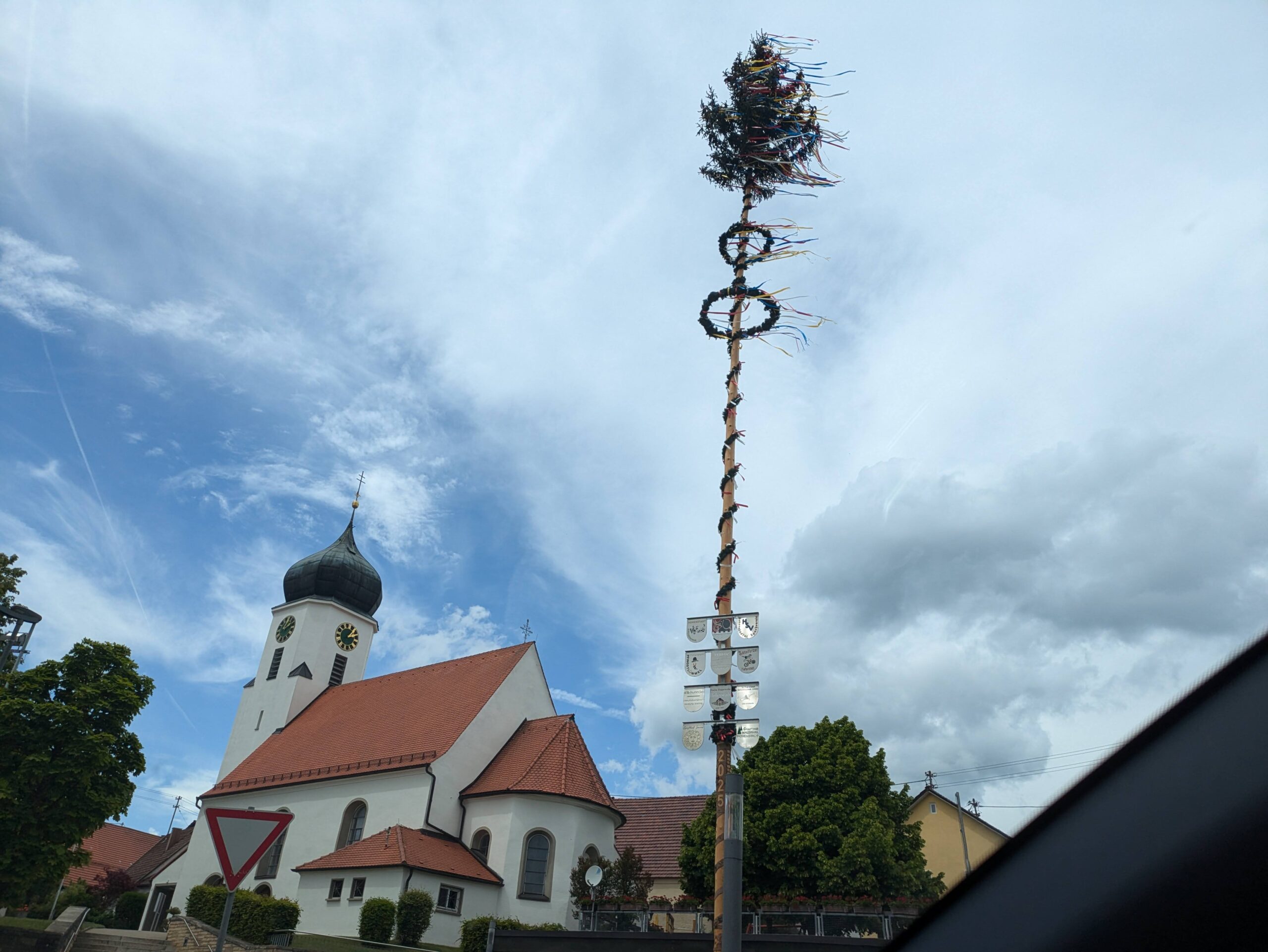
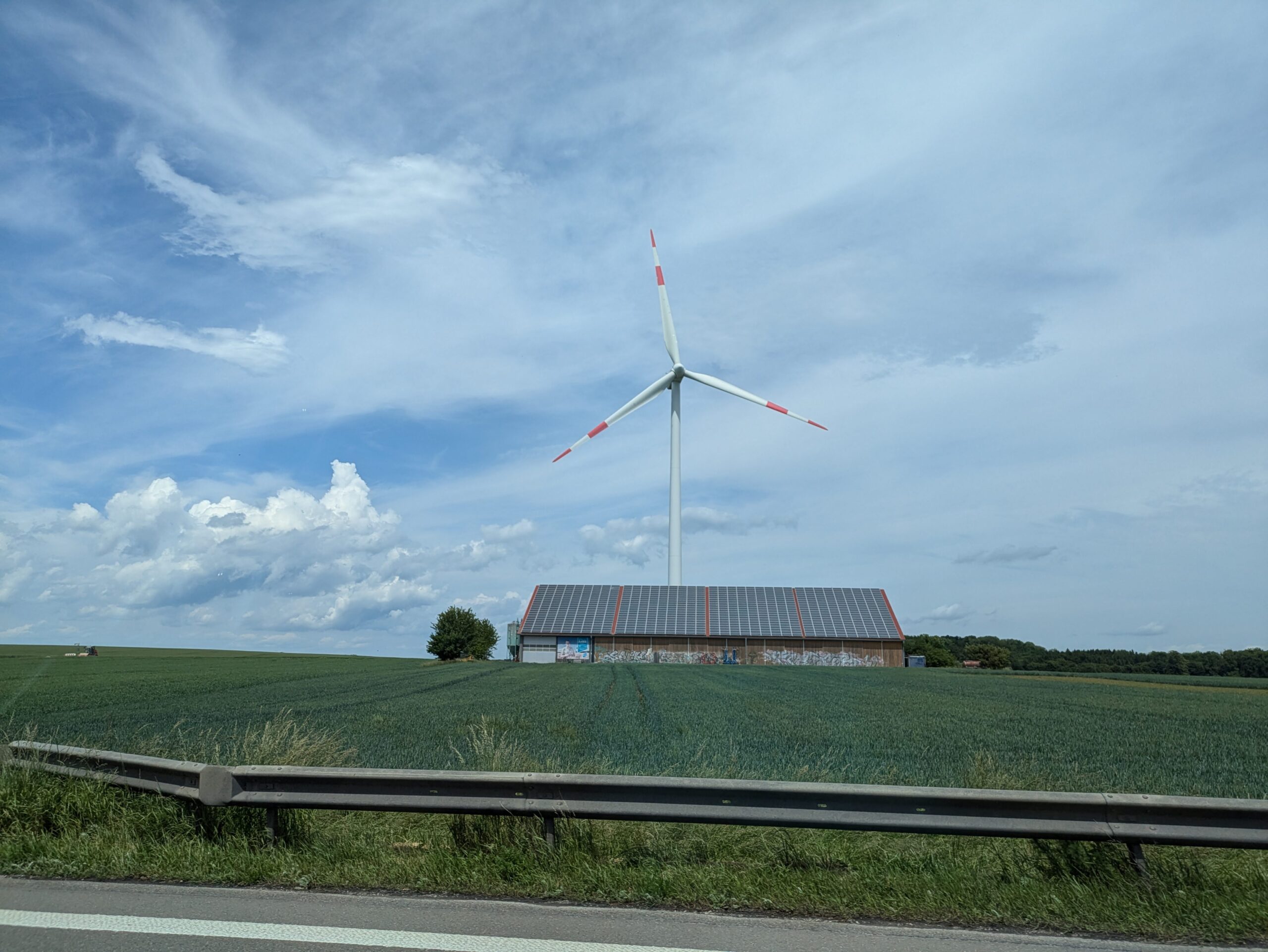
While navigating the Autobahn, we enjoyed the modern and old-world mix of maypoles, wind turbines and rolling farmland. We found German drivers to be quite polite and considerate. We also got in a few giggles at the German sign for exit: Ausfahrt.
Stuttgart
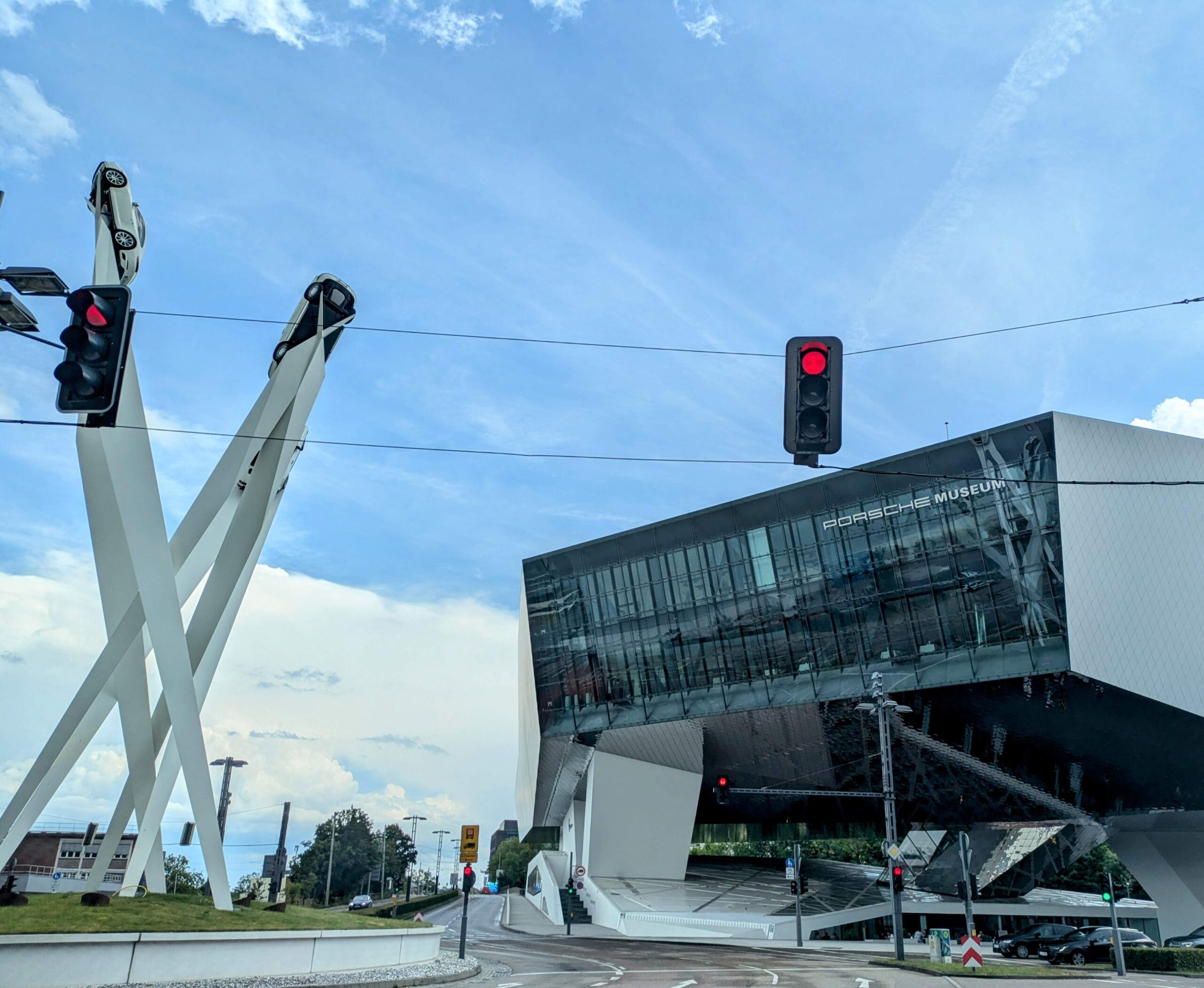
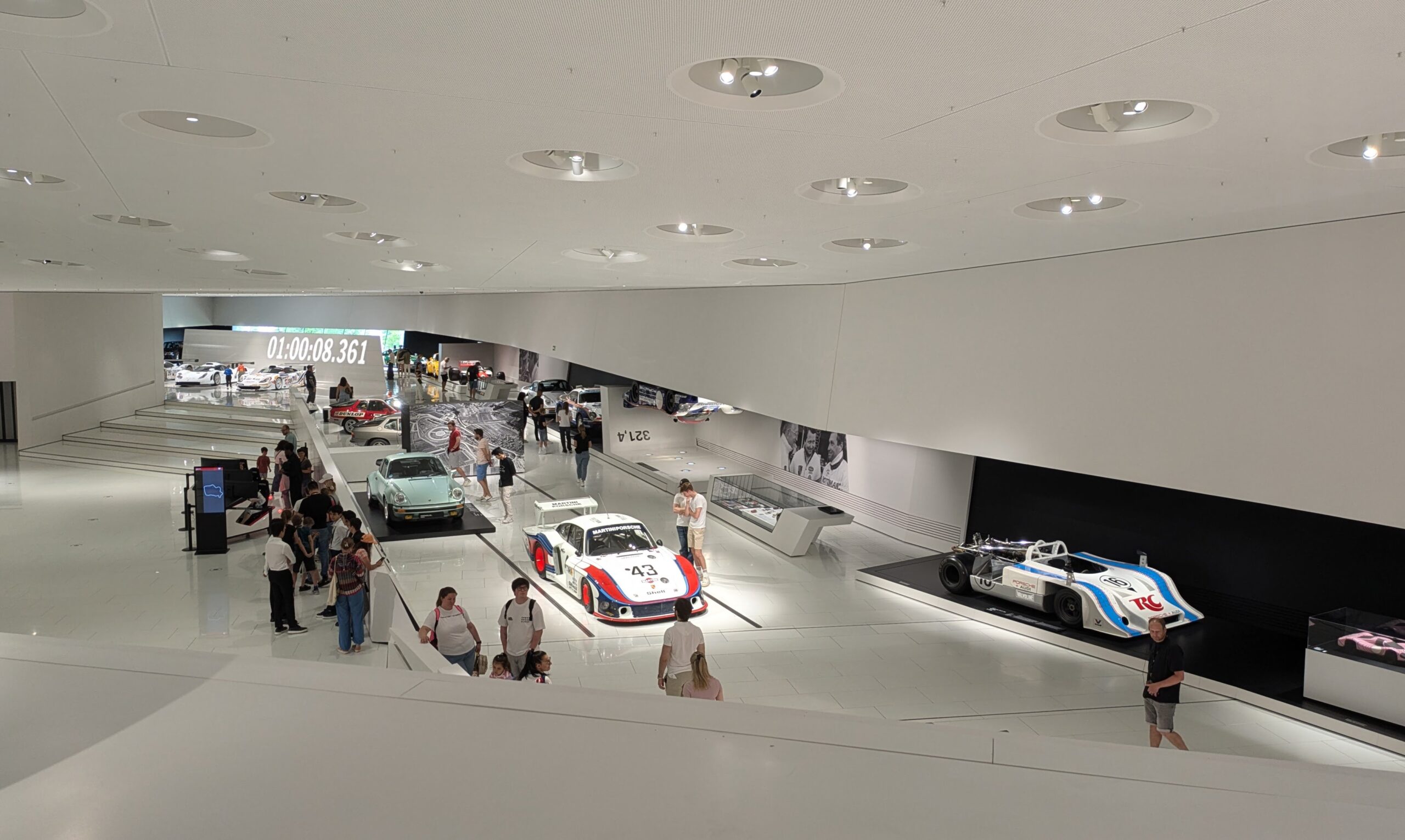
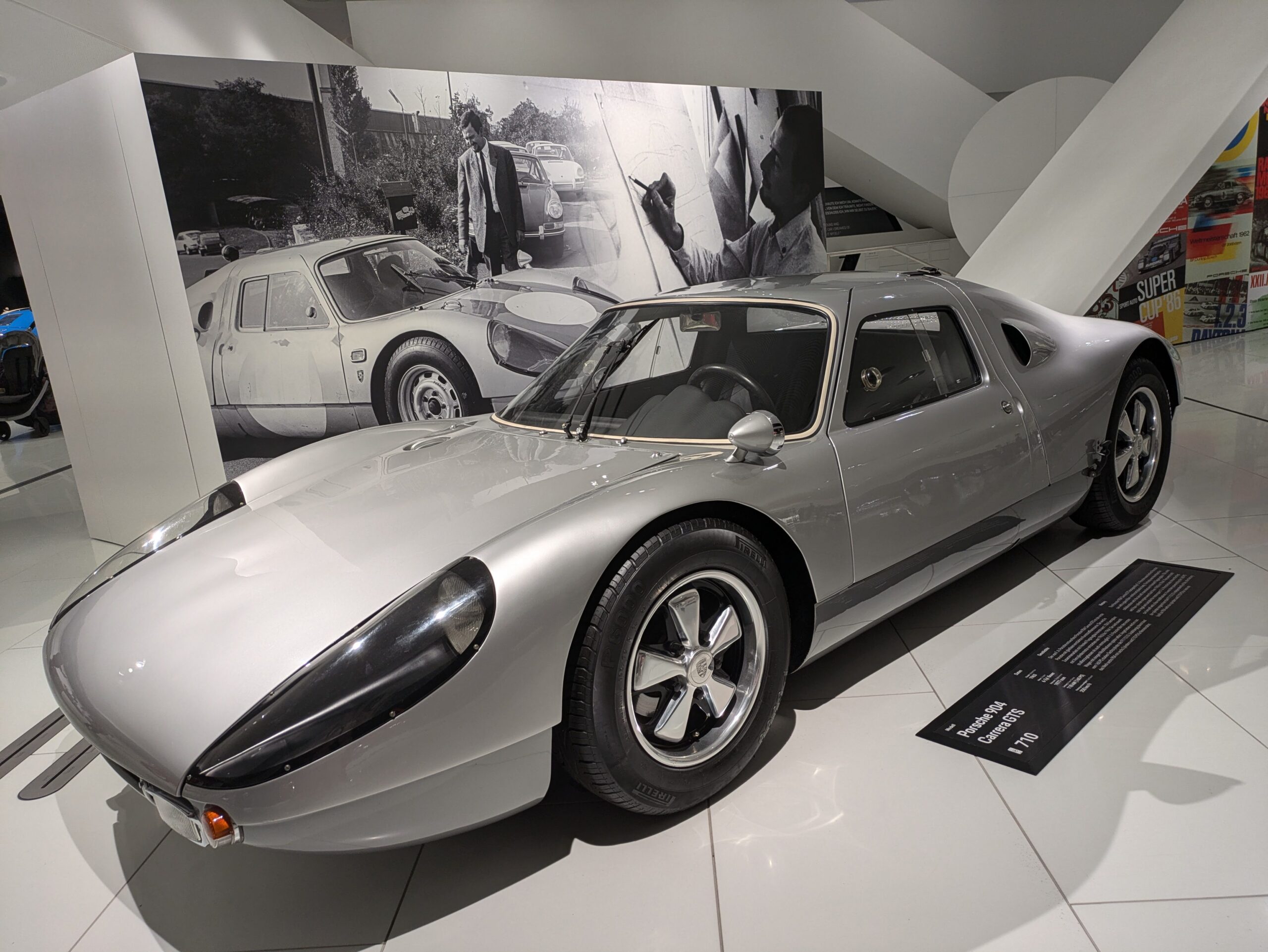
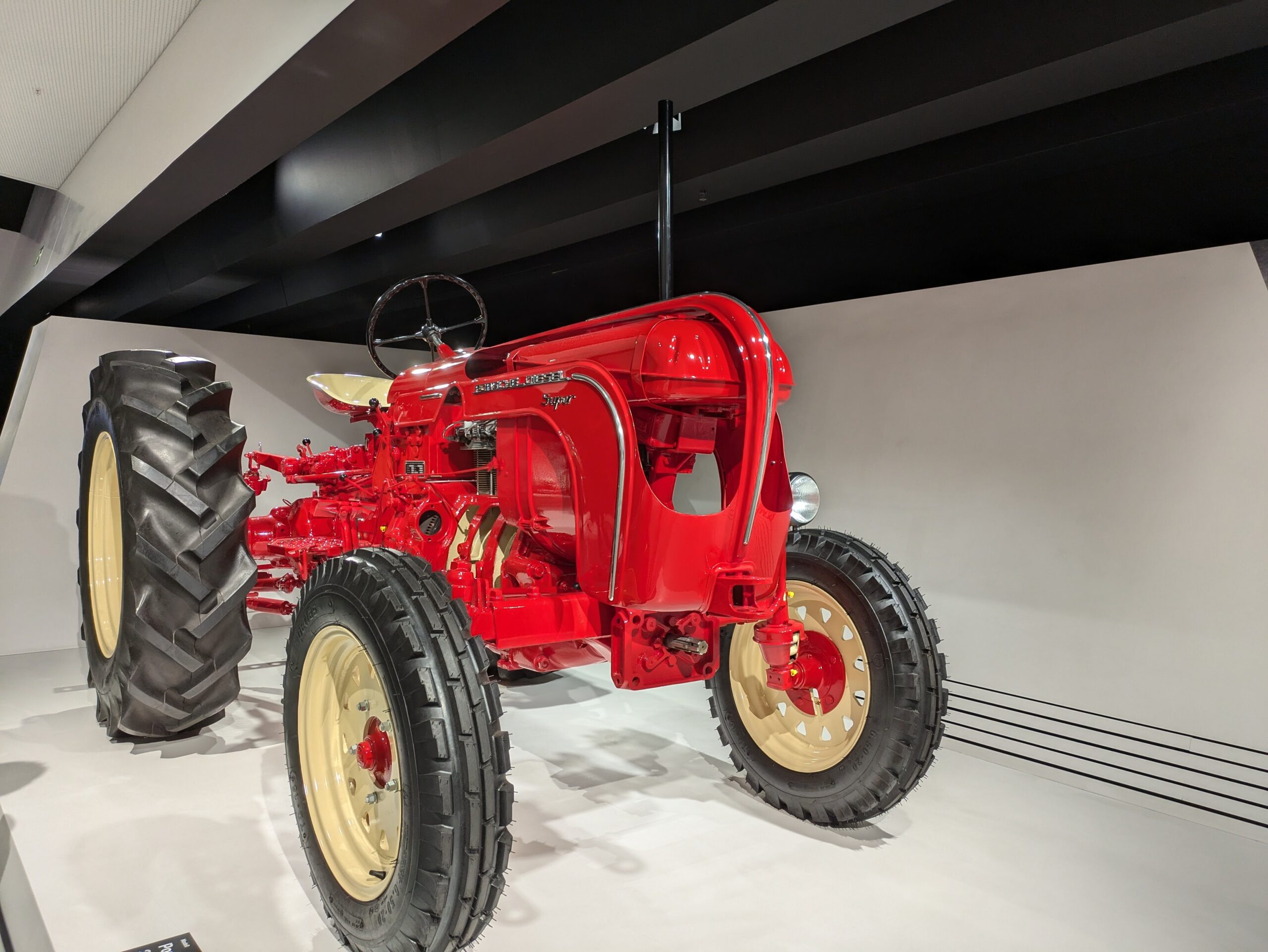
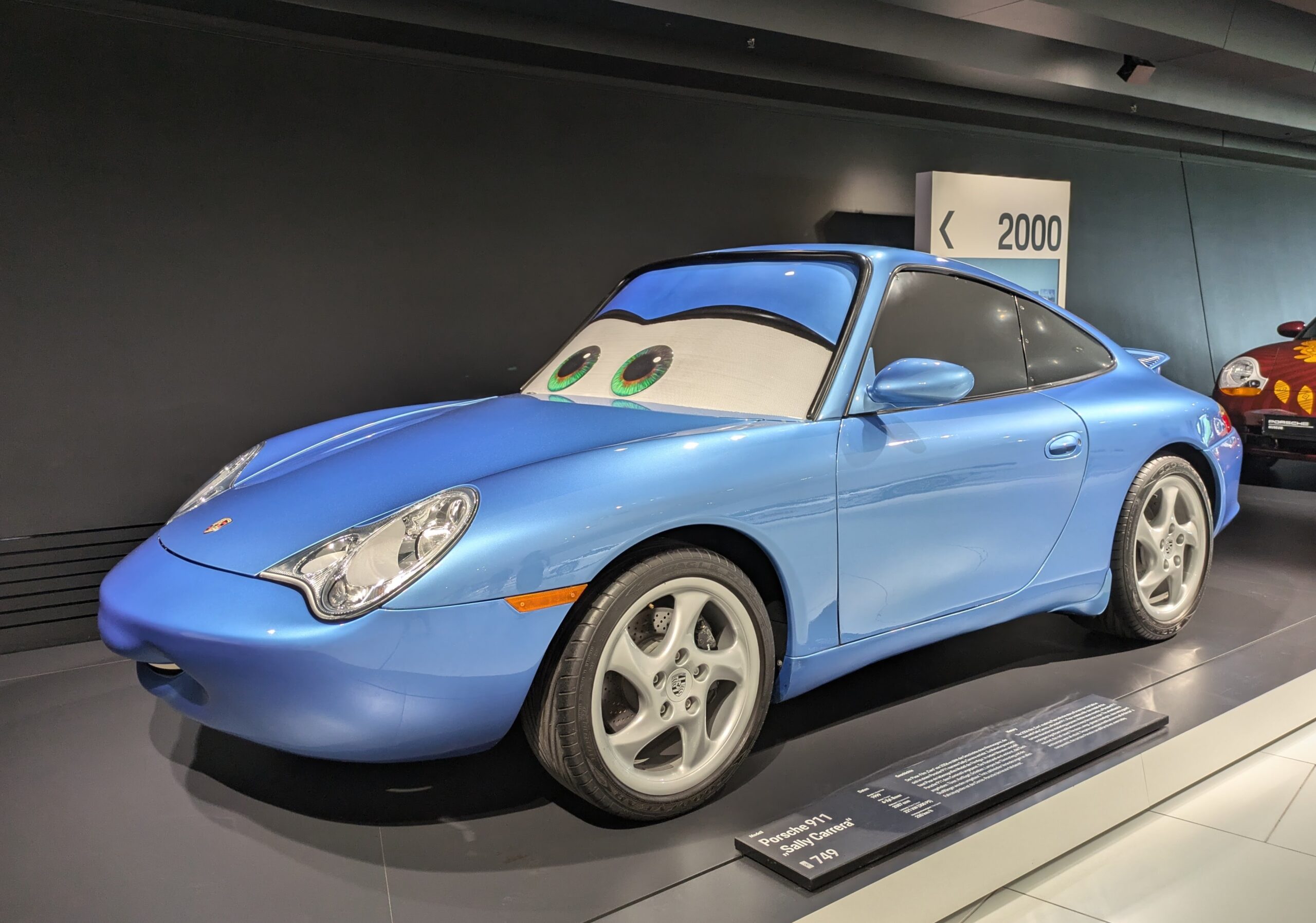
Our first stop was Stuttgart, capital of the state of Baden-Württemberg and home to the Porsche Museum, factory and headquarters. The building’s modern architecture is a wonderful accompaniment to the Porsche standards of history, technology and fine German craftsmanship. The museum is not as big as we expected, but it features a nice variety of modern and late-model vehicles while showcasing the extensive history and development of Ferdinand “Ferry” Porsche’s dream.
Heidelberg
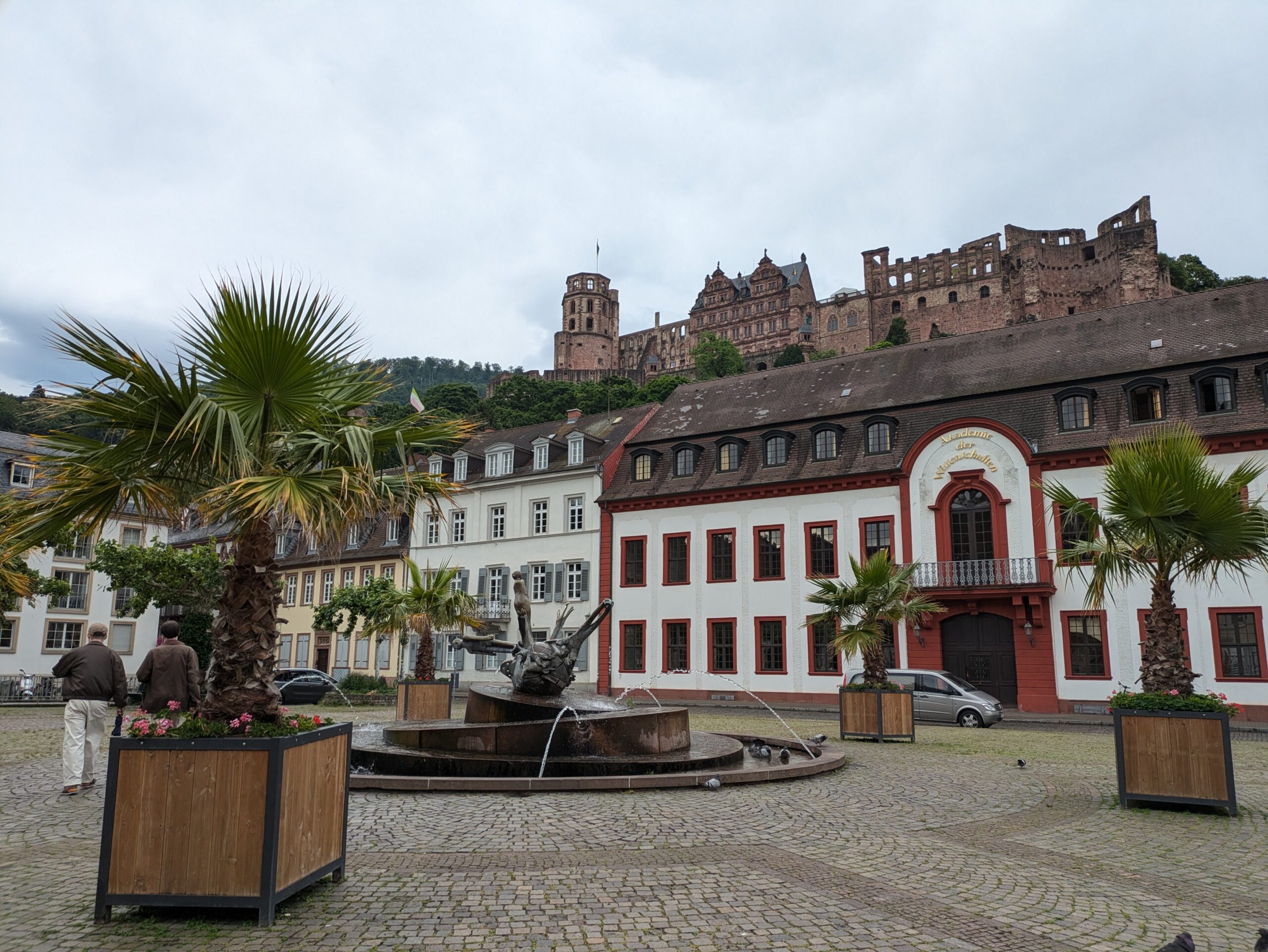
With its quaint collection of red sandstone, castle ruins, winding Neckar River shoreline and narrow alleys filled with cafes and shops, Heidelberg is a postcard-perfect blend of history, Renaissance architecture and literary charm (all set against the beautiful backdrop of rosy-hued roofs and ruins). I can just imagine a scholarly sort walking along a hilltop, lost in thought.
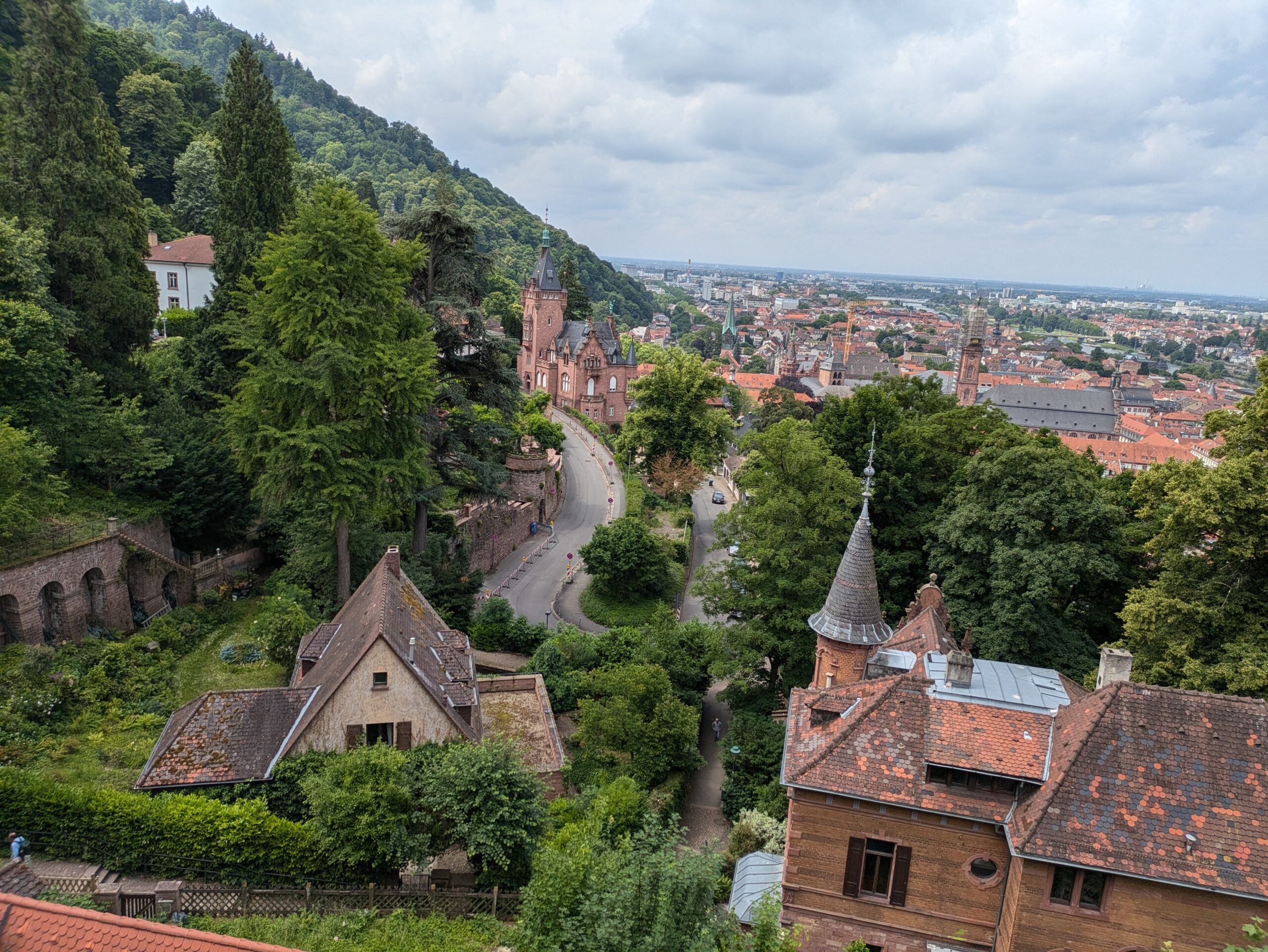
“I have never enjoyed a view which had such a serene and satisfying charm about it as this one gives” – Mark Twain, about Heidelberg in A Tramp Abroad.
Heidelberg has been designated a city of literature by the UNESCO Creative Cities Network and has inspired artists, literary enthusiasts and romantics for centuries. The prestigious Heidelberg University was founded in 1386, making it the oldest in Germany and a center of learning and research in disciplines such as law, medicine, humanities and sciences.
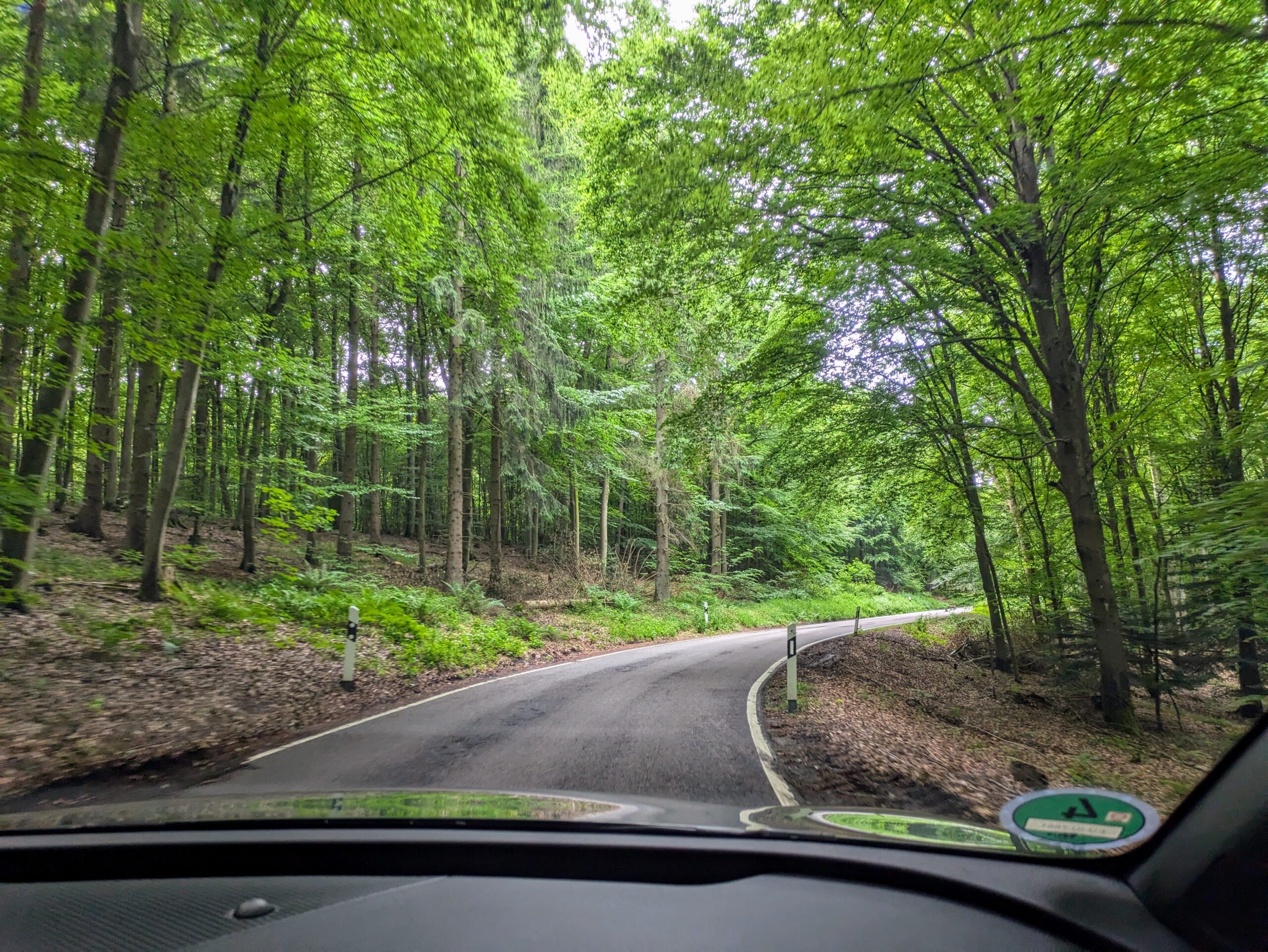
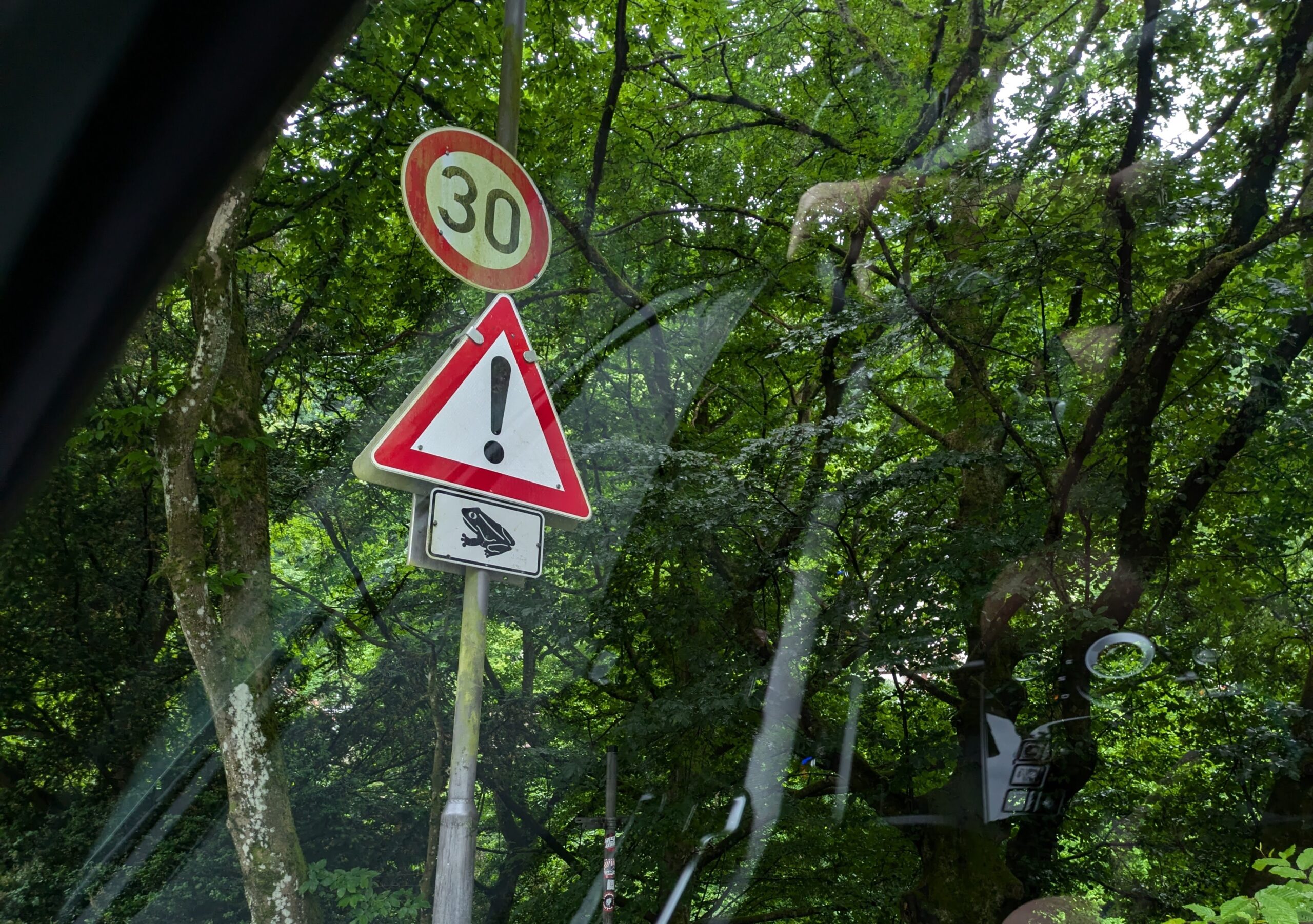
While driving up and down the Konigstuhl (“King’s Chair) hill, situated within the Odenwald Mountains, we discovered narrow, winding roads, lovely forest views and interesting signs. At about 1,862 feet in height, the mountain is the highest peak in the Lower Odenwald region. With some of the turns bordering on the hairpin side, we were thankful that Germany takes the right-hand-side-of-the-road driving stance. We were also thankful we chose to drive instead of pedal.
Heidelberg Castle
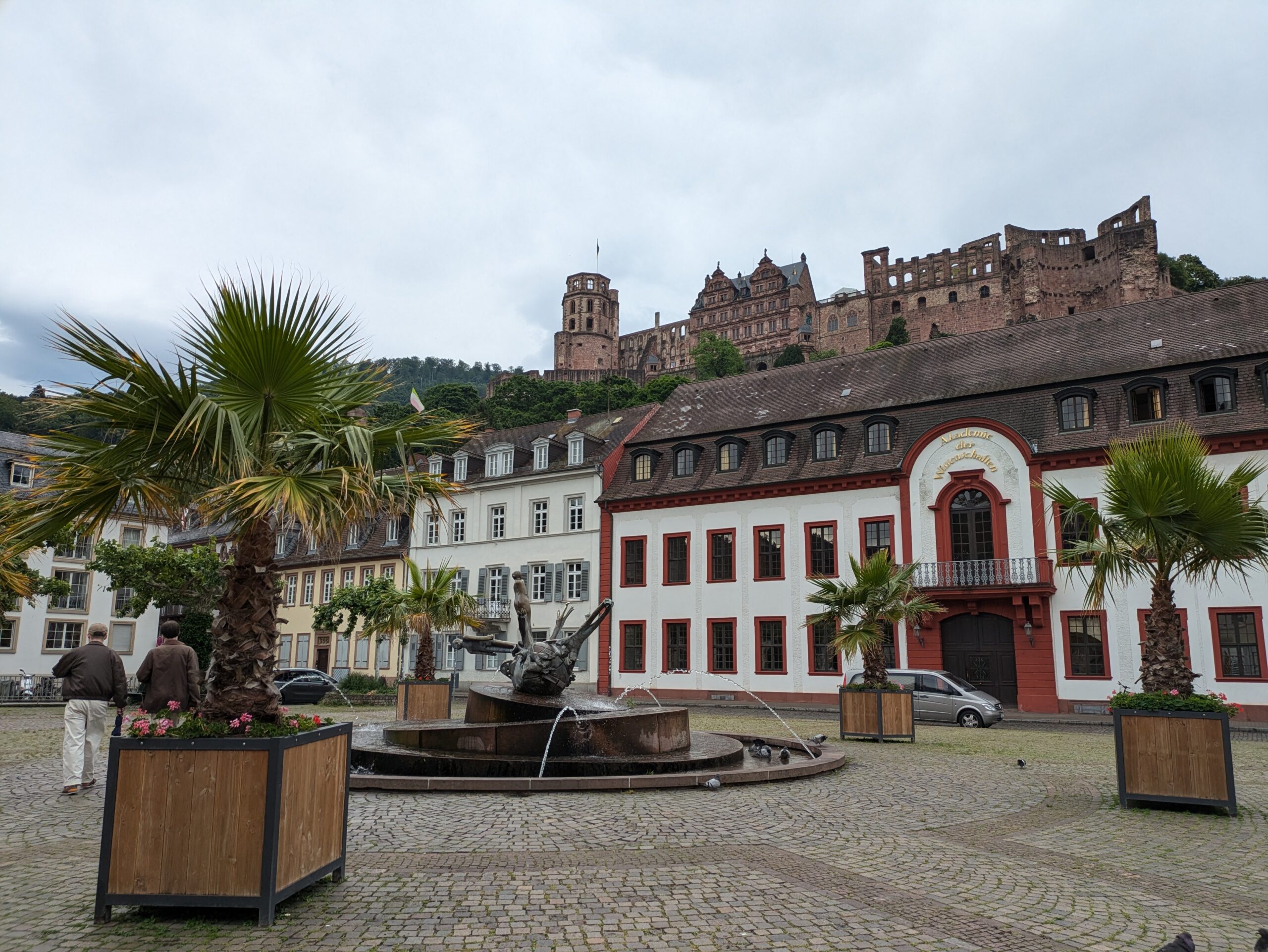
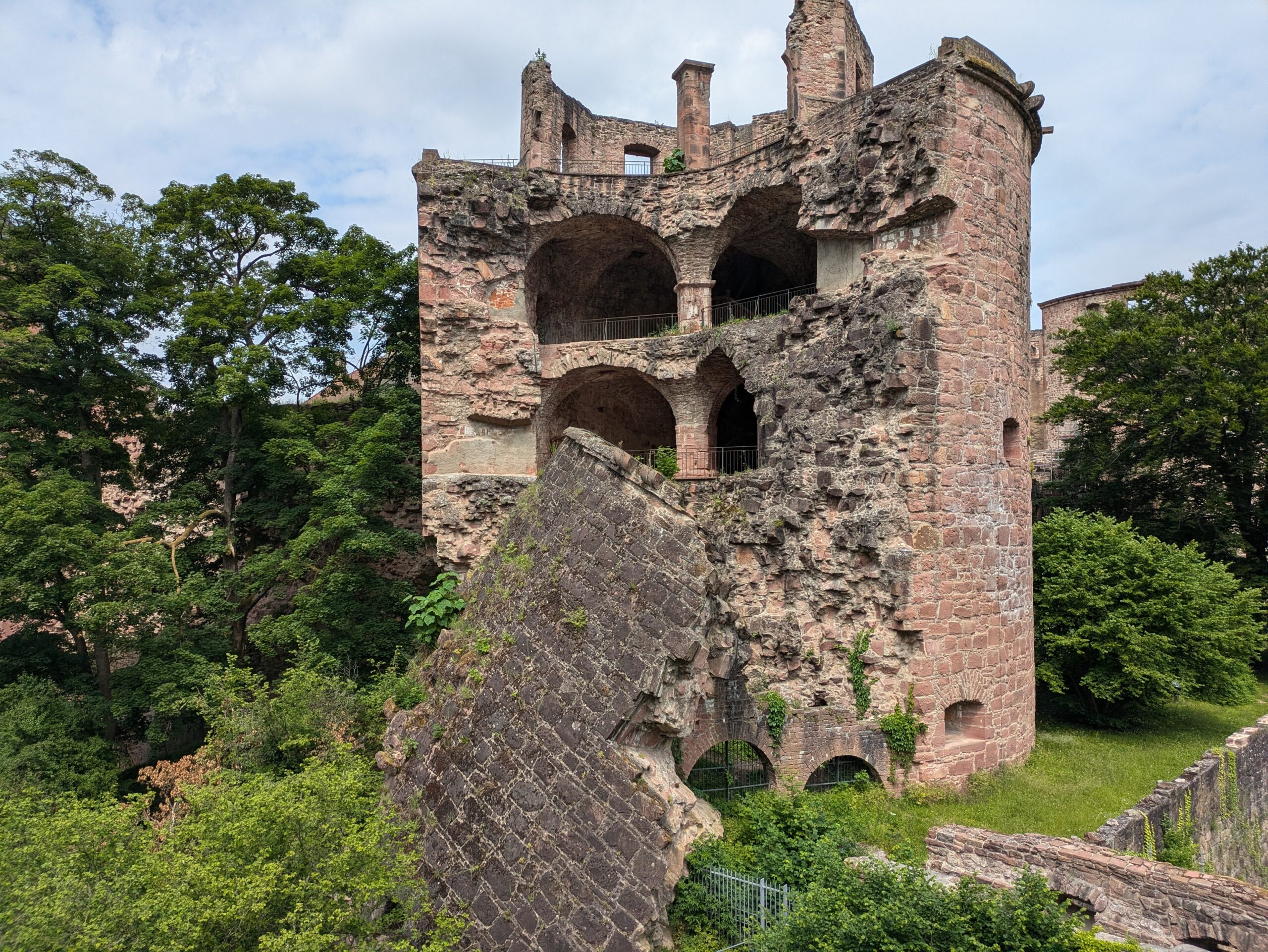
The Renaissance and Gothic architecture of Heidelberg Castle overlooks the town. Partially rebuilt, but mainly in ruins, the castle is made of beautiful red sandstone from the Neckar Valley. The first structure was built in approximately 1214. Around 1294, it was expanded into an upper and lower castle and later received additional renovations. It received damage from lightning strikes, fires and the Nine Years’ War. Mark Twain mentioned the castle as a ruin in 1880 in A Tramp Abroad.
“A ruin must be rightly situated to be effective. This one could not have been a better place. It stands upon a commanding elevation, it is buried in green woods, there is no level ground about it, but, on the contrary, there are wooded terraces upon terraces, and one looks down through shining leaves into profound chasms and abysses where twilight reigns and the sun cannot intrude.“
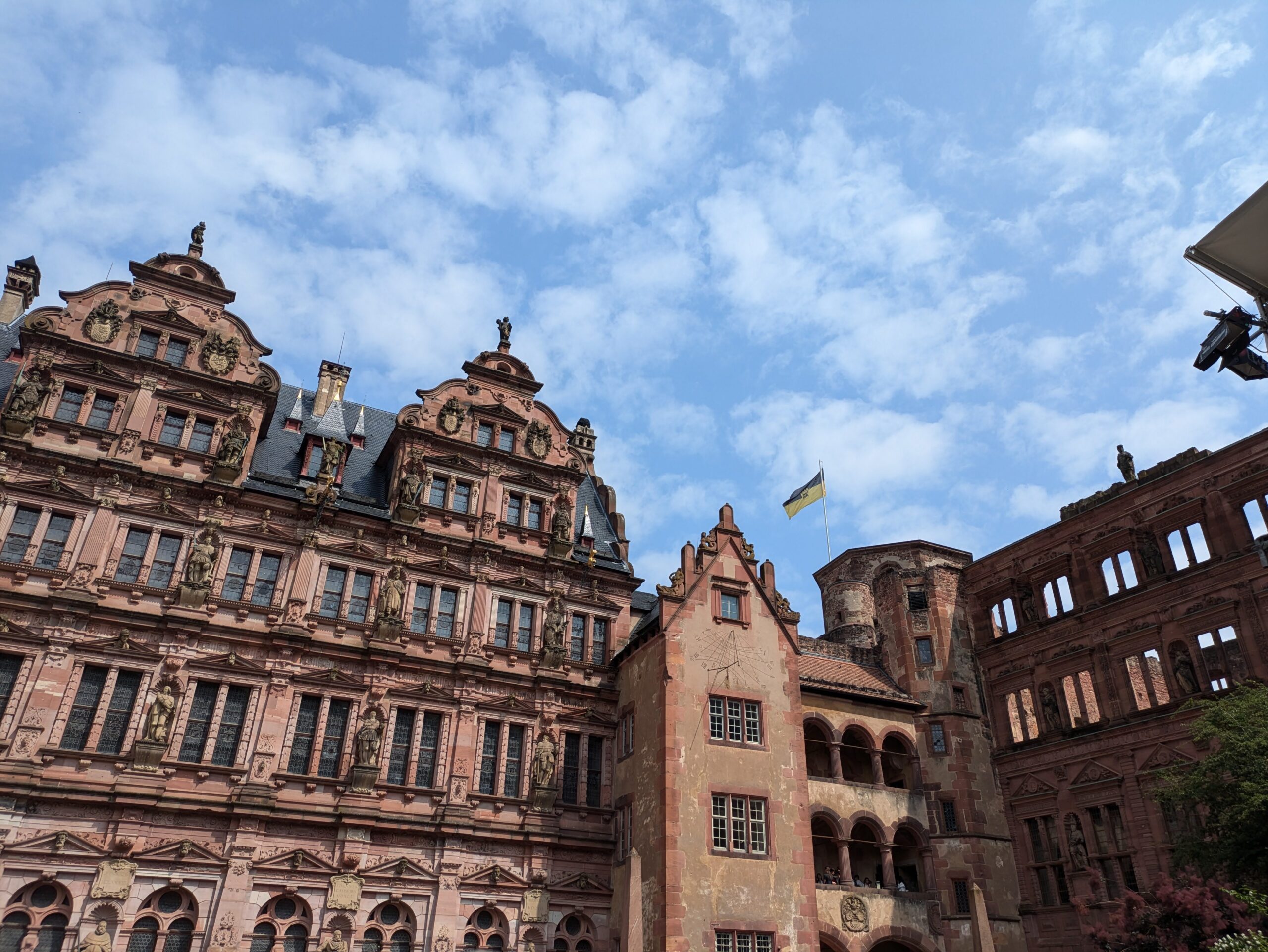
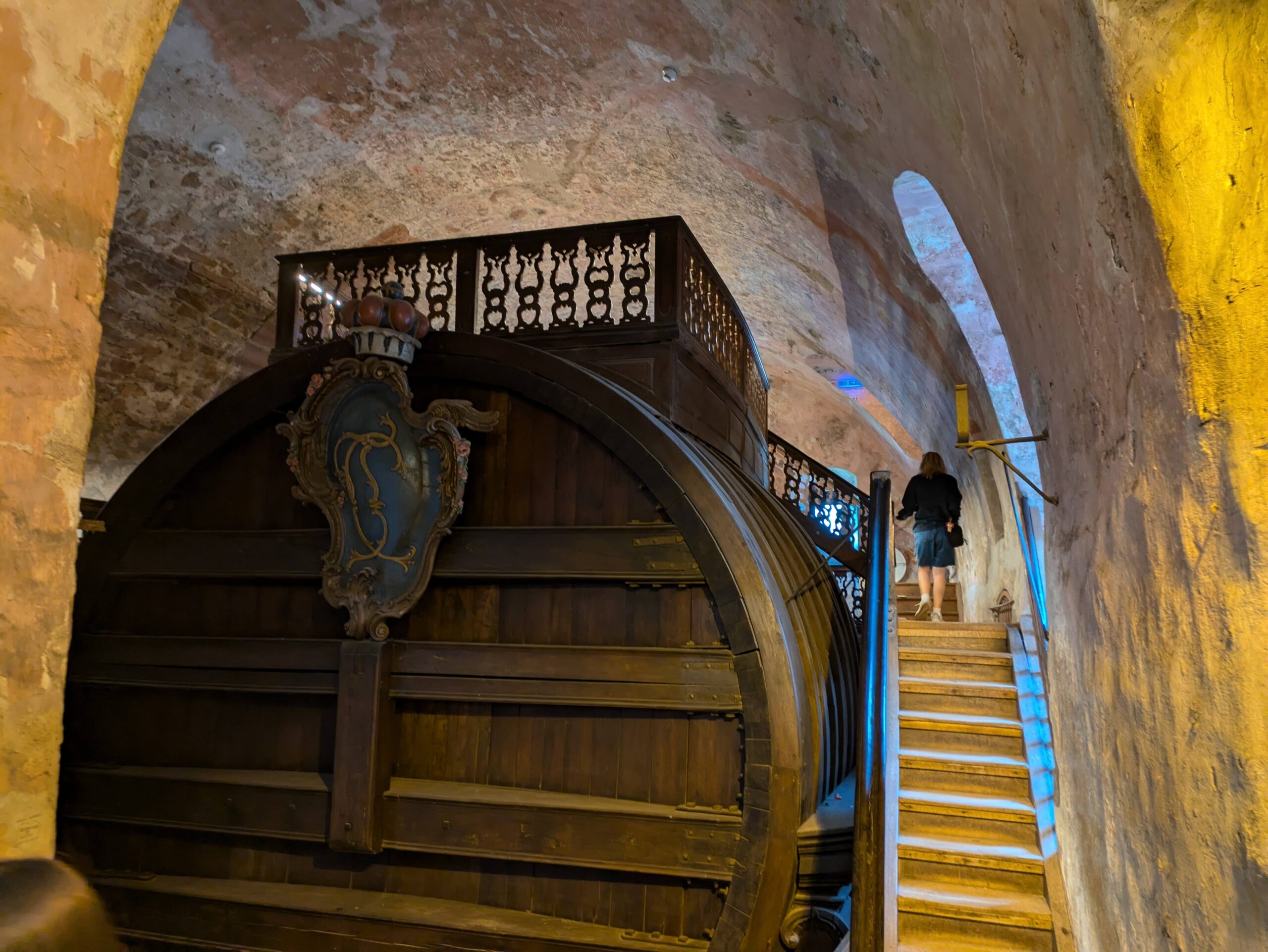
Explore the ruins and the castle courtyard while taking in the views. On the castle site, you’ll also find the largest wine barrel in the world, the Heidelberg Tun, which is made from oak and can hold 58,574 gallons. You’ll definitely want to pose for a pic. Interior castle tours are available, but we chose to enjoy the view from the outside.
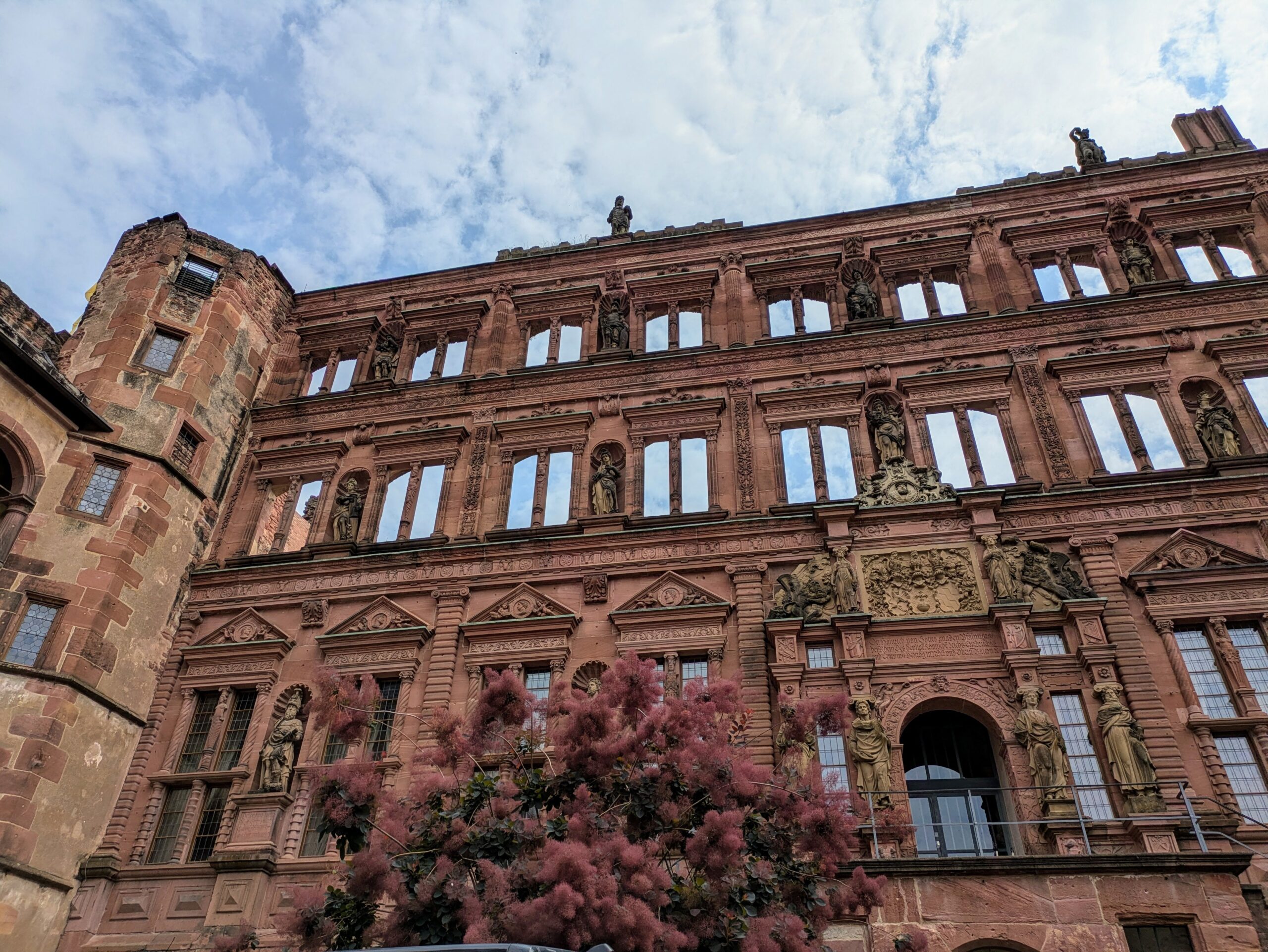
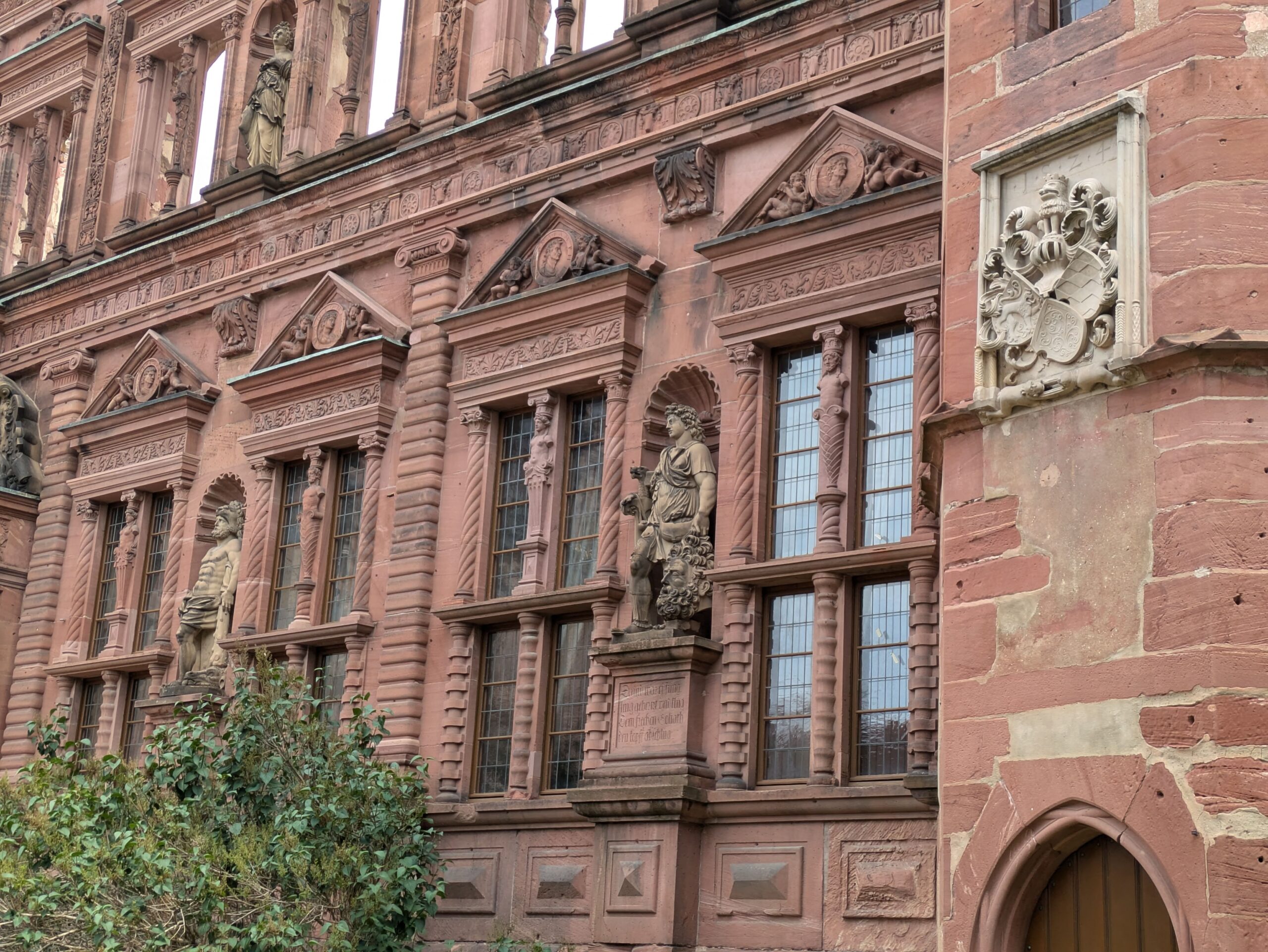
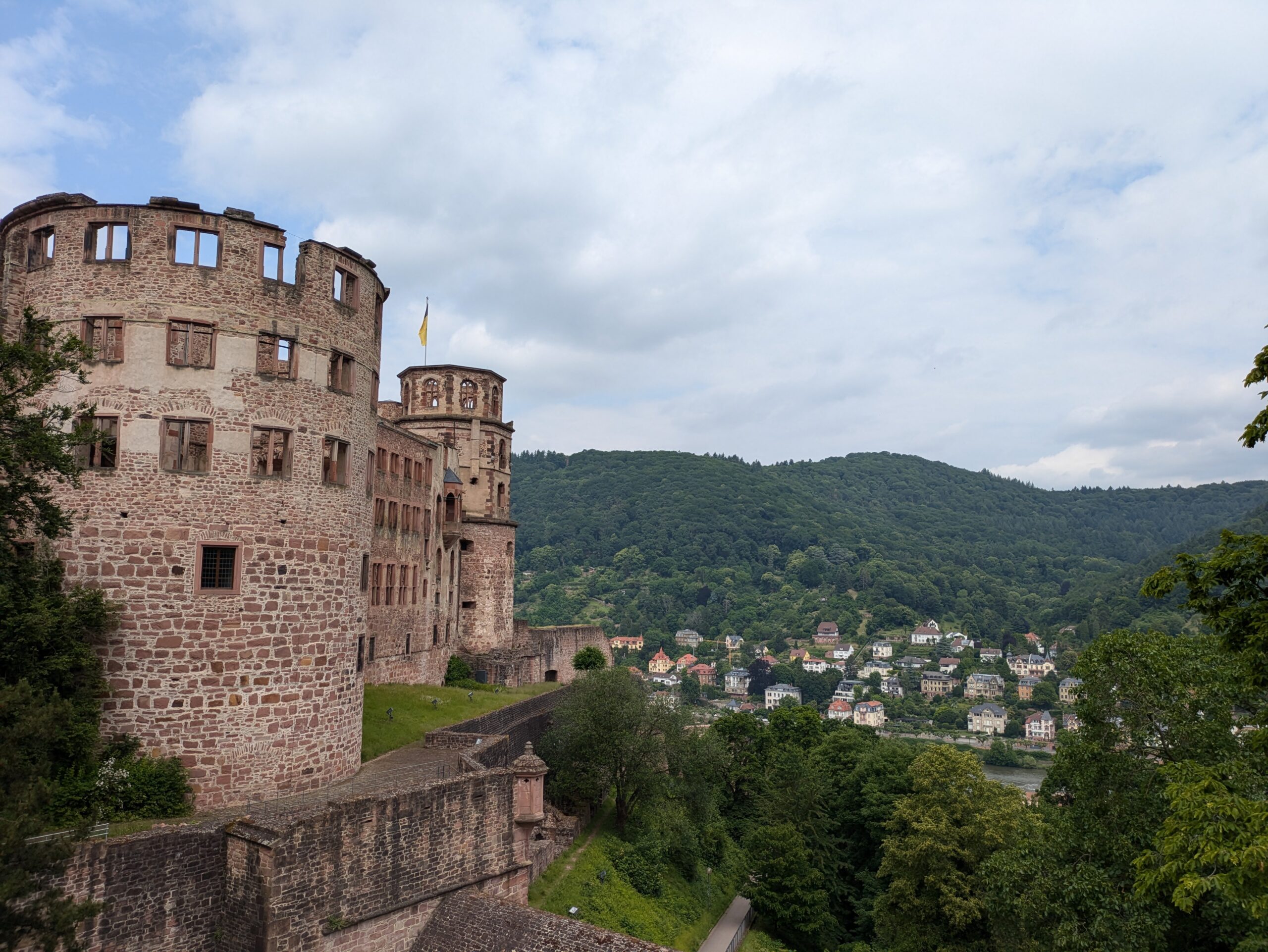
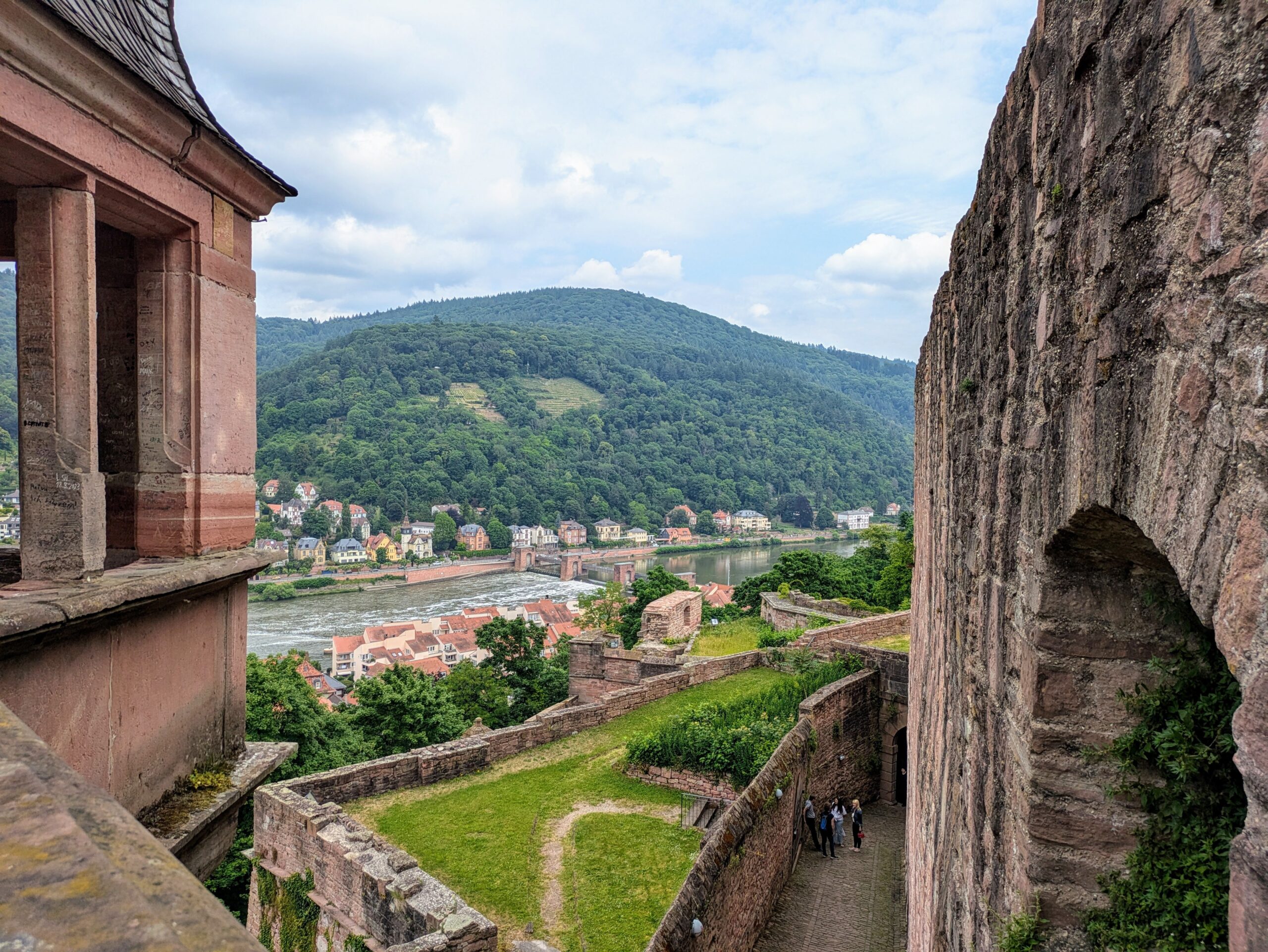
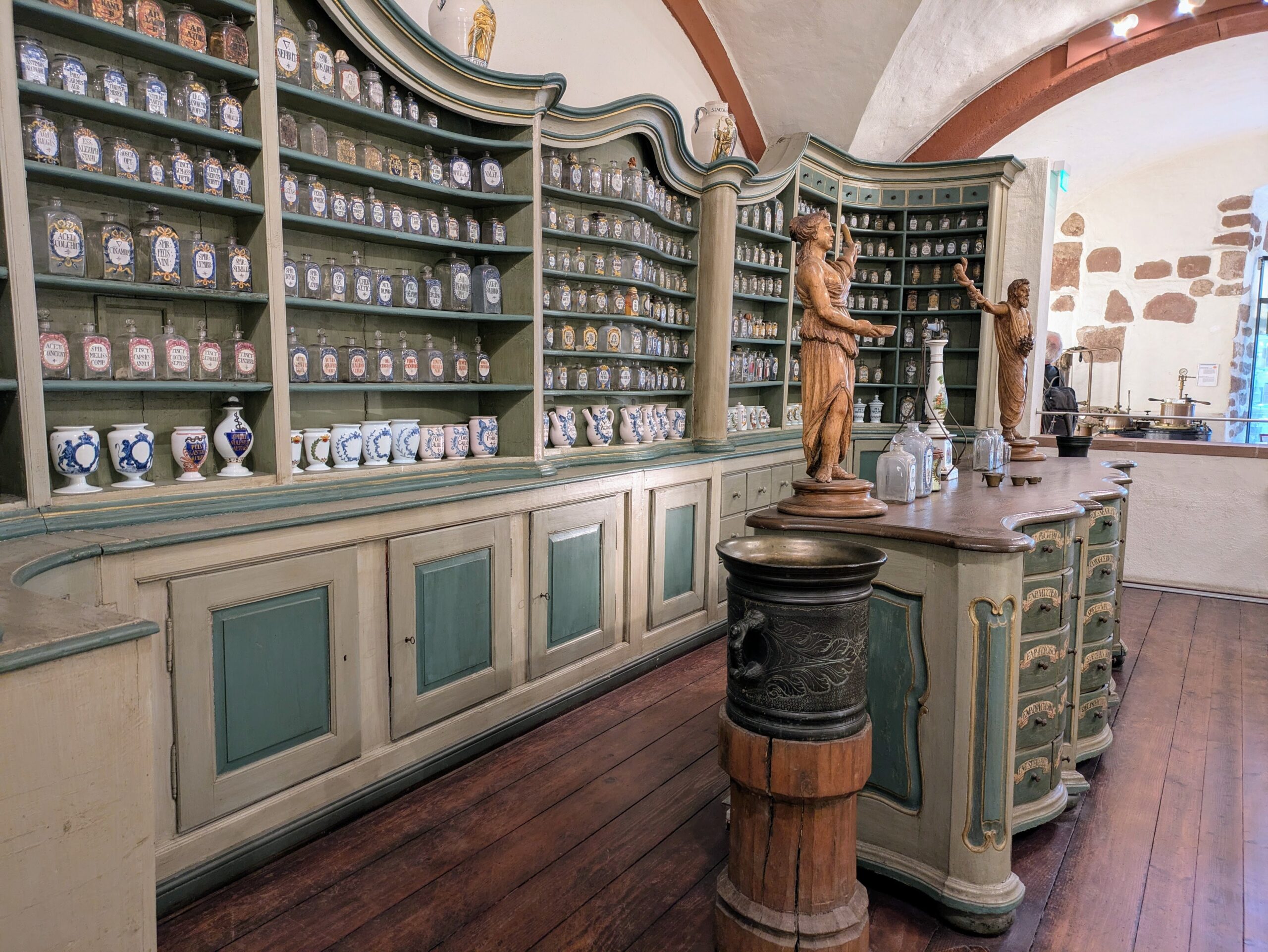
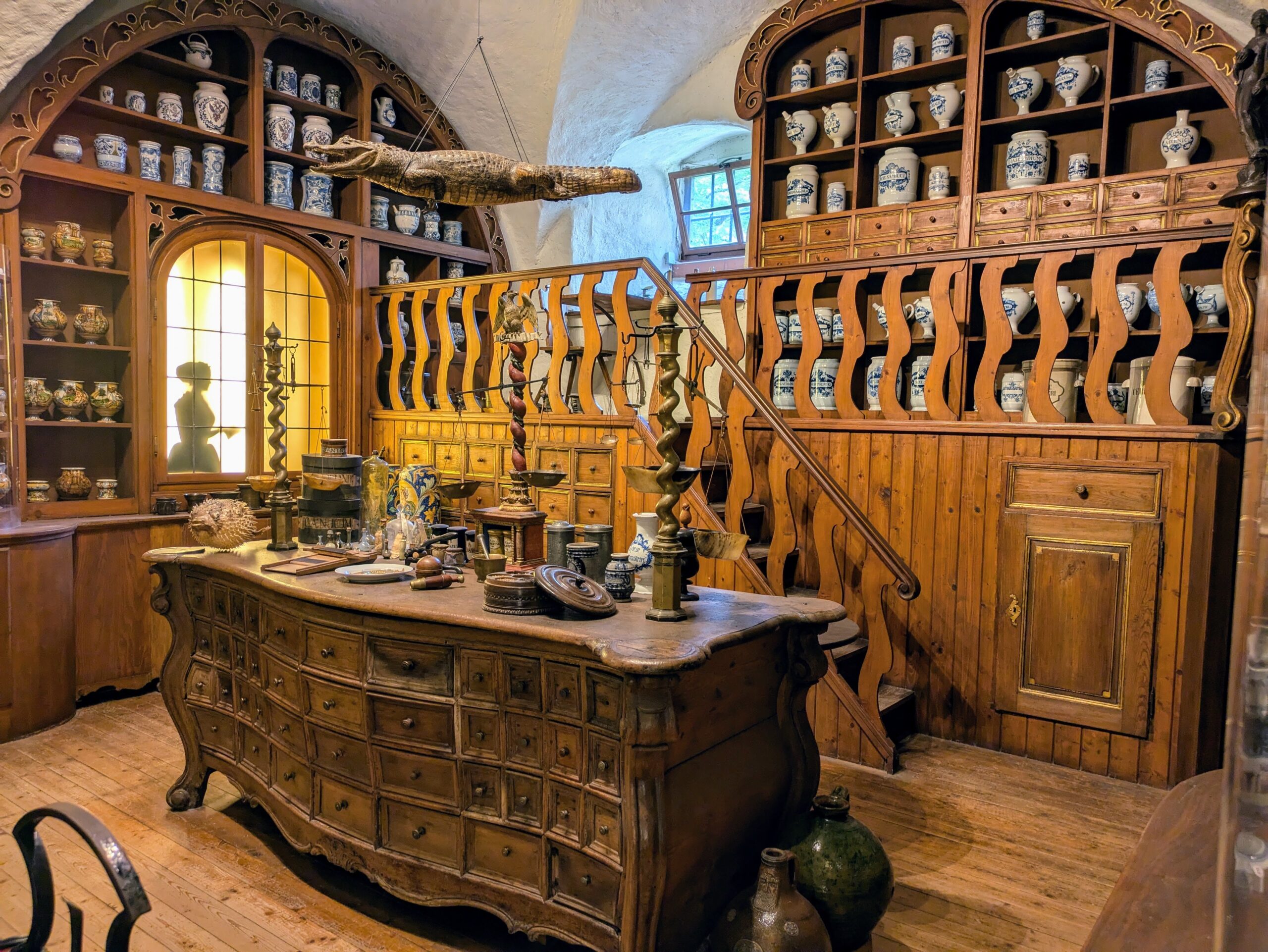
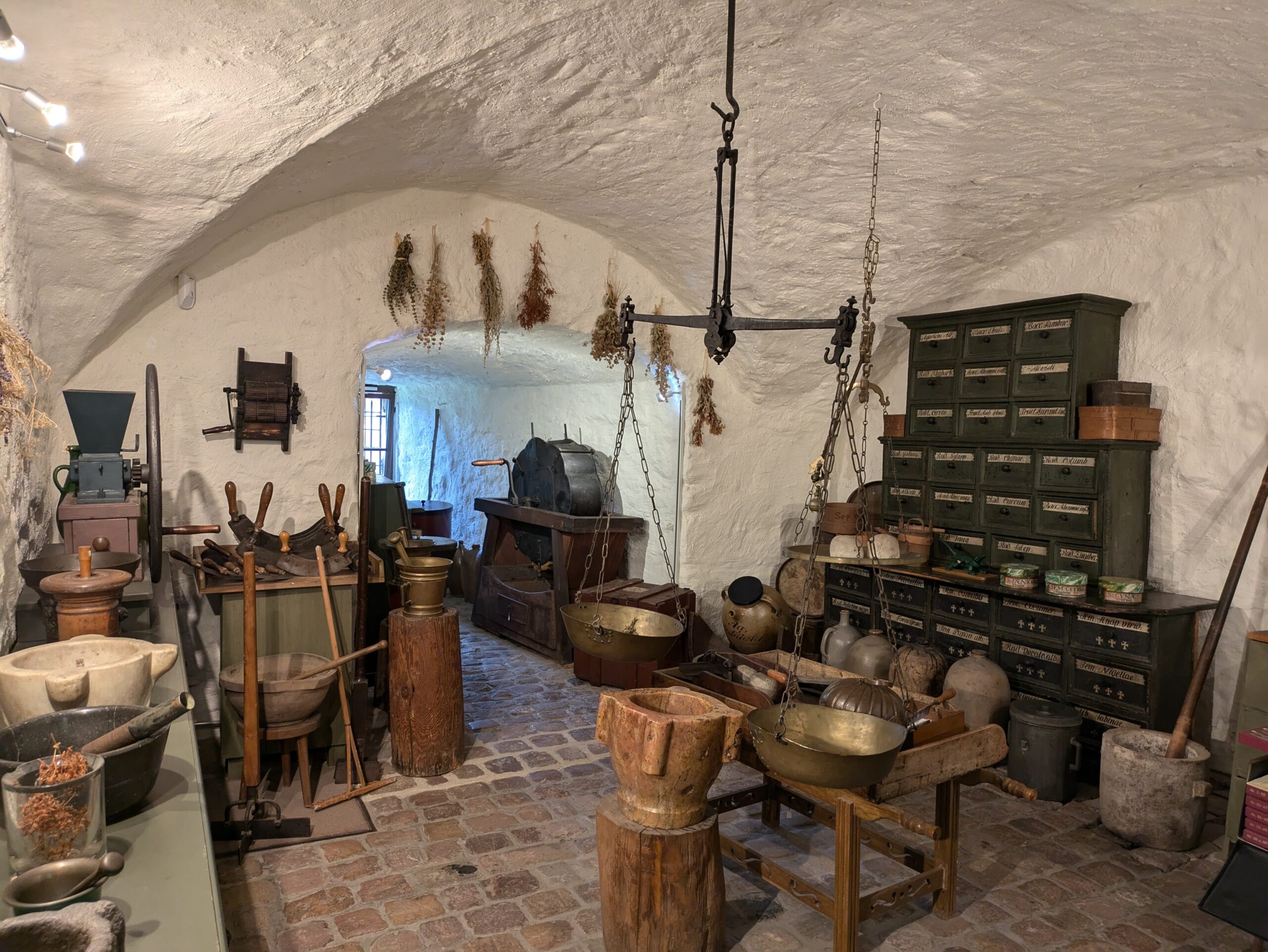
The German Pharmacy Museum is on the castle grounds and is included with admission. It’s a fascinating foray into medieval bottles, potions, powders and instruments.
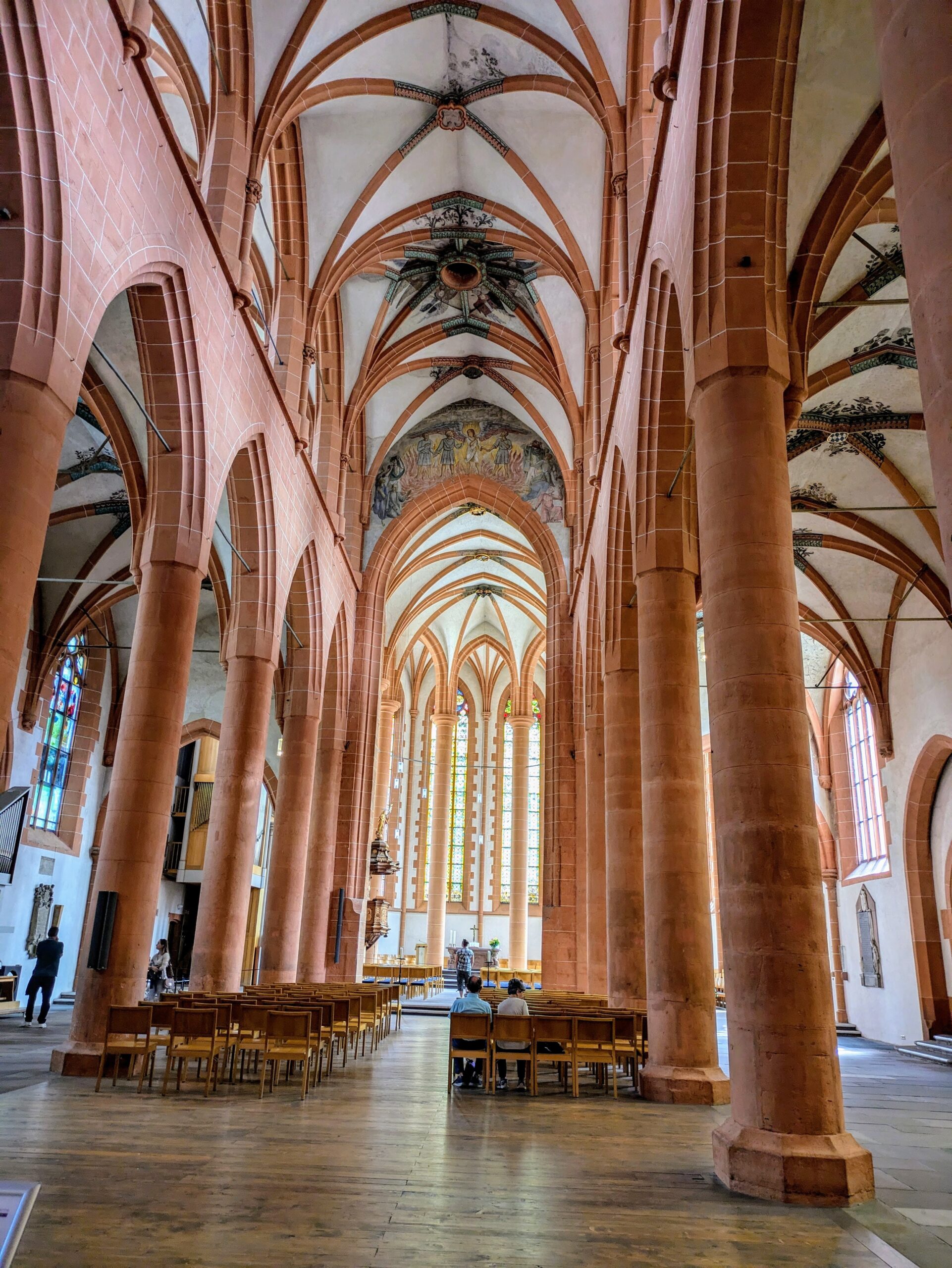
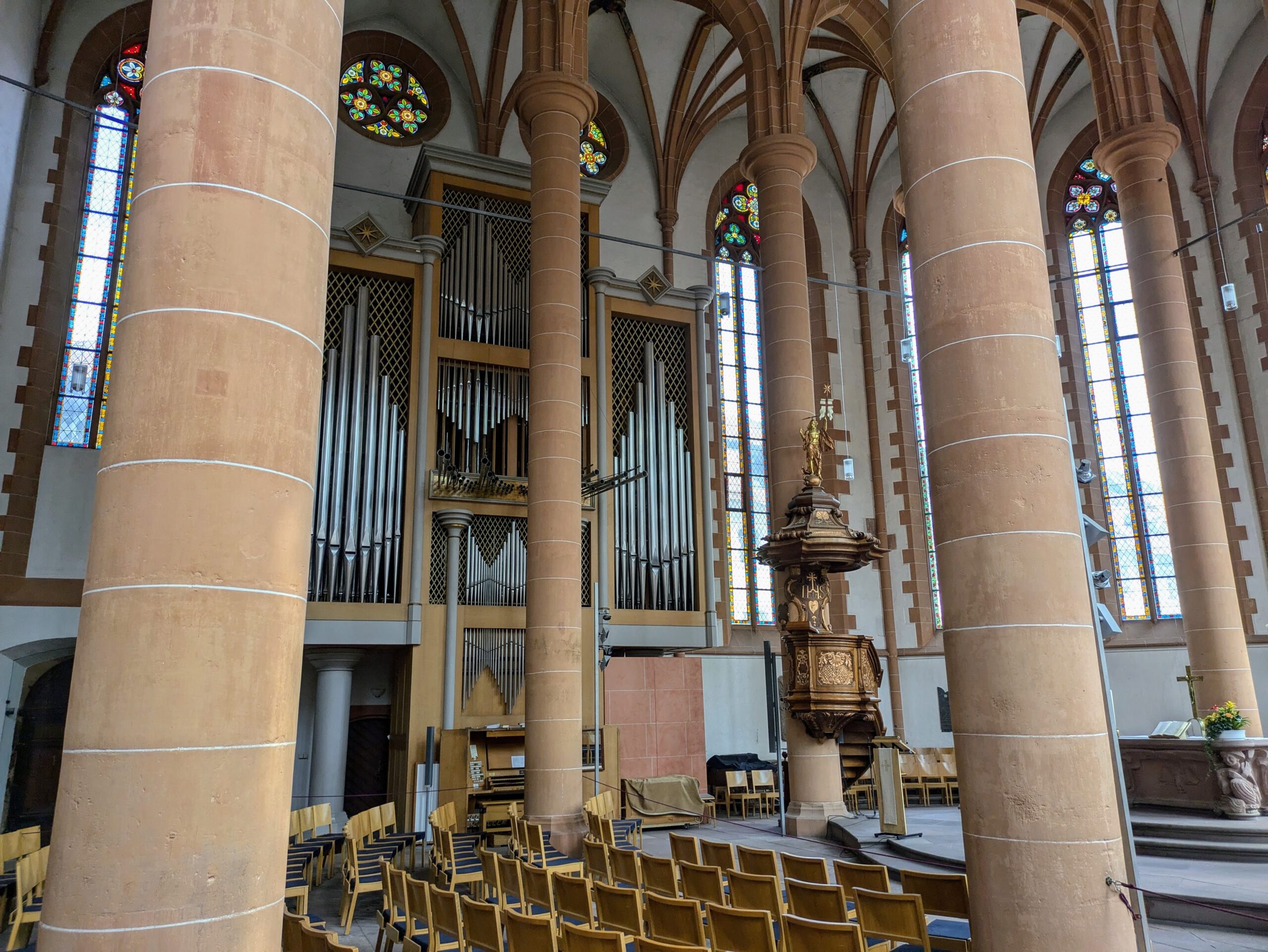
Heiliggeistkirche (Church of the Holy Spirit)
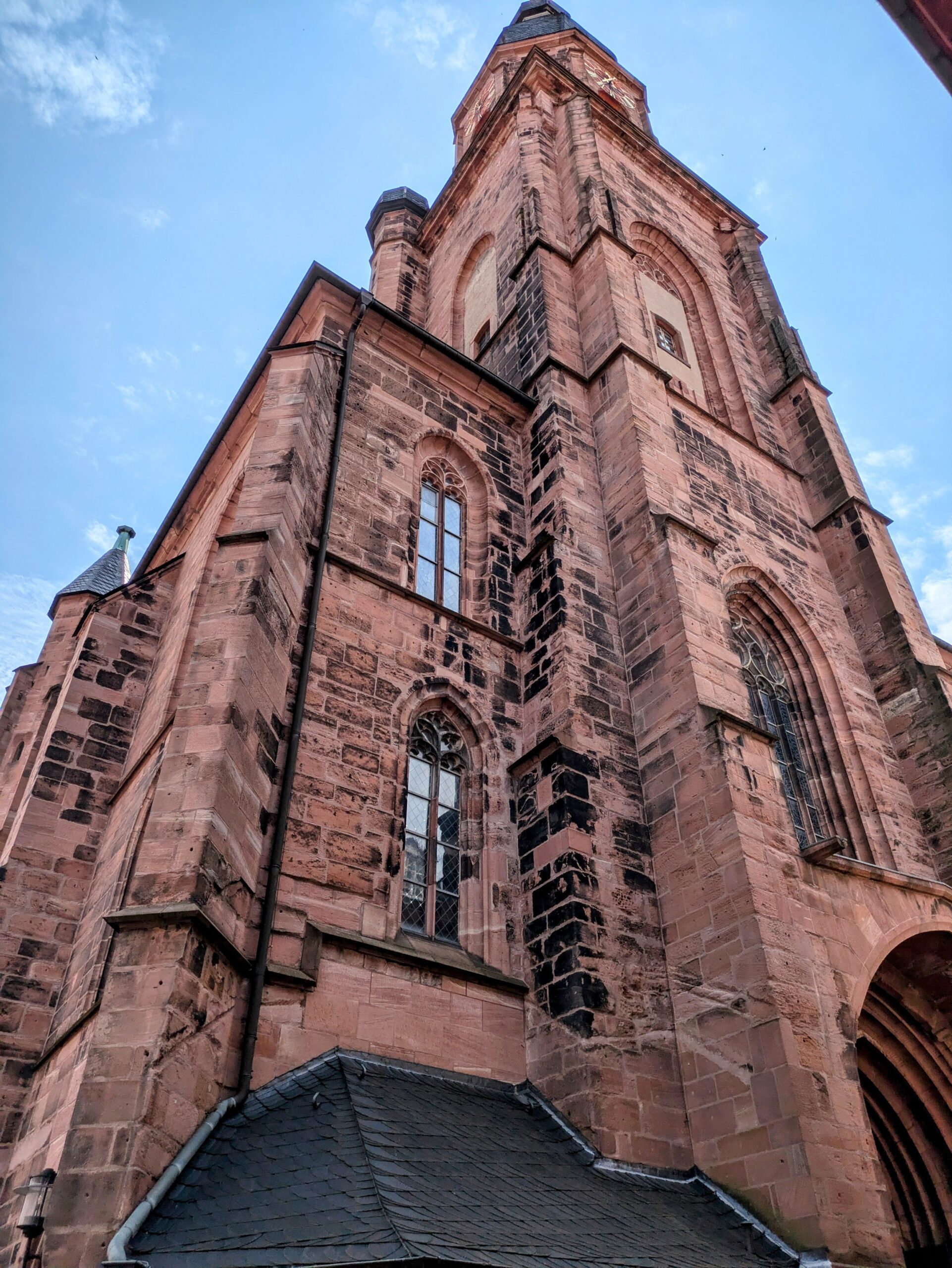
The Heiliggeistkirche (Church of the Holy Spirit) was built between 1398 and 1515 in a gorgeous Romanesque and Gothic style. It was originally Catholic, and after many denomination changes (including Calvinism, Lutheranism and Old Catholicism), it is now Protestant.
The Heidelberger Bergbahn
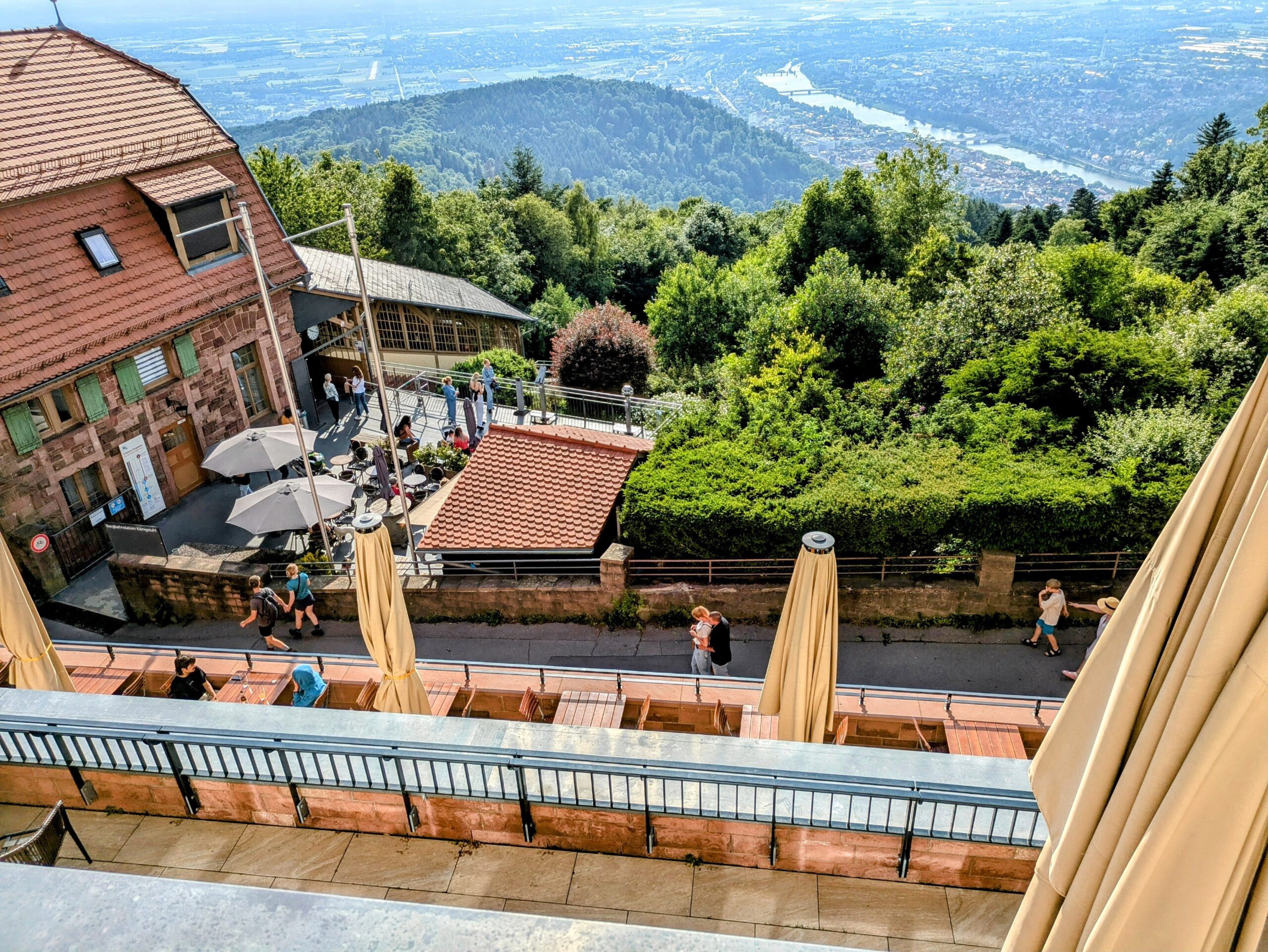
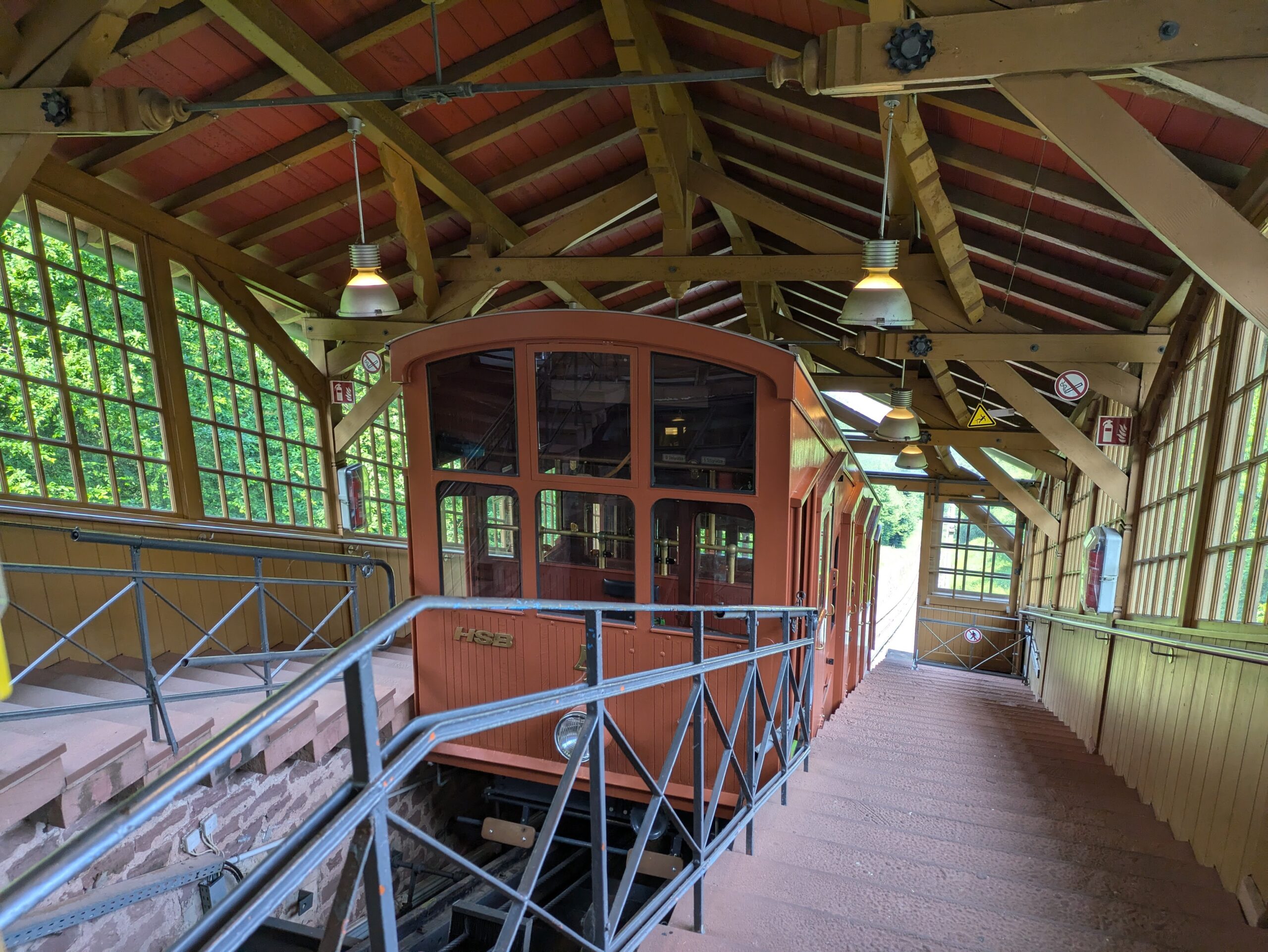
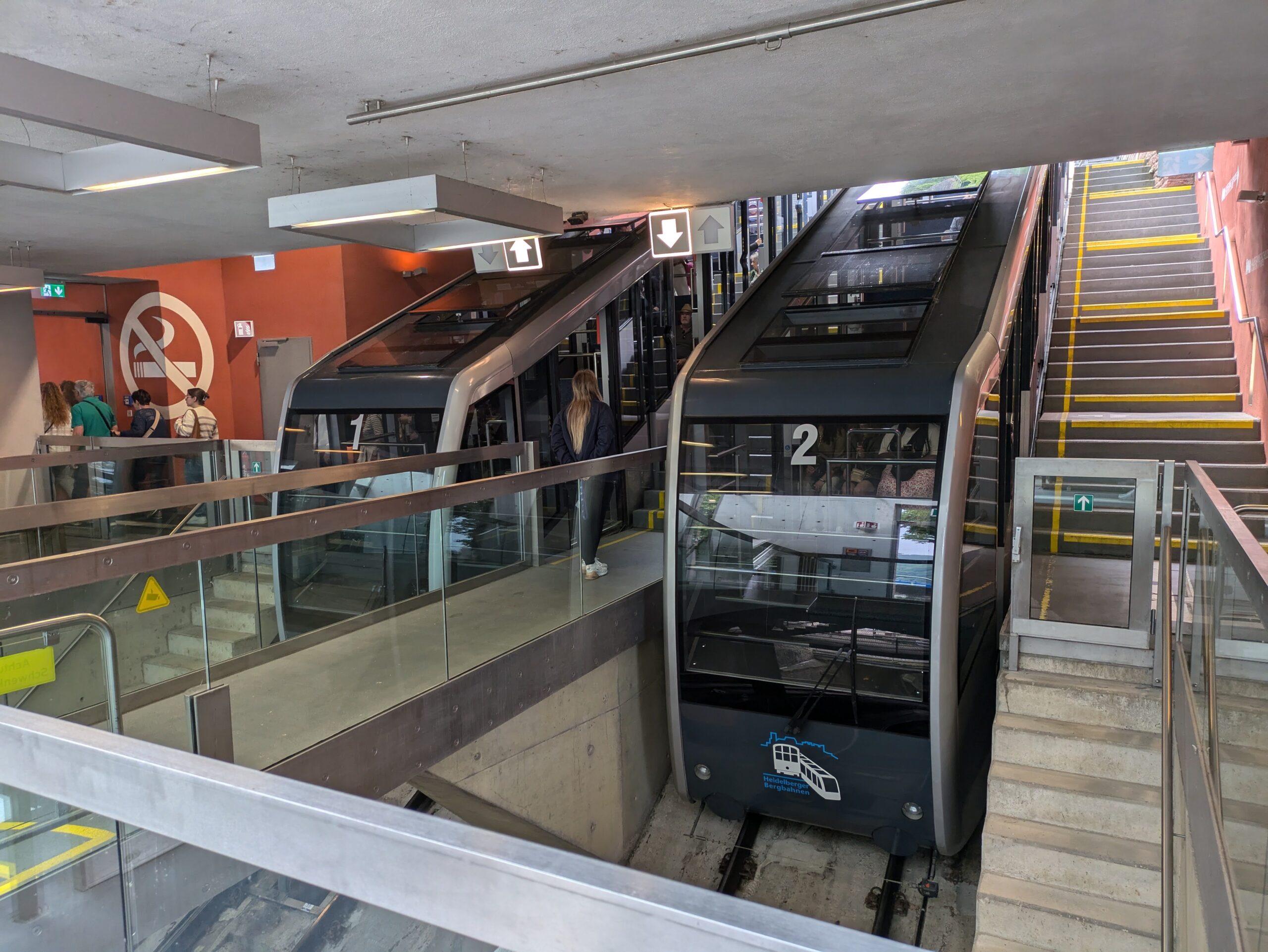
The Heidelberger Bergbahn is a historic funicular railway, meaning it’s a railroad of sorts that runs up and down the mountain (rather than rolling flat on the ground). This unique mode of transport is an excellent way to see the valley and get up and down the mountain. There are walking trails, a nature center and the Berg-Gasthof Konigstuhl hotel at the top. Funicular stops along the way:
- Kornmarkt Station at the bottom – it’s easy to walk to and from Old Town from here
- Station Castle – stops at Heidelberg Castle
- Molkenkur Station – where you switch to the vintage/original car from 1907
- Konigstuhl Station – stop at the top
Alte Brucke Heidelberg
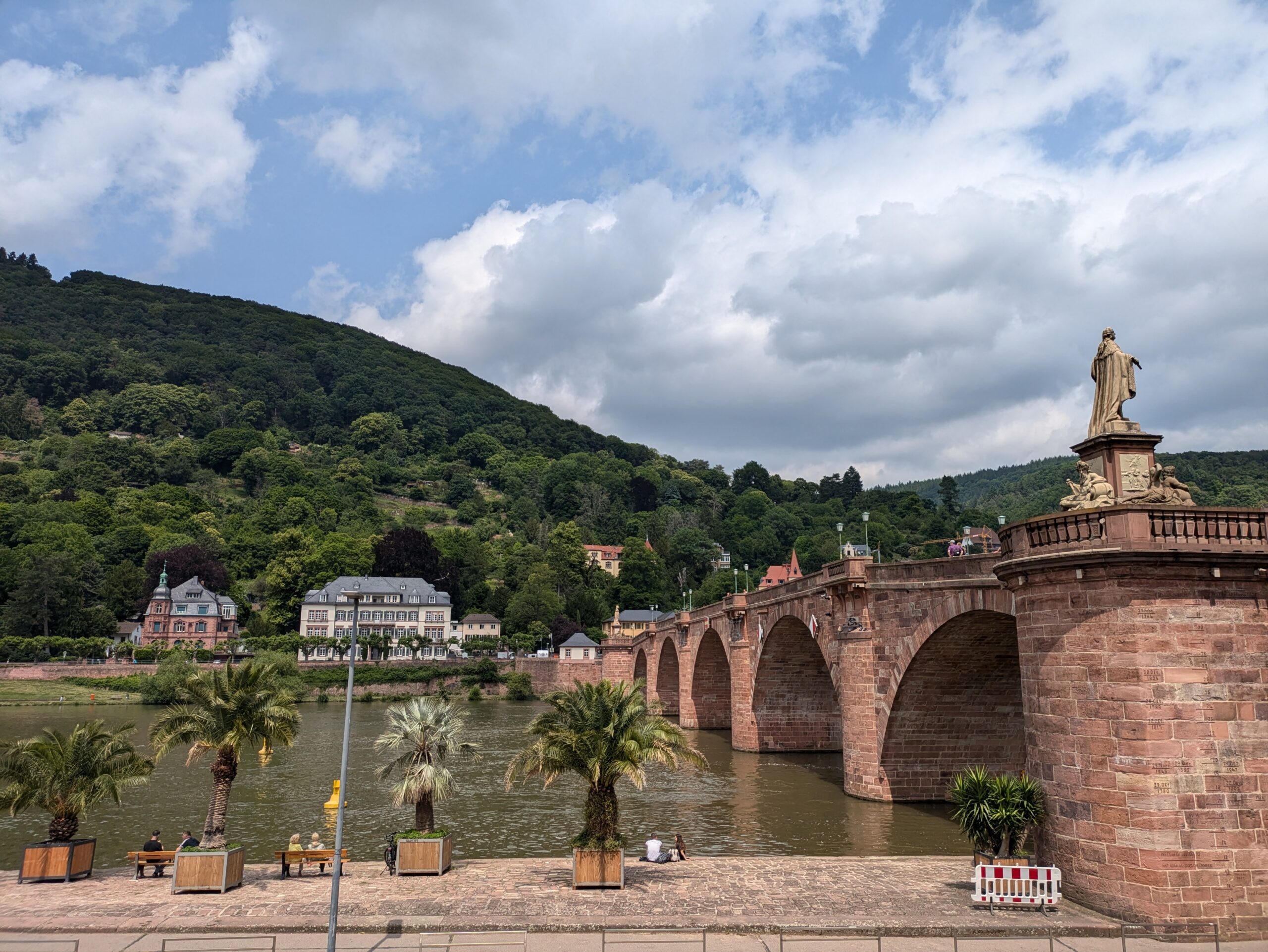
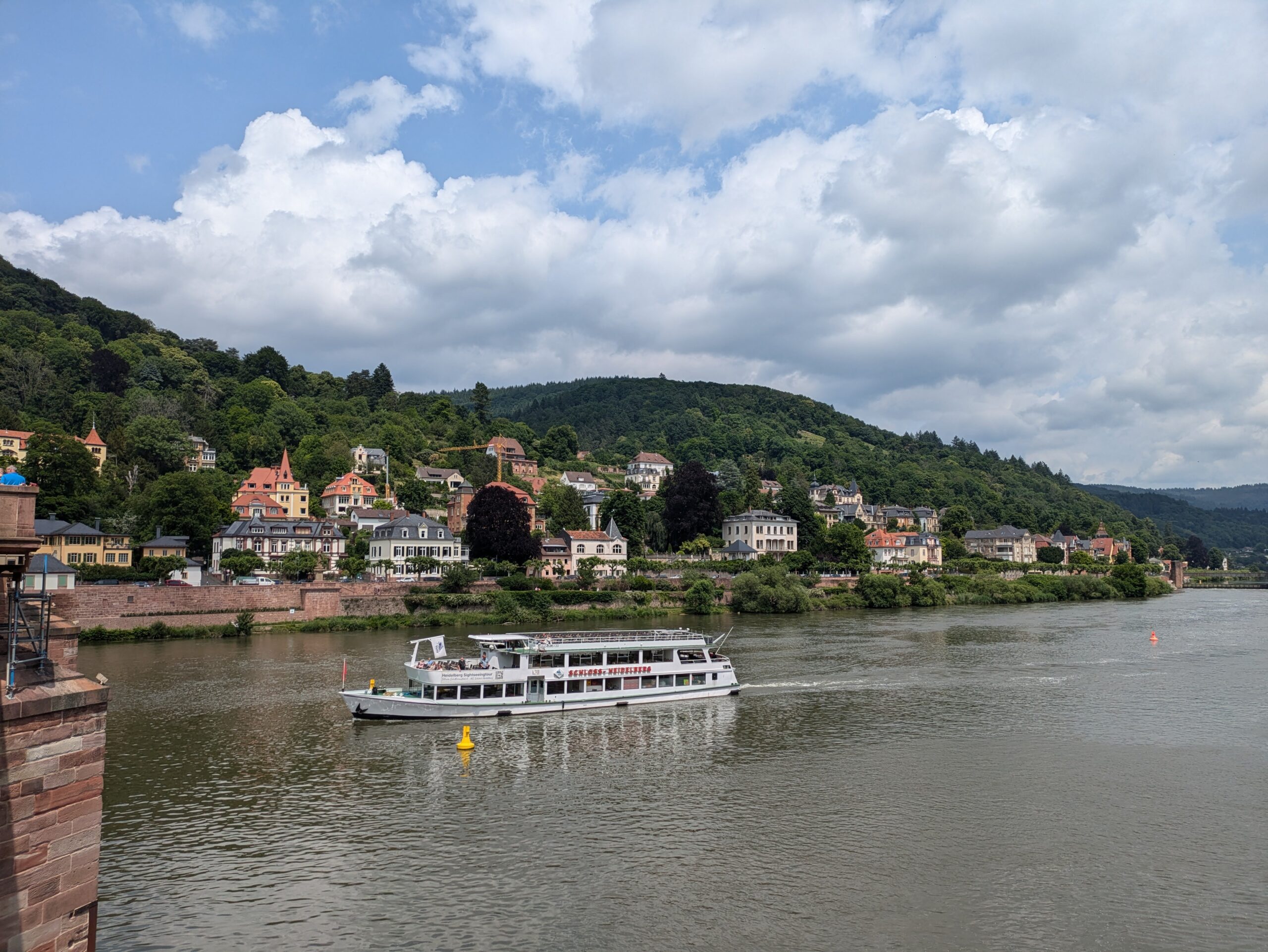
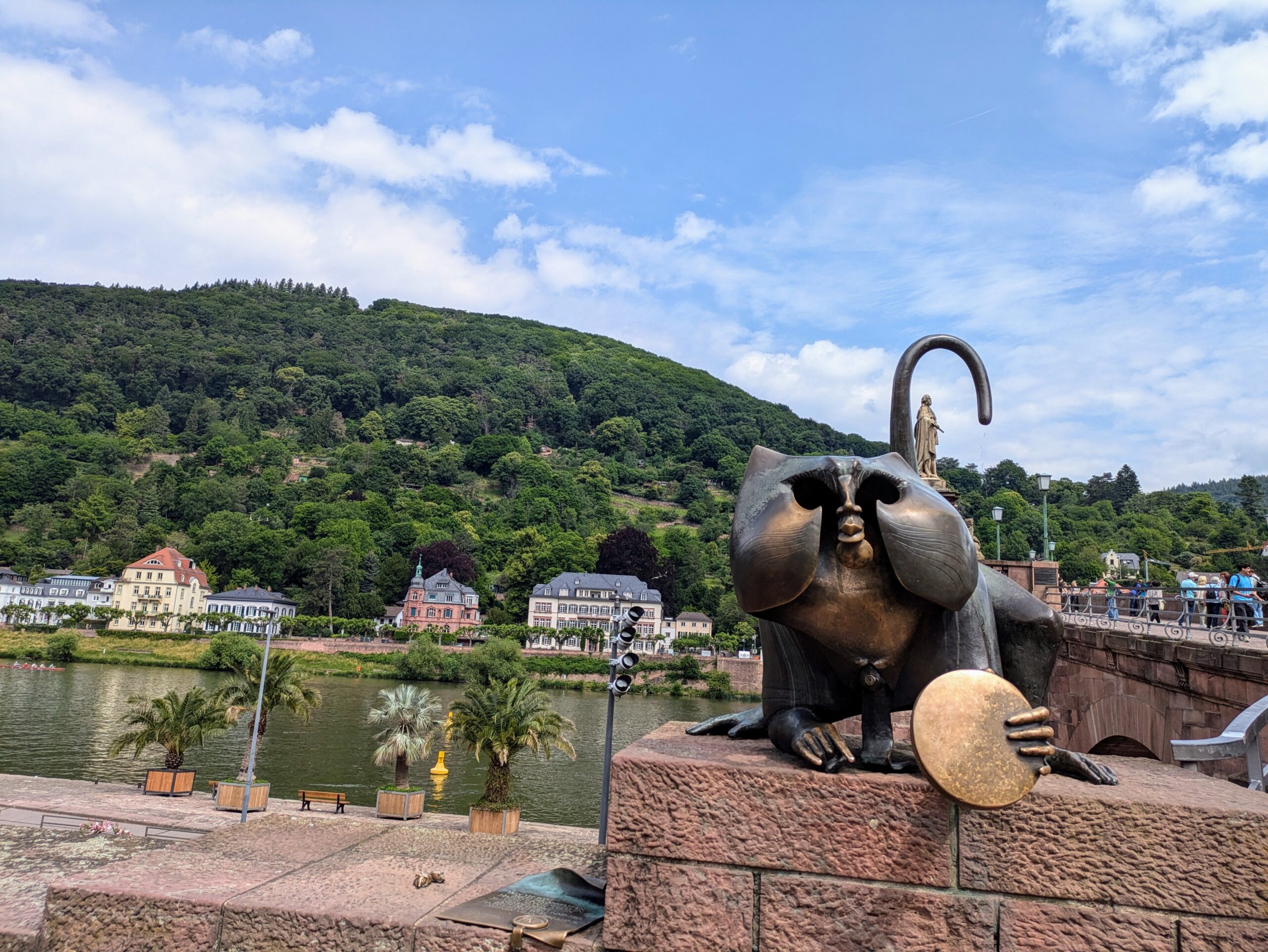
Made of Neckar Valley sandstone, the Alte Brucke (Old Bridge) was commissioned by Elector Karl Theodor in the 18th century. It’s technically the Karl Theodor Bridge but more commonly called the Old Bridge. It’s a great spot to view the riverfront, watch boats glide by and maybe see a swan or two.
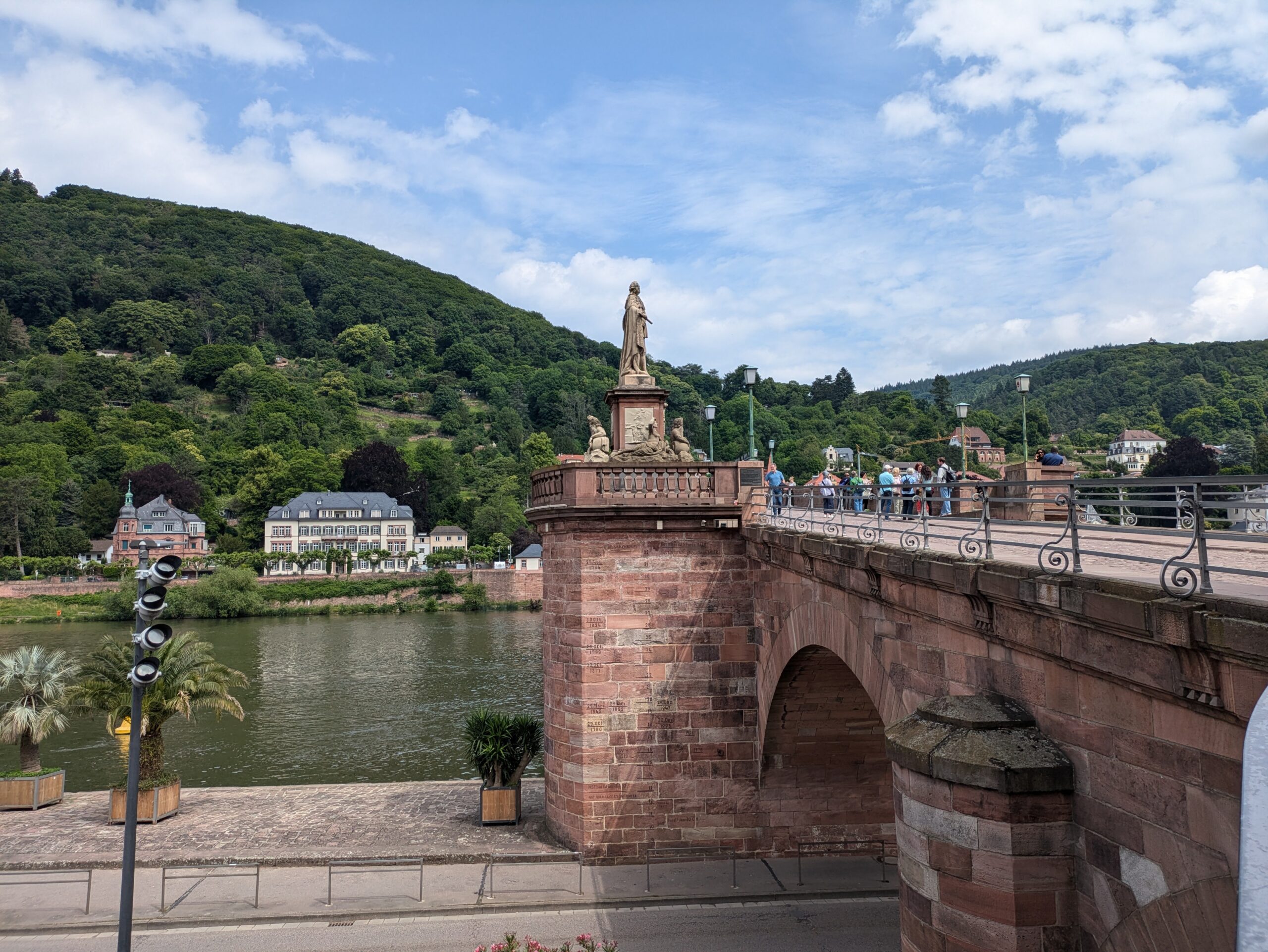
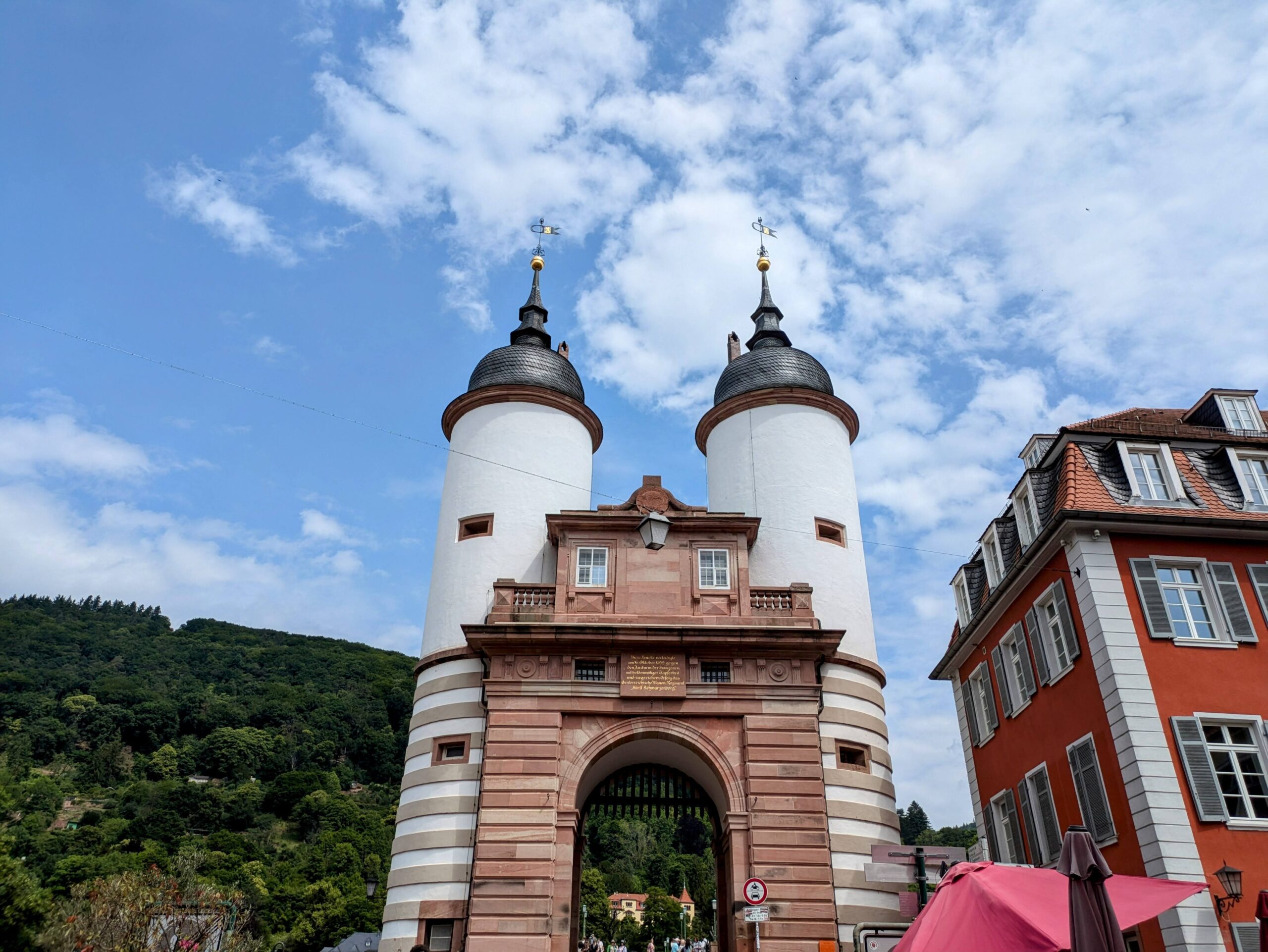
Don’t miss the monkey statue. There’s been one there since the 15th century. An original statue somehow went missing or was destroyed during the Nine Years’ War. The current statue has been there since 1979. Supposedly, rubbing the mirror held by the monkey brings good luck.
Hotel in Heidelberg
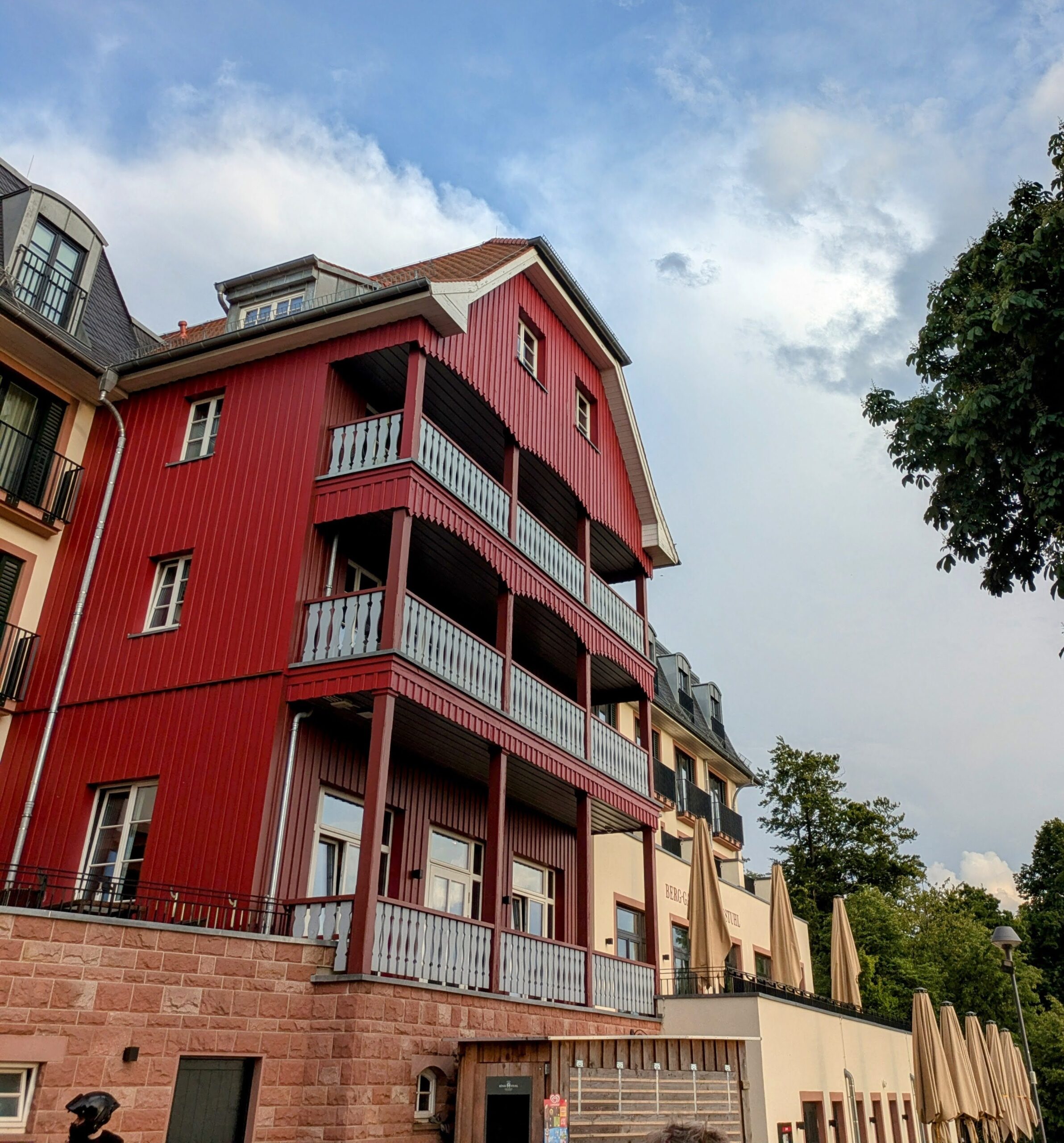
Berg-Gasthof Konigstuhl
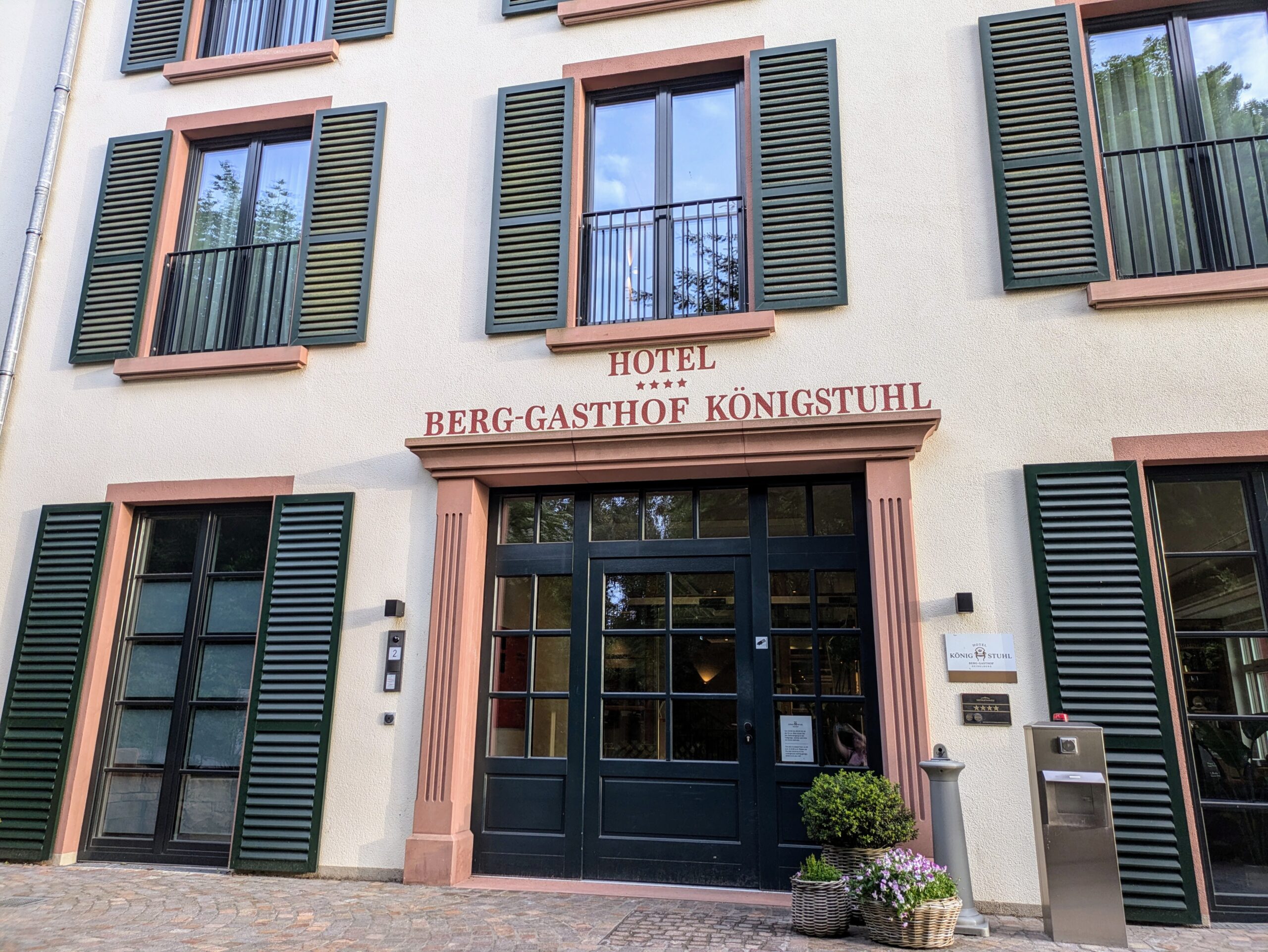
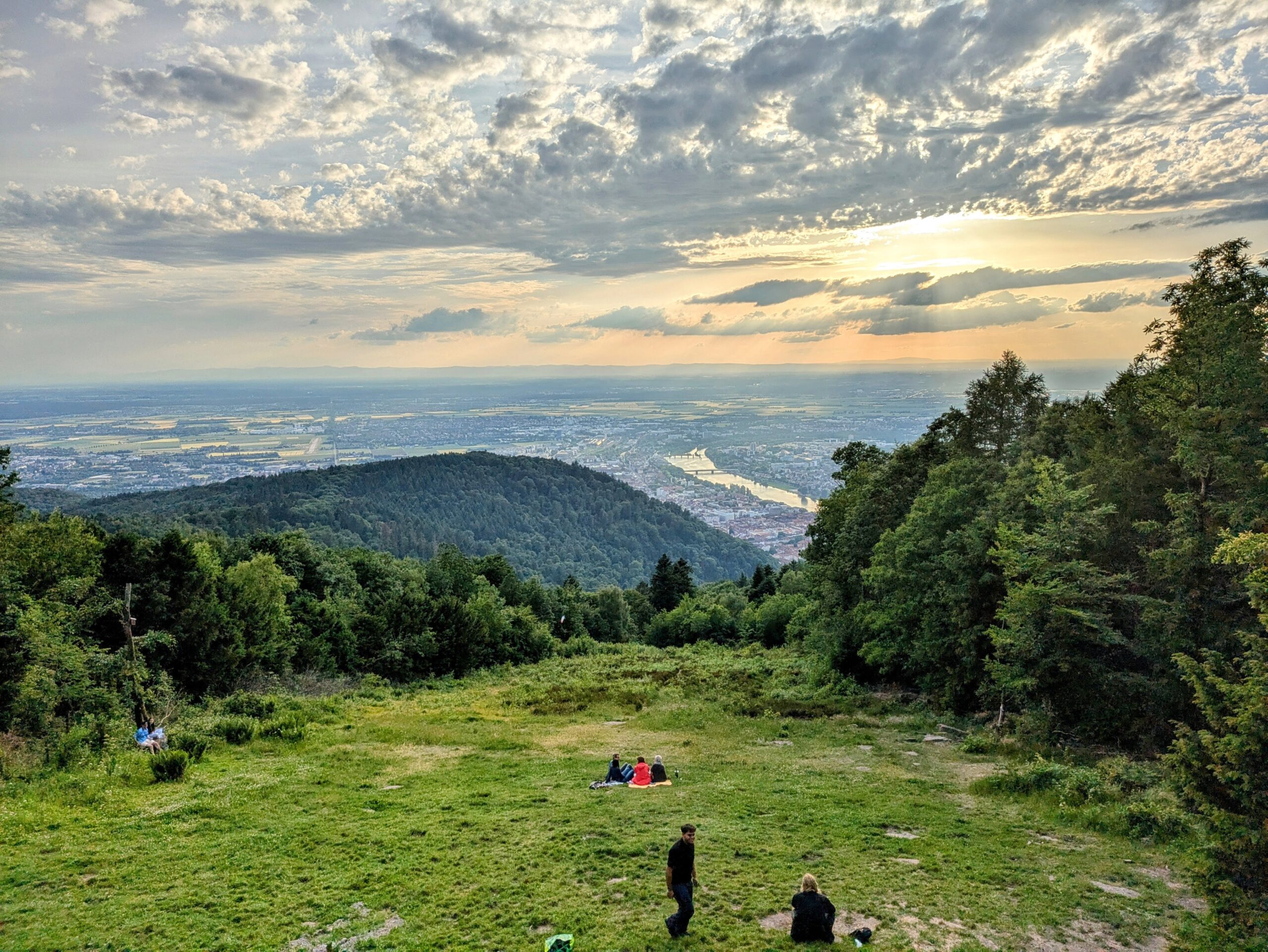
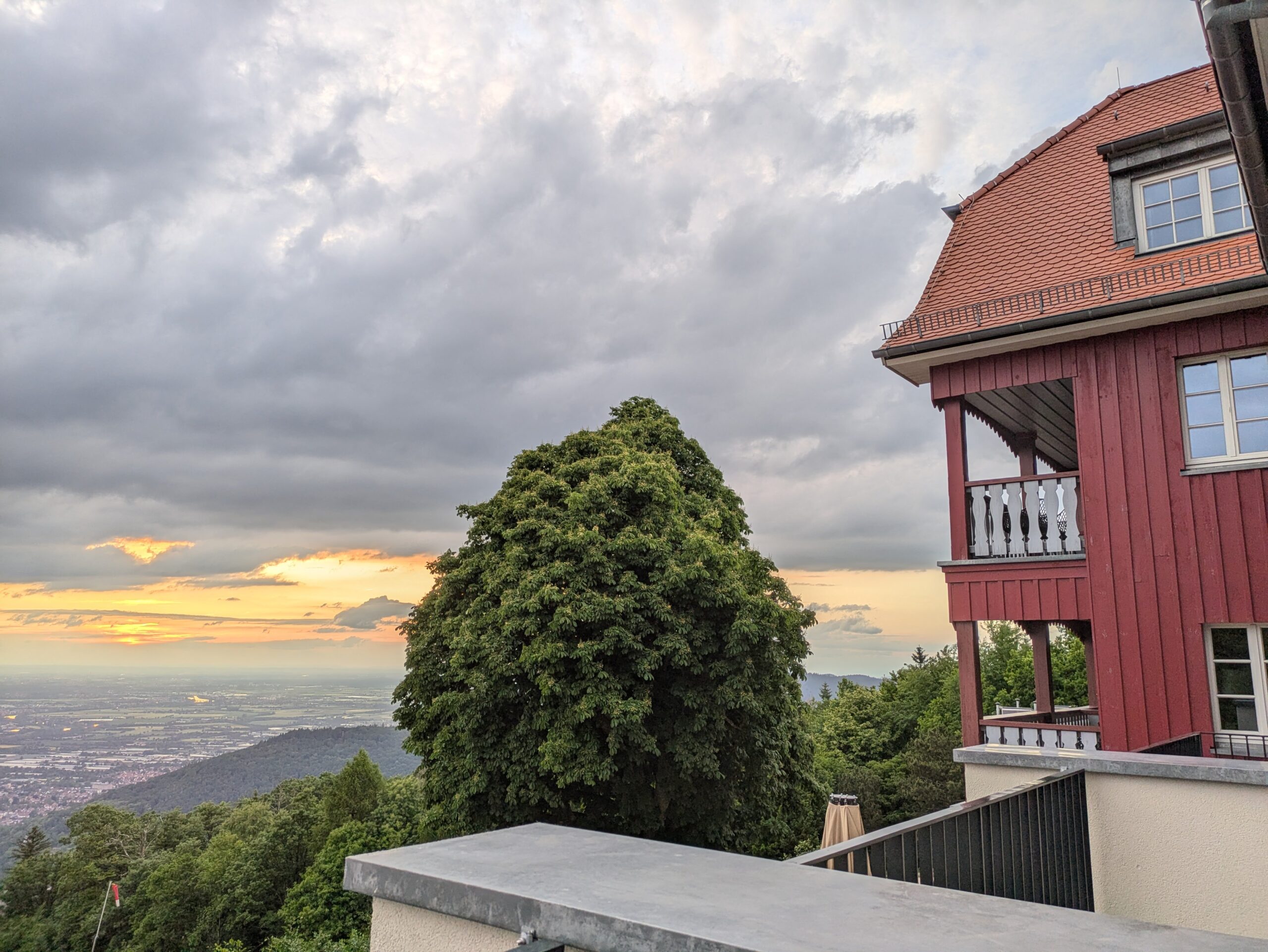
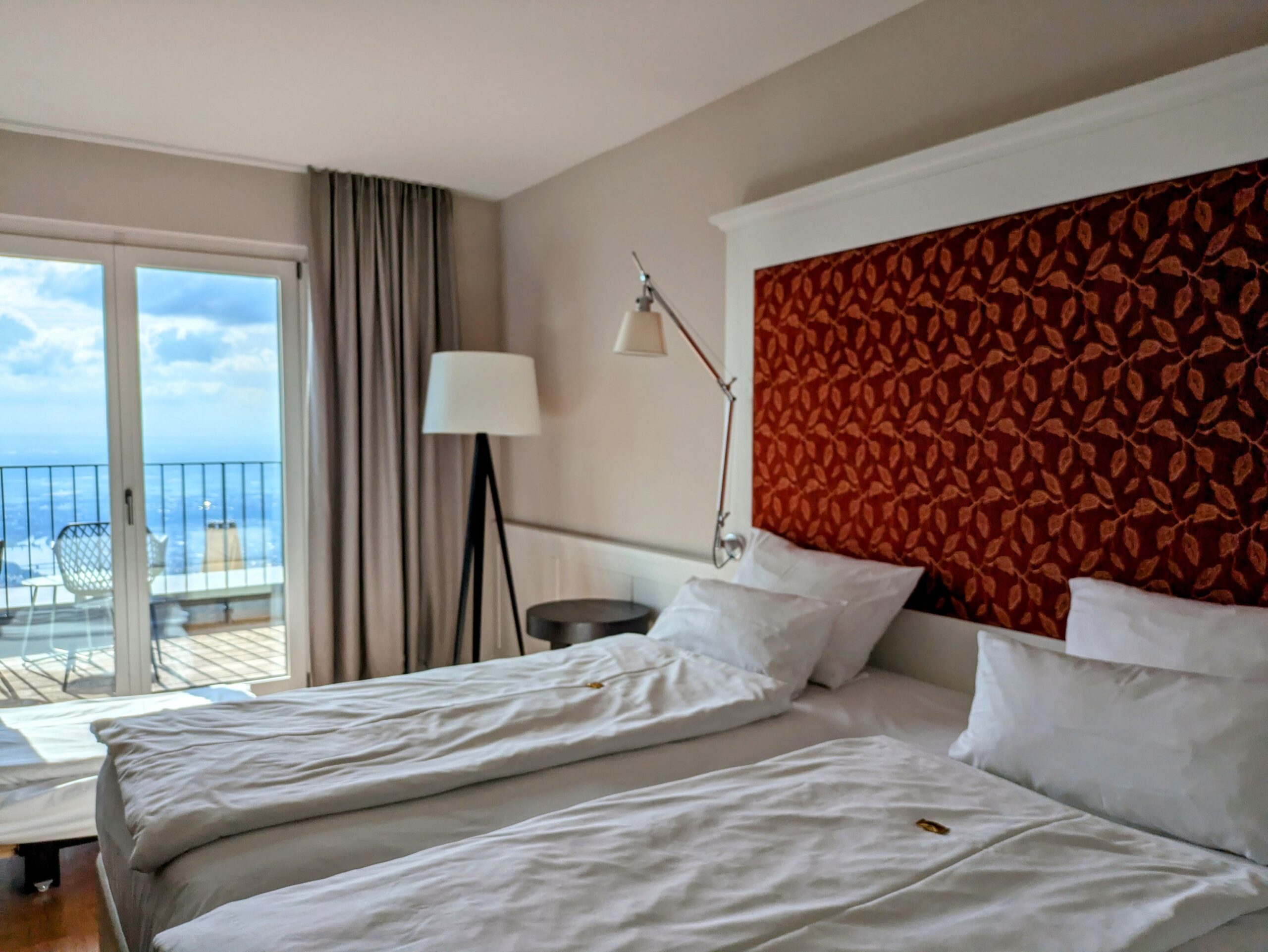
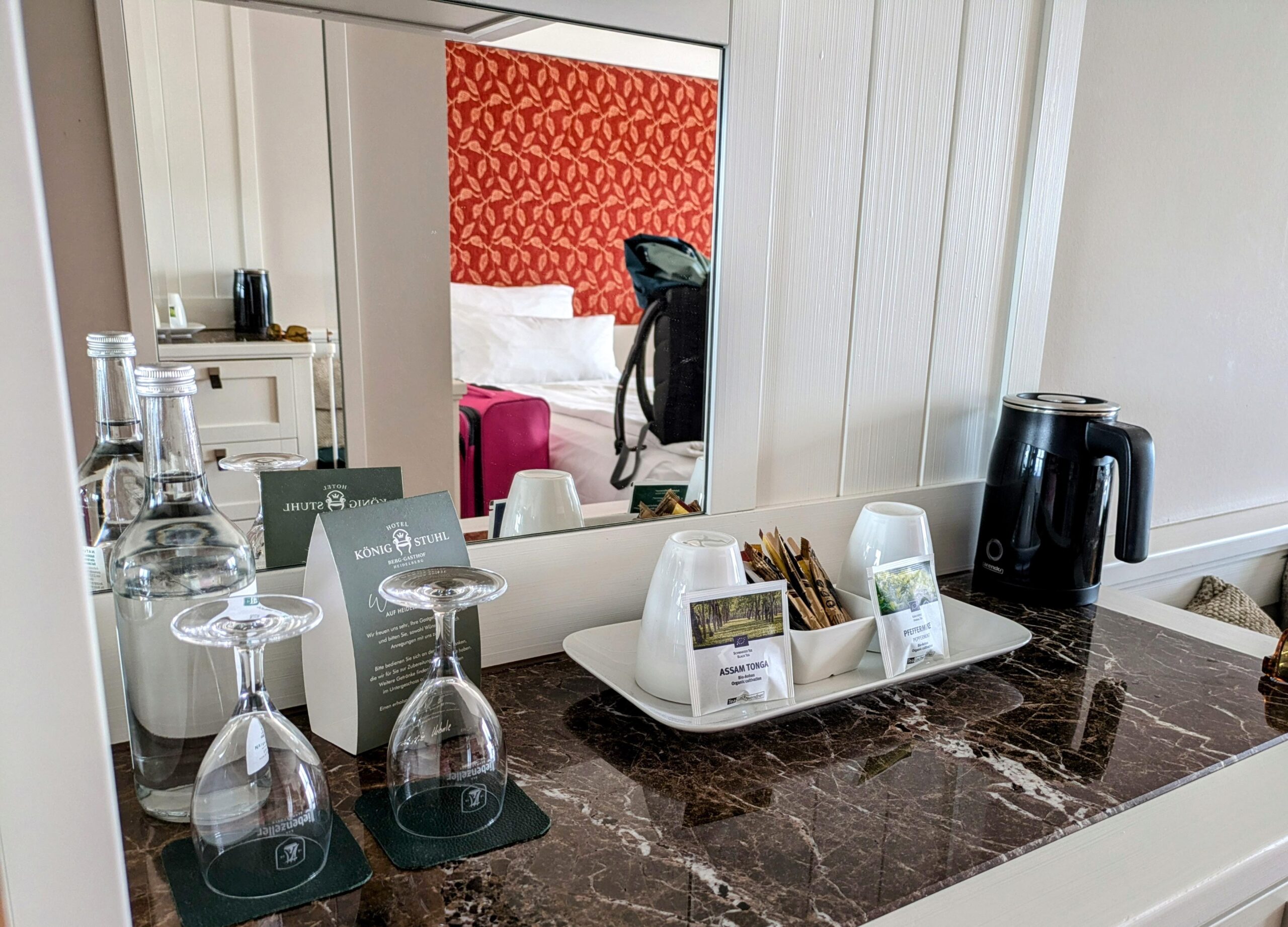
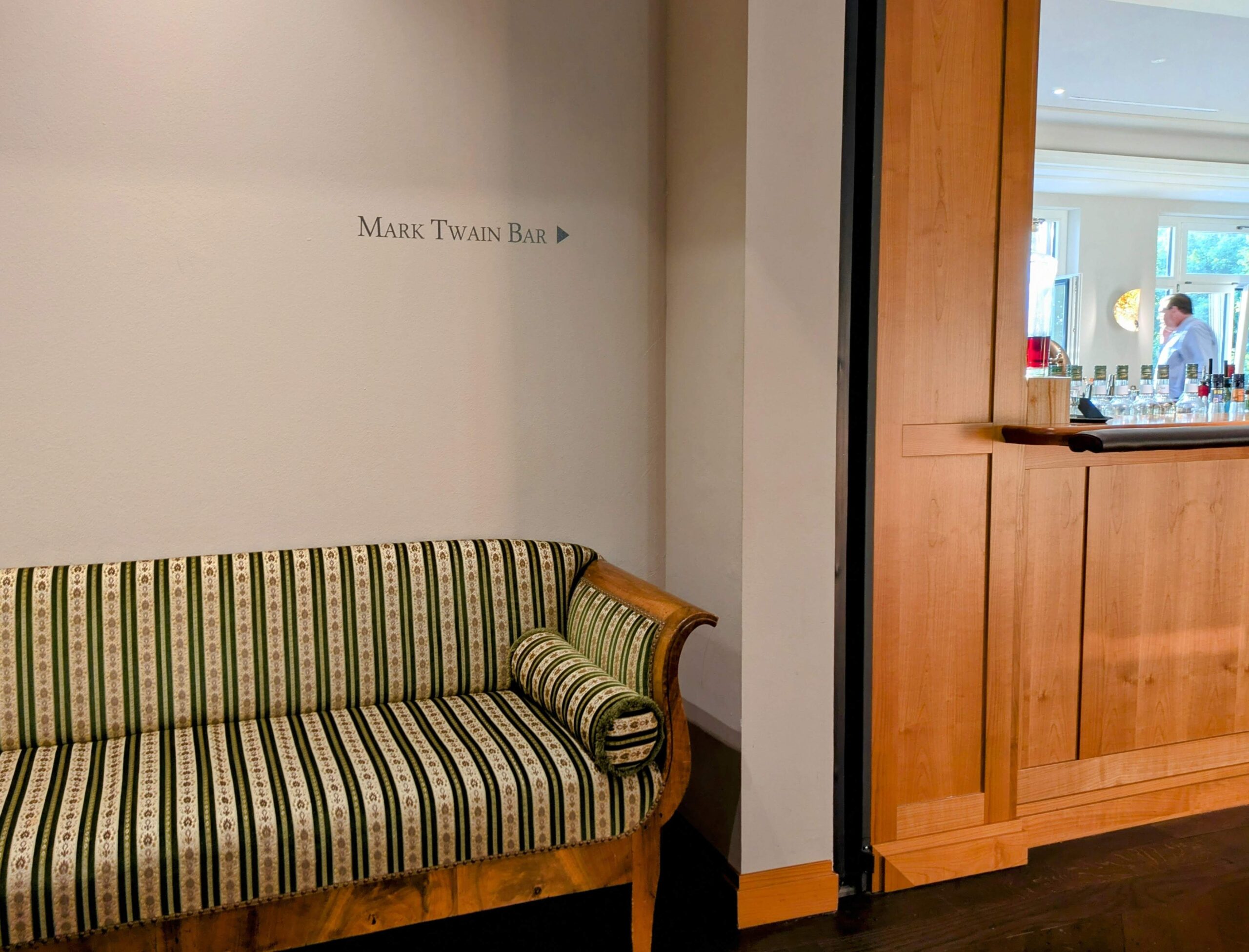
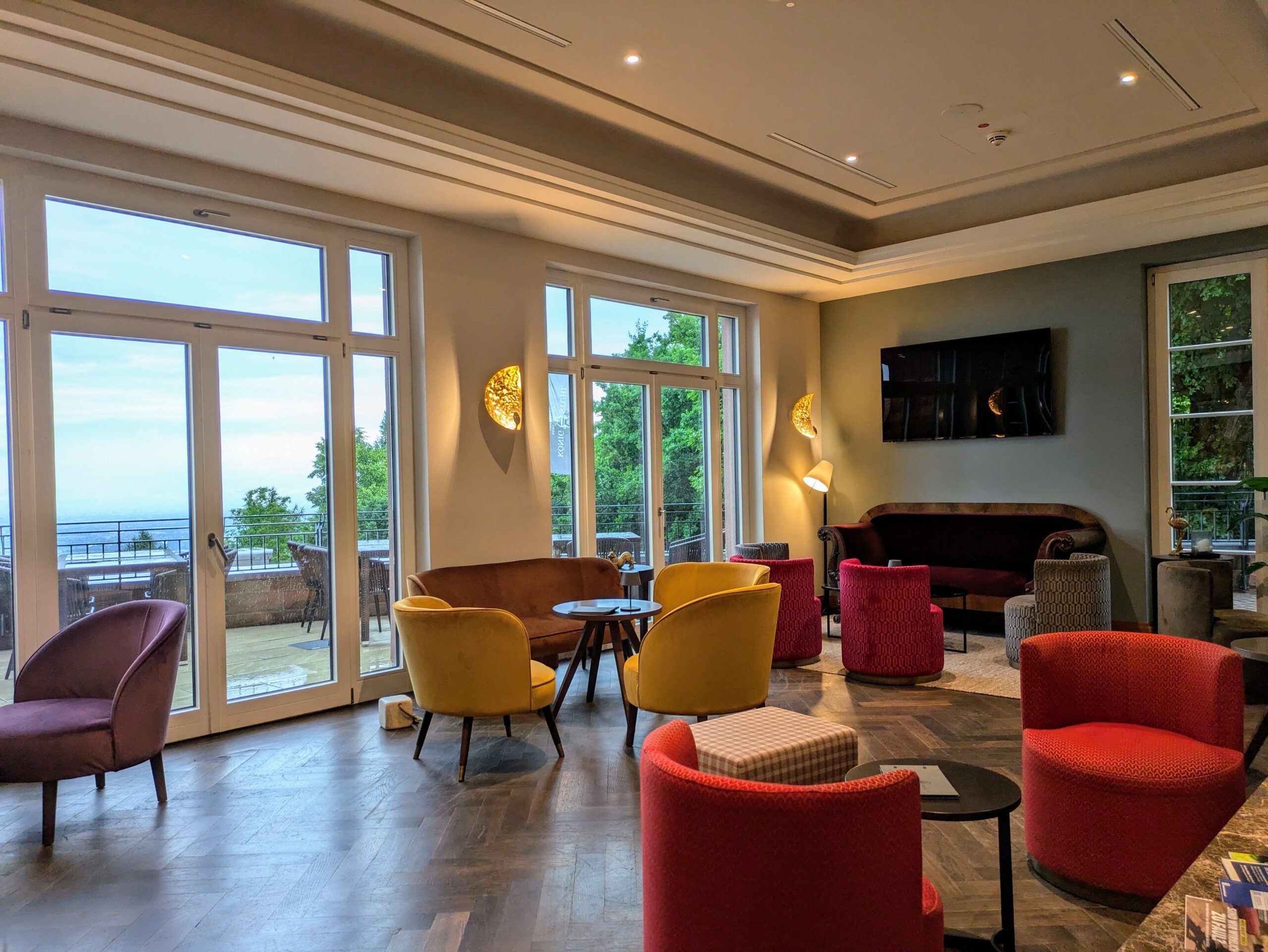
The Berg-Gasthof Konigstuhl looks out over the city’s red tile roofs and Neckar River (which is one of the reasons I chose it). We had a comfortable and spacious room with a balcony overlooking the river and Heidelberg. There’s a bar, a restaurant, a lounge area and outdoor gathering areas. Breakfast is available for an additional fee. The funicular is a quick walk away (hotel guests get a discount).
Dining in Heidelberg
Bergstube
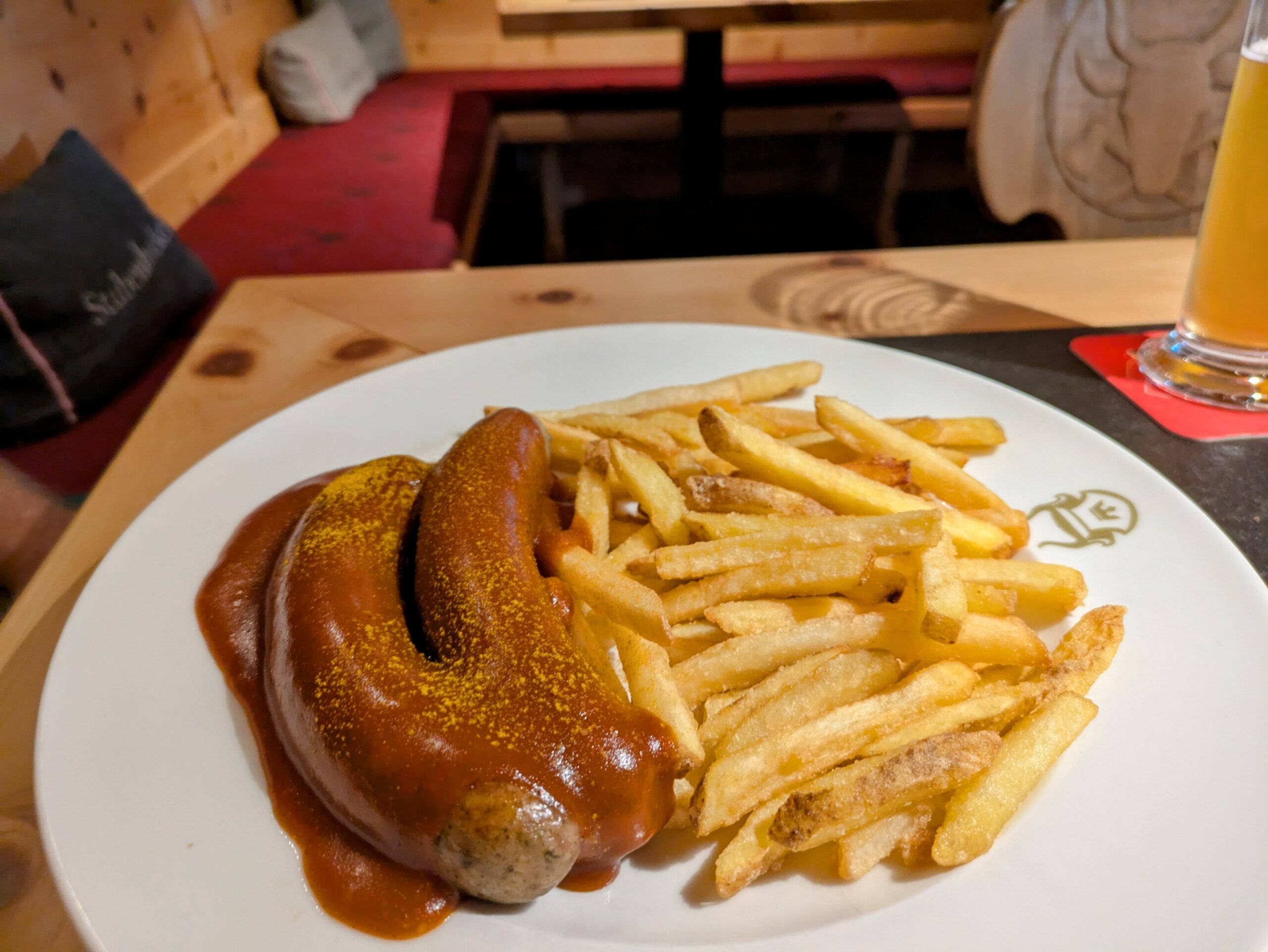
The Berg-Gasthof Konigstuhl’s restaurant, the Bergstube (which means “mountain parlor”), became our favorite dining spot. Choices ranged from German ravioli, wiener schnitzel and currywurst to a delicious pretzel board with cheese and venison sausage and a sweet potato topped with spring greens.
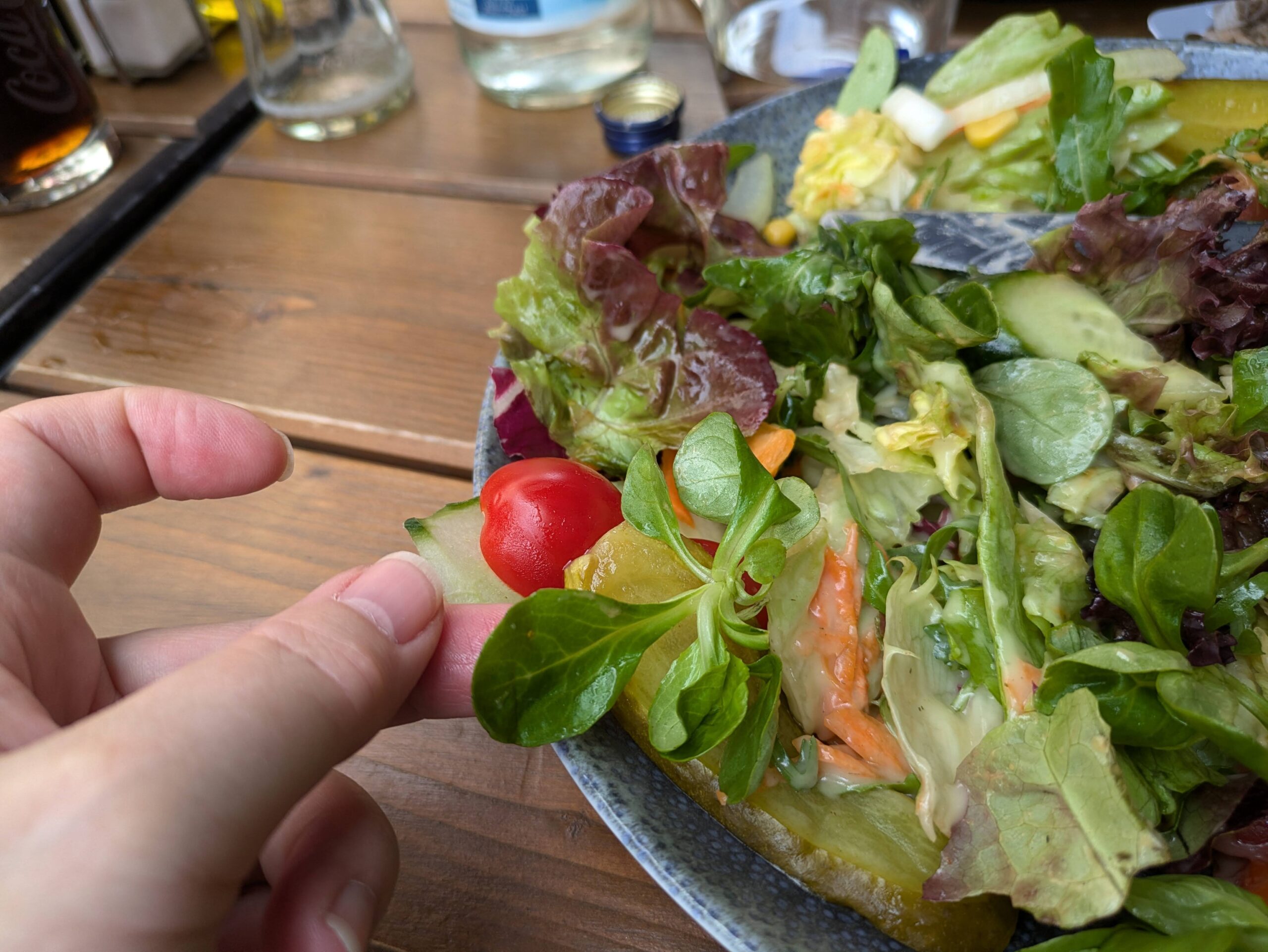
One thing you’ll discover about German cuisine is that, while utterly delicious, there’s a heavy influence of meat and potatoes. By this leg of our journey, I was looking at the salad section of every menu. I discovered the crisp and refreshing use of what’s known as “lamb’s lettuce” (also called Rapunzel lettuce, mache or corn salad). Endive, butterhead and wild herbs are also used to make refreshing salads.
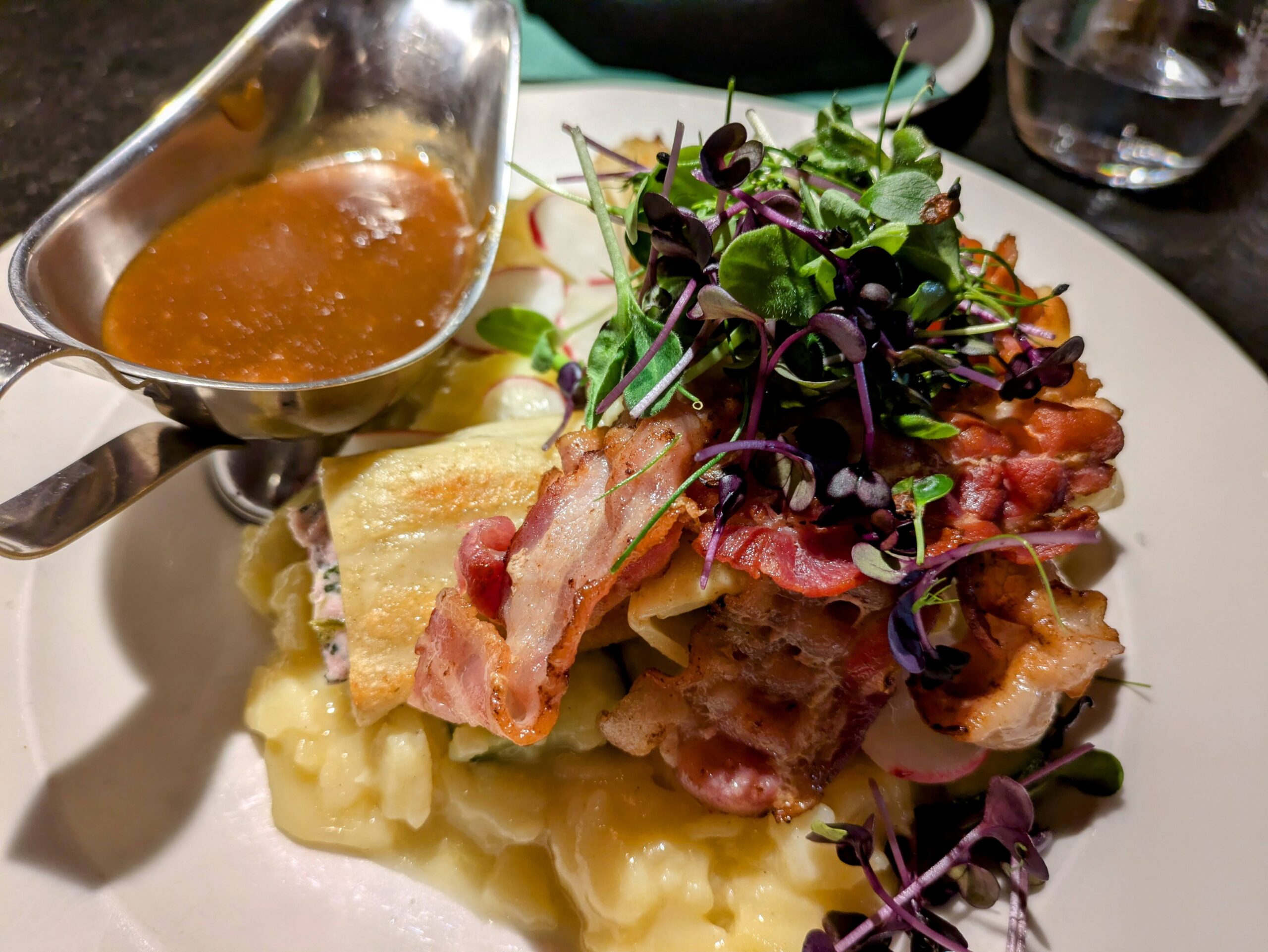
Now for the sweets! In addition to carrot cake and a few other traditional desserts, the Frankfurter kranz (German crown cake) remains high on our list of favorites. Originating in Frankfurt, this round bundt-type cake gets its name from its crown shape. It’s made with three layers of sponge cake, filled with raspberry jam and German buttercream and then sprinkled with krokant (caramel-covered nut brittle).
Brasserie
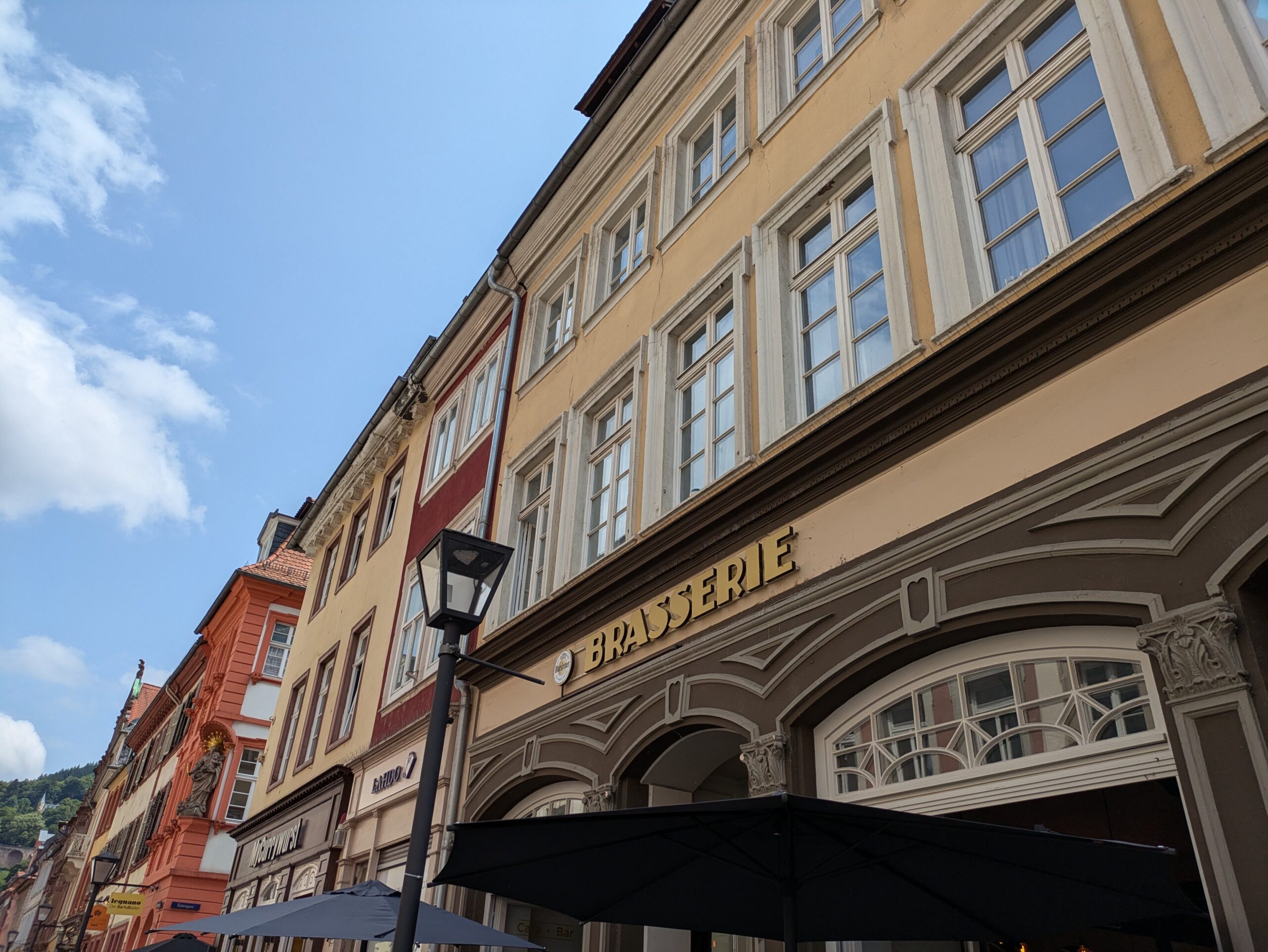
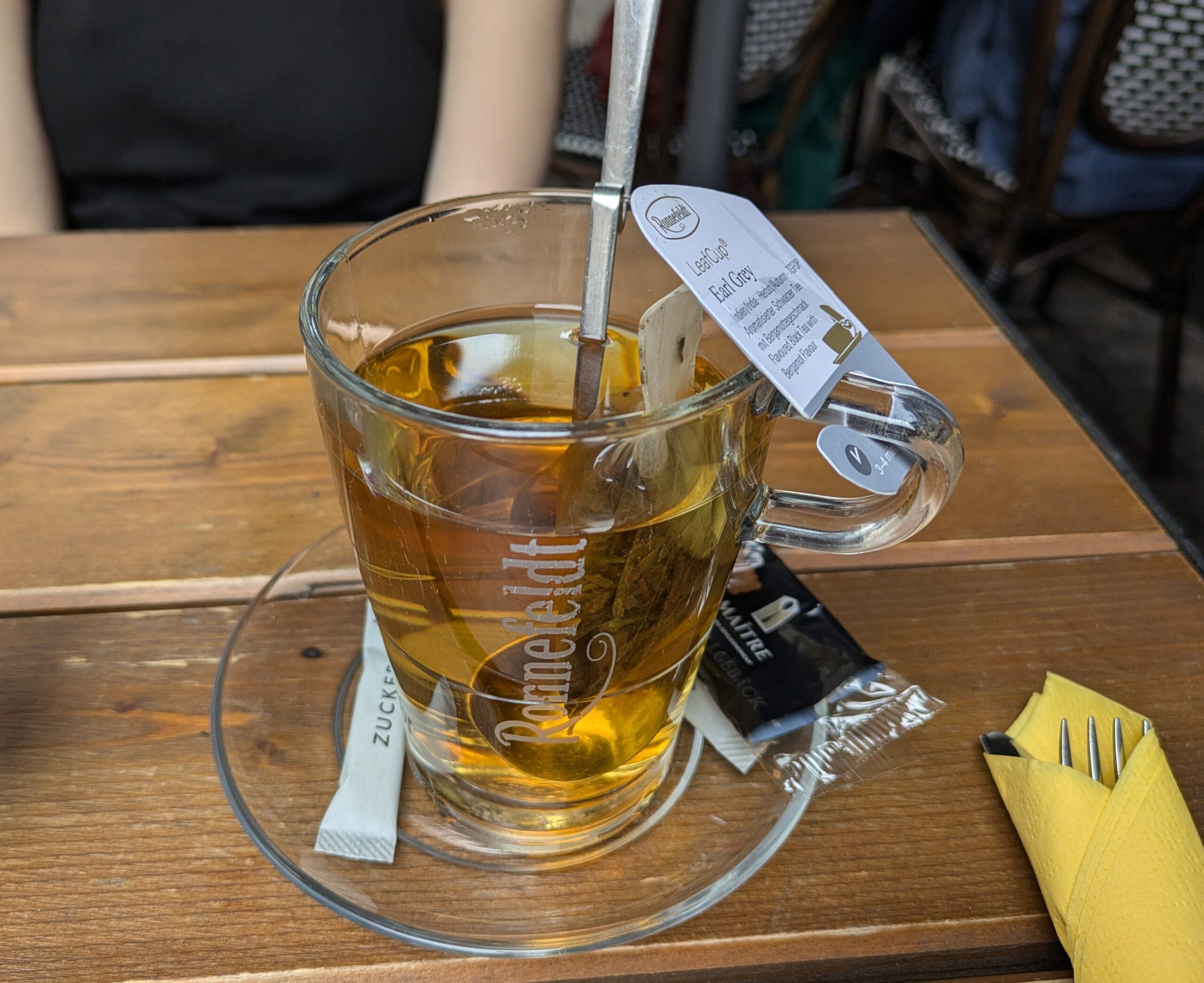
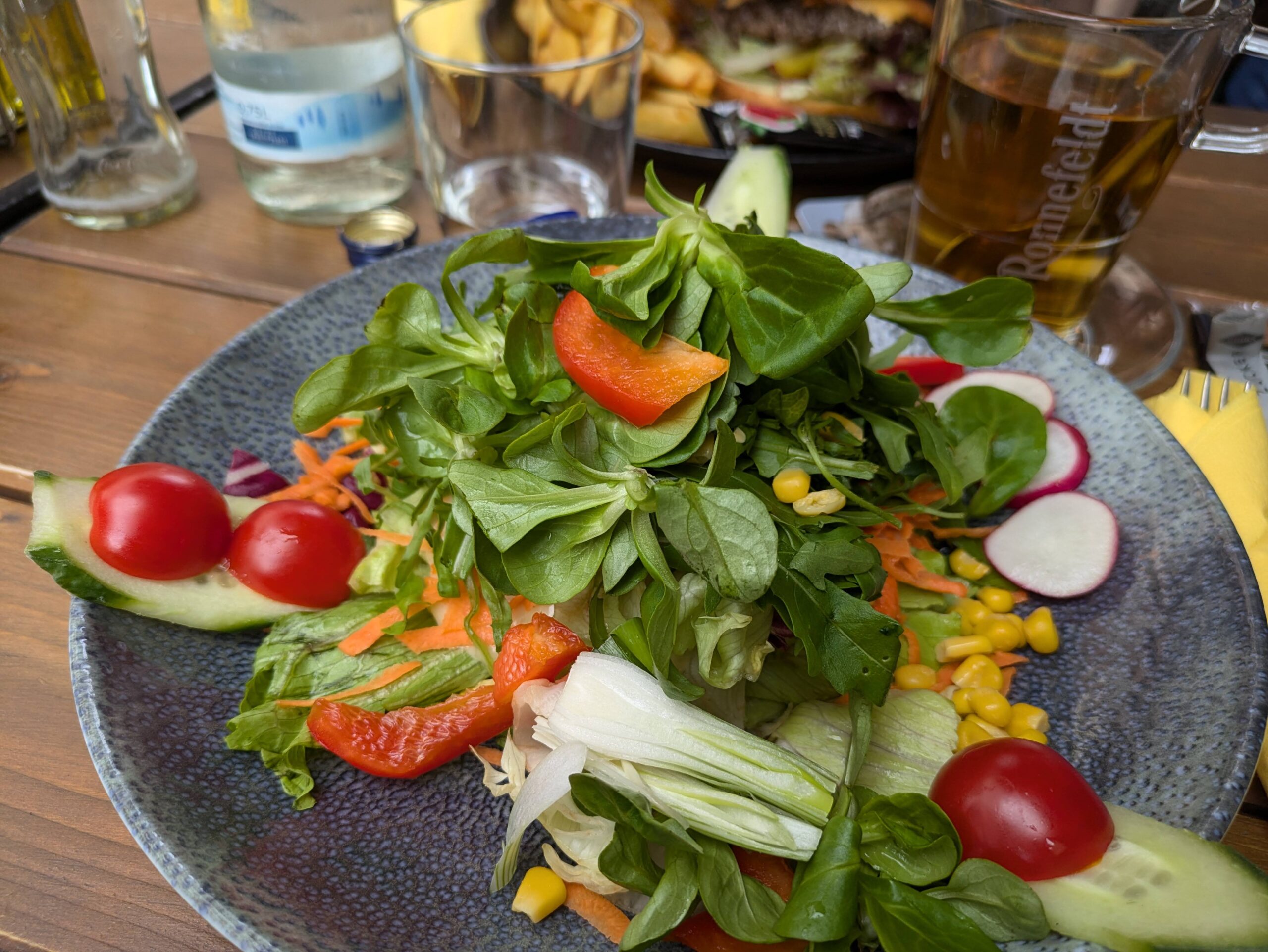
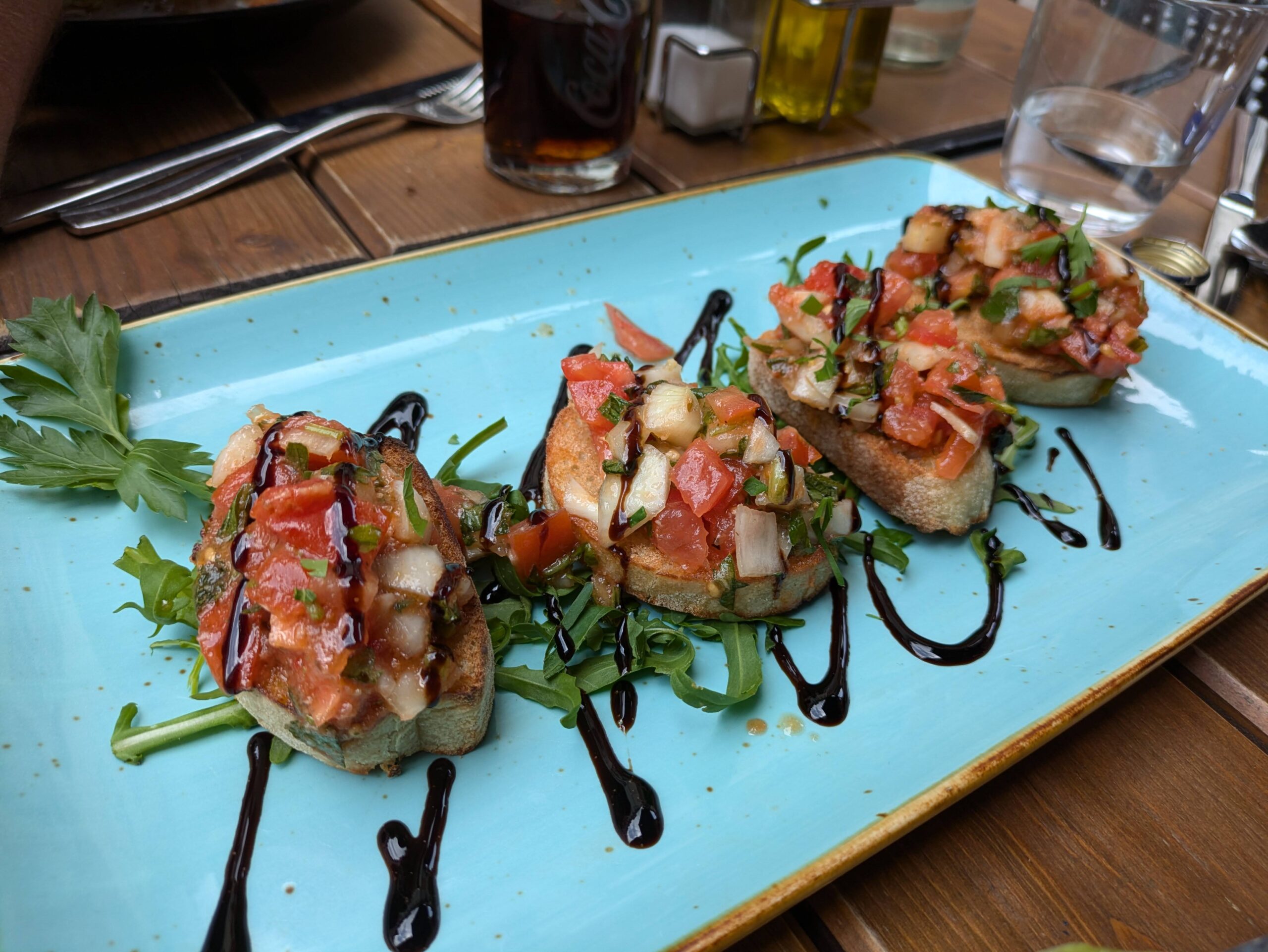
Brasserie is another outdoor dining experience in Heidelberg. There’s an indoor dining area as well. I had a lovely cup of tea, a spring salad and bruschetta.
Puro Gelato
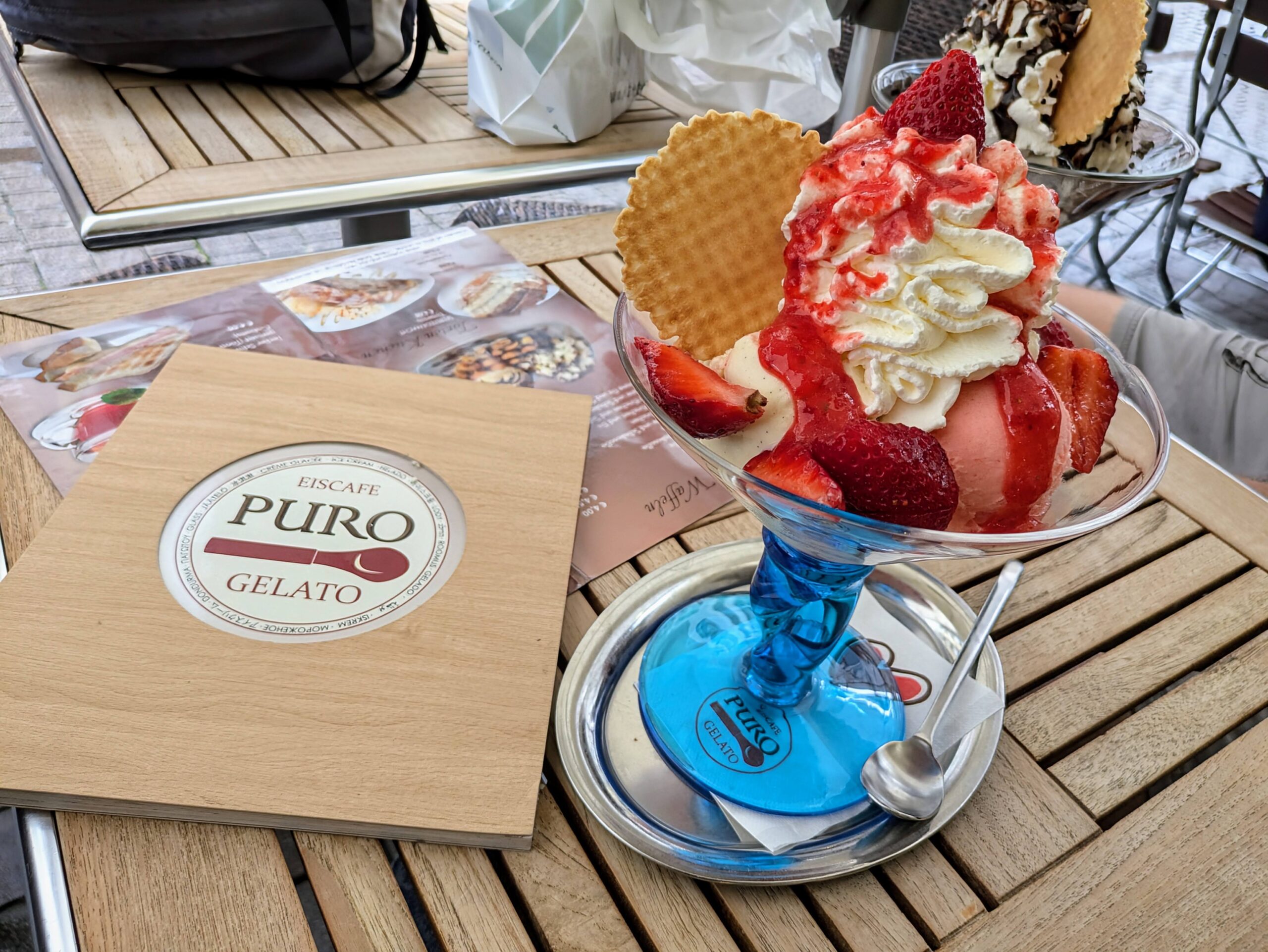
What could possibly be more European than sitting at an outdoor table sipping wine? Sitting at an outdoor table eating the most delicious ice cream Sundaes ever. I had slipped off to check out a shop and returned to find my two companions at Puro Gelato.
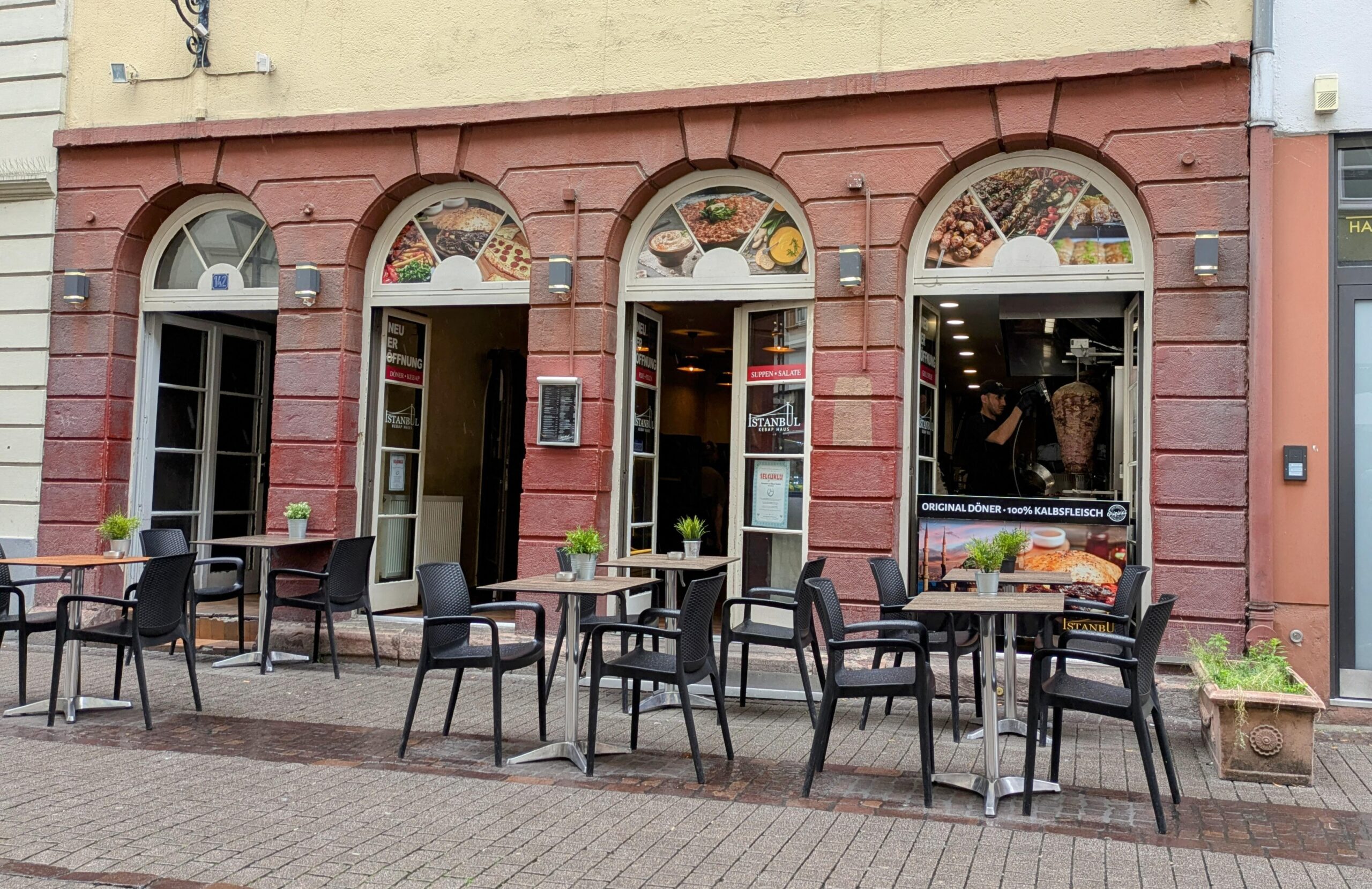
We entertained ourselves by watching a butcher shave meat from a side of beef at the Turkish kebab spot across the street. It made us wish we hadn’t indulged in the ice cream quite as much. Next time!
Vetter’s Alt-Heidelberger Brauhaus
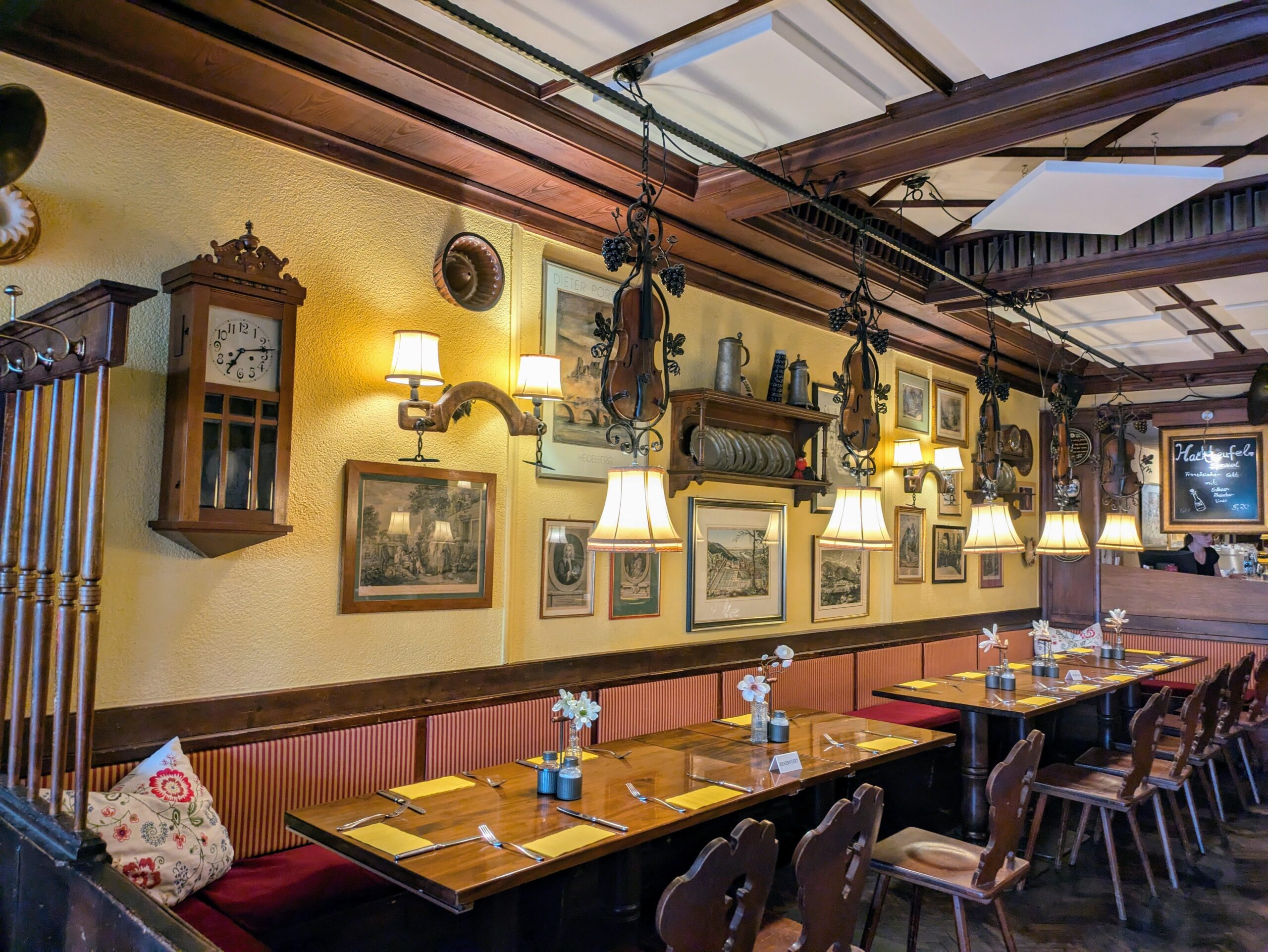
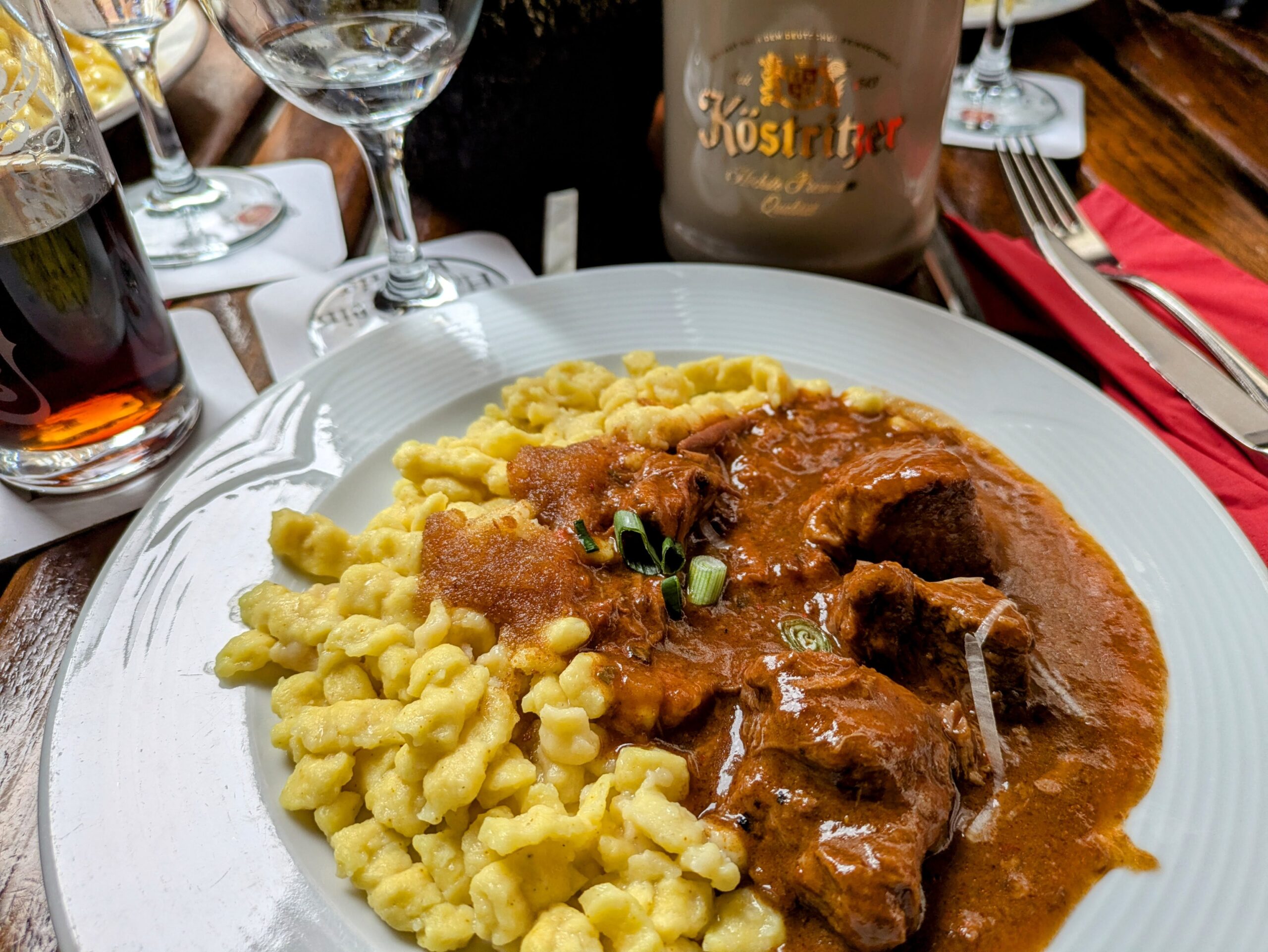
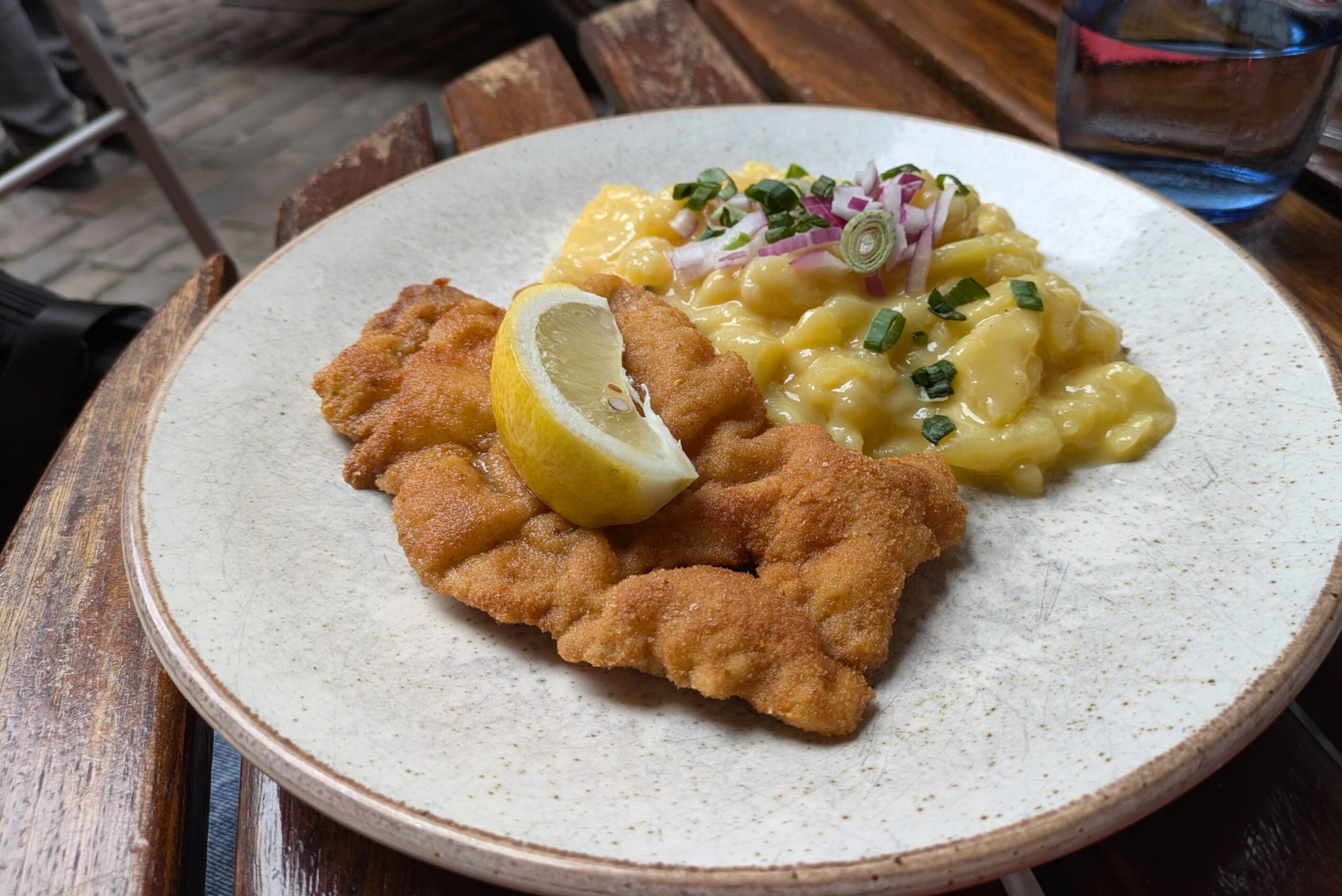
Another outdoor dining experience (for us, there is indoor dining), Vetter’s Alt Heidelberger Brauhaus serves traditional German cuisine and fresh brewed beer alongside the shops and narrow alleyways of Old Town. We had pork schnitzel, spaetzle and goulash.
Clausthal-Zellerfeld
Since it’s about a 6.5-hour drive from Heidelberg to Berlin, we decided to break it up by stopping in Clausthal-Zellerfeld, in the Bad Grund/Harz area of the Harz Mountains in Lower Saxony. I mentioned my German heritage in my other post. I chose this region as a layover because some of my ancestors came from the area. I wish I’d had enough time to really explore and do more in-depth genealogy, but we can’t always fit everything in. Hopefully, I can get back to explore and learn more.
Known for the Technical University of Clausthal, this former mining town (mining ended in the ‘30s) is a hub for outdoor recreation in Harz National Park. The weather was on the rainy side during our stay, and there wasn’t much going on in town. We decided this was a great reason to just relax and slow down. I can see how the small town can turn into a lively flurry of outdoor activity during non-rainy weather days.
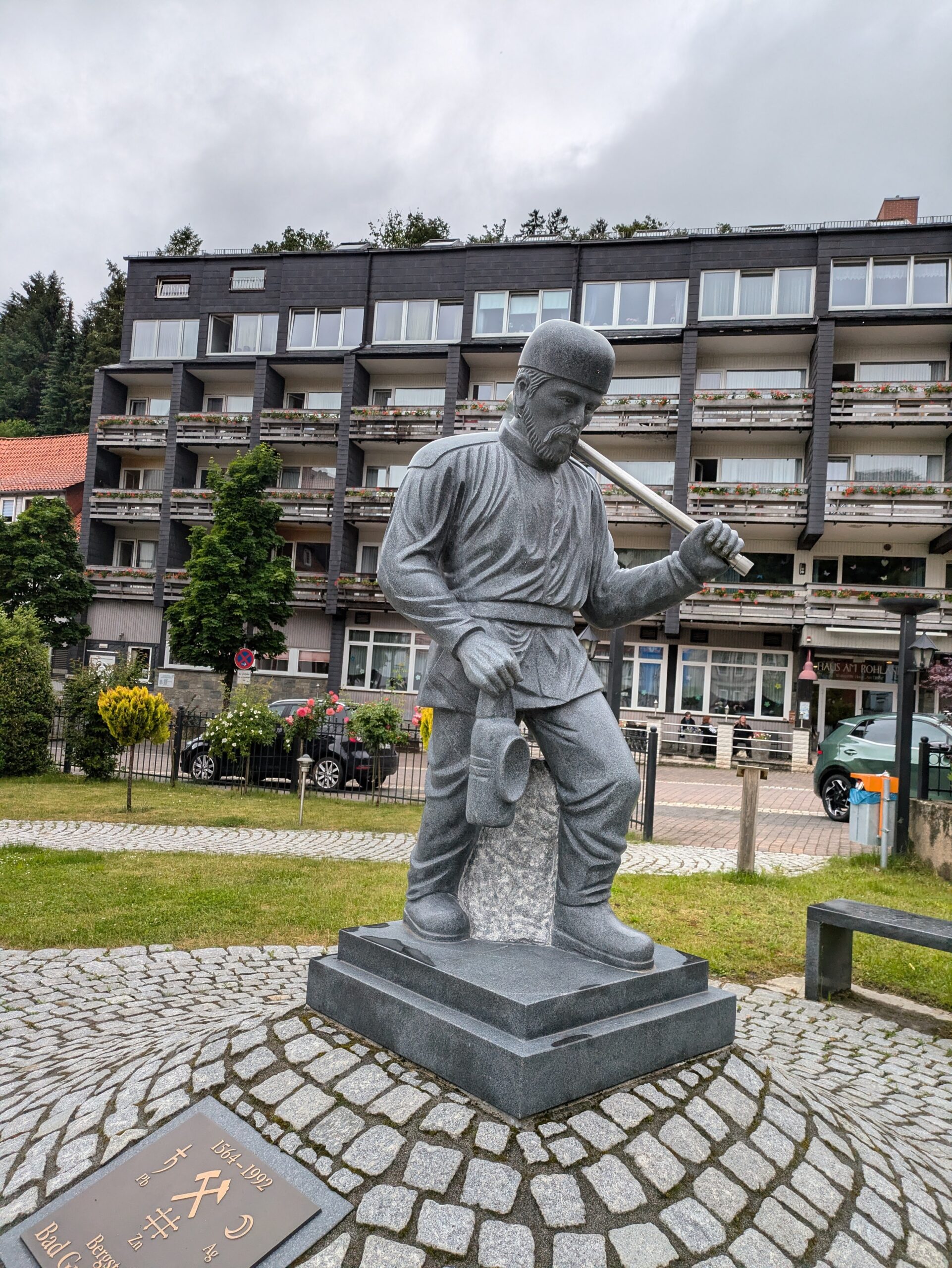
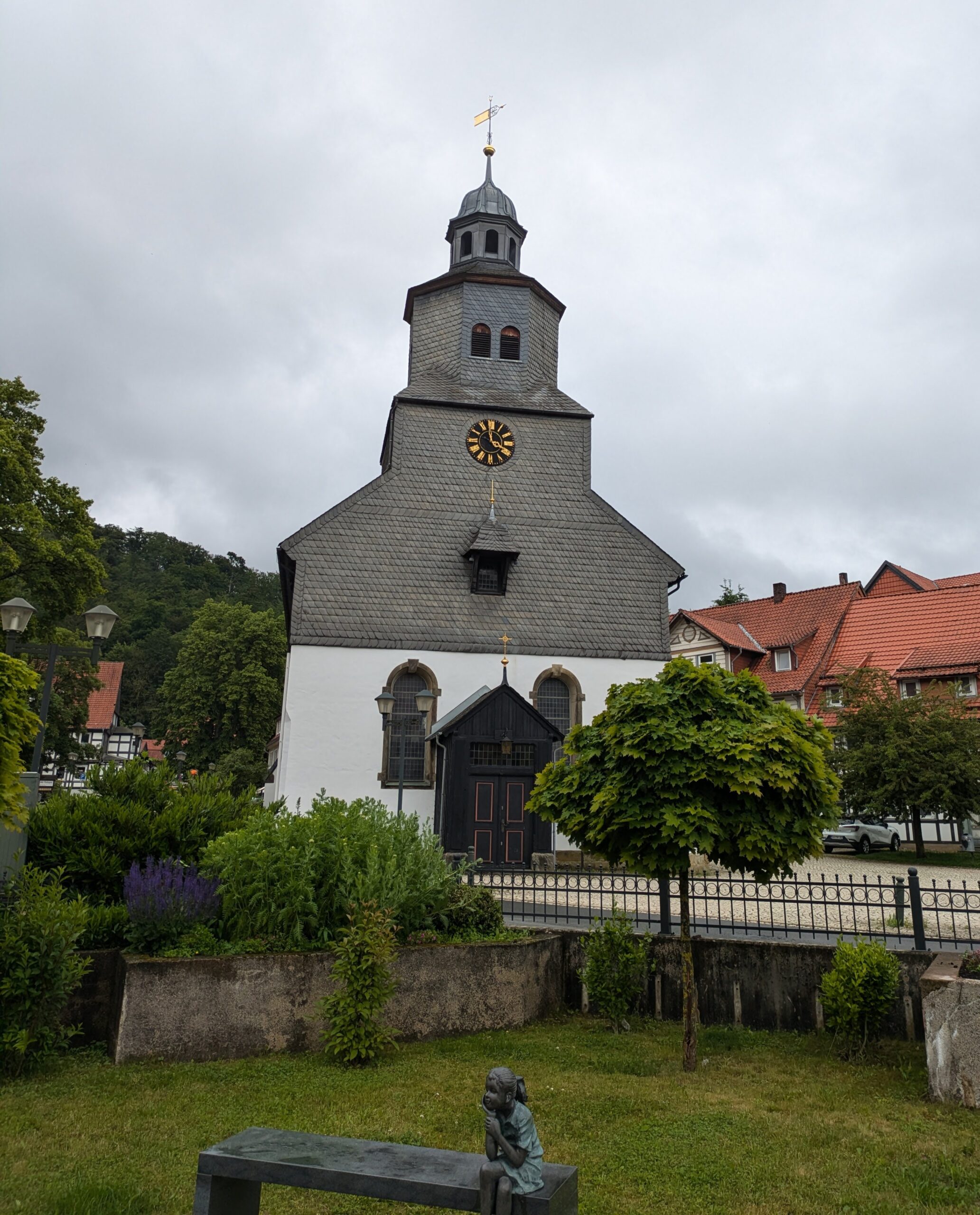
Bad Grund is one of the oldest mining towns in the region, and you can find remnants of its heritage around the area. The Skulptur Bergmann (miner statue) depicts a miner in traditional attire and gear. The statue honors miners and mines in the area, including the nearby Eisenberg Mine. This was interesting for me to learn since I come from a mining area in Western Maryland, and my maiden name is Eisentrout (“iron tracks”). After checking out the statue, check out the Baroque architecture of the Protestant St. Antonius Church.
Other Sites near Clausthal-Zellerfeld
- Marktkirche zum Heiligen Geist (Market Church of the Holy Spirit) – Baroque church constructed in 1637 and one of the world’s largest wooden churches
- Upper Harz Mining Museum
- Marienburg Castle
- Gustav Stave Adolf Church
- Harz National Park
Hotel in Clausthal-Zellerfeld
Hotel Pension am Kurmitelhaus
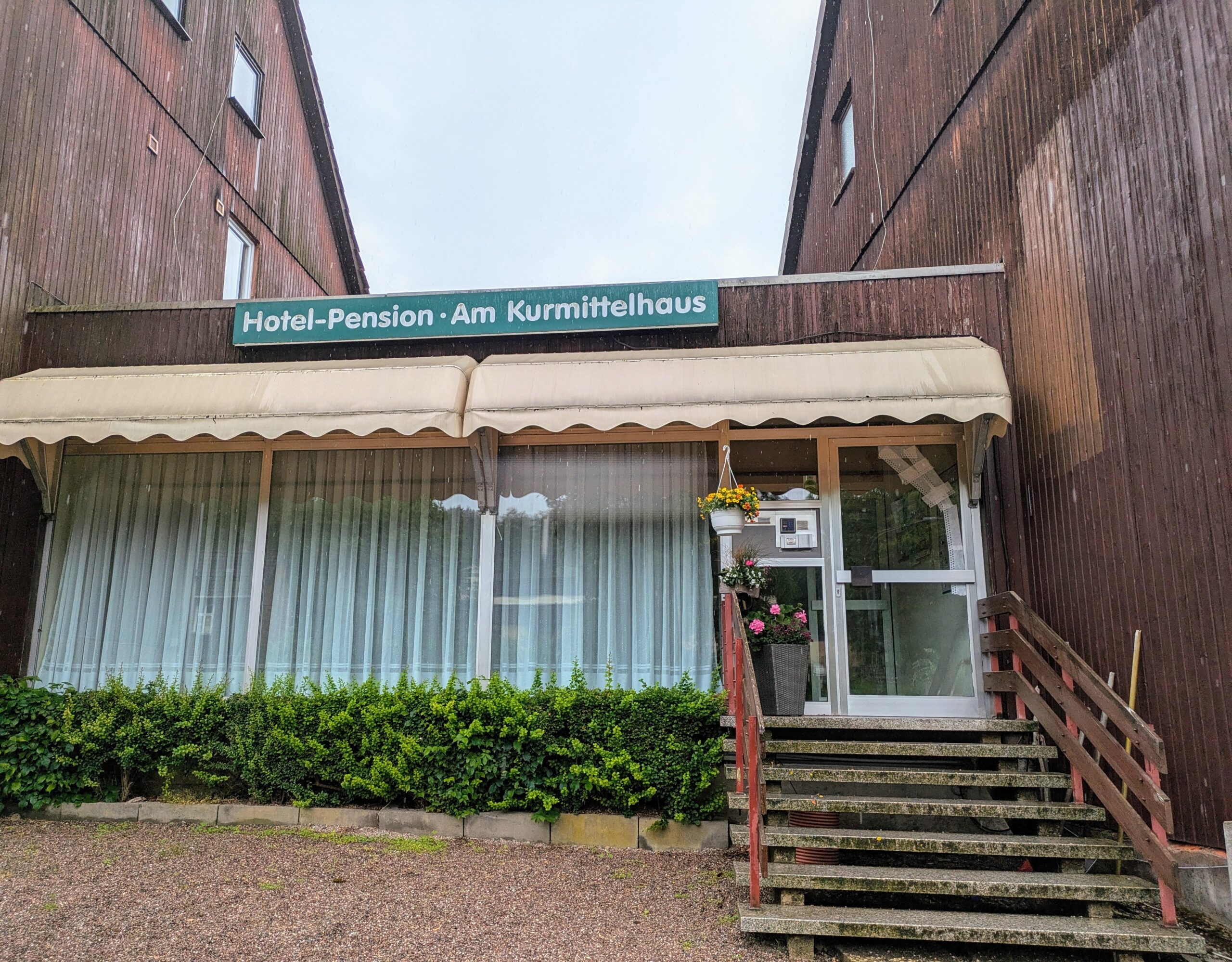
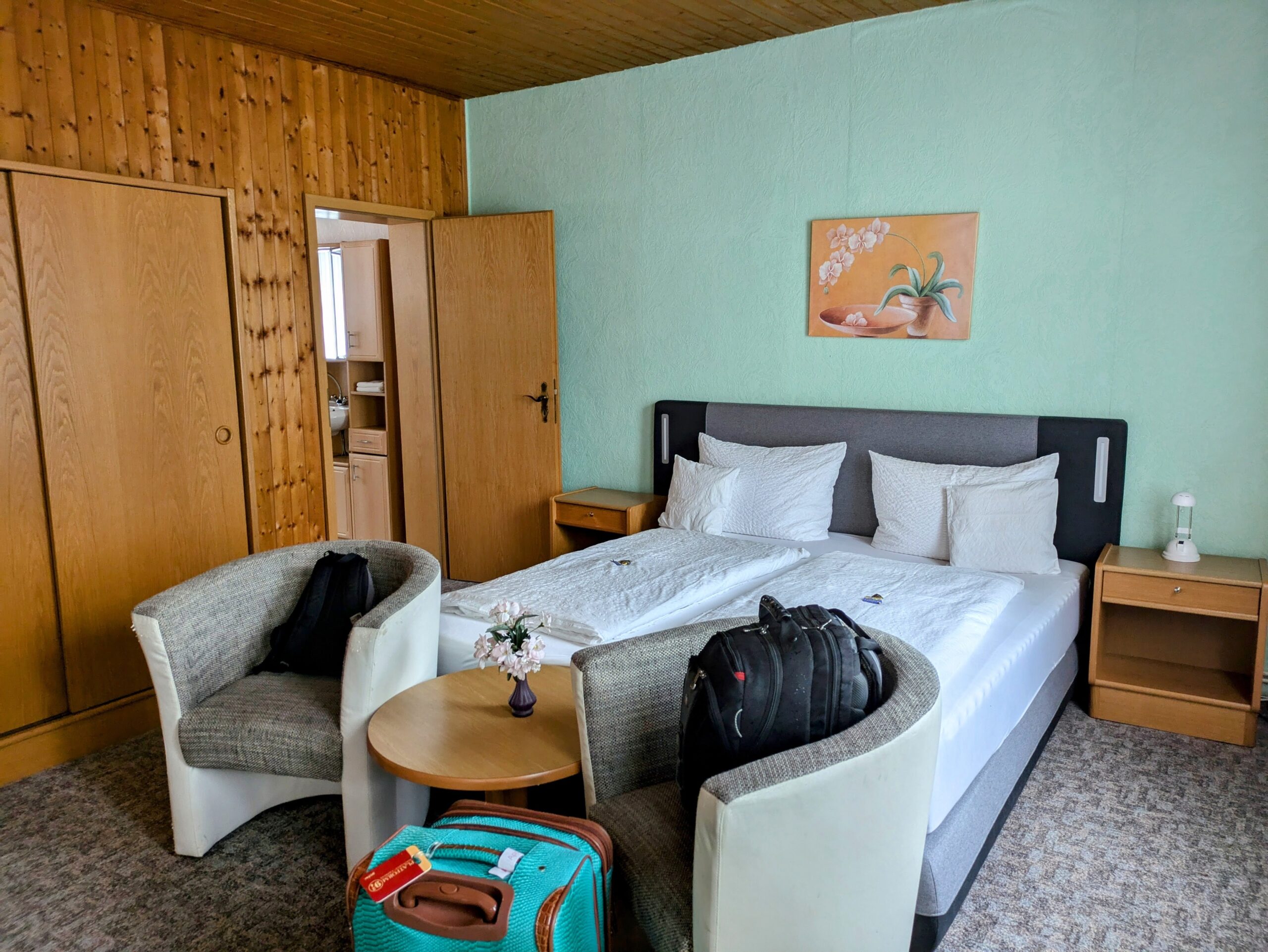
The Hotel Pension am Kurmittelhaus has 15 rooms spread across three floors (there is no elevator). It’s located across from a spa center and near mountain biking, hiking and skiing. We had a lovely adjoining room. A buffet breakfast is available, but we chose to get up and out on the road.
Dining in Clausthal-Zellerfeld
Ristorante Pizzeria Oase
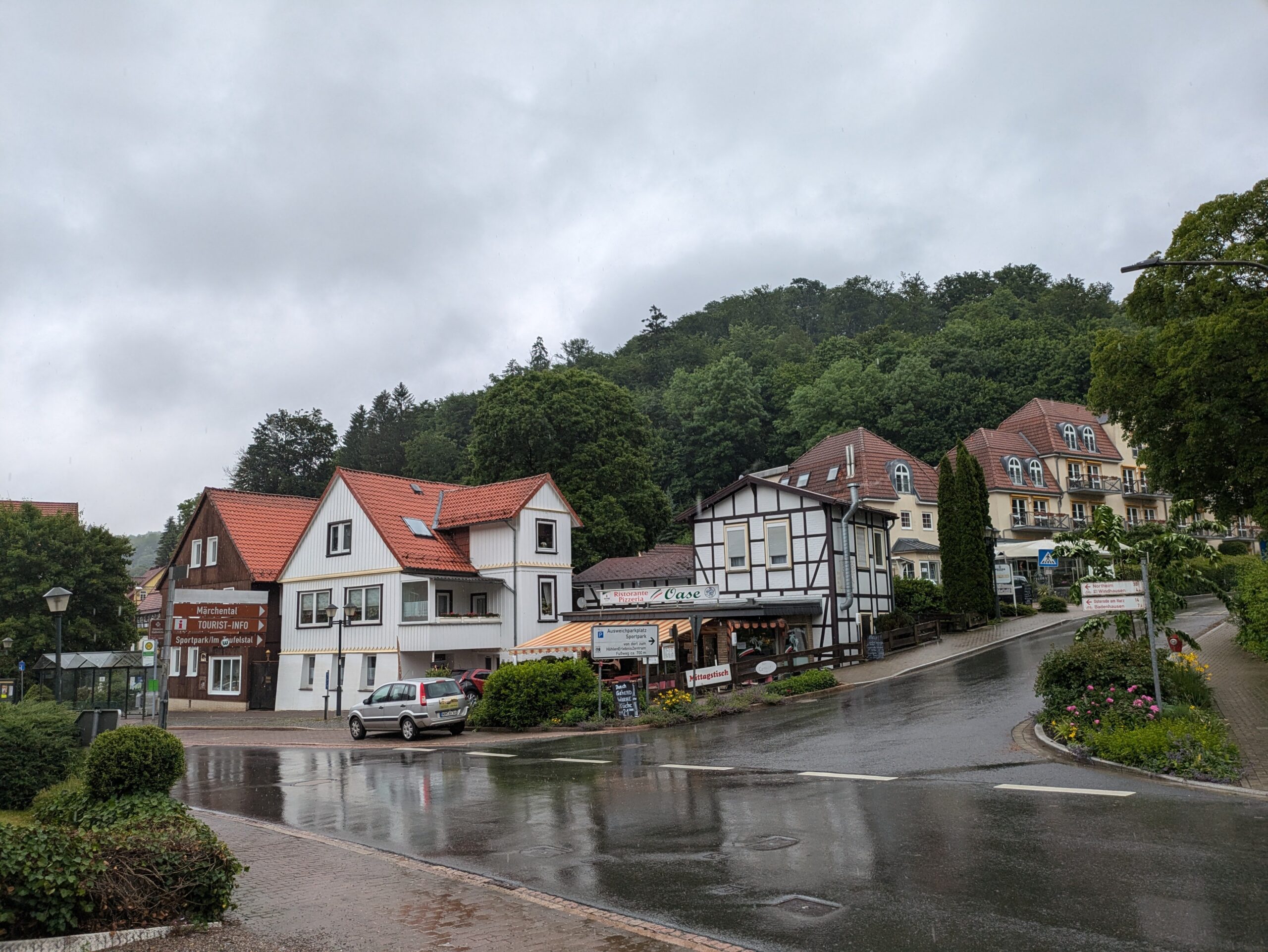
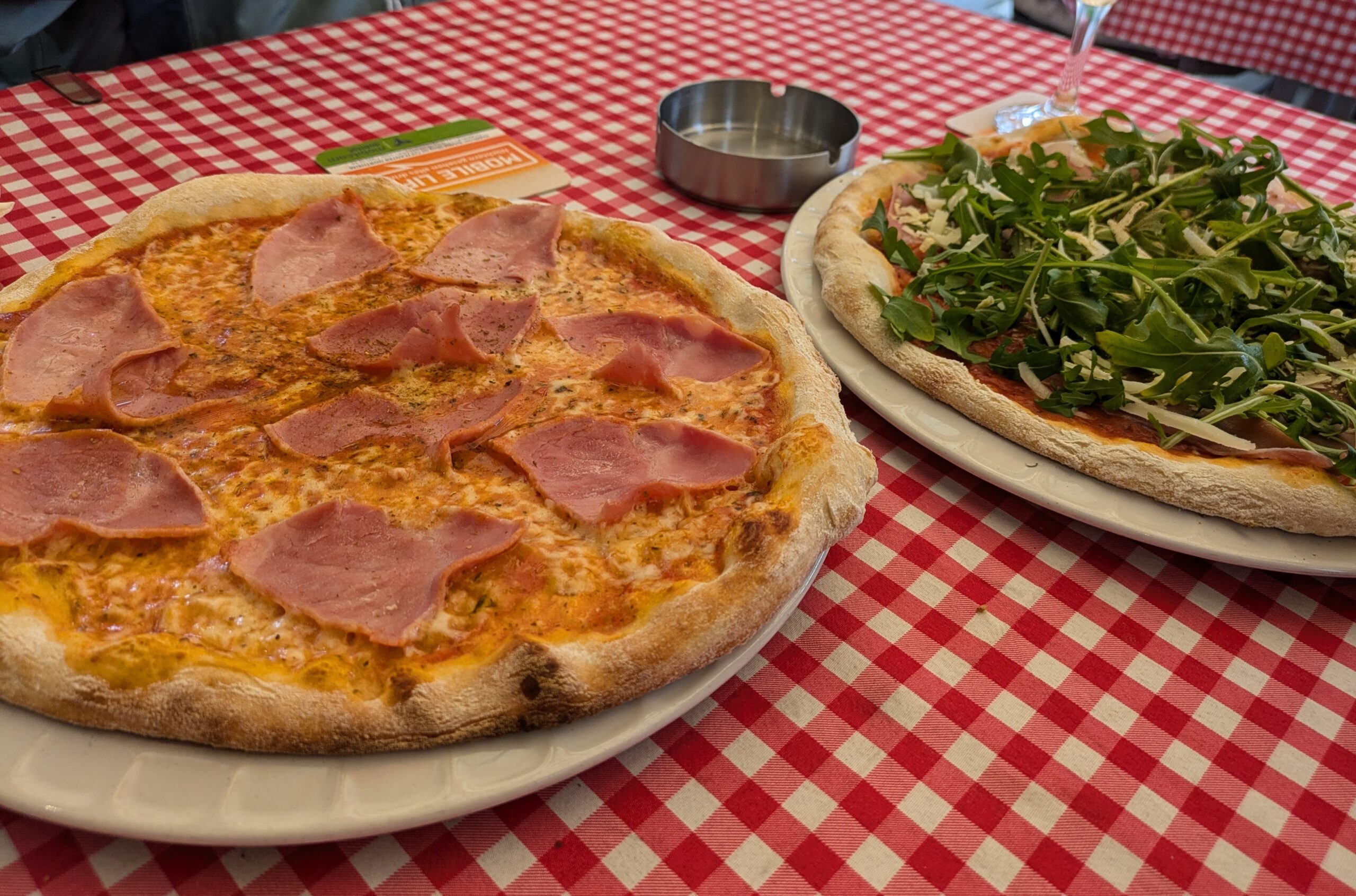
Ristorante Pizzeria Oase is across the street from Hotel Pension, and we were ready to chow down after the drive. We sat on the covered terrace and enjoyed a pizza.
Potsdam
Potsdam, capital of the state of Brandenburg, is about 50 miles from Berlin. Sometimes called Germany’s version of Versailles, it’s one of the largest UNESCO World Heritage Sites in Germany. The natural and cultural landscape includes 17 palaces and perfectly landscaped gardens, such as the New Garden, Charlottenhof Palace, the New Palace, Babelsberg Palace and Park, Sanssouci Park, Sacrow and more.
Sanssouci Palace
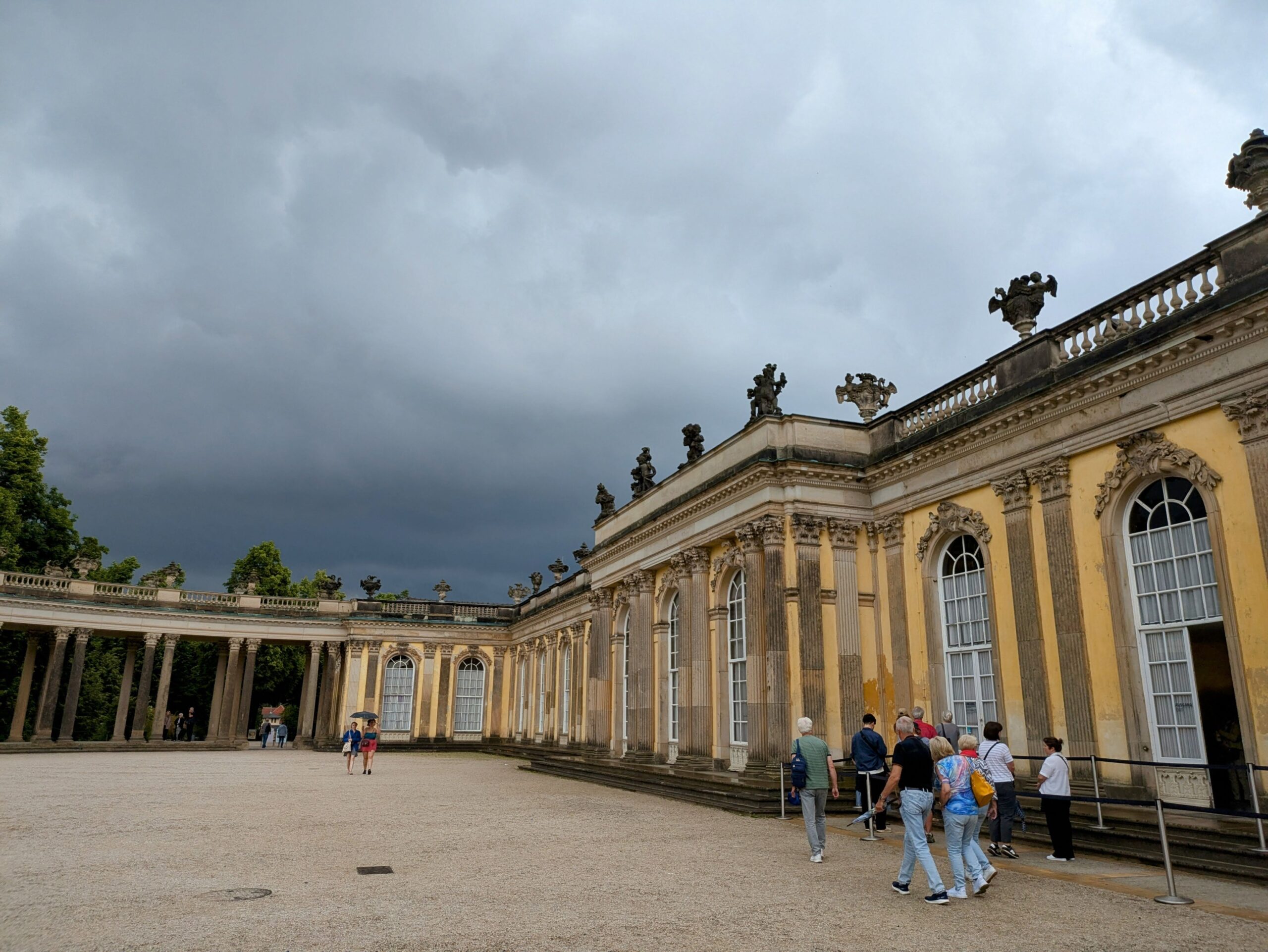
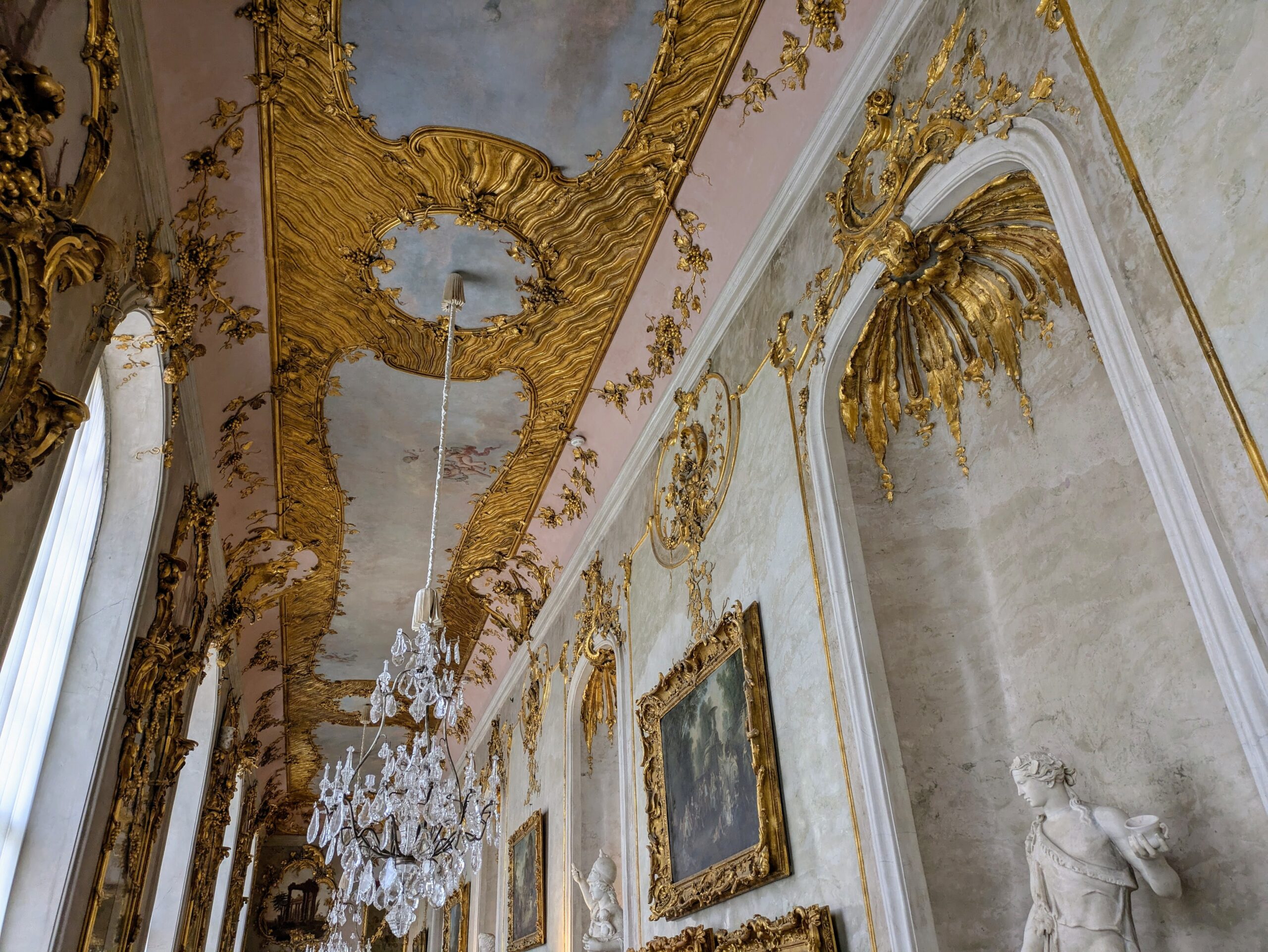
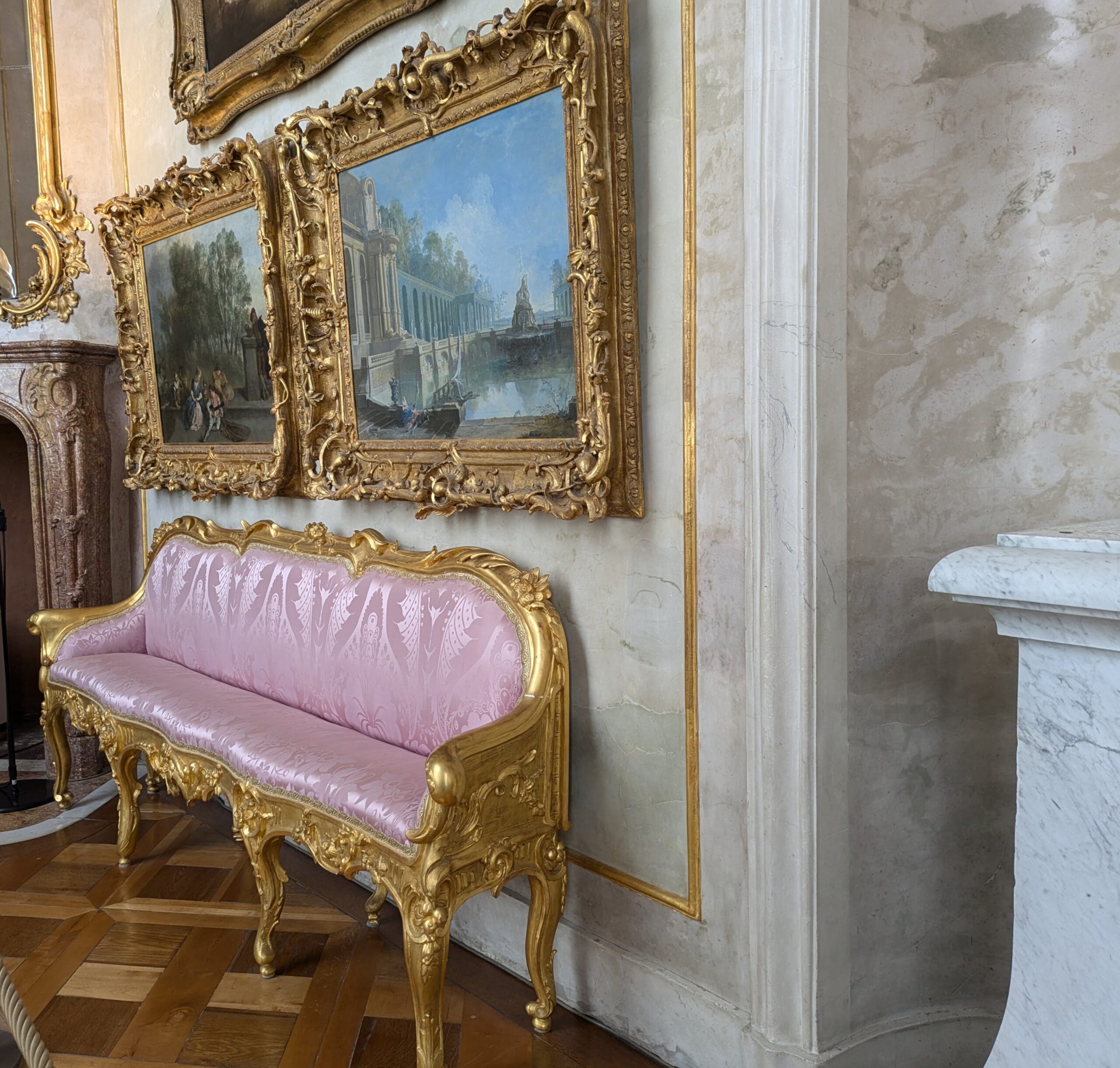
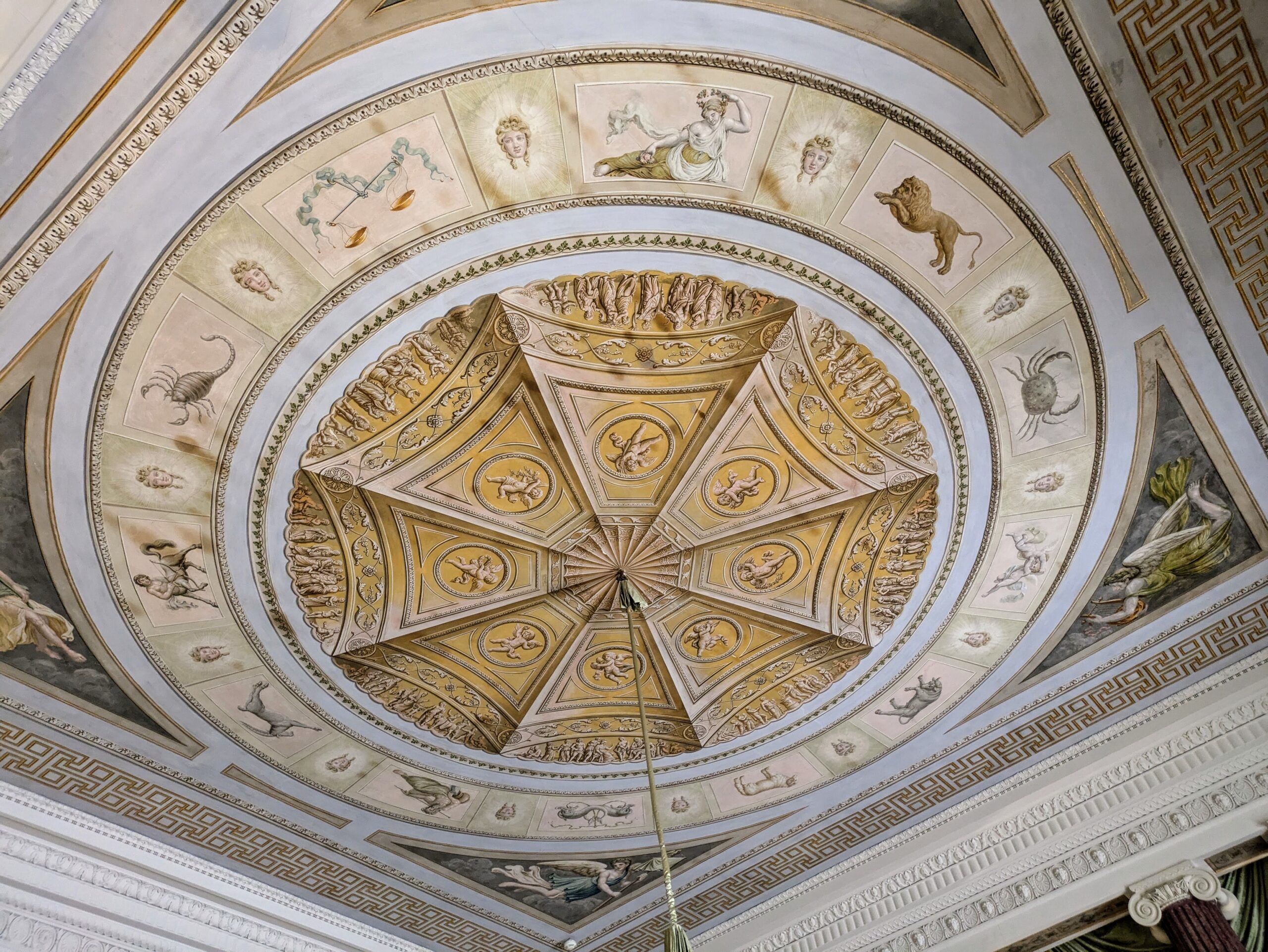
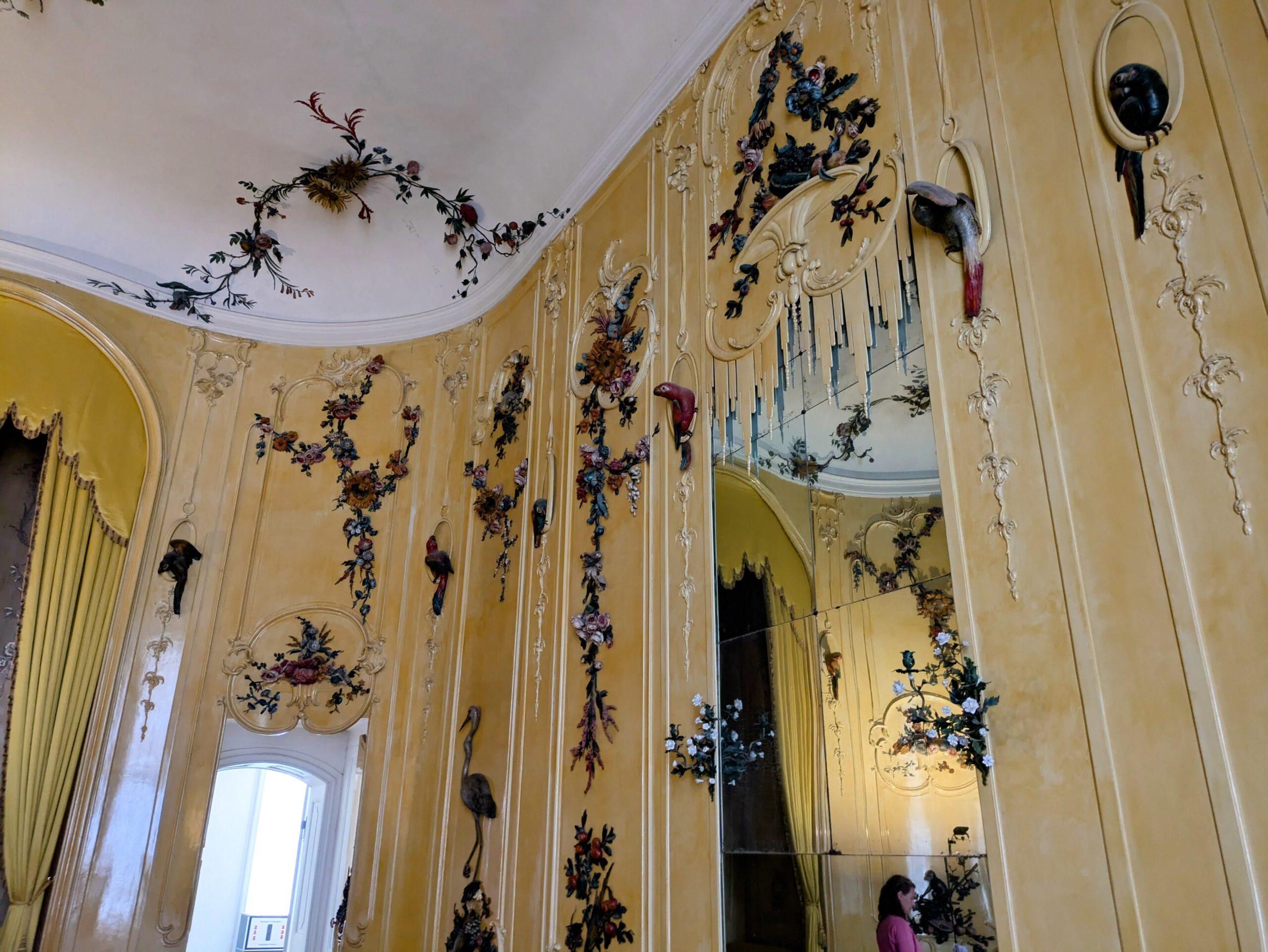
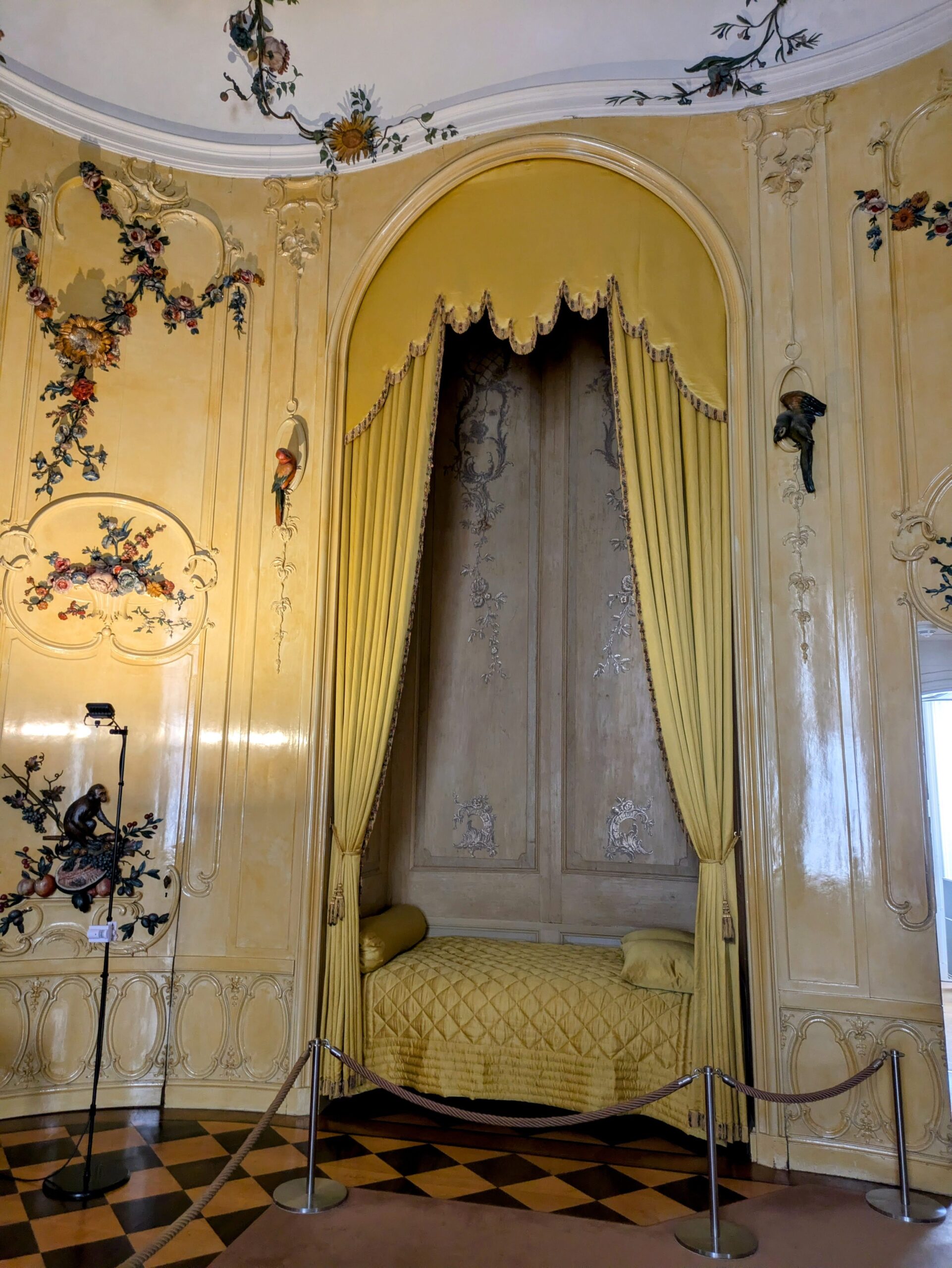
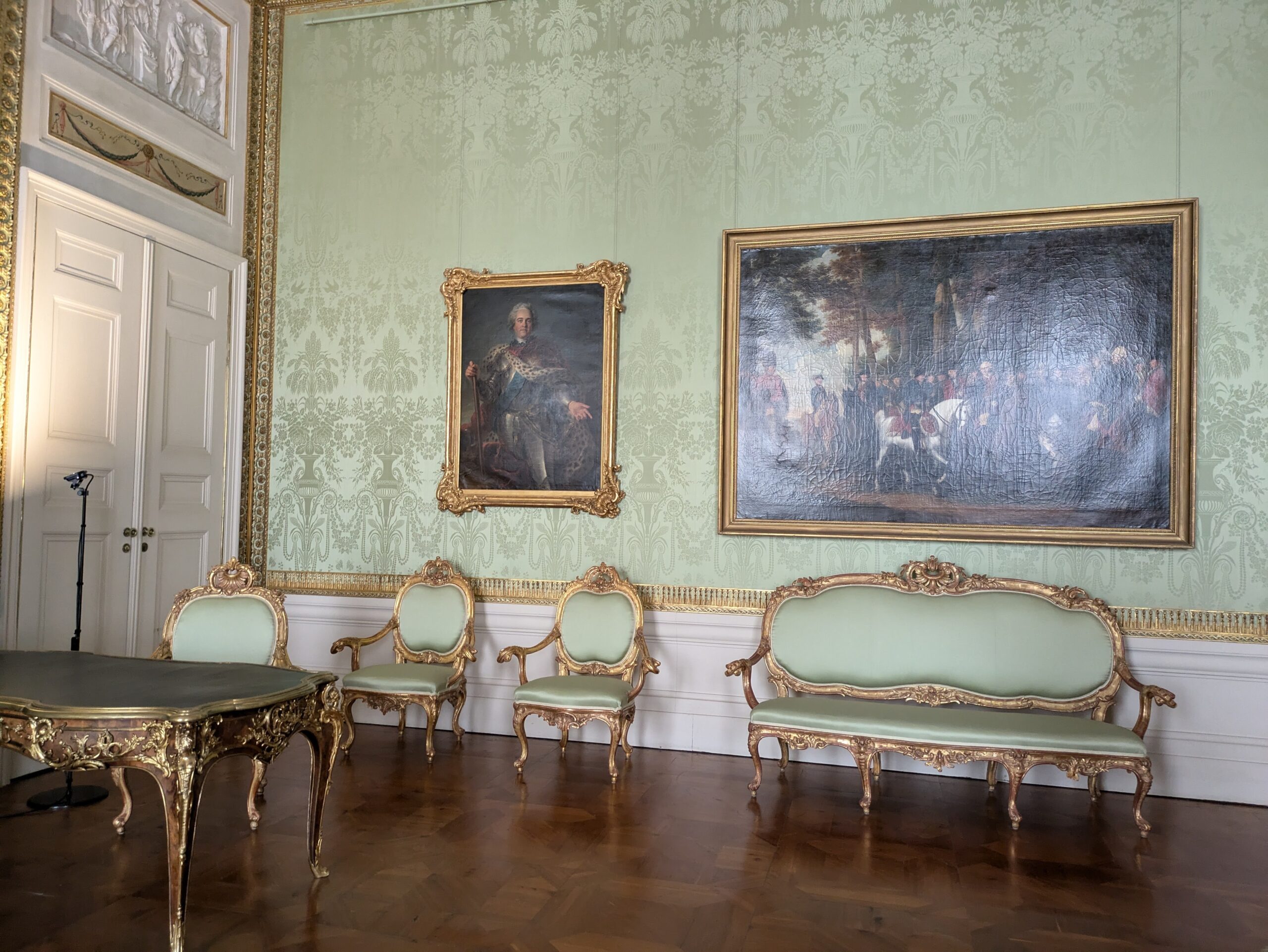
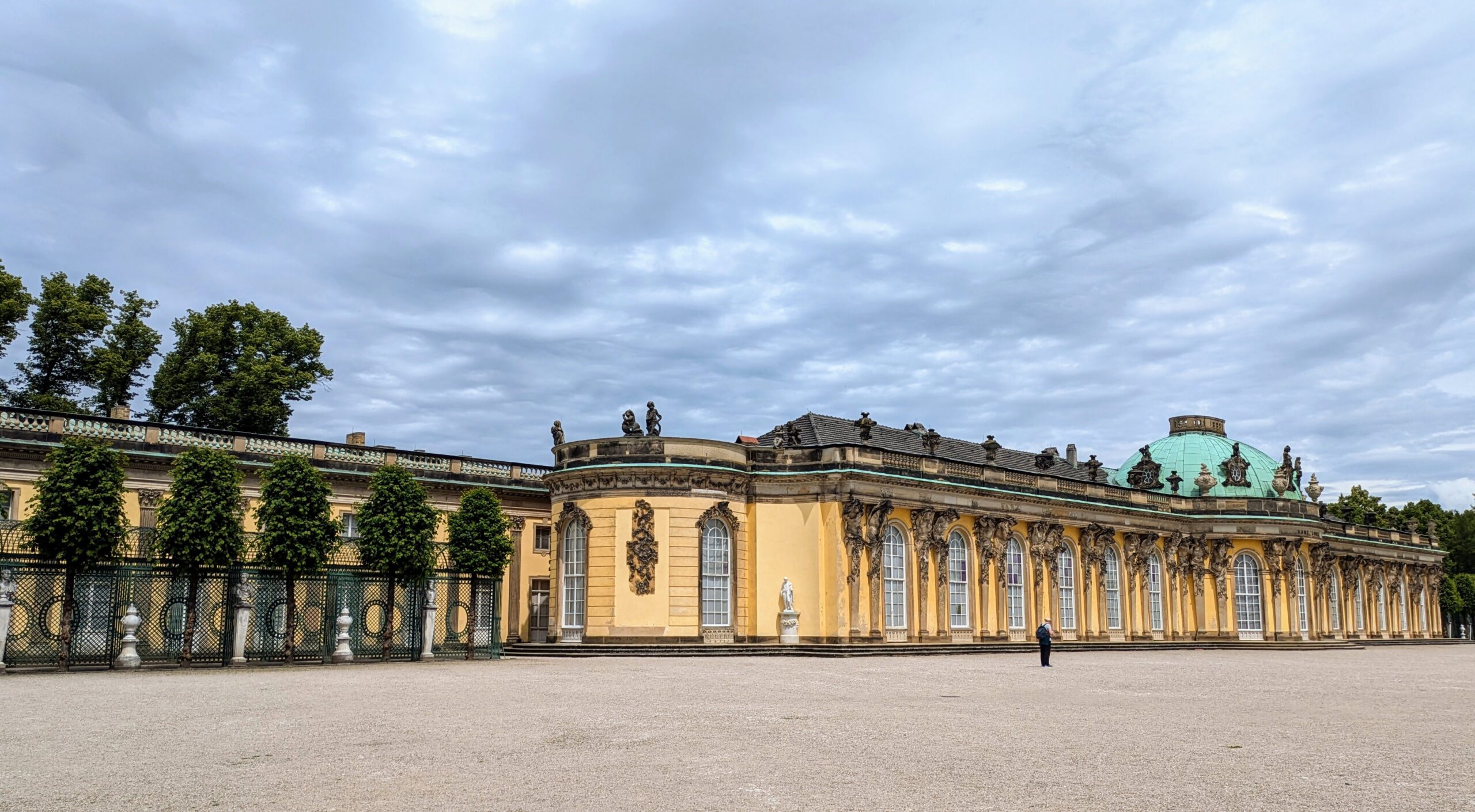
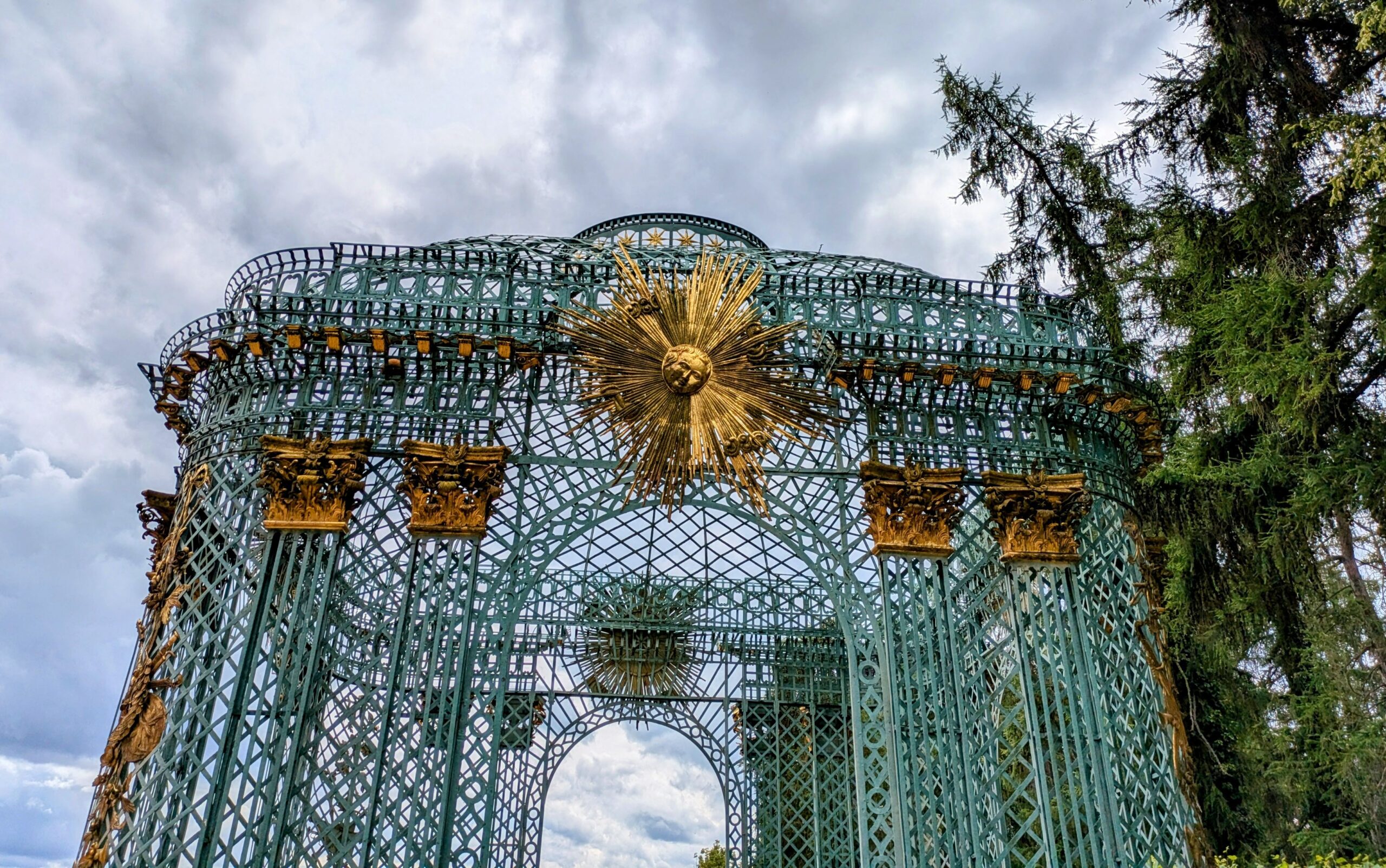
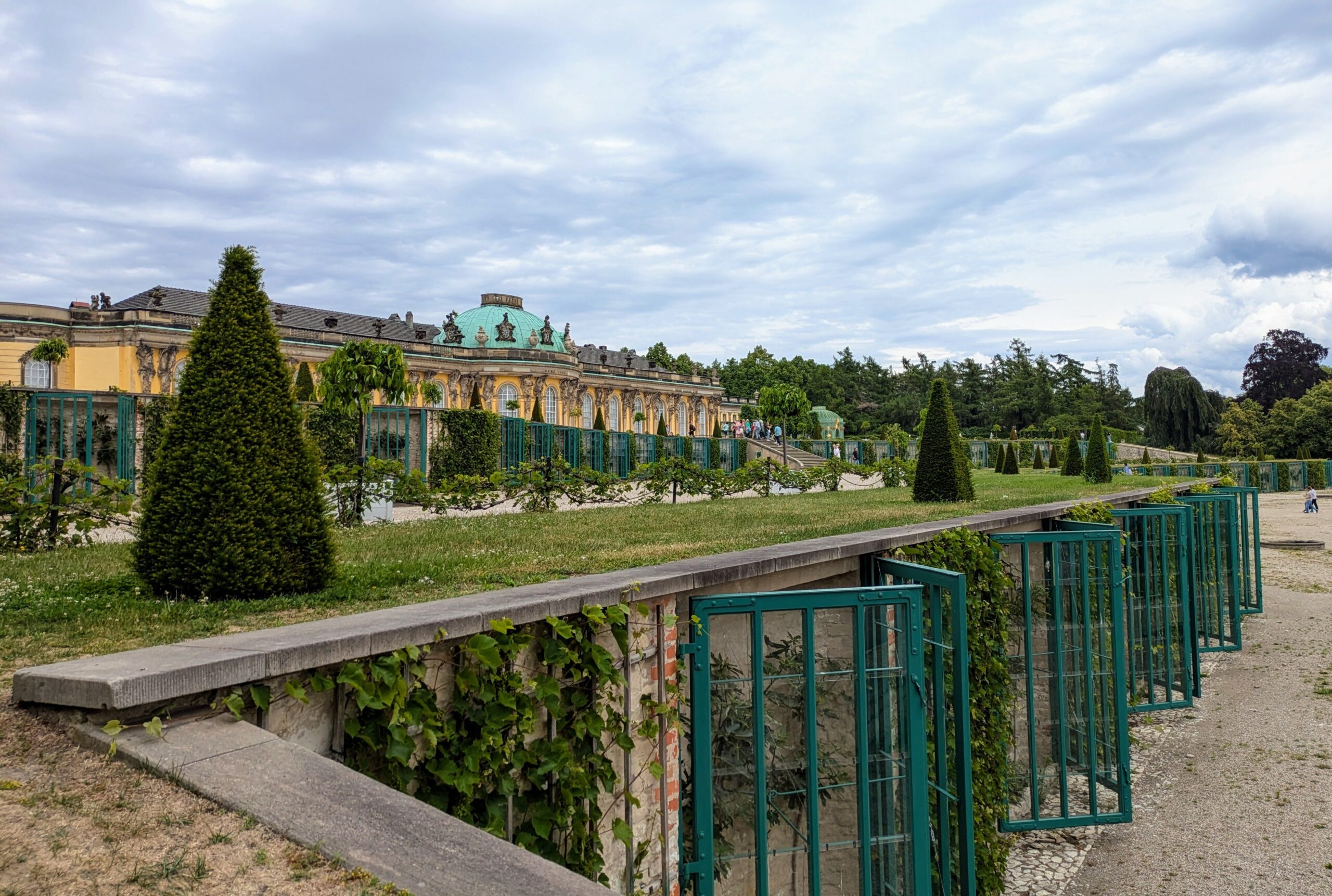
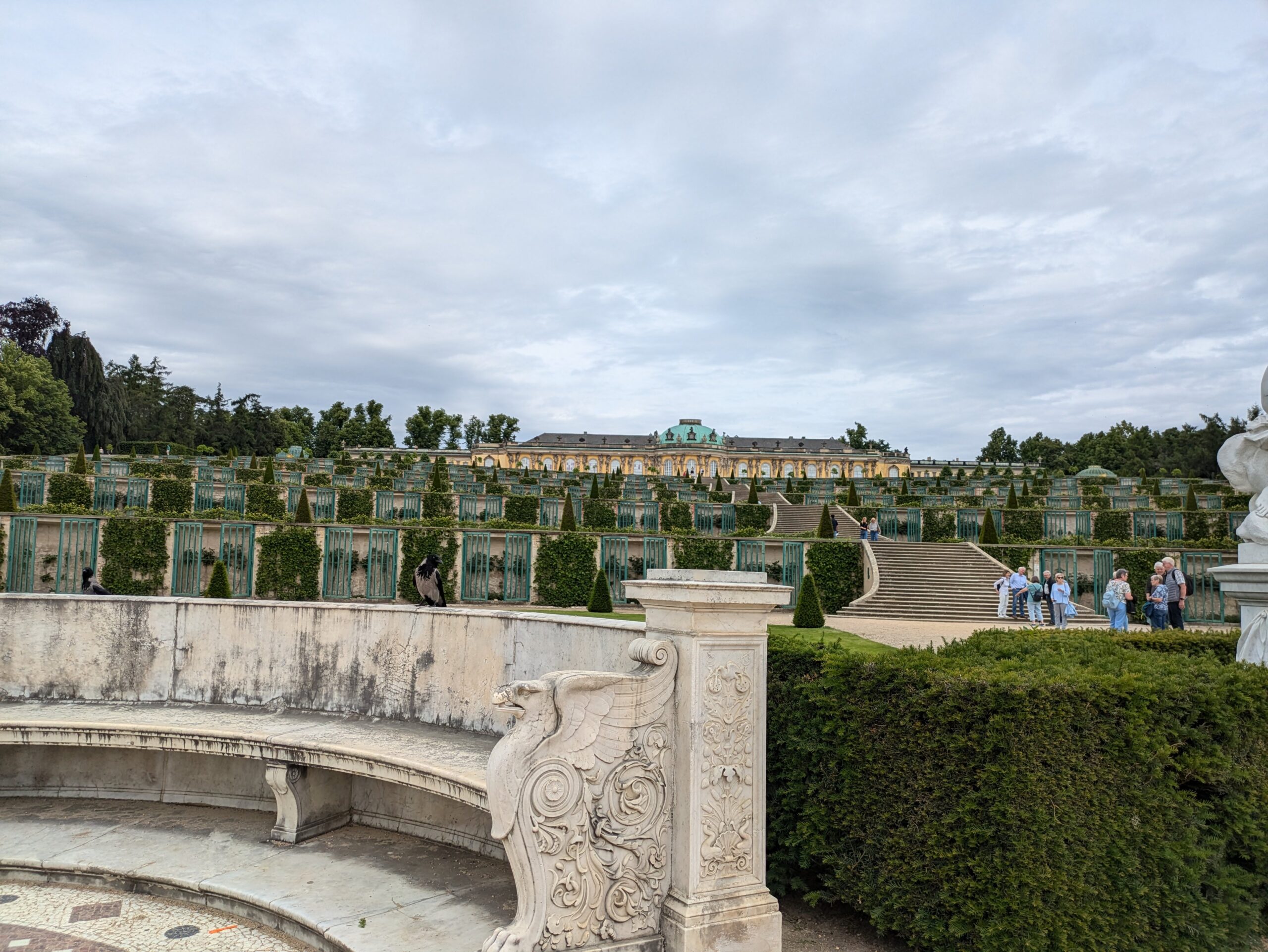
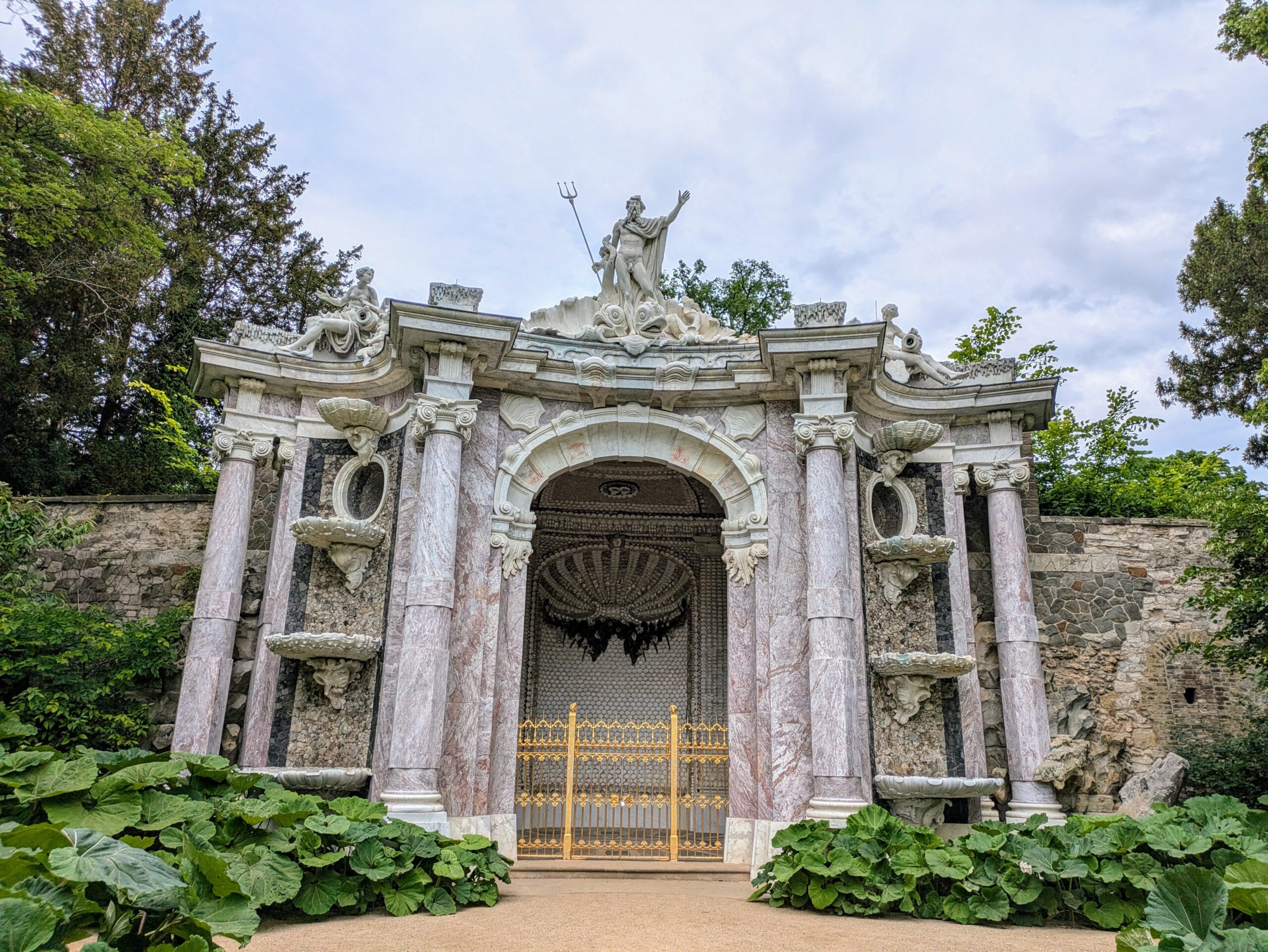
We didn’t visit all 17 sites, but we did spend a few hours at the Sanssouci Palace. This gorgeous structure was built around 1745 by Prussian King Frederick the Great as a summer palace. With its sunny colors and nature-inspired décor, I’ve decided that it’s my favorite palace. The elegant Rococo architecture wasn’t quite as over the top as some of the Baroque and Gothic sites we visited. You can also take a walk around the extensive gardens – filled with statues, fountains, arbors and hedges – and check out the Neptune Grotto, which was constructed between 1751 and 1757.
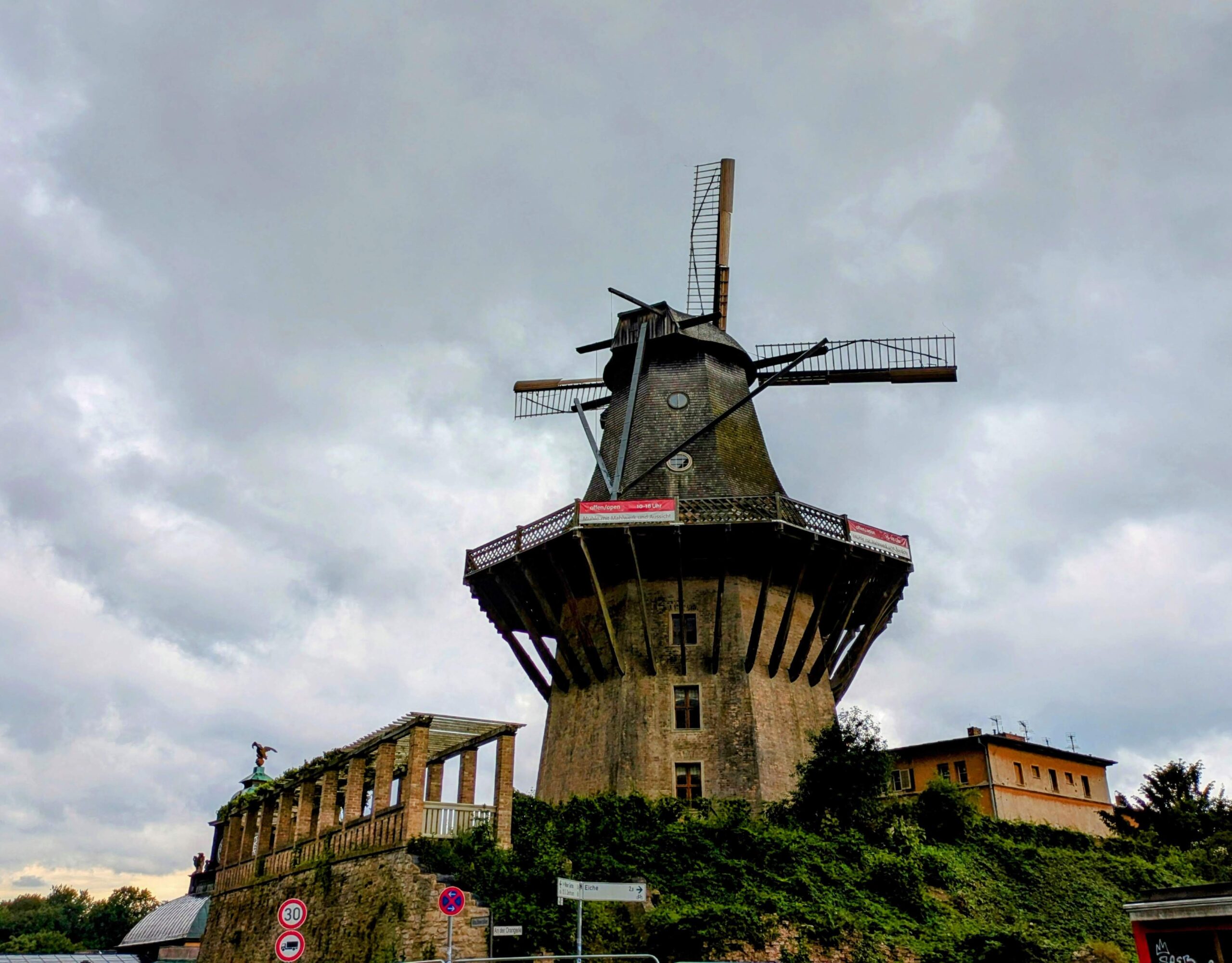
The original 1738 windmill was torn down because it was in such disrepair. A Dutch-inspired windmill was the replacement, but the structure was damaged during WWII. It was restored in 1993 and the sails (the long poles that turn) have been turning ever since. It’s still used in flour production (organic spelt, rye and wheat) and serves as a museum where visitors can learn about its history and grain processing.
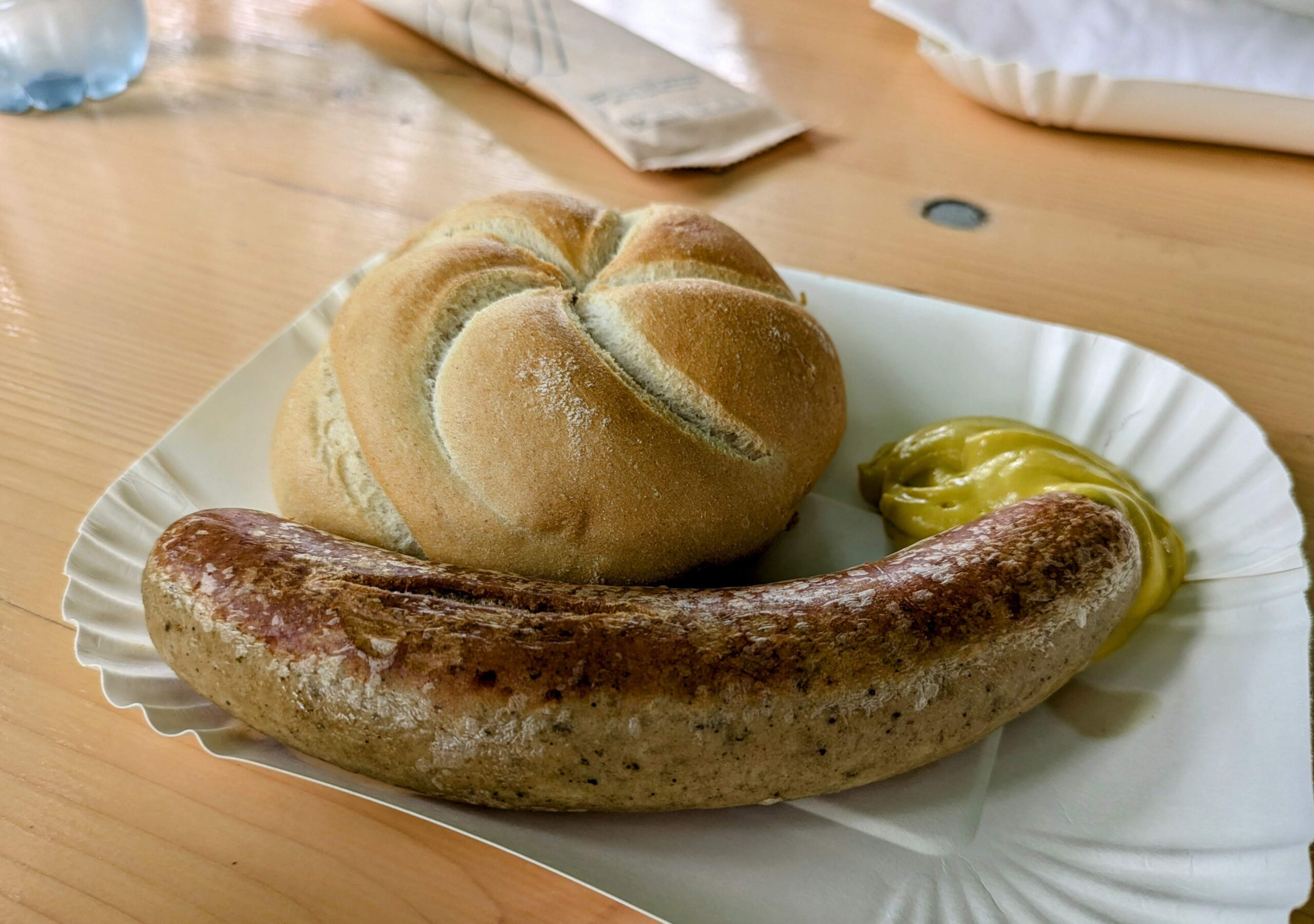
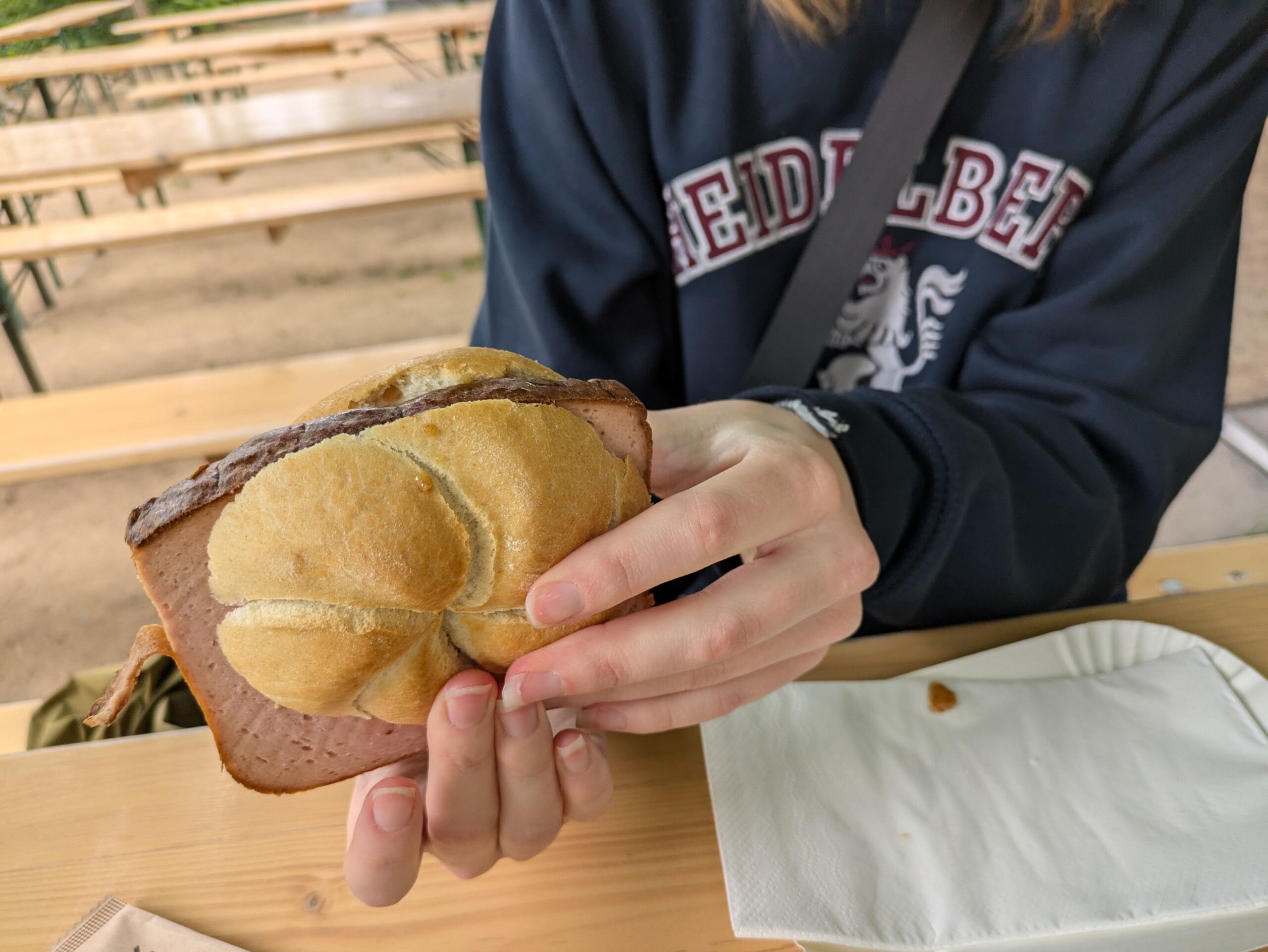
Looking for a bite to eat in the Sanssouci area? There’s an upscale restaurant, but we chose the casual outdoor setting at Biergarten im Gasthaus Zur Historischen Muhle. We had currywurst and a roll.
Germany Travel Tips
- The Autobahn is not to be feared. It’s a highway much like any other highway you might encounter.
- Drive on the right-hand side of the road just like the United States and most other countries.
- Currywurst is the best thing ever invented. Eat it as much as possible.




















[…] After we bid “Auf wiedersehen” to our Globus tour, we headed west to Heidelberg for the second half of our German adventure. Read all about that here. […]