I’ve never been one for guided group tours. Crowded buses, overscheduled itineraries, stuffy guides and all sorts of other random thoughts ran through my mind. Of course, I also thought I wasn’t one for cruises, but last year’s Alaskan cruise changed that opinion. Germany has been on my list for many years, but not knowing the country (and having never been to Europe), we were a bit apprehensive about taking on a big international trip by ourselves.
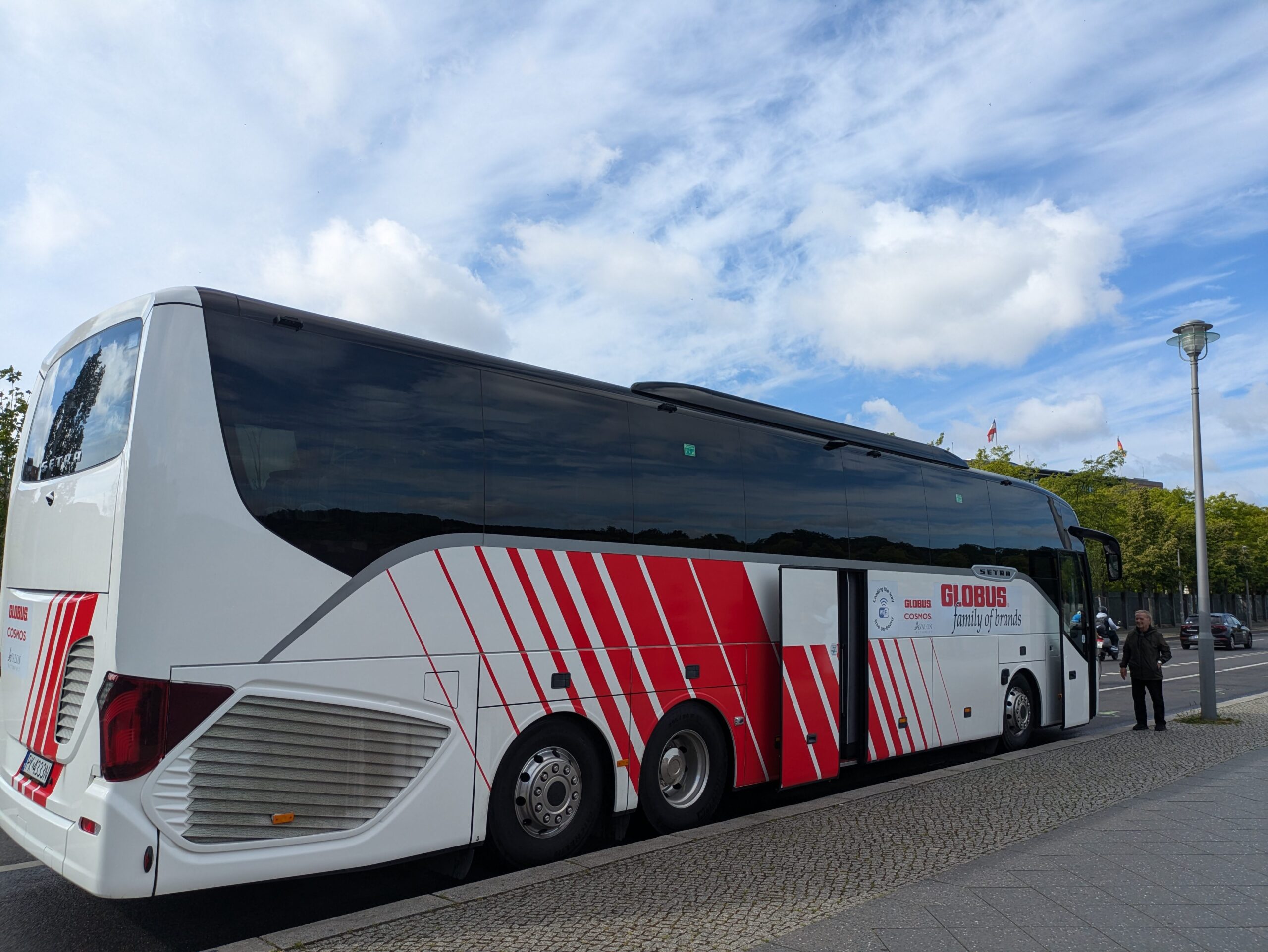
After researching guided group tours, we found Globus. Globus provides fun, informative, engaging and educational tours that take the stress out of trip planning. With Globus, everything is organized for you: accommodations, transportation and major sites are all planned and prearranged, so all you have to do is show up and enjoy the experience.
Globus’s partner sites include Cosmos and Avalon Waterways. Cosmos is more of the value-minded option. Hotels might not be in the city center or have as many amenities as those selected for Globus tours. If you’re looking for a luxury European river cruise, Avalon is the ticket.
We chose the German Vista tour, which begins in Berlin and ends in Munich. Our group was on the smaller side, with about 24 people. We had plenty of room to spread out on the bus and travel in comfort. Sheryl, our tour director, made the entire trip perfectly wonderful with her helpful advice, informative narration and charming personality.
Globus German Vista Tour
Quick Facts
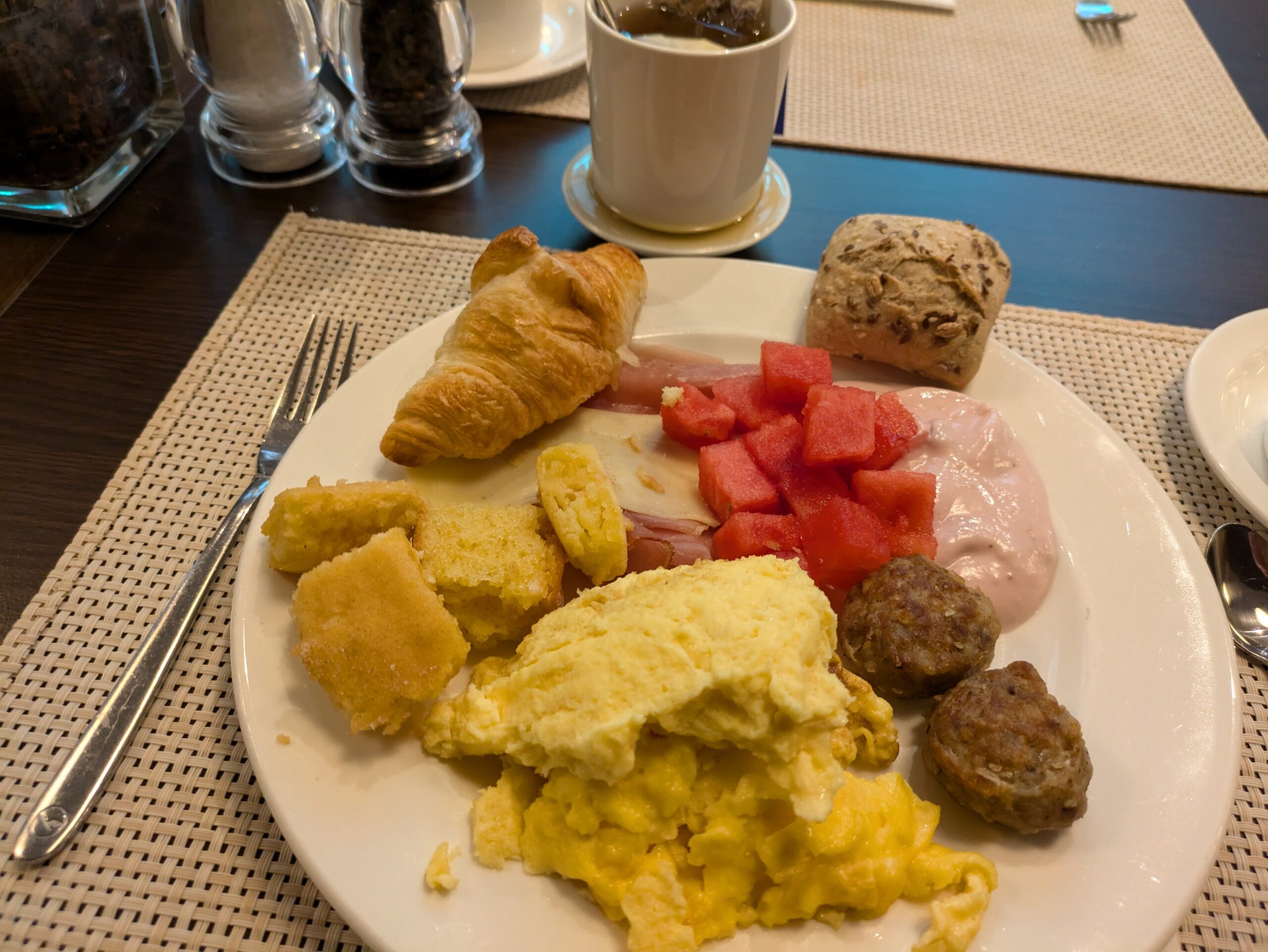
The German Vista tour is seven days. It includes two dinners (one at the start of the tour and one on the last night) and a daily breakfast buffet. The breakfast buffets were all at the hotels and more than plentiful enough to keep us full until lunch and beyond.
Most hotels are located within the city center, so it’s convenient to walk out and explore your surroundings on your own (you’ll find that there’s lots of free time to go along with the planned activities). This central location saves you the time, energy and frustration of finding a taxi or an Uber.
Several sites and attractions are included in the Globus tour, allowing you to enjoy yourself without worrying about reservations or tickets. The tour director or a local guide leads the way while delivering facts, local information and personal anecdotes. There are also a variety of optional day tours and dinner experiences available if you choose. These are at an additional cost and vary depending on the tour.
Berlin
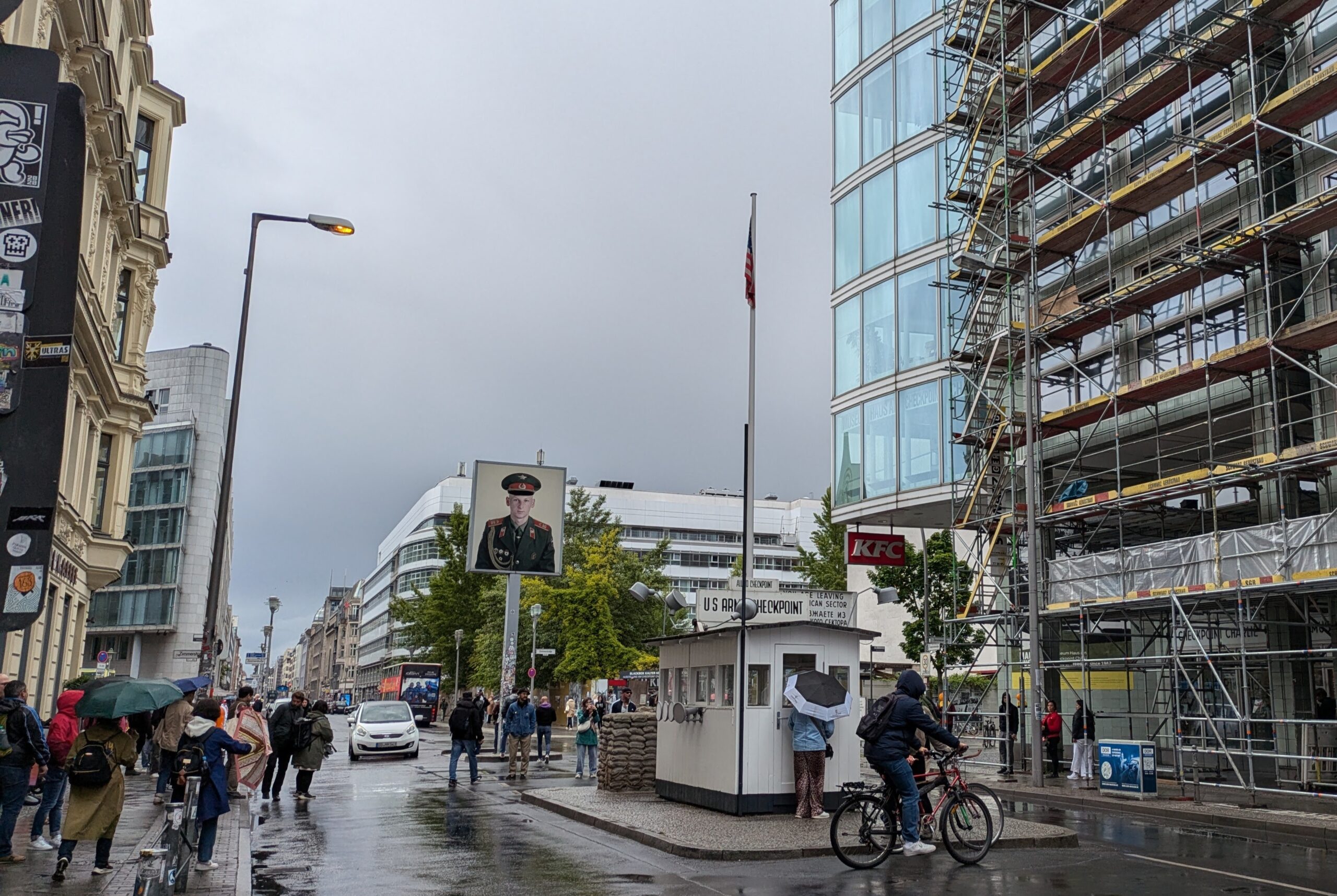
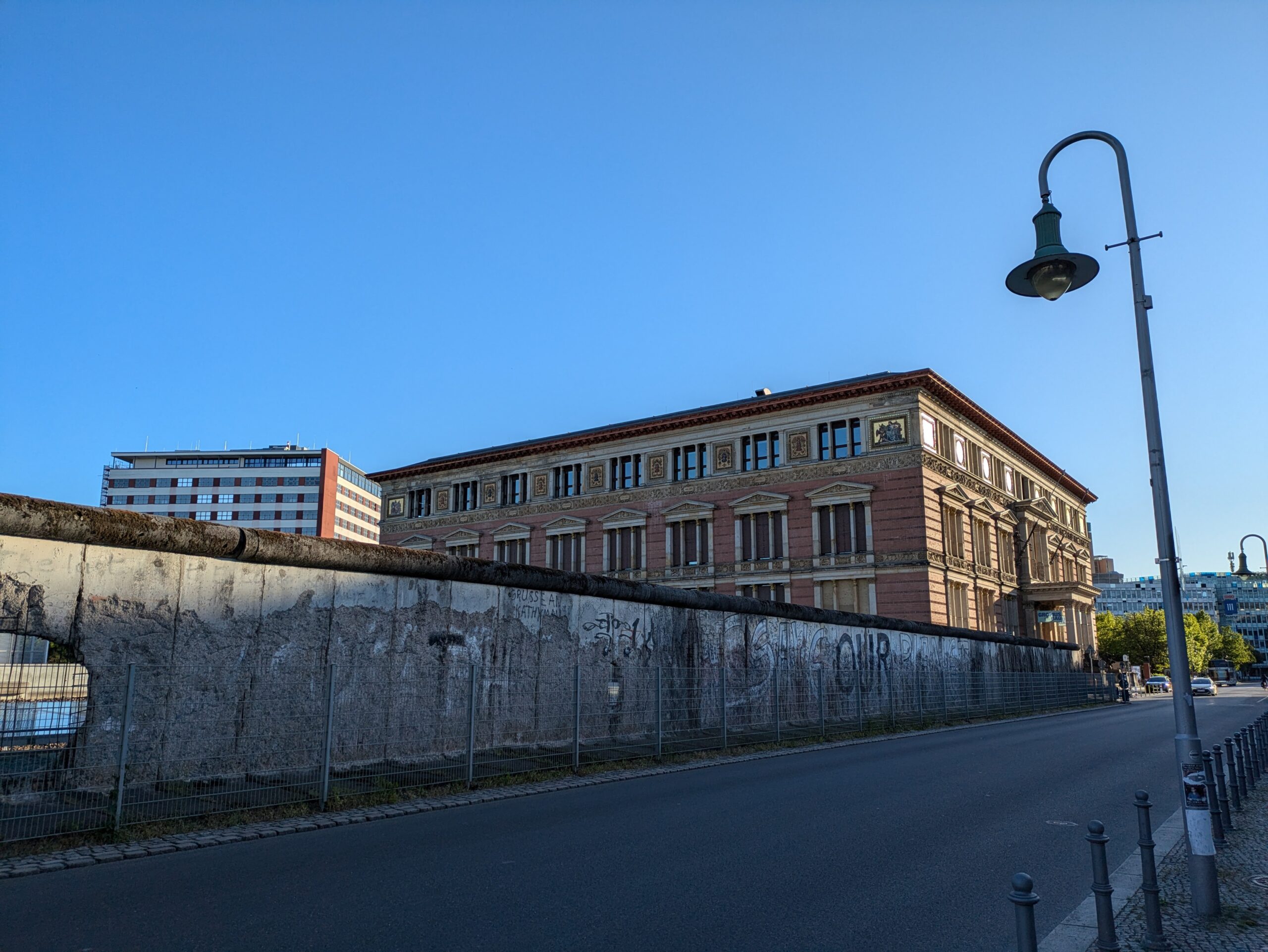
We arrived in Berlin two days before the tour started. Prior to the start of the tour, we visited Checkpoint Charlie, the Topography of Terror outdoor exhibit, Rausch Chocolate, the Mall of Berlin, the German Cathedral and the French Cathedral. I recommend arriving at least one day before the tour starts, as you never know what can happen with delayed flights and other uncontrollable factors.
Highlights of Berlin
The Kaiser Wilhelm Memorial
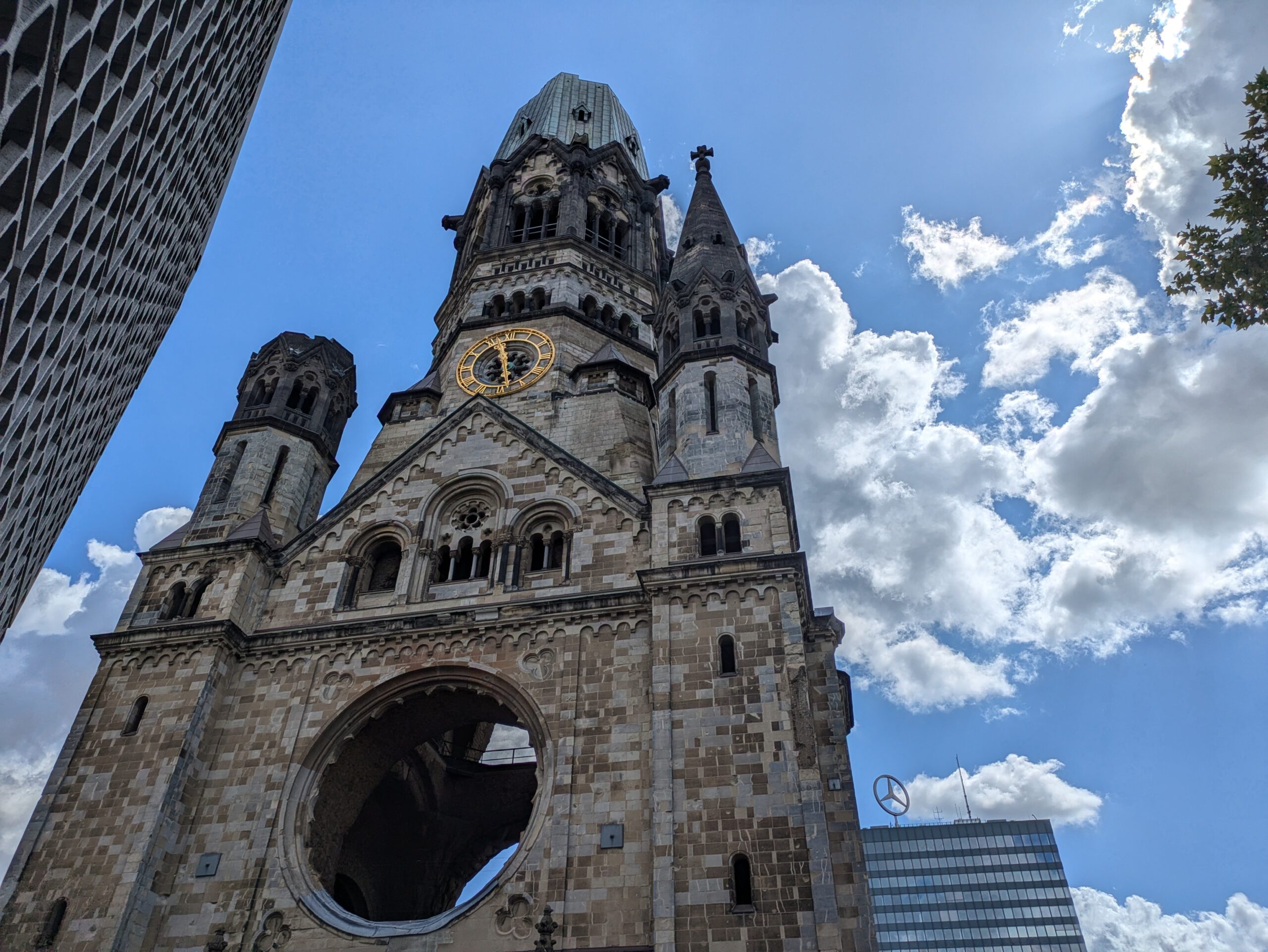
One of my favorites, the Kaiser Wilhelm Memorial, is located in the trendy Ku’damm neighborhood. The memorial was severely damaged in a bombing in 1943 and left as it was. It’s a surreal sight to see the remains (which are quite beautiful) in the middle of a modern shopping and business area. Next door to the memorial is the Kaiser Wilhelm Memorial Church.
Holocaust Memorial
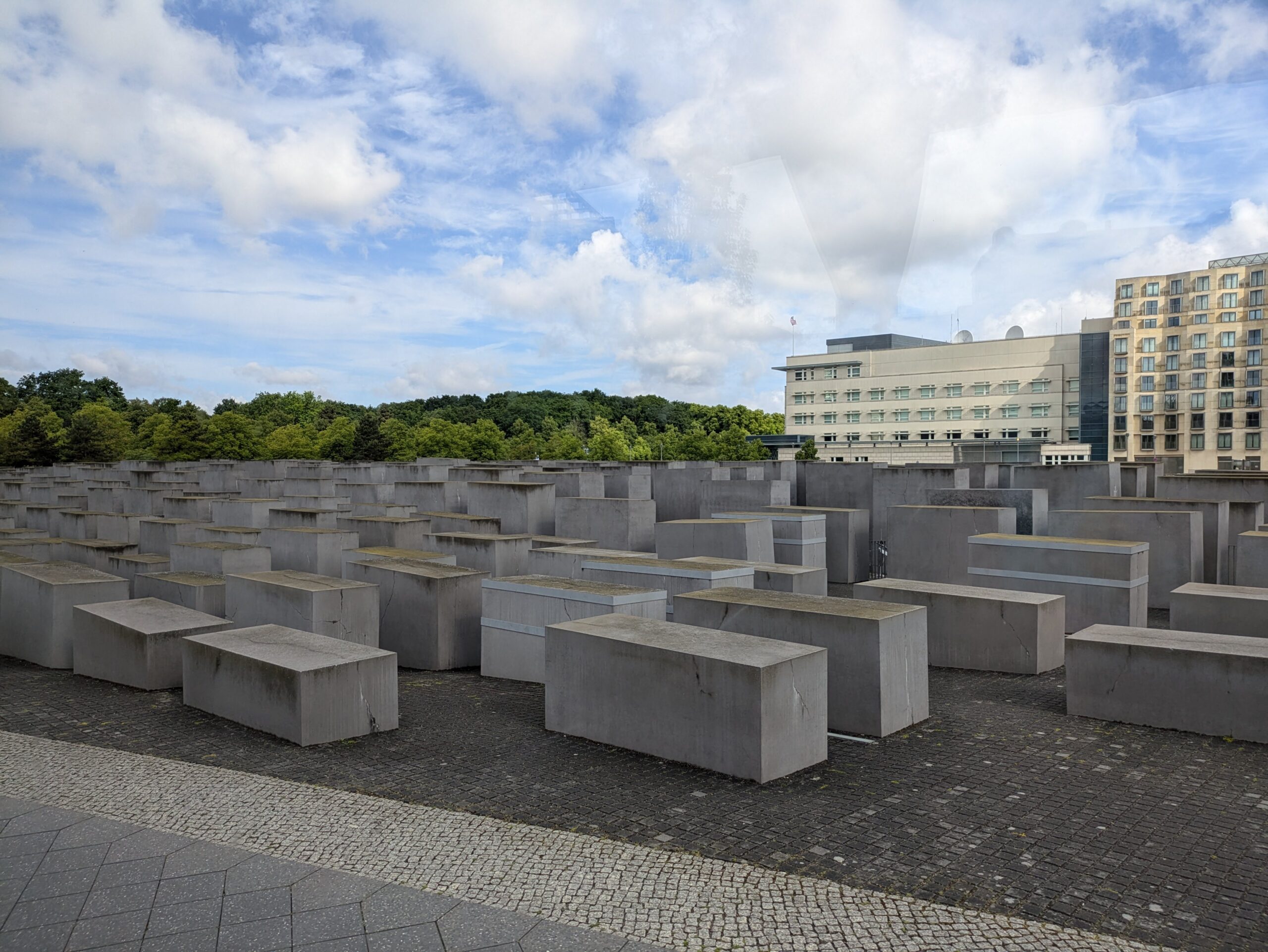
Designed by architect Peter Eisenman, the Holocaust Memorial consists of 2,711 concrete boxes all the same width and length but at different heights. The guide said you could “disappear” walking down the aisles. He compared it to the lives that disappeared. It was easily the most sobering sight in the whole city.
Brandenburg Gate
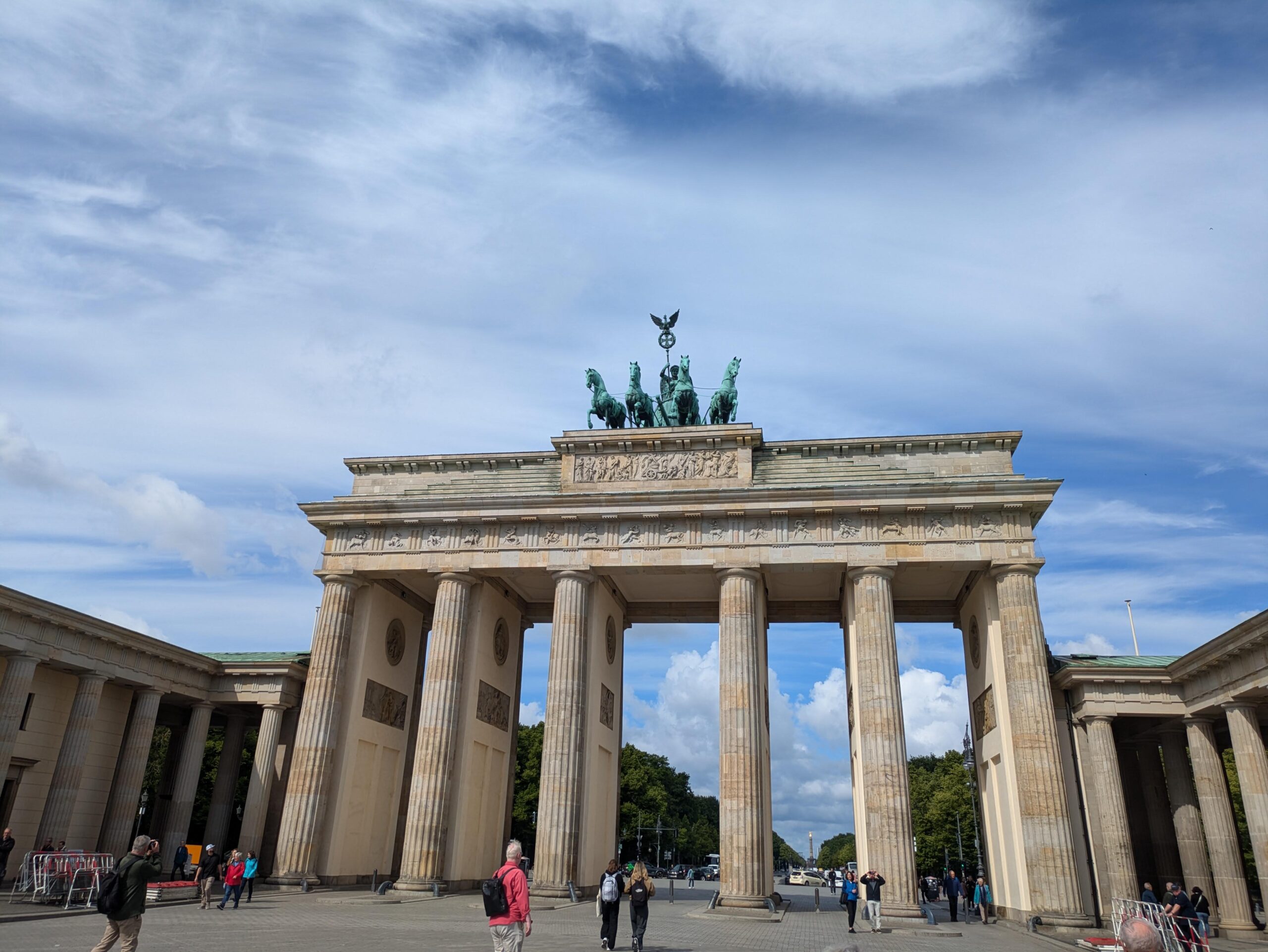
I’ve heard that you can’t go to Berlin without visiting the Brandenburg Gate. I would have to agree. It’s a must-stop site for history buffs and photographers. There were once about 18 impressive gates like this around the city. Merchants would come through them to sell their wares. The Brandenburg Gate is the only one left.
Museum Island
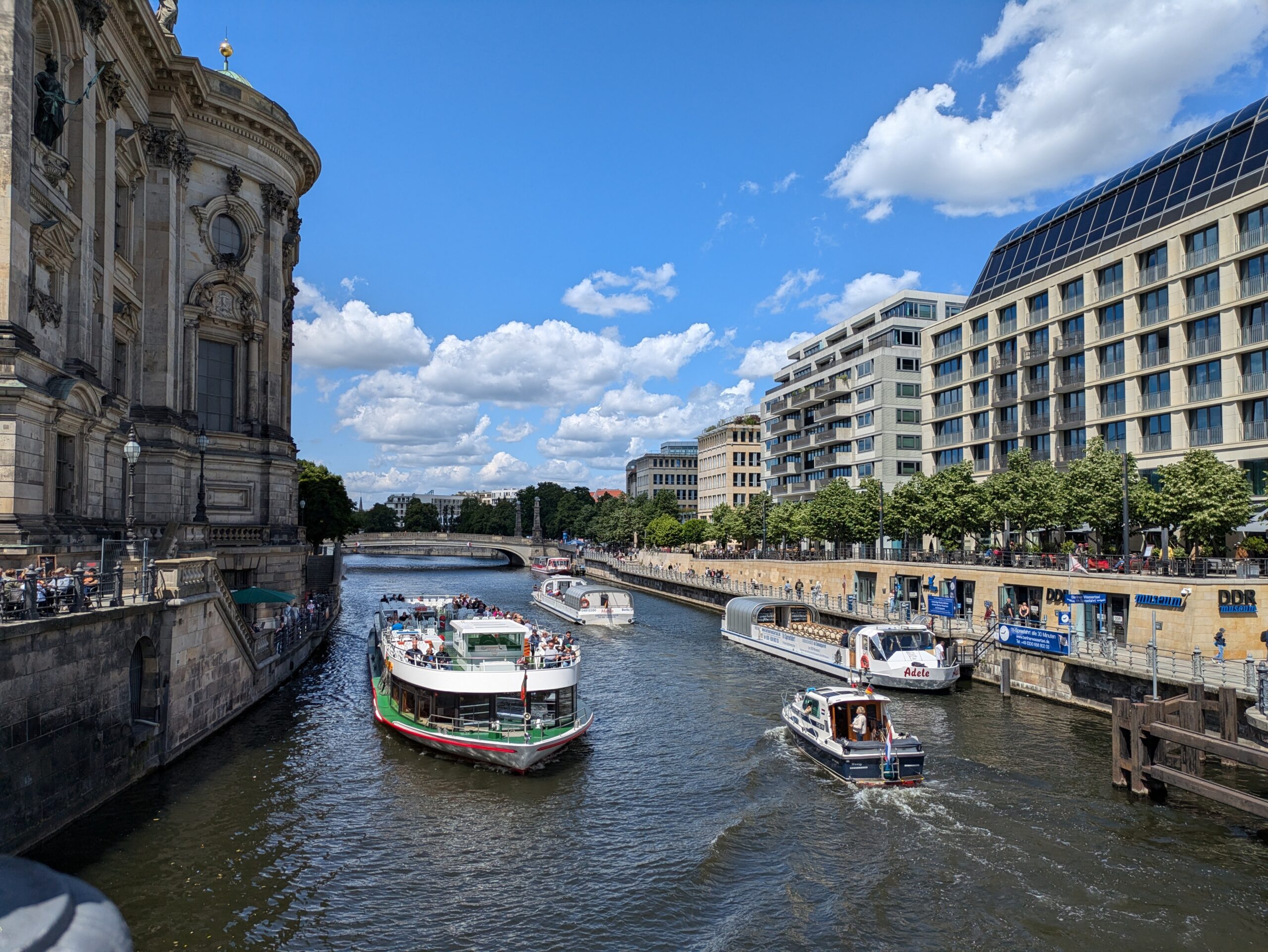
The Berlin Cathedral, and several museums and historic buildings (such as the Berlin Palace), are located on Museum Island along the Spree River. We visited this area on our own while the Globus group was off on an optional tour that we chose to skip.
Neptune Fountain
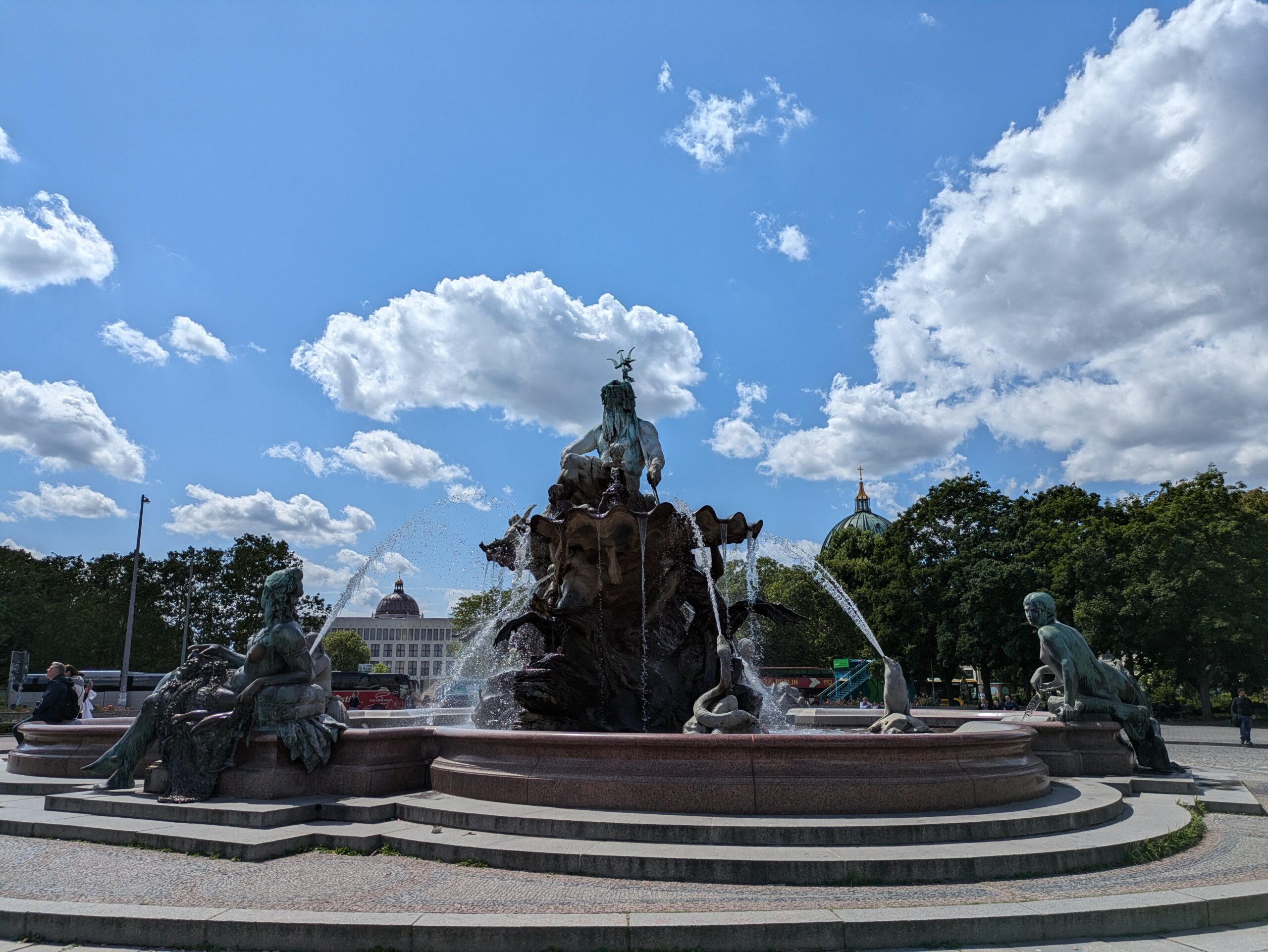
The Neptune Fountain features, you guessed it, Neptune. He’s surrounded by figures that represent the rivers Elbe, Rhine, Vistula and Oder. This ornate fountain stands at Alexanderplatz, a lovely square in Berlin’s Mitte District on Museum Island.
Hotel in Berlin
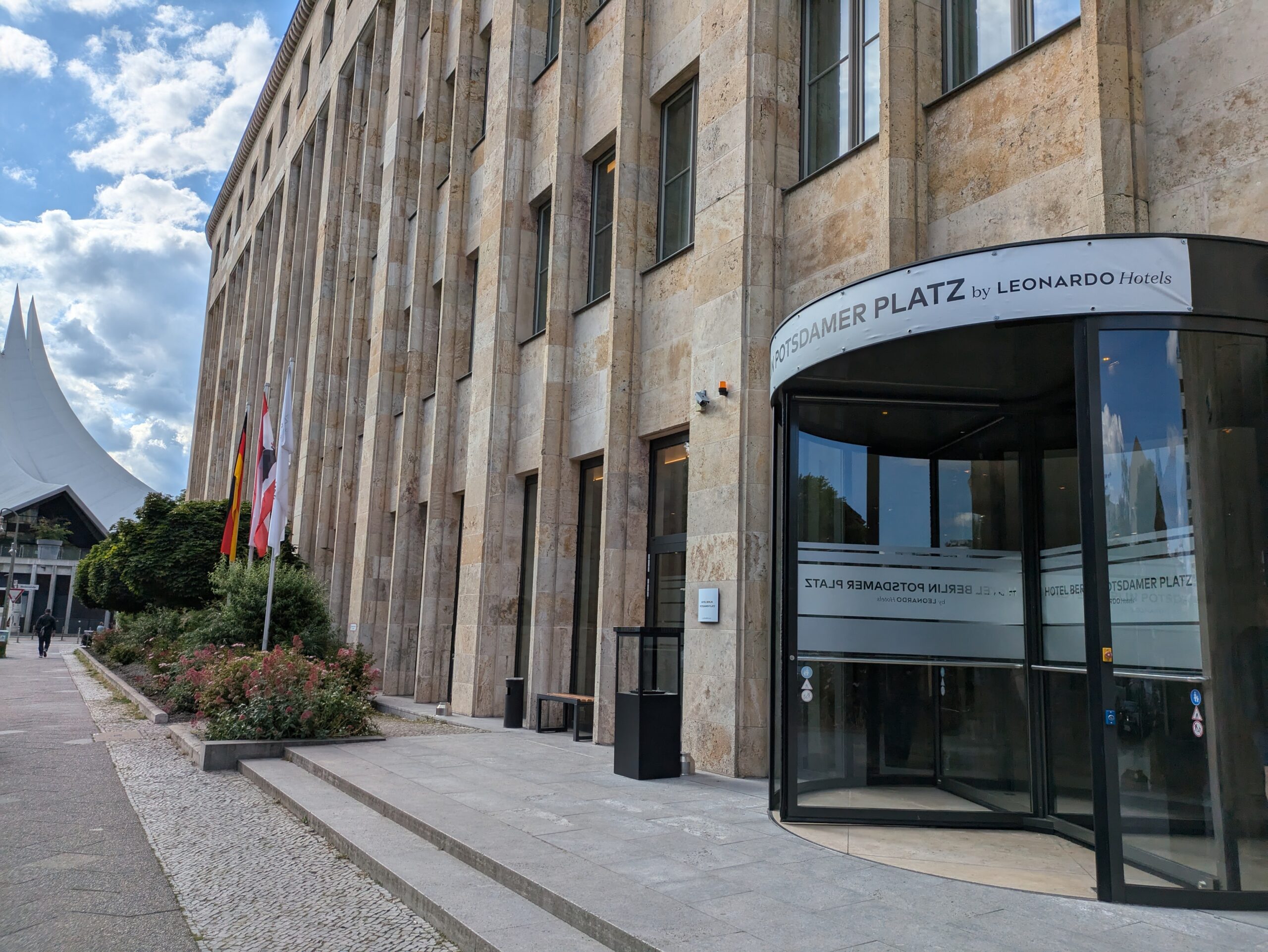
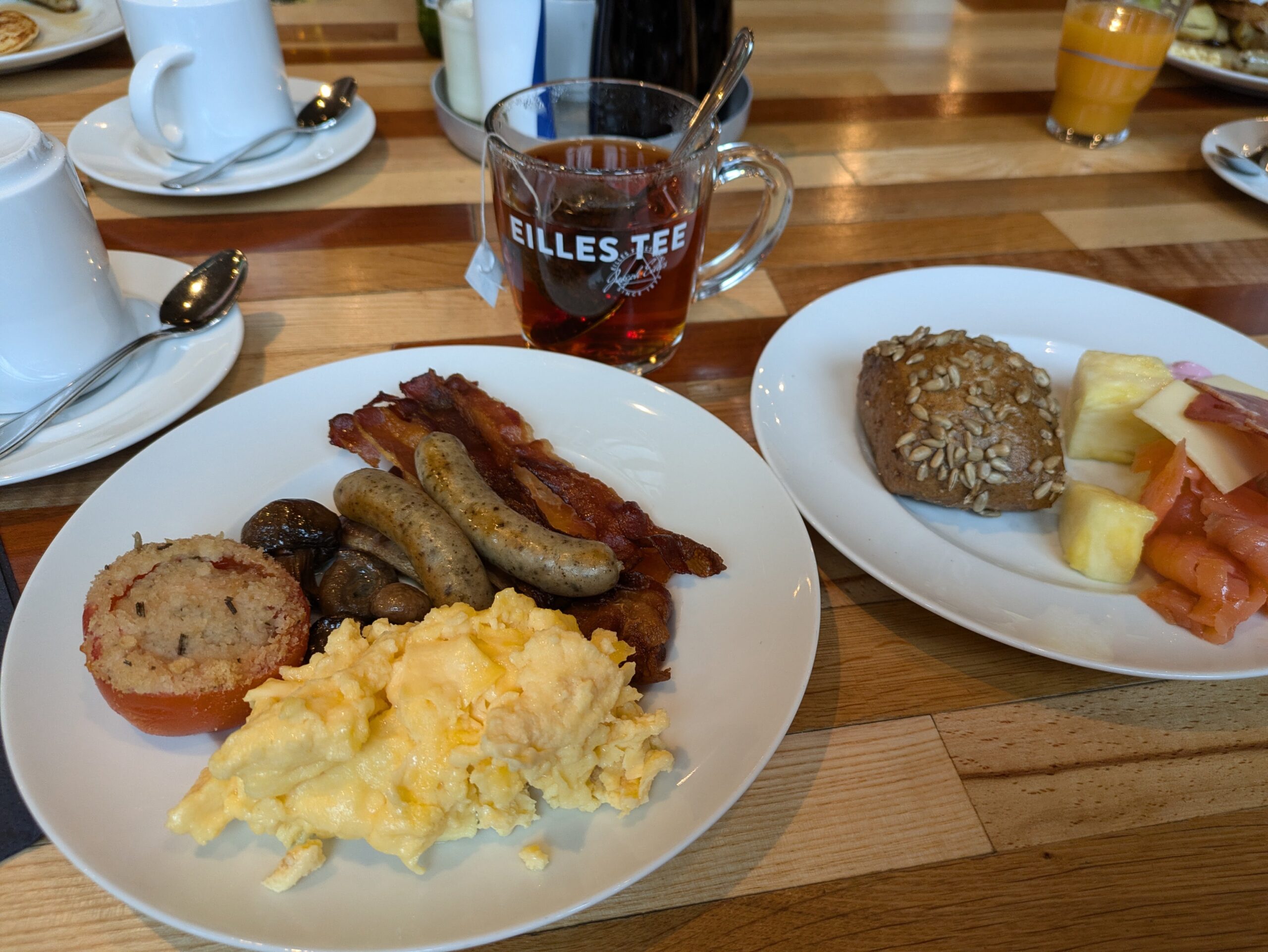
We spent two nights at the elegant Crowne Plaza Berlin – Potsdamer Platz. After meeting up with the Globus group on the first night, we enjoyed a wonderful buffet dinner at the hotel. The breakfast buffet, which offers a wide variety of choices (coffee/tea, fruit, eggs, sausage, charcuterie, bread, yogurt and more), is included in the tour package.
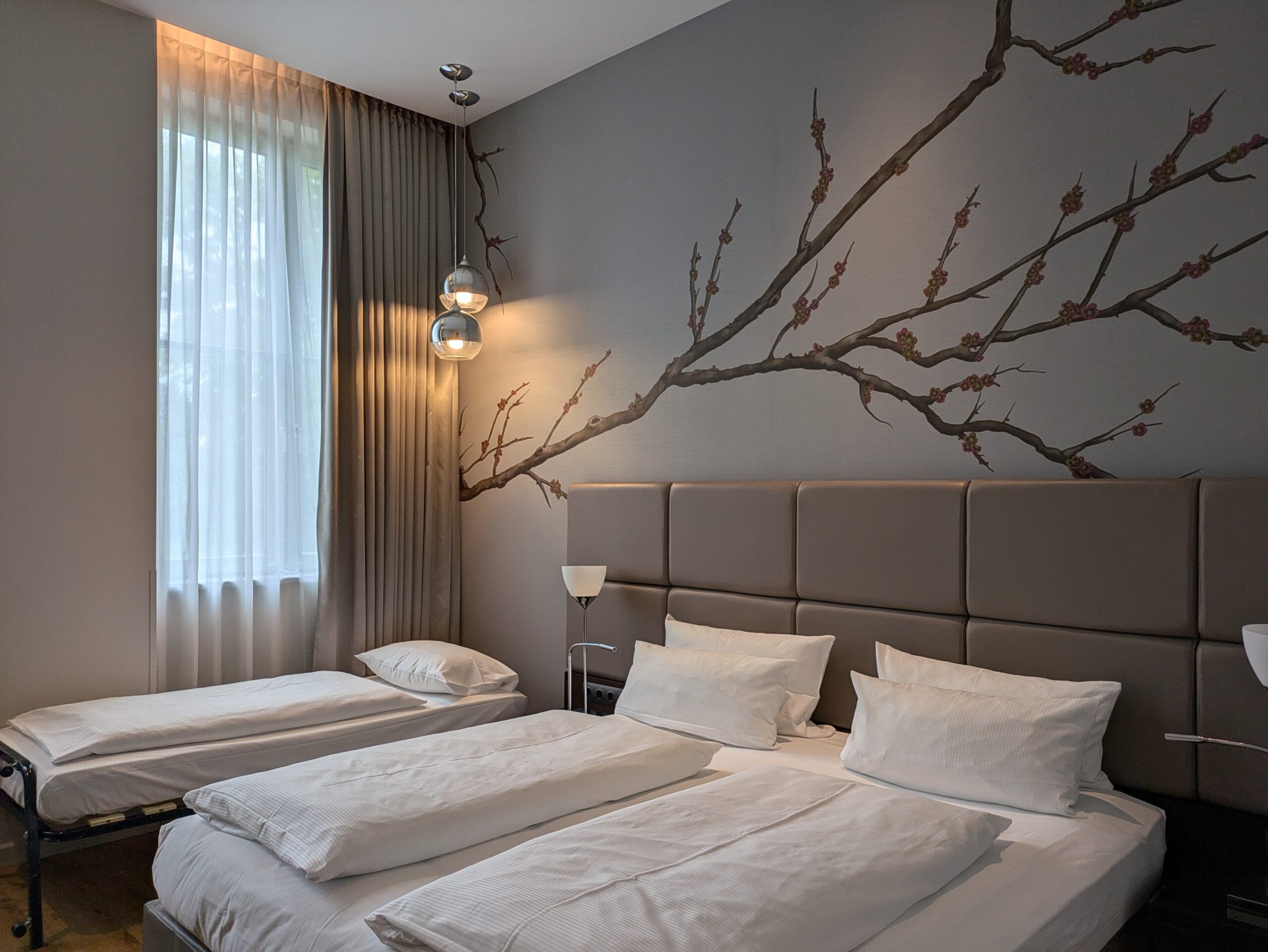
We were a group of three, so most hotel rooms resembled this setup. Globus tours are based on double occupancy. For this particular tour, we recieved a slight discount for having three people in a room. Globus employs the use of a “single supplement” for solo travelers, which means that there is a percentage added to the base price for single travelers. I’ve head some travelers say that it can be waived, or not employed, for certain times or tours. That’s something I would definitely look into if traveling solo.
Dining in Berlin
Berliner Kartoffelhaus
Located in the Mitte district, the rustic Berliner Kartoffelhaus is near Alexanderplatz, the Gothic St. Marienkirche and Museum Island. Schnitzel, steak and potatoes are menu favorites here. We sat at the outdoor patio and enjoyed a variety of German dishes, including a Berliner Kindl pilsner, goulash with parsley potatoes, currywurst with rosemary potatoes and pork schnitzel with mashed potatoes.
Augustiner am Gendermenmarkt
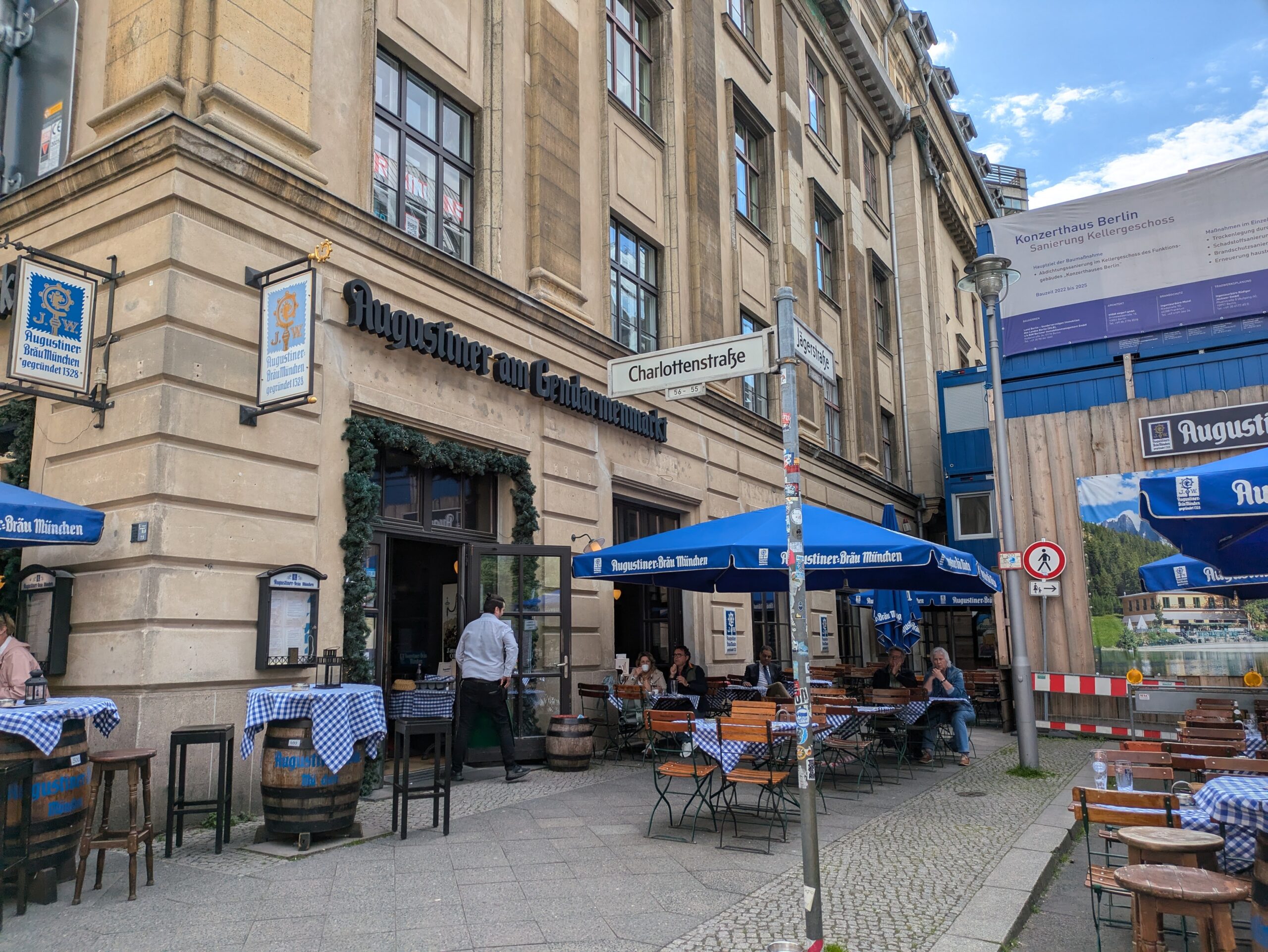
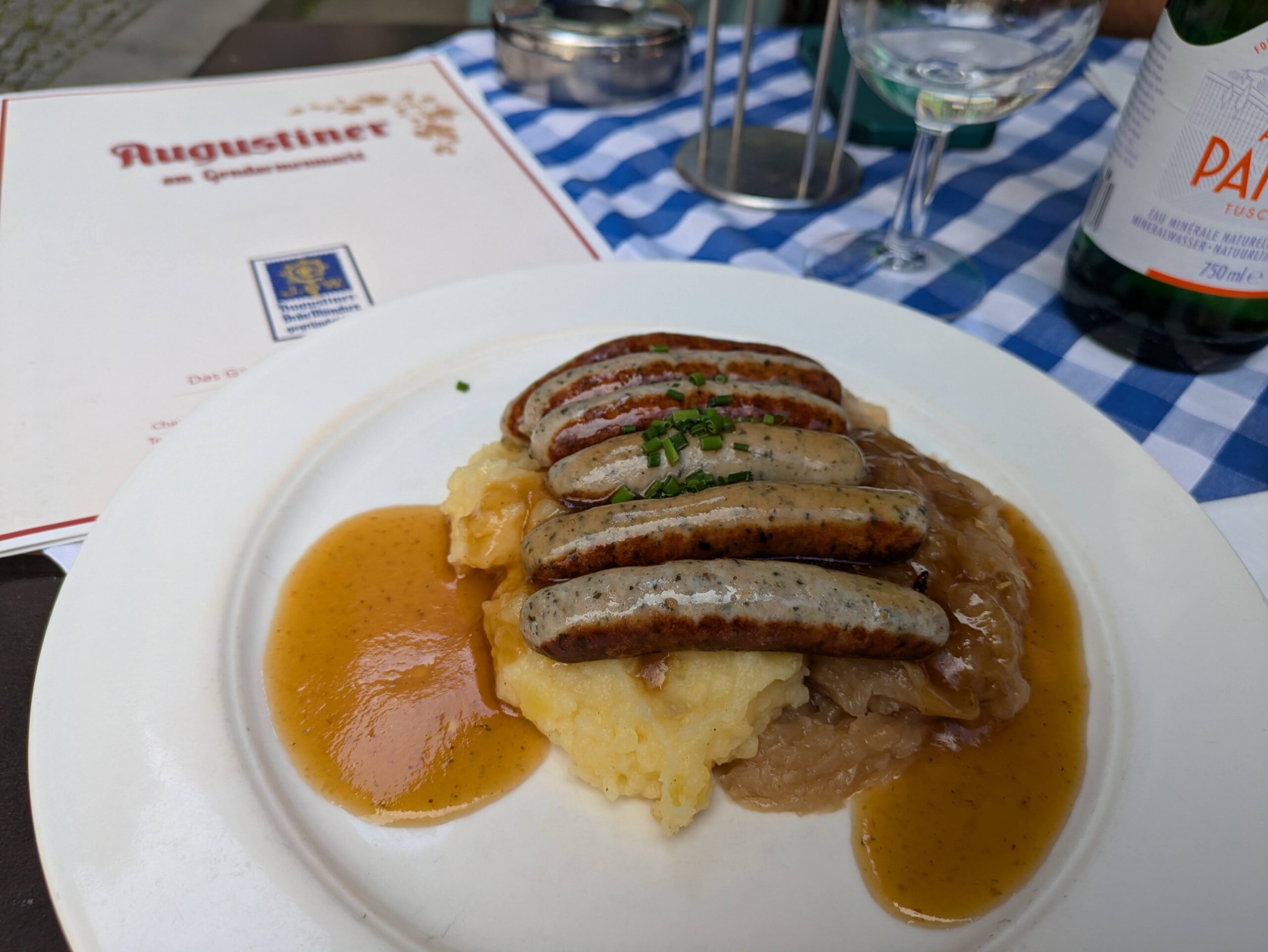
Augustiner am Gendarmenmarkt, near the French and German Cathedrals, was a fun and casual meal at the outdoor biergarten. We had currywurst with mashed potatoes, weisswurst (a white sausage in broth) and goulash with spaetzle.
Dresden
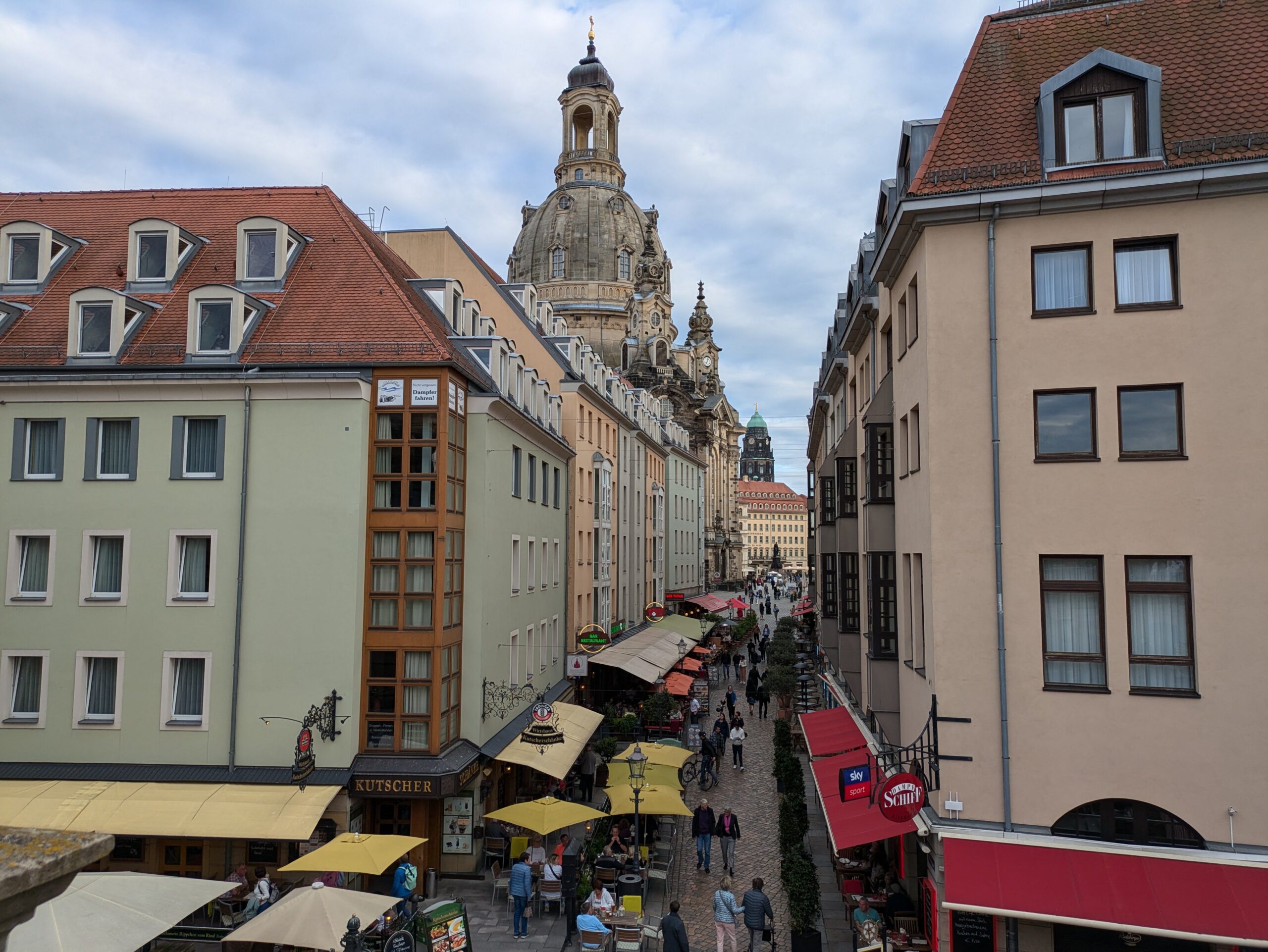
The capital of the state of Saxony, Dresden is the perfect example of why an organized group tour makes so much sense. We probably wouldn’t have visited it on our own had it not been part of the tour (mainly because we didn’t really know much about it). It turned out to be one of our favorite stops along the way.
Dresden is the imperial, elegant and artistic side to the cultural, modern and industrial aesthetic of the historic “Grey City” of Berlin. While it may be most well-known for devastating WWII bombings in 1945, Dresden is a beautiful city with amazing architecture, history and culture around every corner. It’s also the site of Germany’s oldest Christmas market, the Dresdner Striezelmarkt, which was first documented in 1434.
Highlights of Dresden
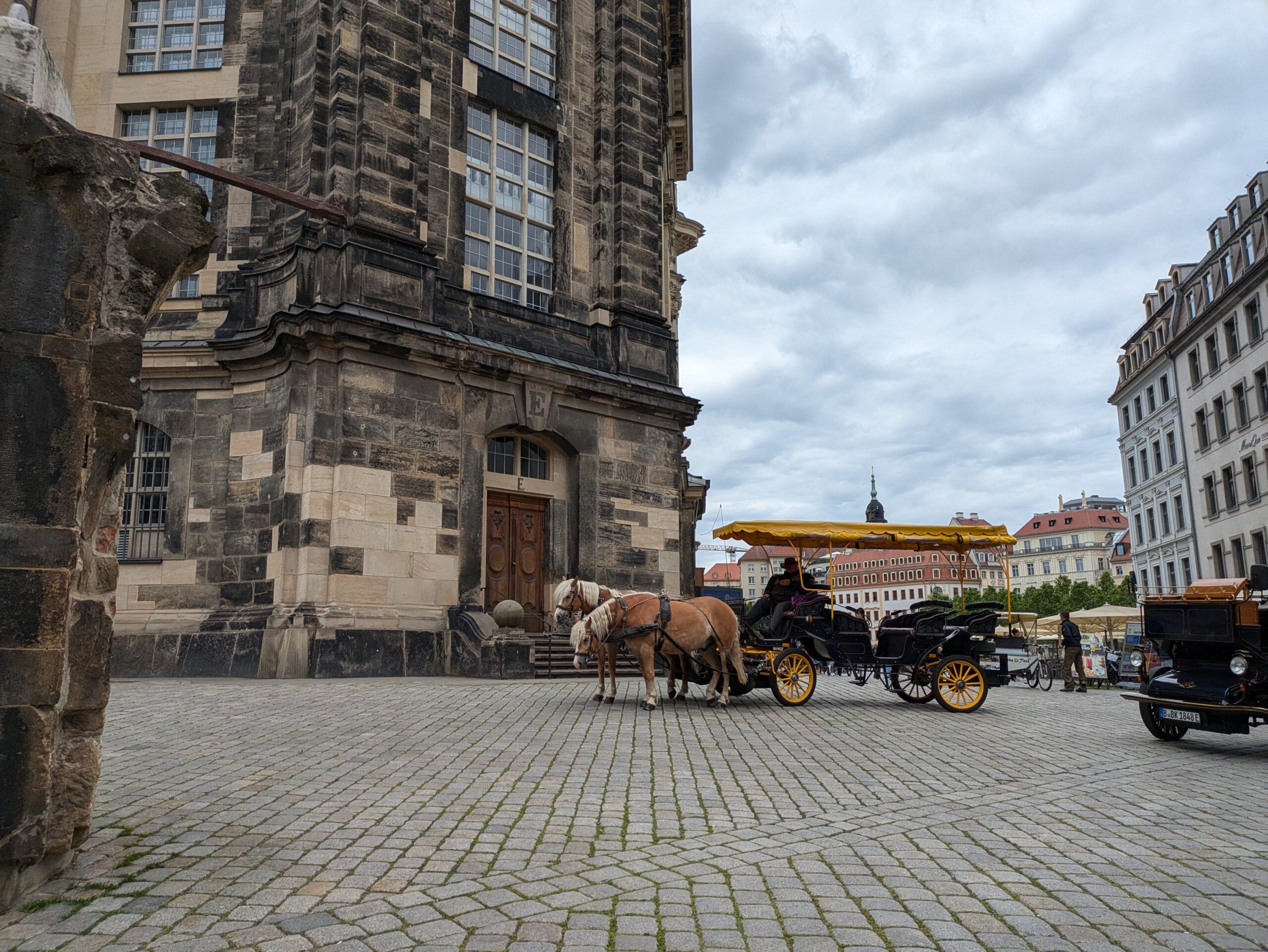
Upon arriving in Dresden, the hotel wasn’t quite ready, so we stowed our luggage and took off on a walking tour with a local guide. We received an interesting and informative tour that highlighted many of the city’s historic sites.
Zwinger Palace
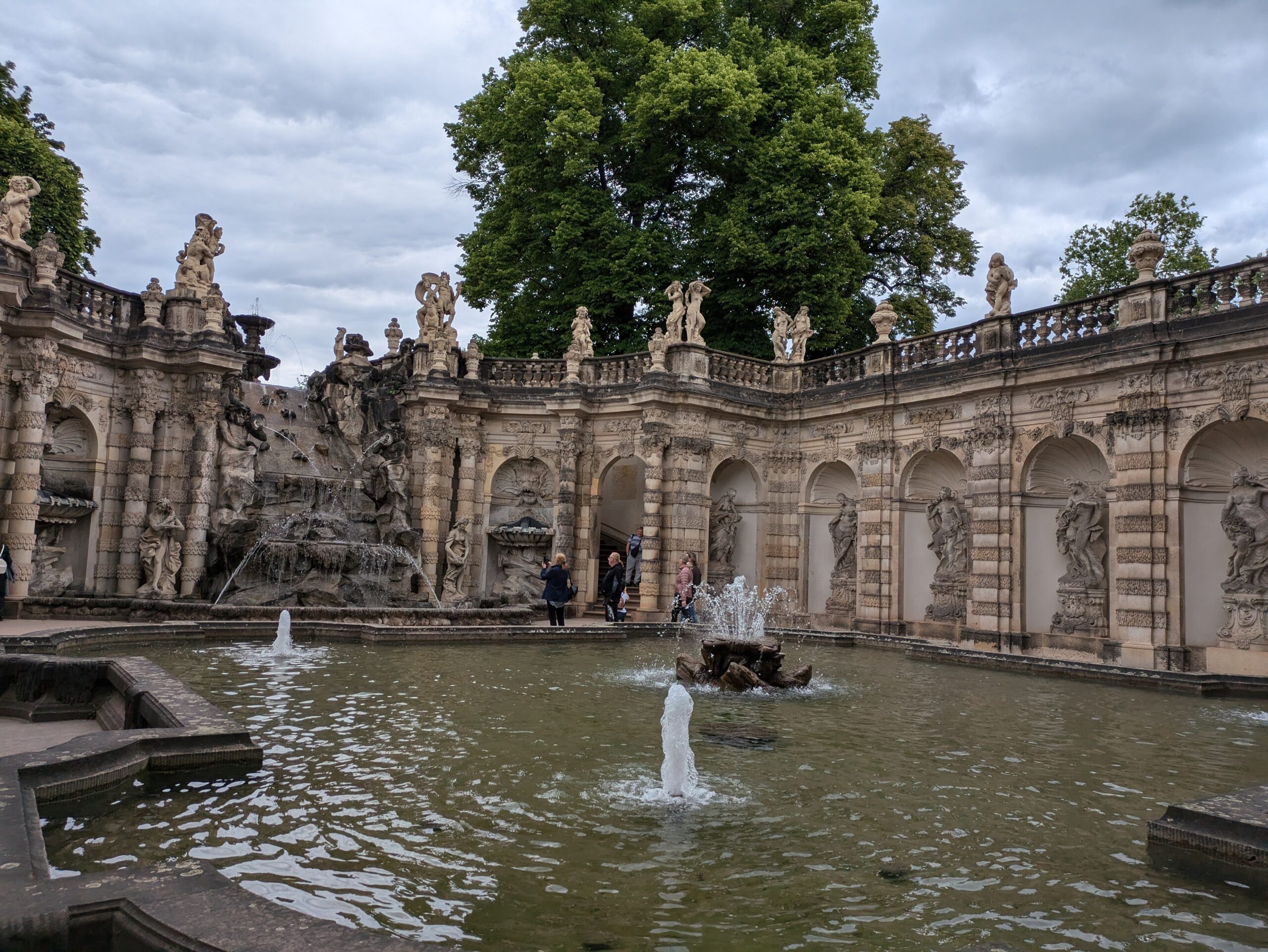
The Zwinger Palace Courtyard is a lovely stroll among fountains, sculptures, gardens and scenic views. Commissioned by Augustus the Strong (Elector of Saxony and King of Poland), this Baroque masterpiece was originally built as an orangery (as well as limes and other citrus fruits), and for tournaments, court festivities and royal events. The palace is within walking distance of sites such as the Semperoper Opera House on Theaterplatz Square and the Green Vault, which is part of the Dresden Castle complex and home to the famous Dresden Green Diamond.
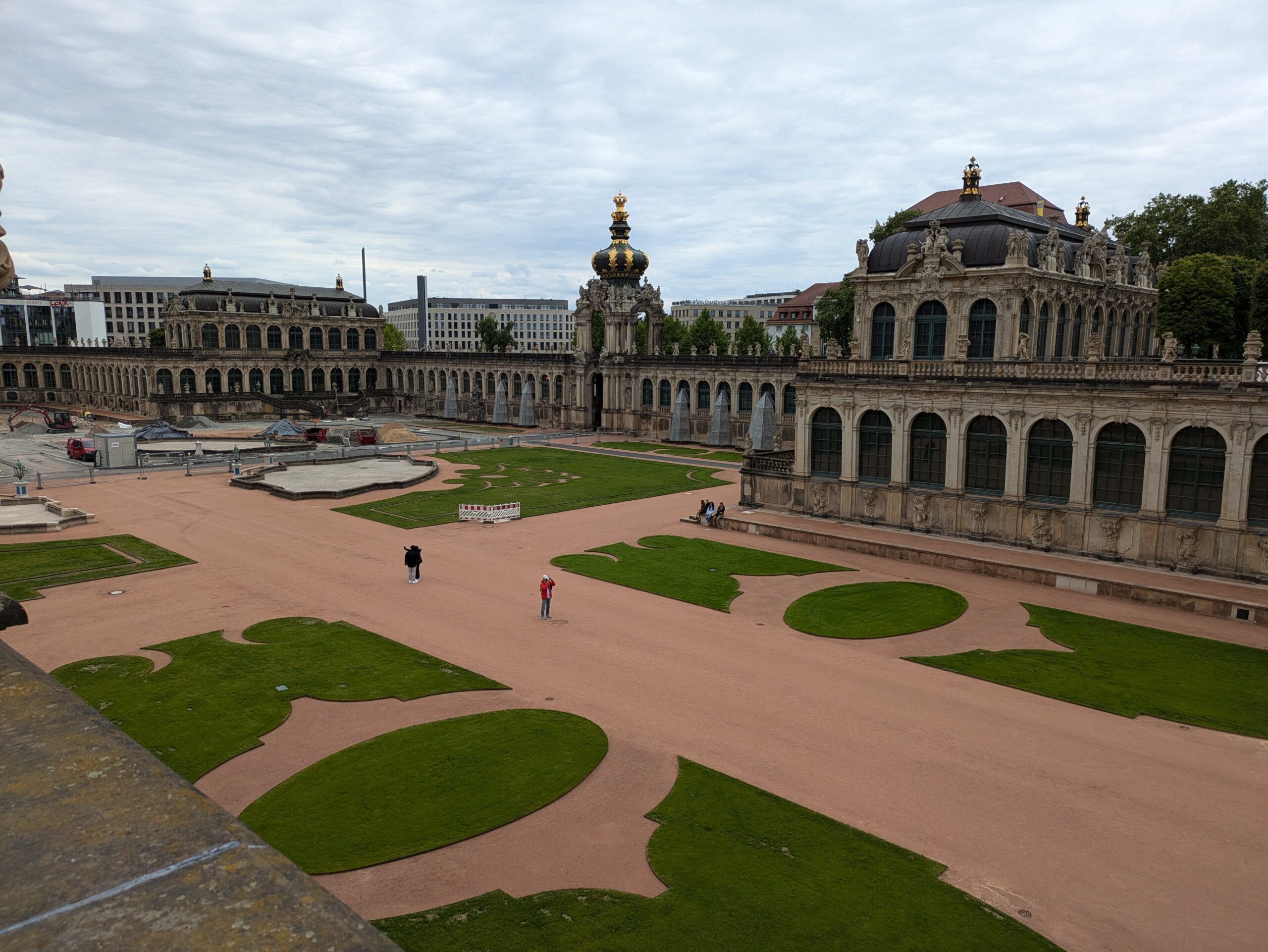
Dresden Castle
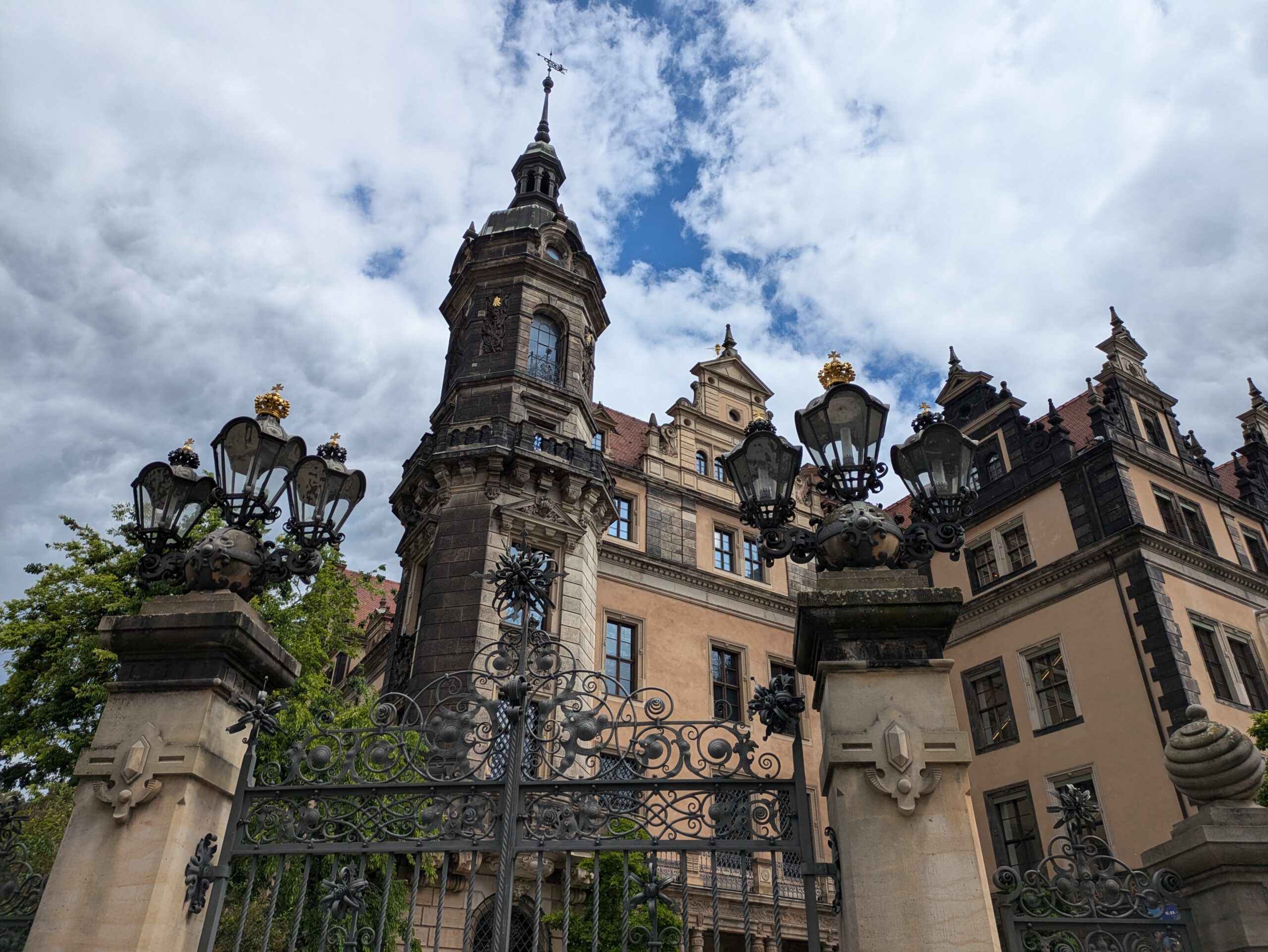
Dresden Castle, also known as the Royal Palace, was the residence of Electors and Kings of Saxony and Poland from 1547 to 1918. Severely damaged in WWII and later reconstructed, it’s now home to a collection of museums, including the Green Vault, the Dresden Armory and Numismatic Cabinet.
Kreuzkirche
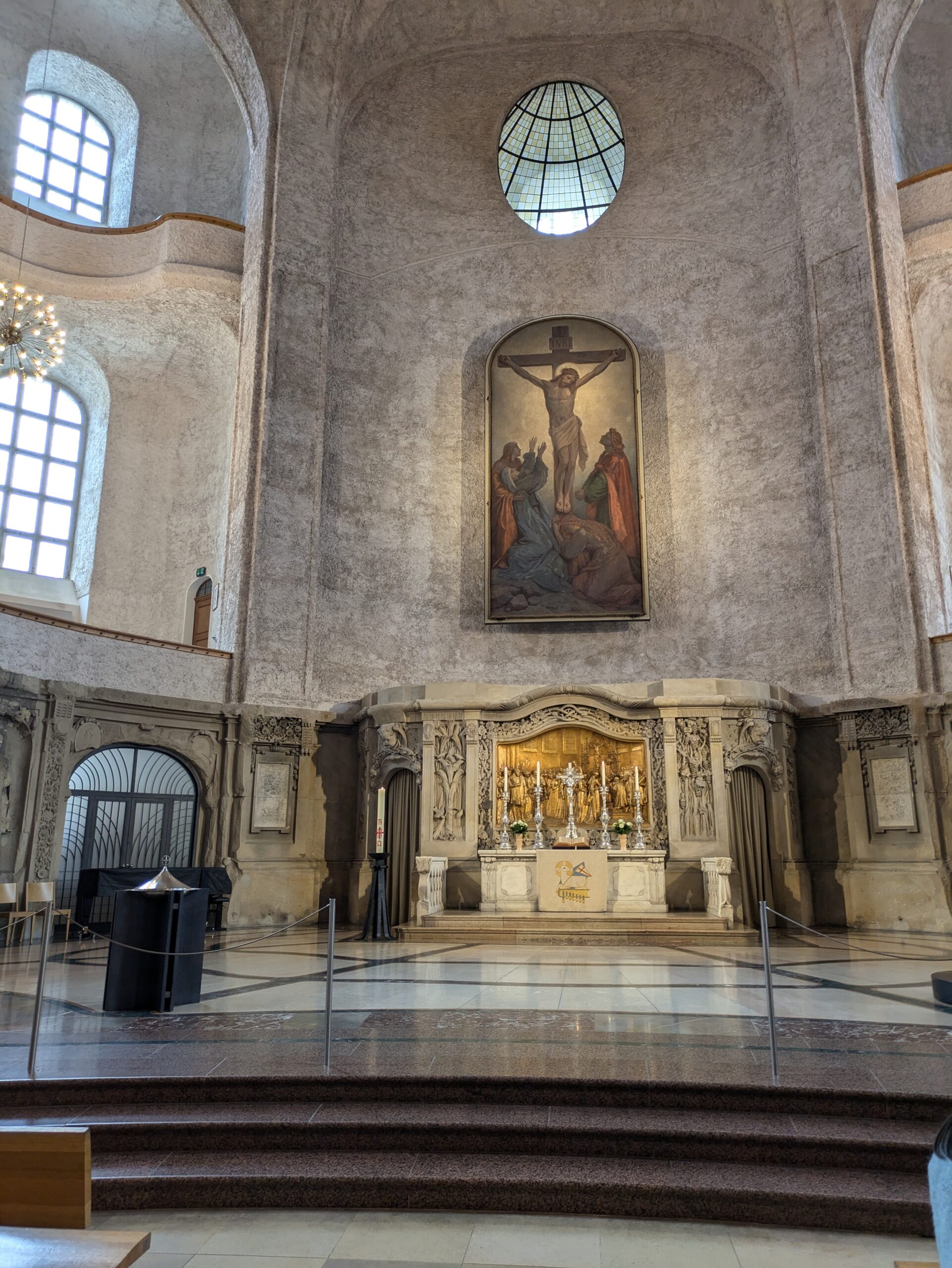
We discovered just how much we adore architecture on this trip. Churches, cathedrals and palaces galore! The Lutheran Kreuzkirche (Church of the Holy Cross) is home to the Dresden Boys Choir and is the largest church building in Saxony. It was built in the early 1800s and features stunning baroque and neoclassical architecture.
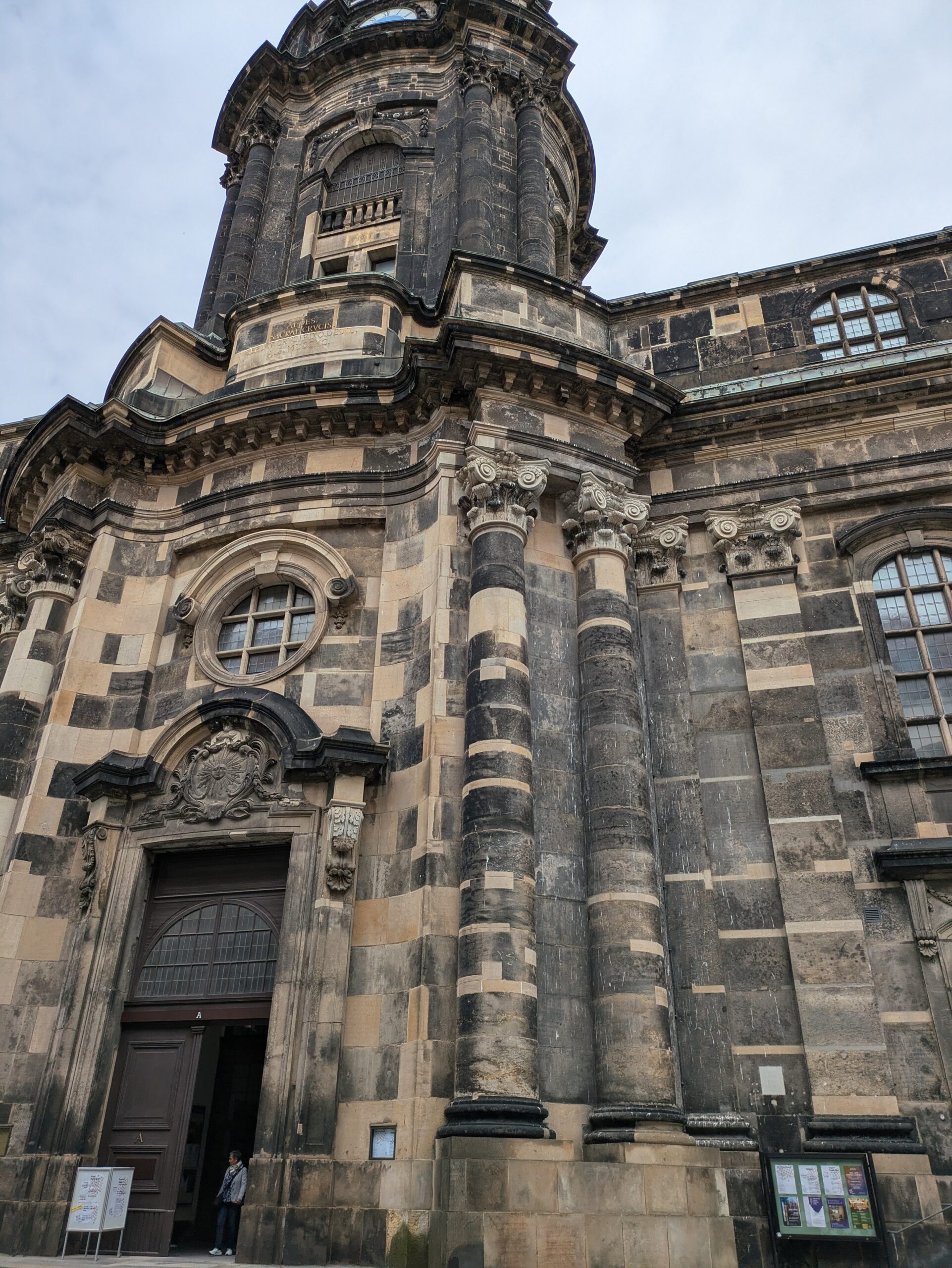
Frauenkirche
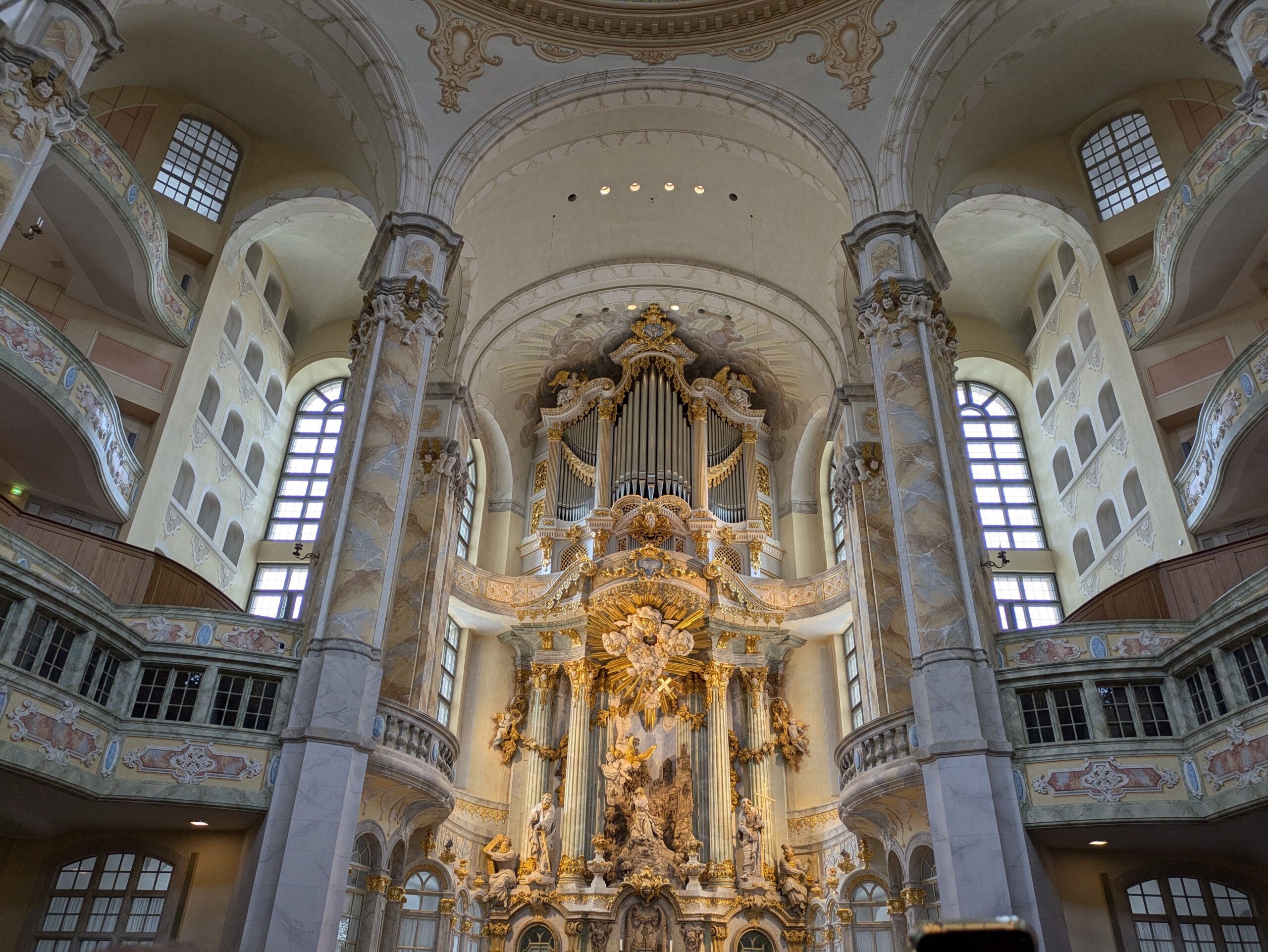
Originally built around 1743, the Lutheran Frauenkirche was destroyed during Allied firebombing in WWII and reconstructed between 1994 and 2005. There’s a statue of Martin Luther outside on Neumarkt Square. Erected in 1885, the statue serves as a reminder of the Protestant Reformation. Most of the Catholic churches in the north became Lutheran after the Reformation.
Furstenzug
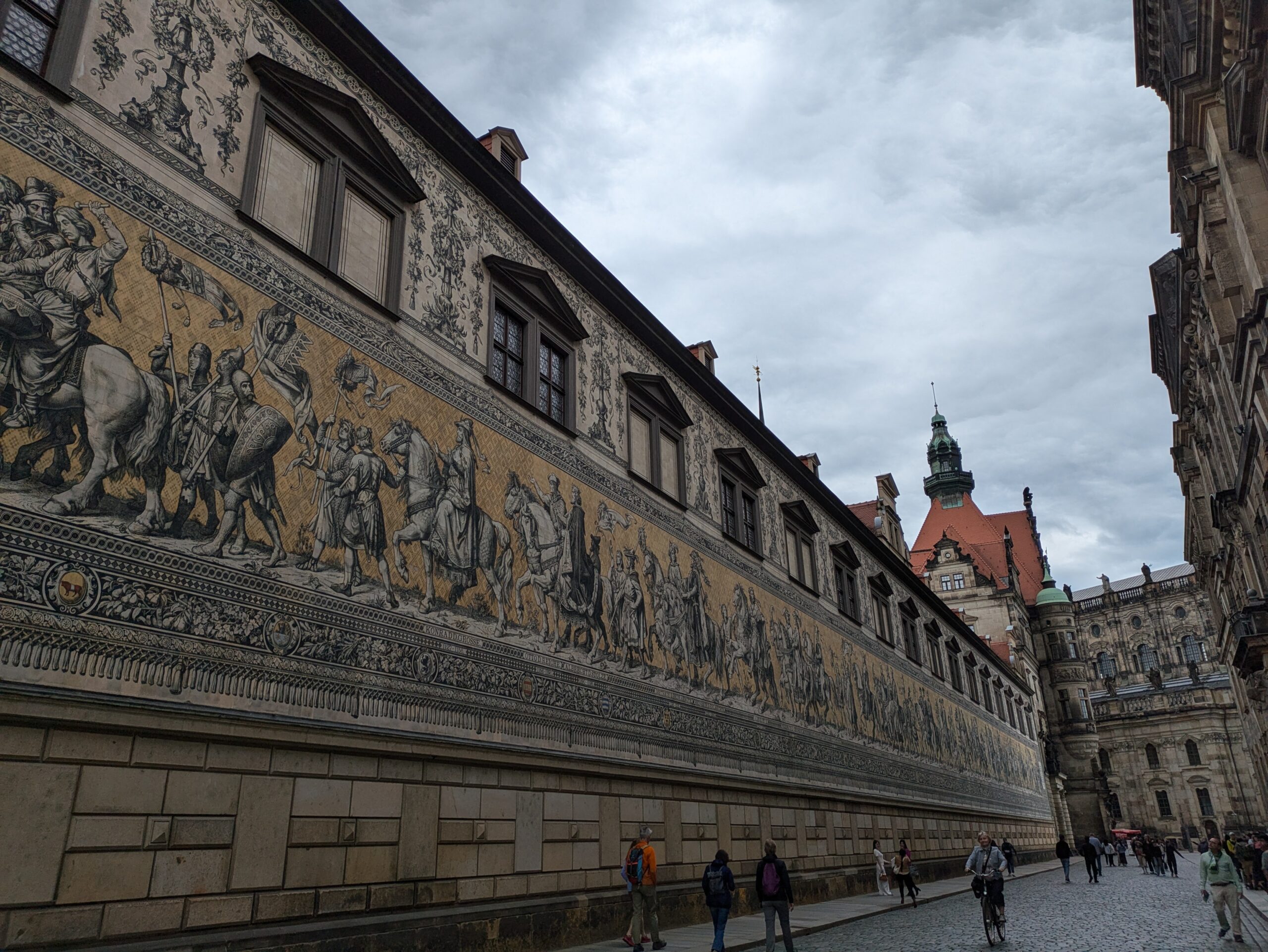
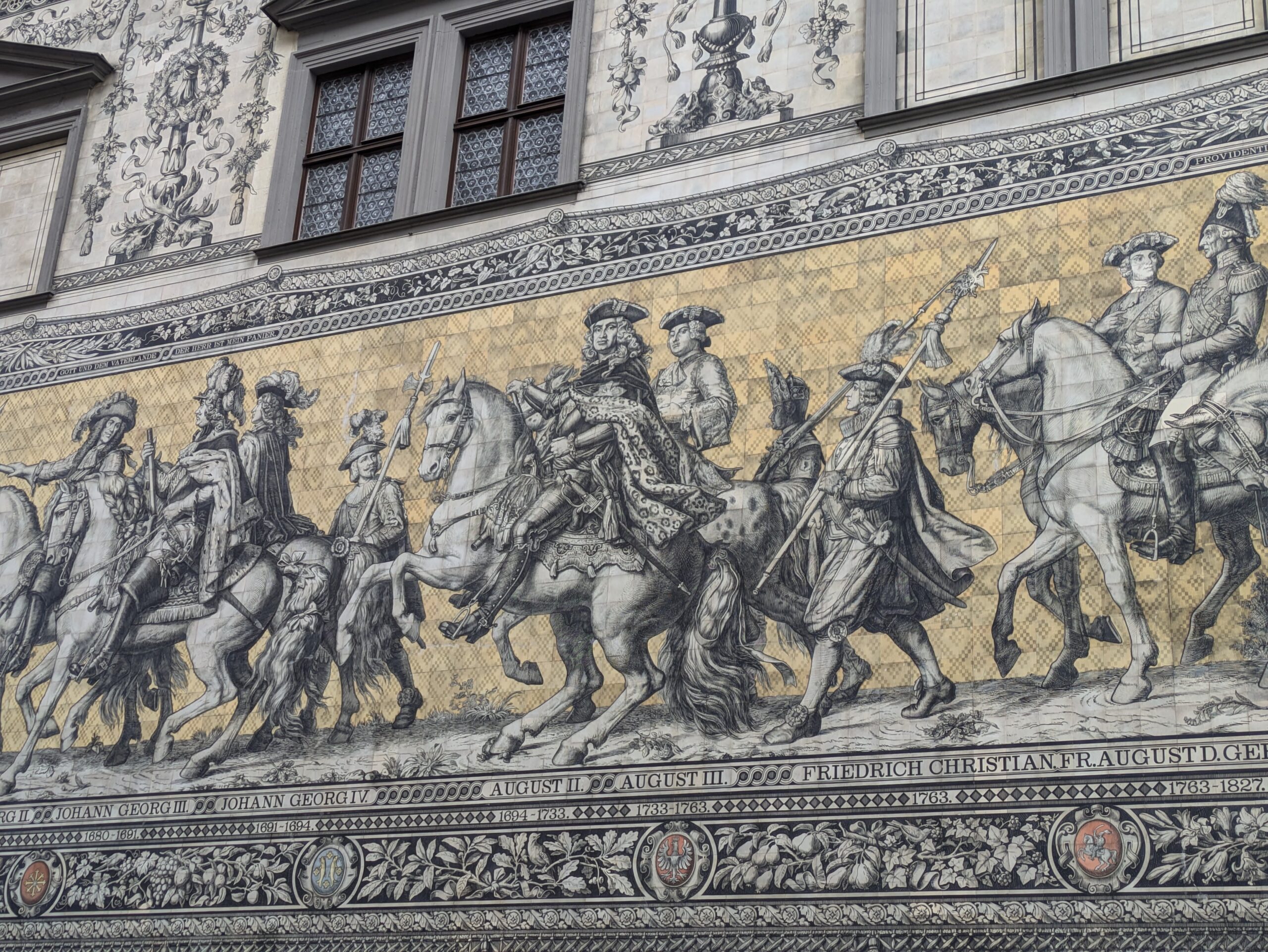
The Furstenzug (Procession of Princes) mural is easily one of the most spectacular attractions in Dresden. It’s made from thousands of pieces of Meissen porcelain (a luxurious product in this region of Germany). Depicting the 34 rulers of Saxony throughout the years, it’s about 394 feet long and located on the outside wall of the Stallhof.
Bruhl’s Terrace
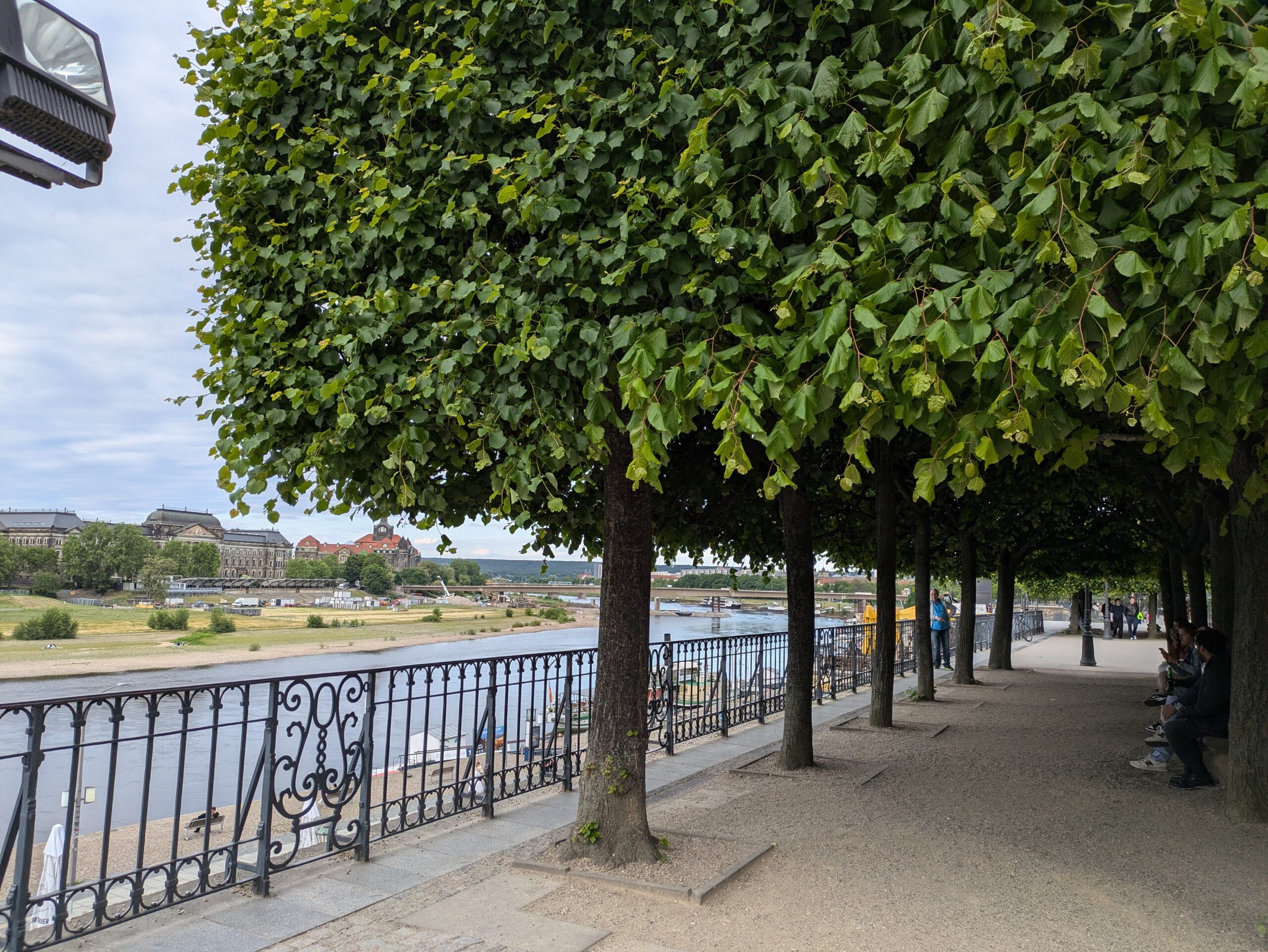
Bruhl’s Terrace, on the Elbe River, is a wonderful spot to relax and take in river views. Dresden gets its nickname, Elbflorenz (which means Florence on the Elbe), from the Elbe River. I enjoyed the canopy of linden trees.
Hotel in Dresden
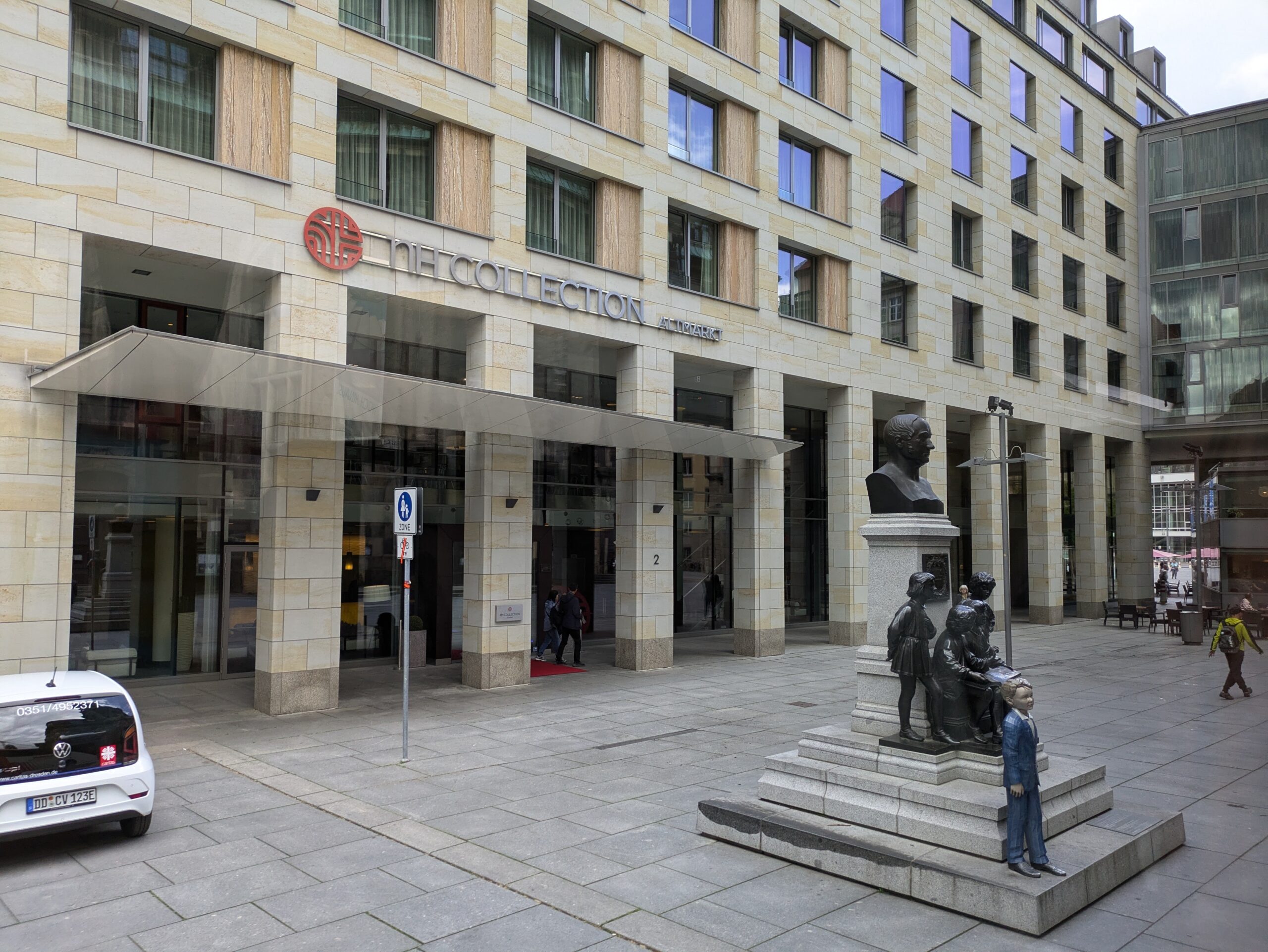
NH Collection Dresden Altmarkt is across the street from the Lutheran Kreuzkirche (Church of the Holy Cross) and near Altmarkt (Old Market Square). It’s an excellent location to walk around the city. We really enjoyed the buffet breakfast at this conveniently located hotel. Speaking of breakfast buffets, all of the daily breakfasts were included in the tour price. Most Globus tours include breakfast, as well as at least two dinners (usually first and last nights); it all depends on the tour.
Dining in Dresden
Coselpalais Grand Café and Restaurant
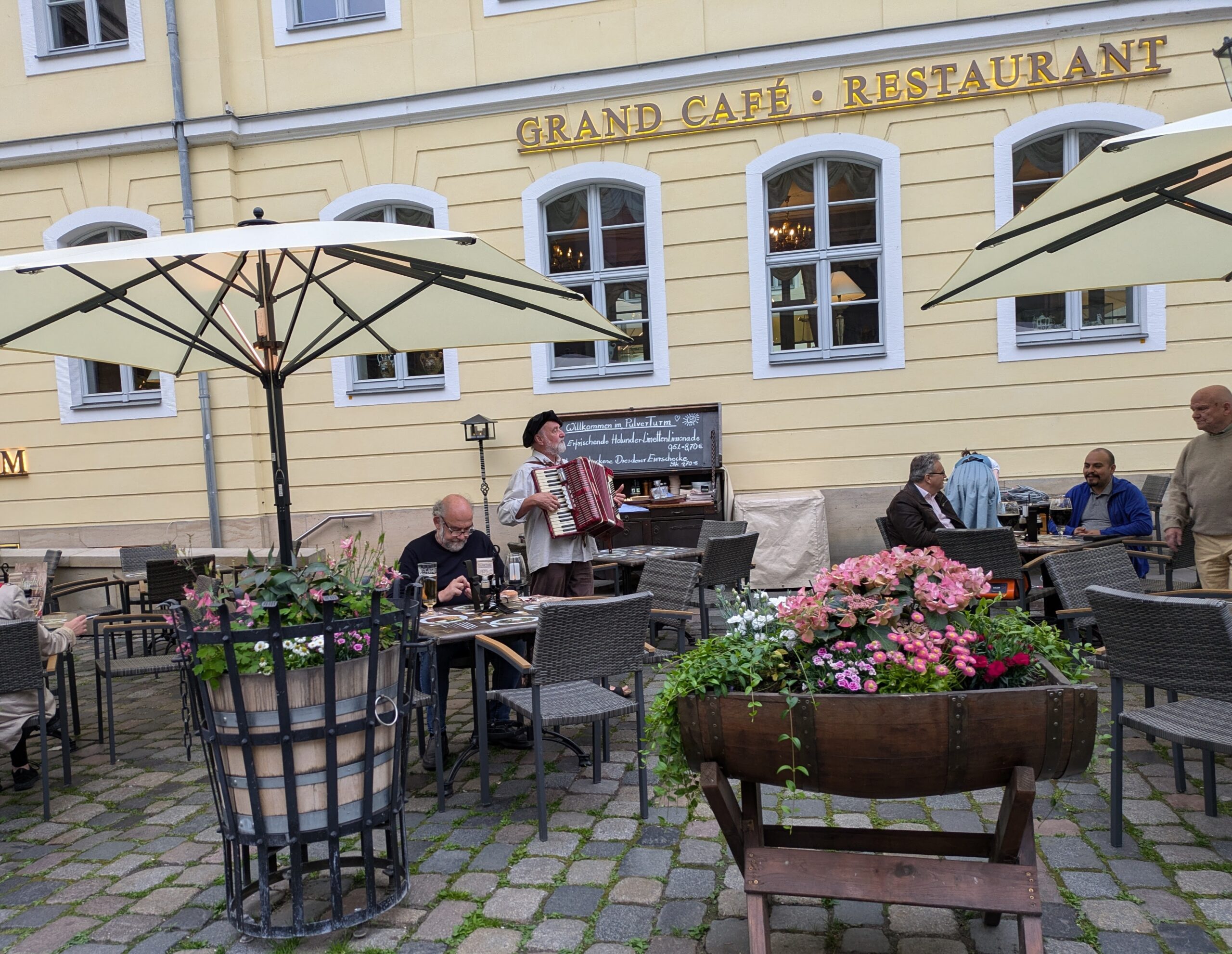
With a beautiful Baroque setting, the historic Coselpalais Grand Café and Restaurant is near the Frauenkirche. It’s built on a former windmill that was used for military storage. Originally built as a residence in 1765, it’s named for Countess von Cosel, a mistress of Augustus the Strong. It was severely damaged during WWII and reconstructed around 1999. We had Saxon-style beef with red cabbage and raisin sauce, a potato dumpling, schweinsteak au four, asparagus and strawberry salad and a refreshing Aperol spritz.
Augustiner an der Frauenkirche
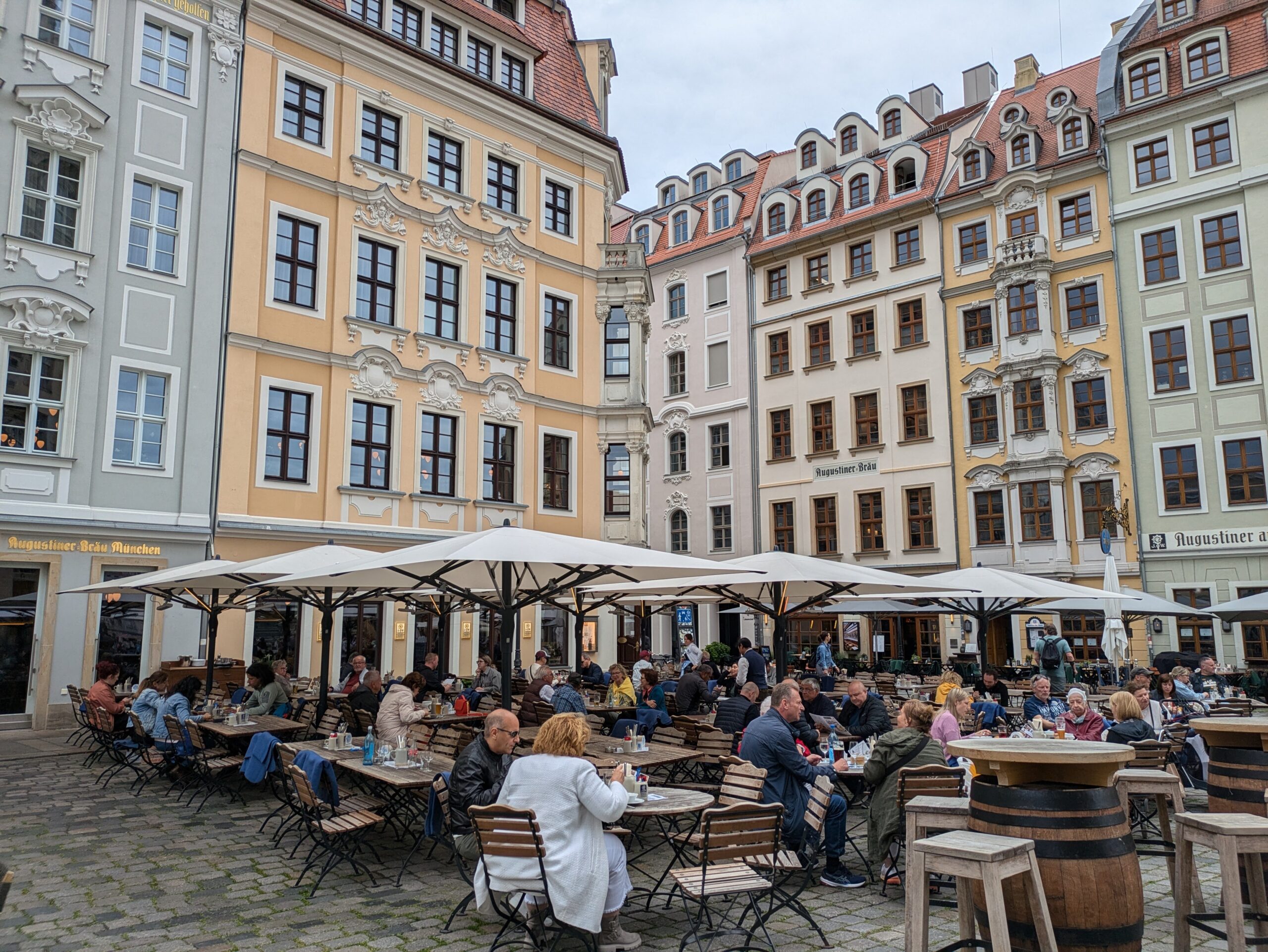
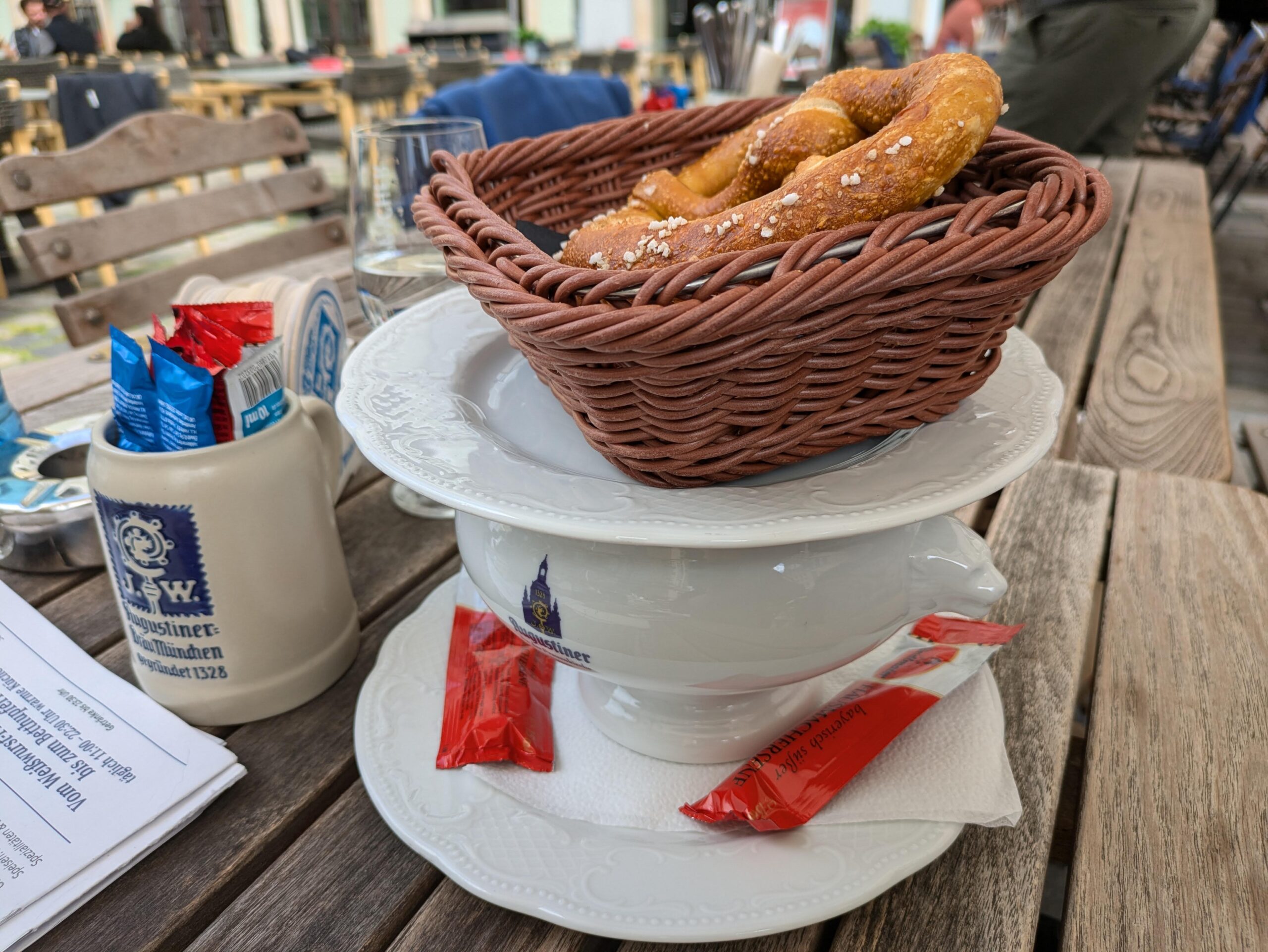
Augustiner an der Frauenkirche is another relaxing patio dining experience. We had a pretzel, Saxon potato soup and weisswurst for lunch.
Rothenburg ob der Tauber
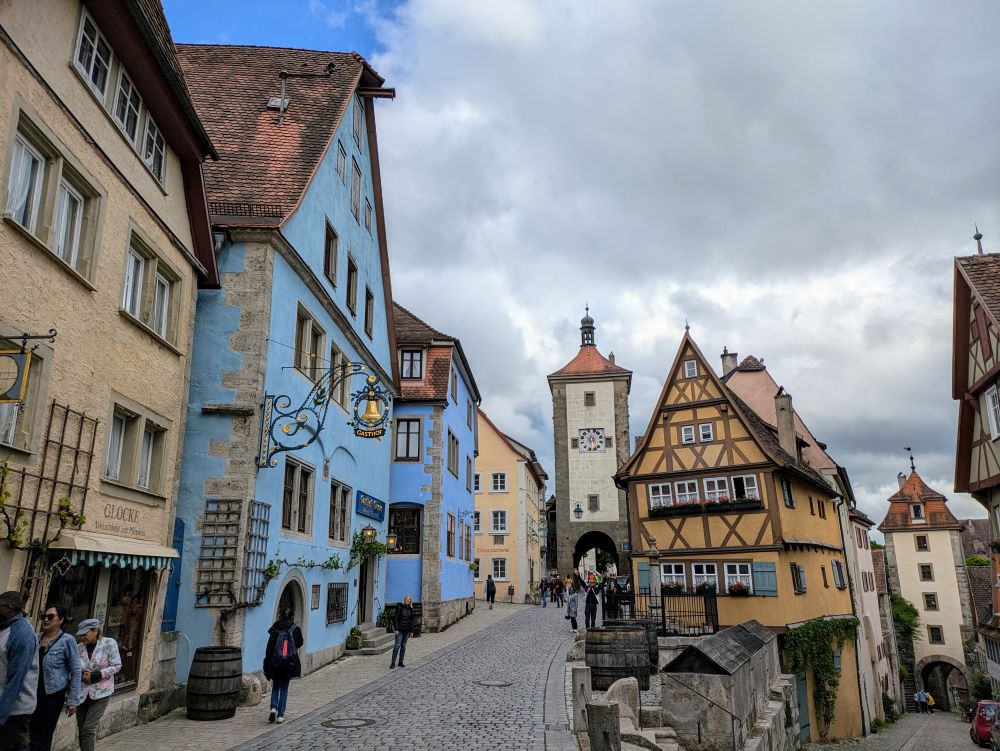
If you’re looking for the marchenbuch (storybook) illustration of a German village, you’ve found it in Rothenburg. The medieval walled city of Rothenburg ob der Tauber is located in the middle Franconia region of Bavaria and dates to the 13th century. You must be escorted in and out of the city if you’re not a resident.
Highlights of Rothenburg ob der Tauber
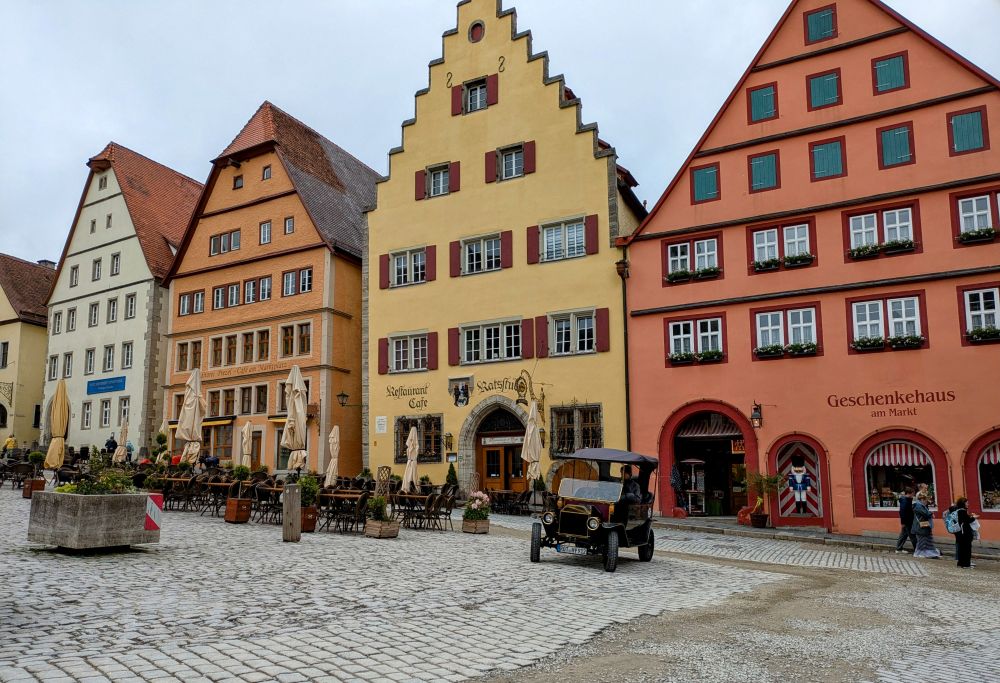
After a quick walk to the town square, we were off on our own to check out the medieval past and half-timbered architecture of this adorable village. While walking about, be sure to check out the bakeries and cute shops, including Kathe Wohlfahrt for authentic Christmas ornaments.
Medieval Crime Museum
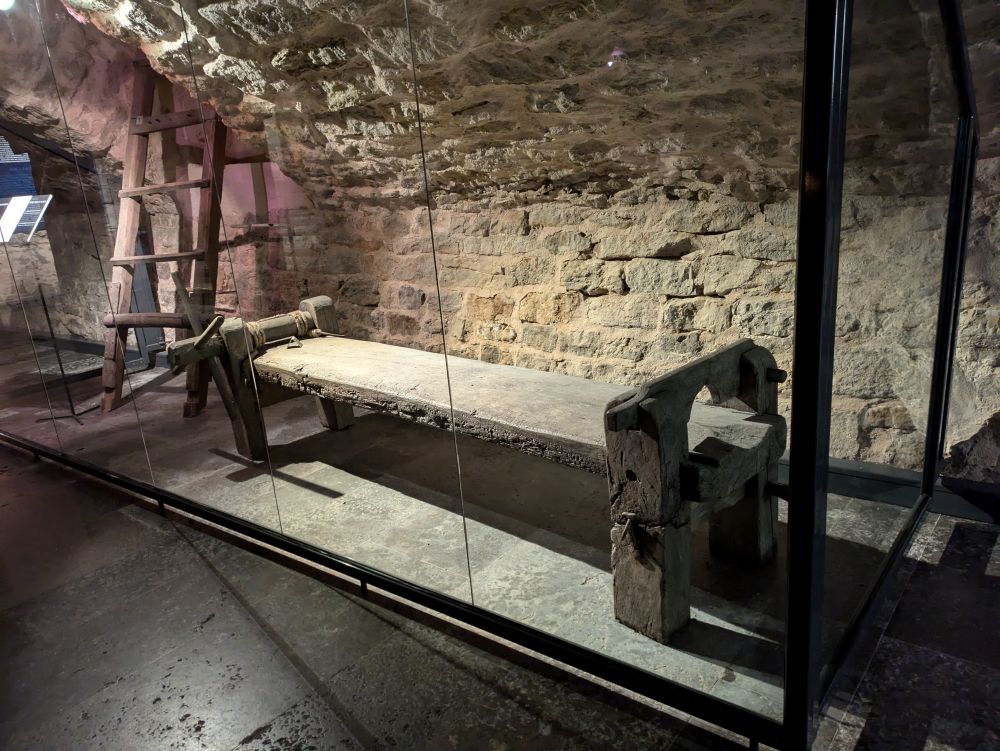
The Medieval Crime Museum offers a historical look at punishment, torture and law enforcement practices from medieval times to the present. Think: torture devices, punishment tools, an iron maiden, nail-covered chairs, shaming outfits and a book on the “Protocol of Torture.”
St. Jakobs Kirche
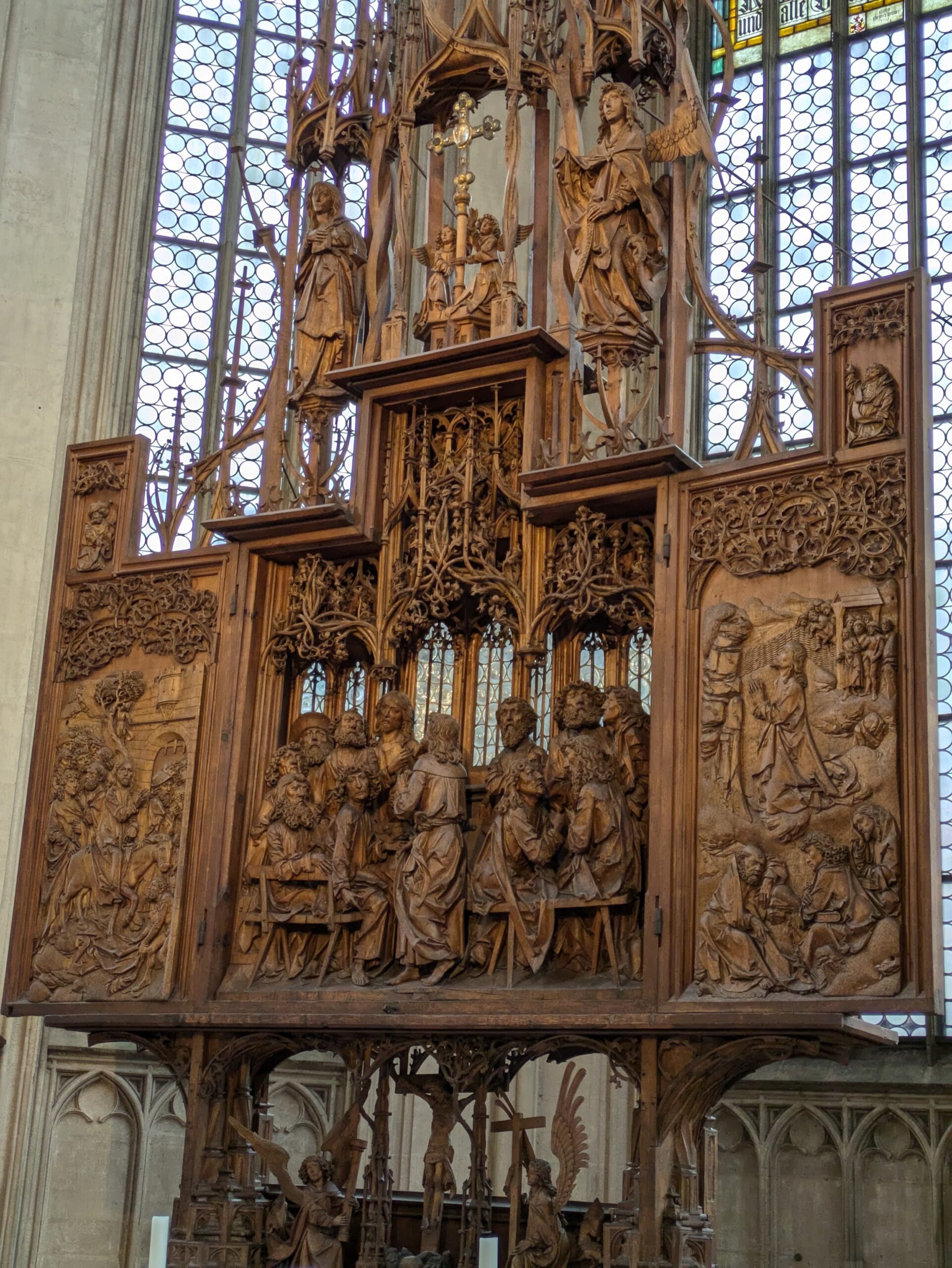
The Gothic St. Jakobs Kirche (Church of St. James) was originally Roman Catholic and now Lutheran. The highlight of this beautiful church is the Altar of the Holy Blood, an intricately carved wooden piece revered for the small droplet of Christ’s blood contained inside a vial, which is held by two angels.
St. Maria Kirche
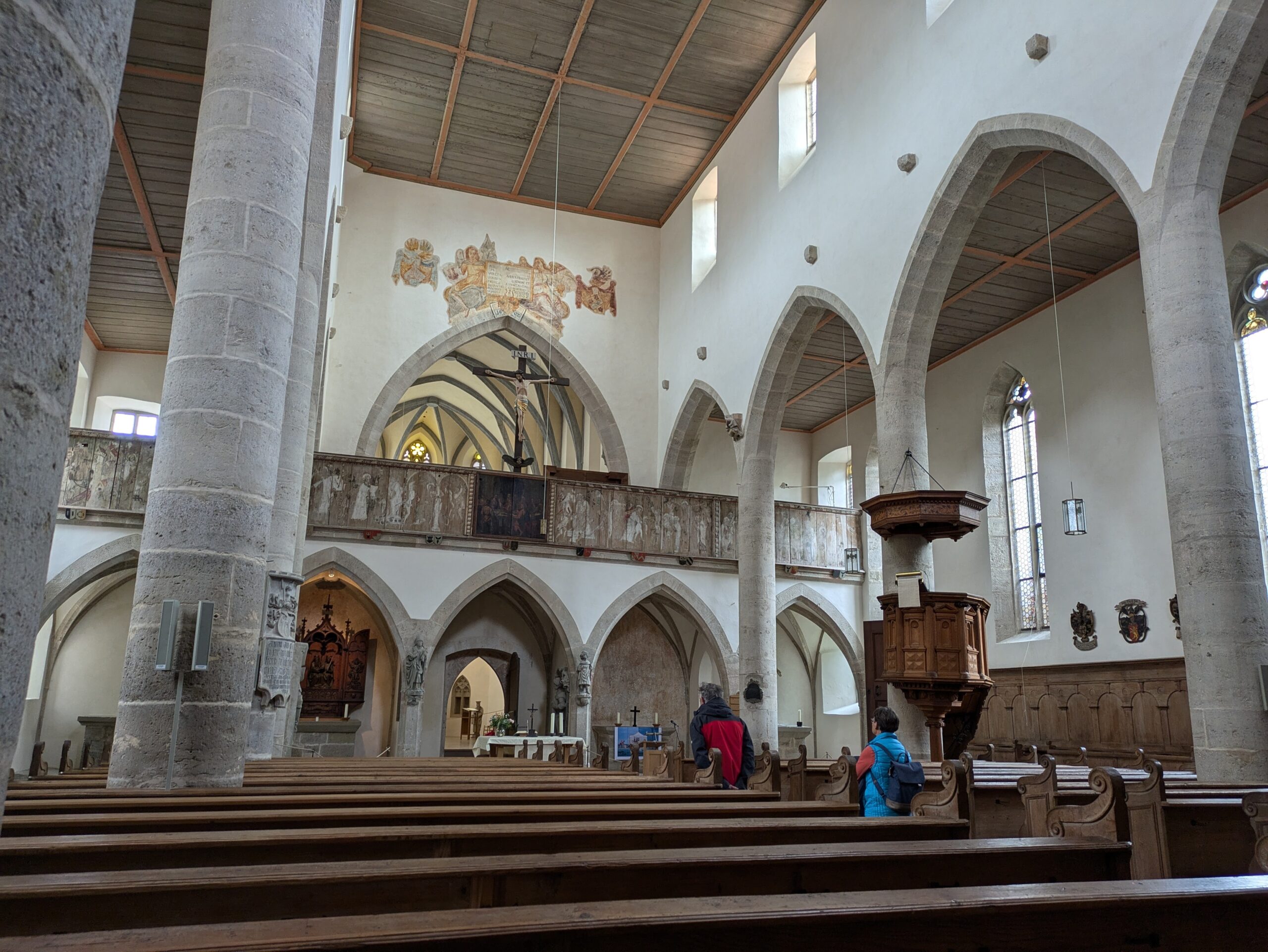
St. Maria Kirche, founded in 1281, is another beautiful sight in Rothenburg. Like others in the region, it was Roman Catholic and is now Lutheran.
Night Watchman Tour
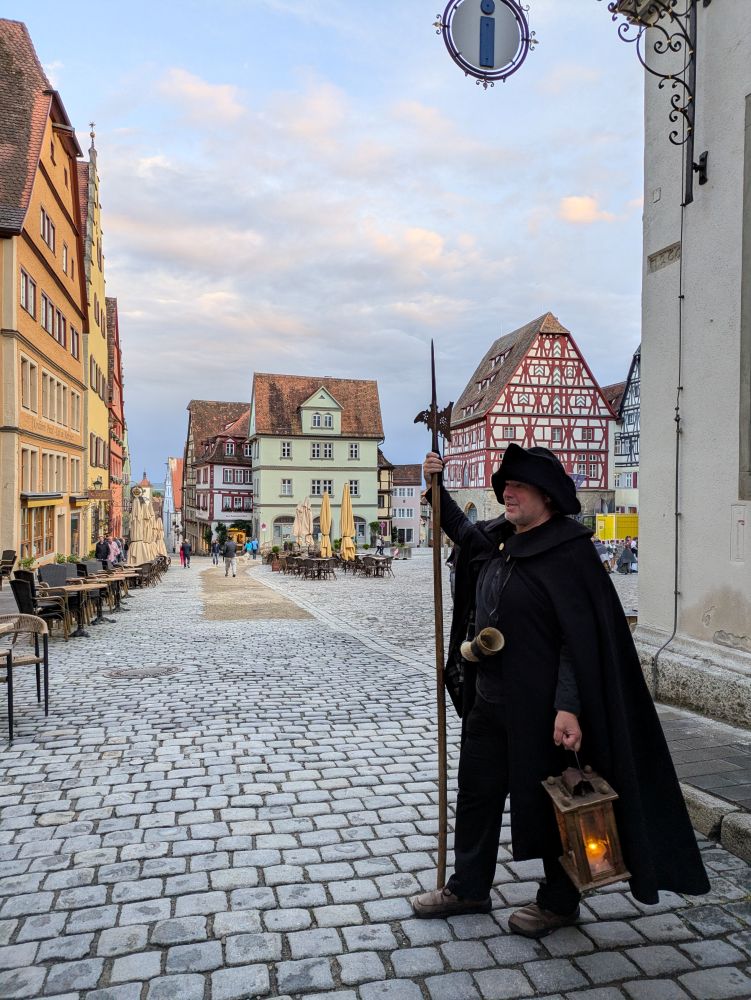
The Night Watchman Tour was an optional excursion that included dinner at a local restaurant and a historic walking tour around town. Escorted by an axe-wielding, lantern-carrying and otherwise historically costumed night watchman, we learned about the chores and nightly duties of this person charged with guarding the town throughout the night.
Hotel in Rothenburg
Hotel Goldener Hirsch
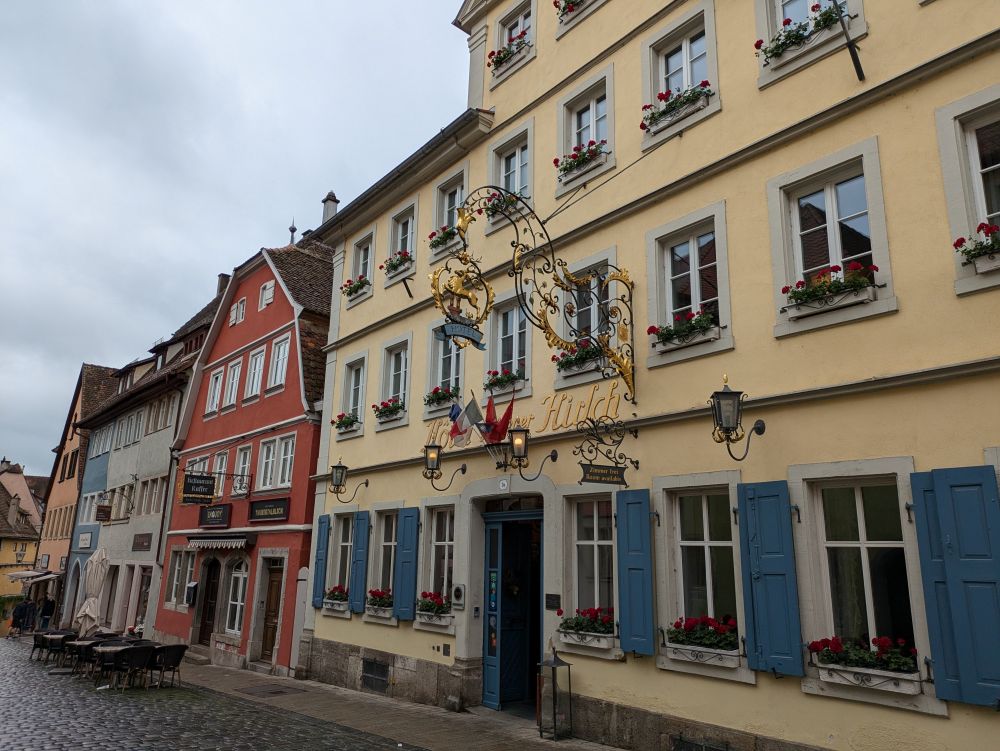
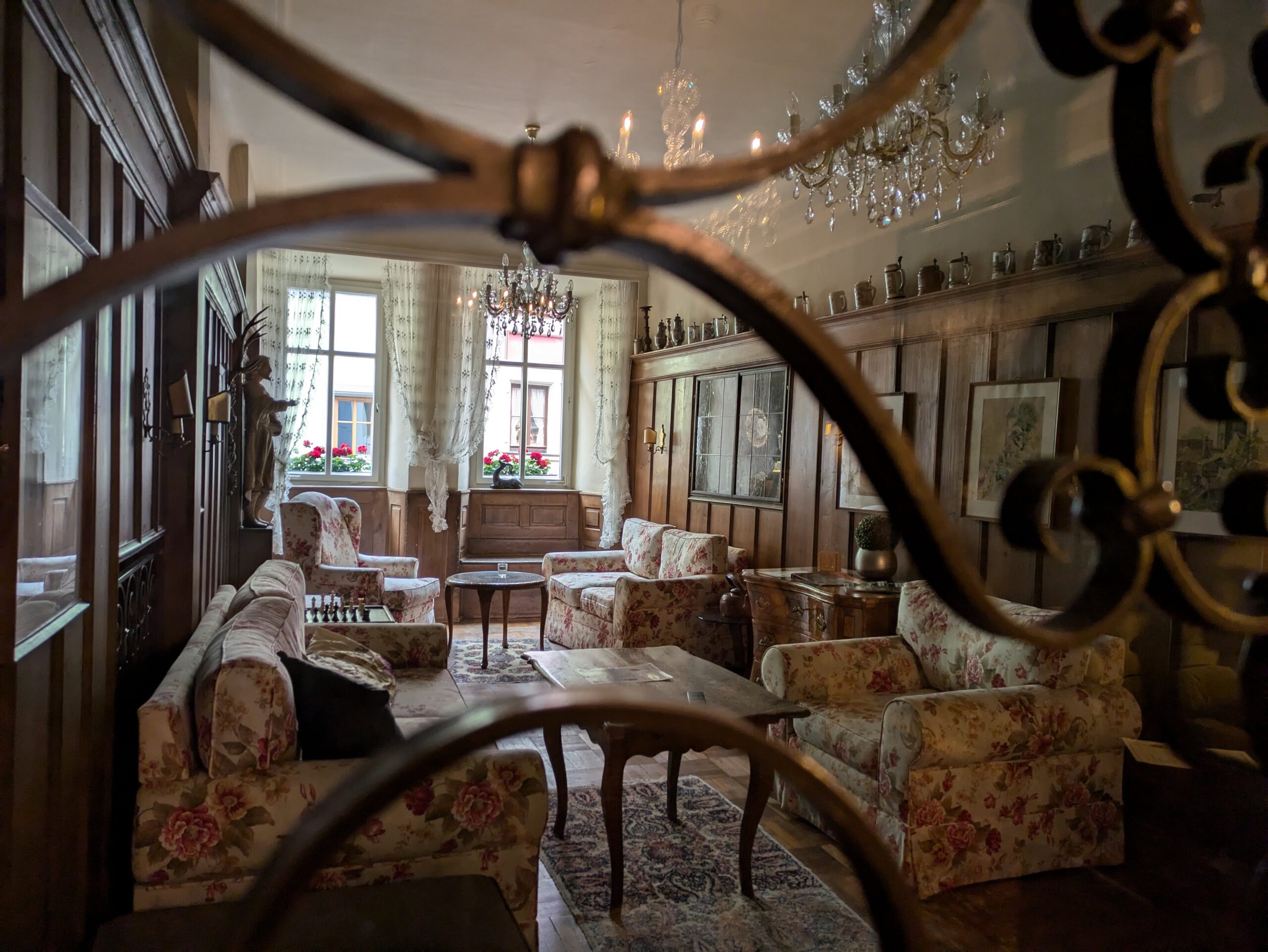
The Hotel Goldener Hirsch (Golden Deer) is lovely, quaint and just what you’d expect from a medieval German town. Spacious rooms have a large bathroom with a tub and a shower. The hotel has sitting rooms, a billiards table and a cute breakfast room with a scenic view.
Hotel Eisenhut
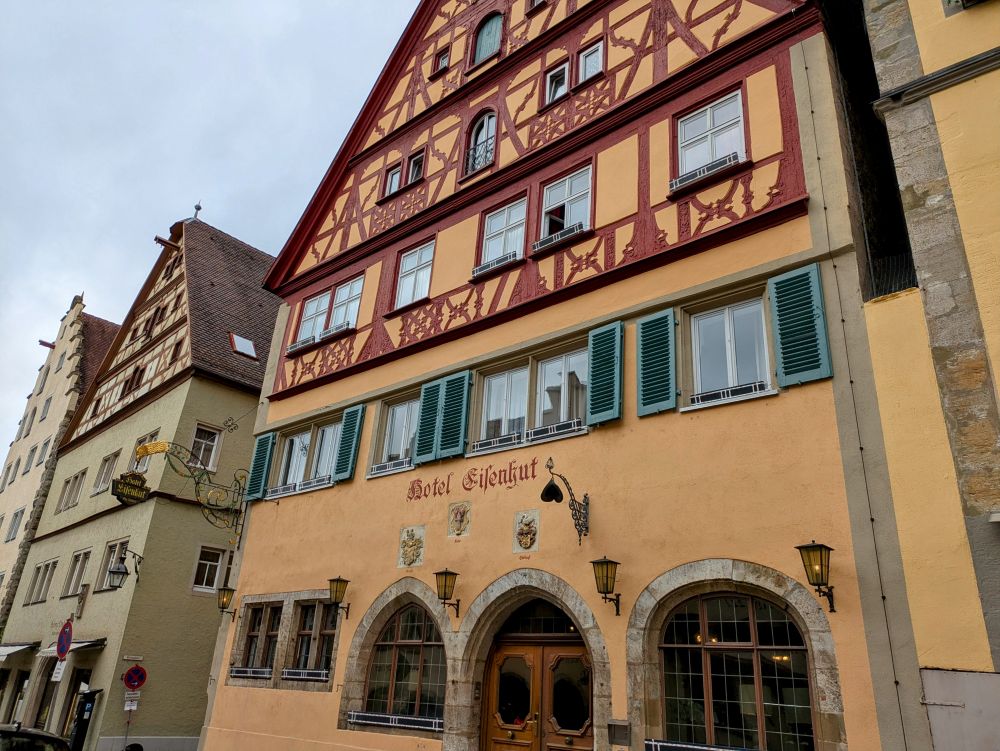
Okay, we did not stay at Hotel Eisenhut (which means “Iron Hat/Helmet”), but I have to mention it just for the fact that my maiden name is Eisentrout. The hotel is made up of four houses from the 12th and 18th centuries. It has 75 rooms, a restaurant, a bar and conference space.
Dining in Rothenburg ob der Tauber
Goldenes Lamm
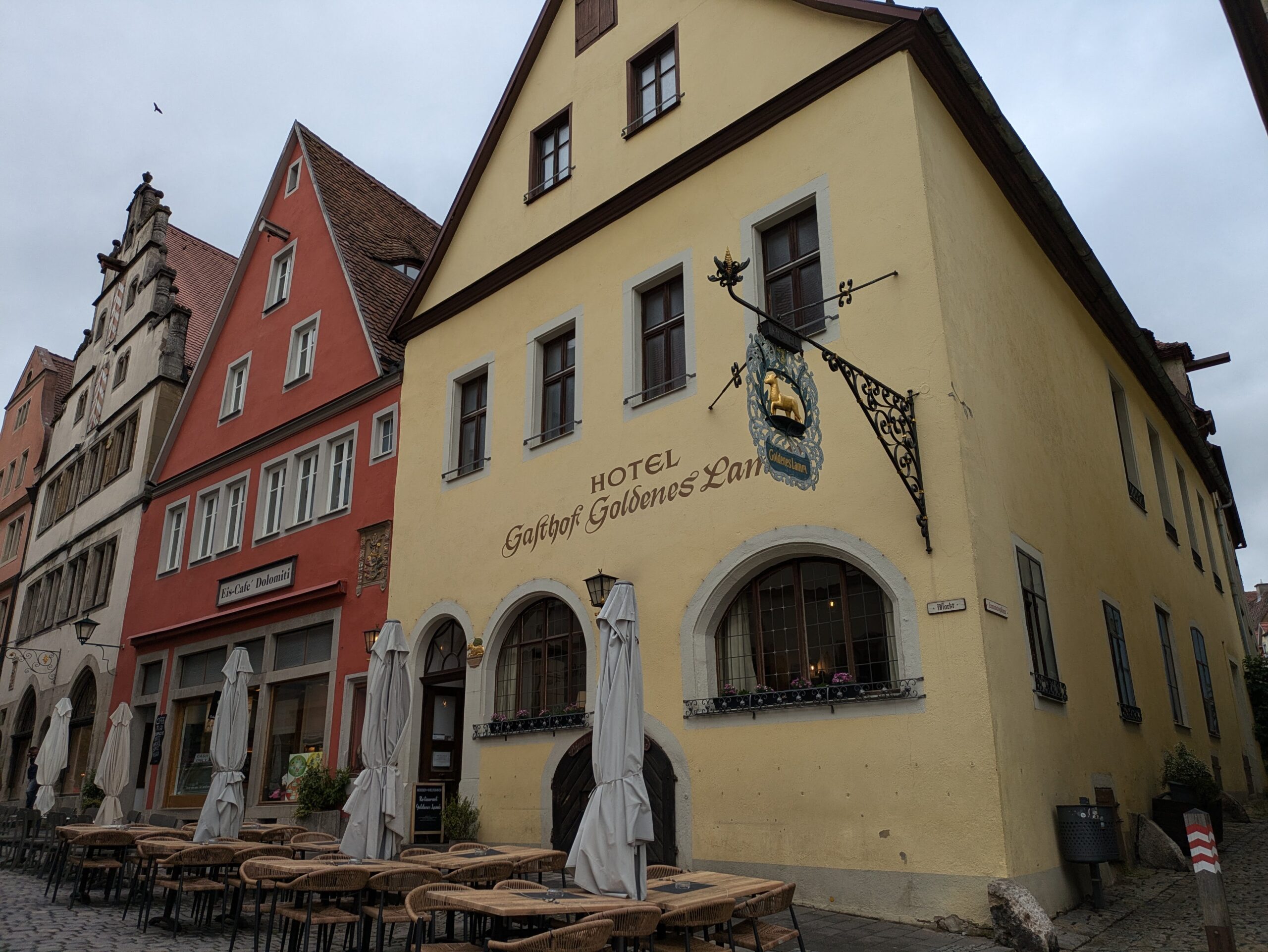
The Goldenes Lamm (Golden Lamb) was the dining part of the optional Night Watchman tour. Dinner included a pork dish, spaetzle and apple strudel. Dinners with Globus usually include two beverages. We chose red wine, light beer (there’s a choice of light or dark beer) and an aperol spritz.
Bavaria Bound
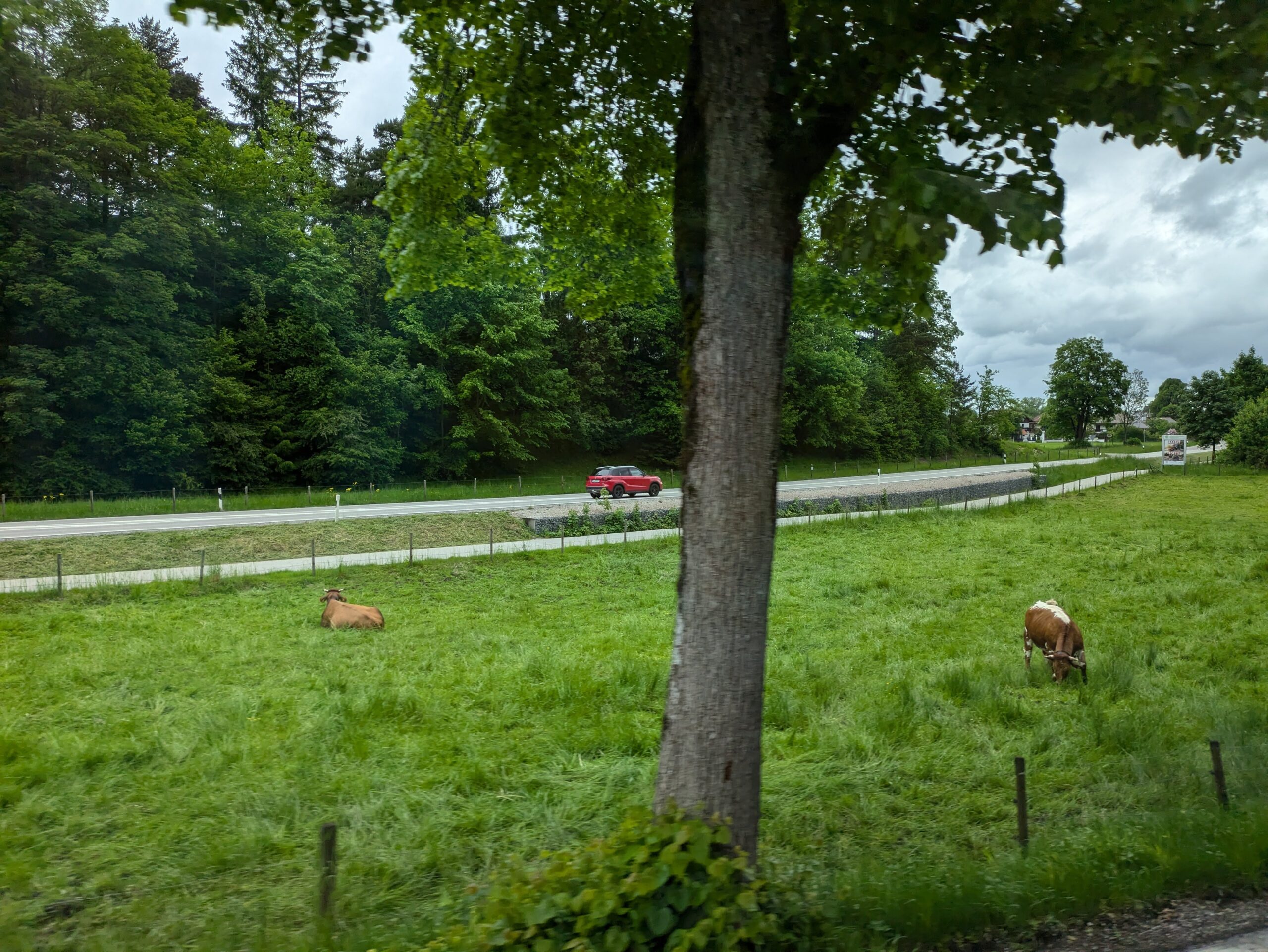
From Rothenburg to Schwangau, we got the first glimpse of Bavarian dairy country and the rolling hills and snow-capped peaks of the Bavarian Alps.
Schwangau
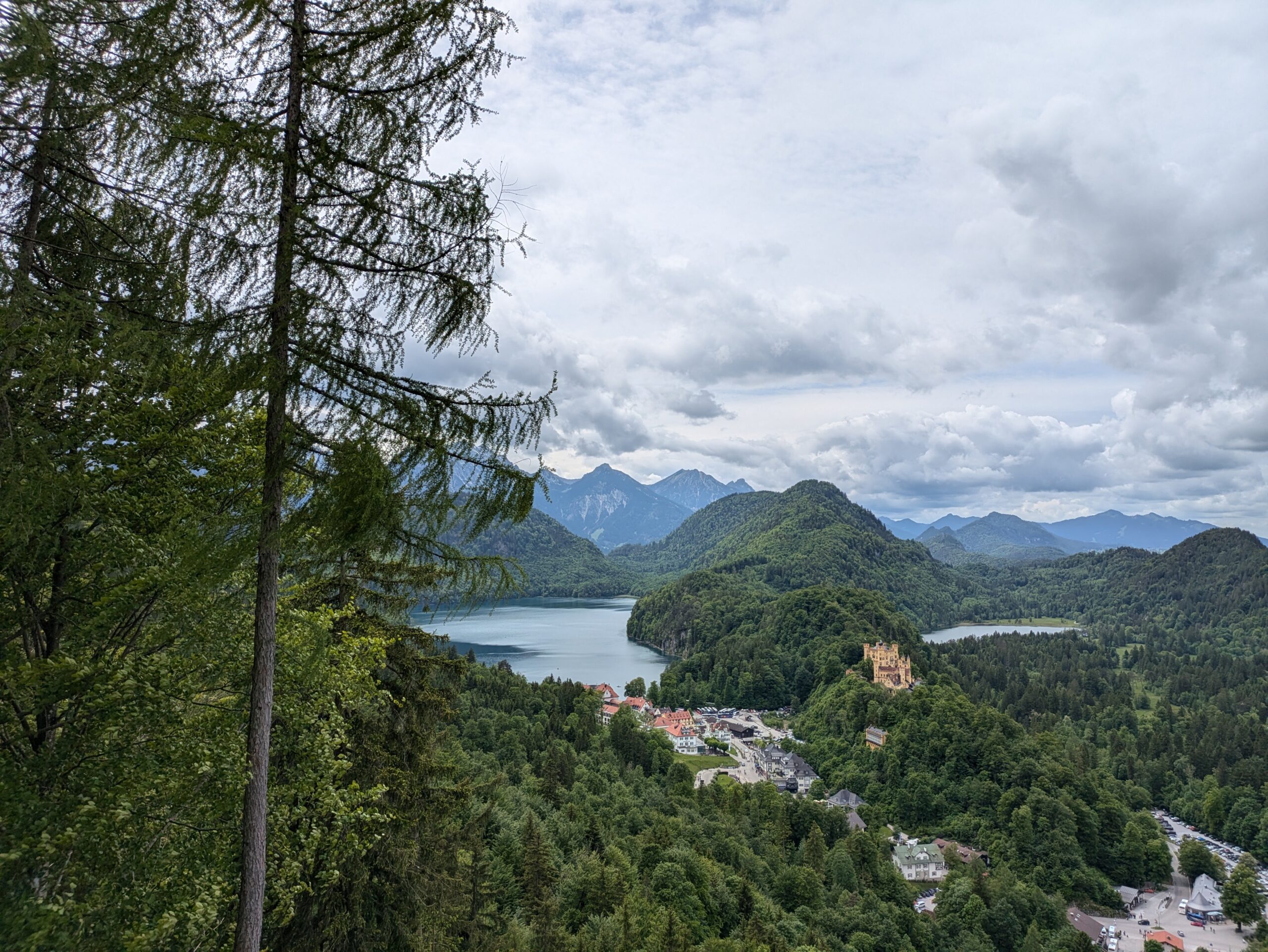
Highlights of Schwangau
Neuschwanstein Castle
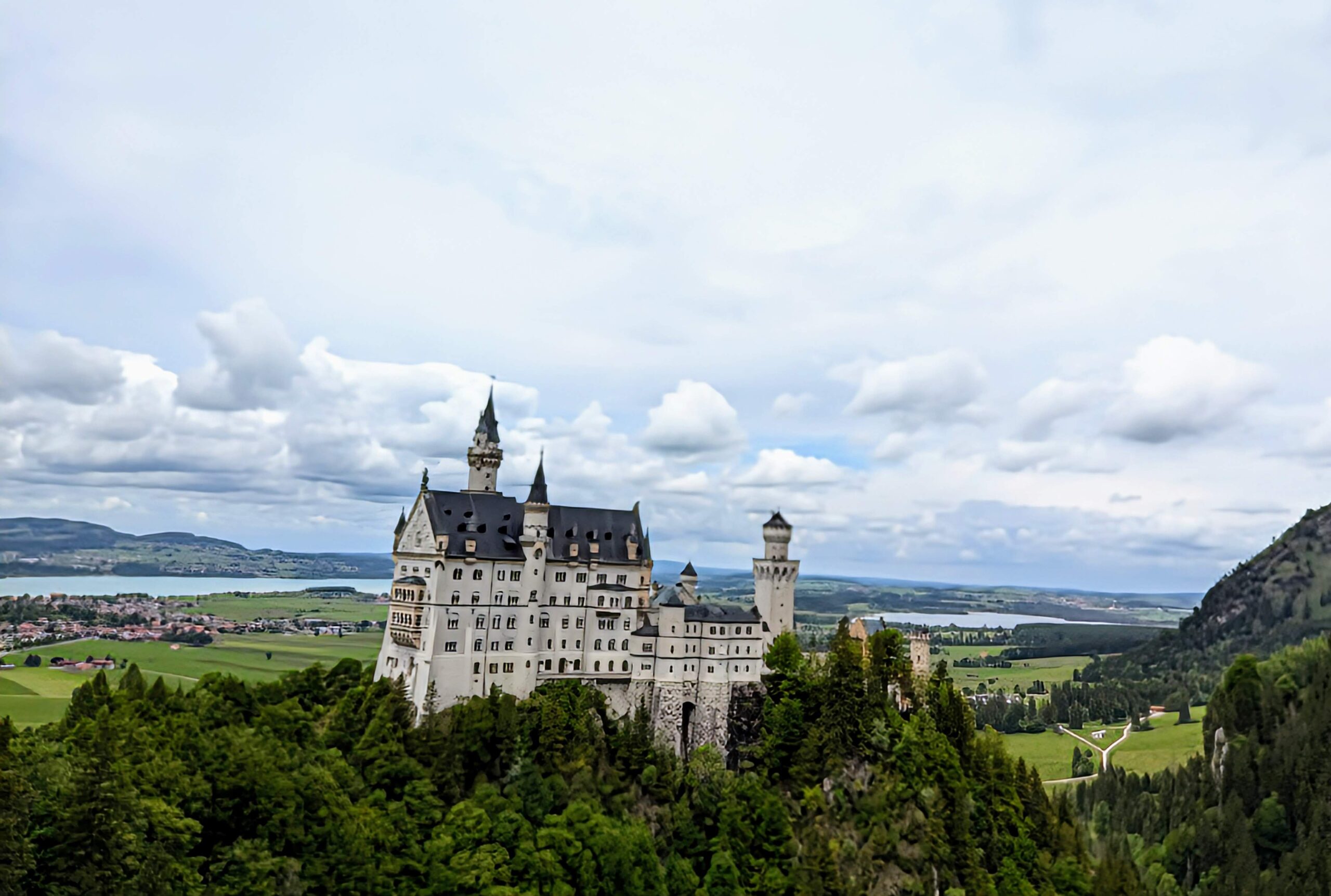
Built in 1869, Neuschwanstein Castle was the dream of the imaginative, eclectic and decidedly eccentric King Ludwig II. It was also the inspiration for Walt Disney’s theme park castles. Unlike most castles, it wasn’t intended for protective purposes. He just wanted to create the perfect fairytale-inspired castle. Even if you don’t take the castle tour (F.Y.I. there are a LOT of stairs inside), don’t miss the chance to stand on Marienbrücke (Mary’s Bridge) for spectacular shots. At 295 feet above the Pollat Gorge, it’s not for the faint of heart, but if I can do it, you probably can too.
Side note: The castle tour is by reservation only, and it sells out quickly (as in days and weeks in advance). I recommend making a castle reservation as far ahead as possible. Of course, if you’re on the Globus tour, you don’t have to worry about it. Everything is included.
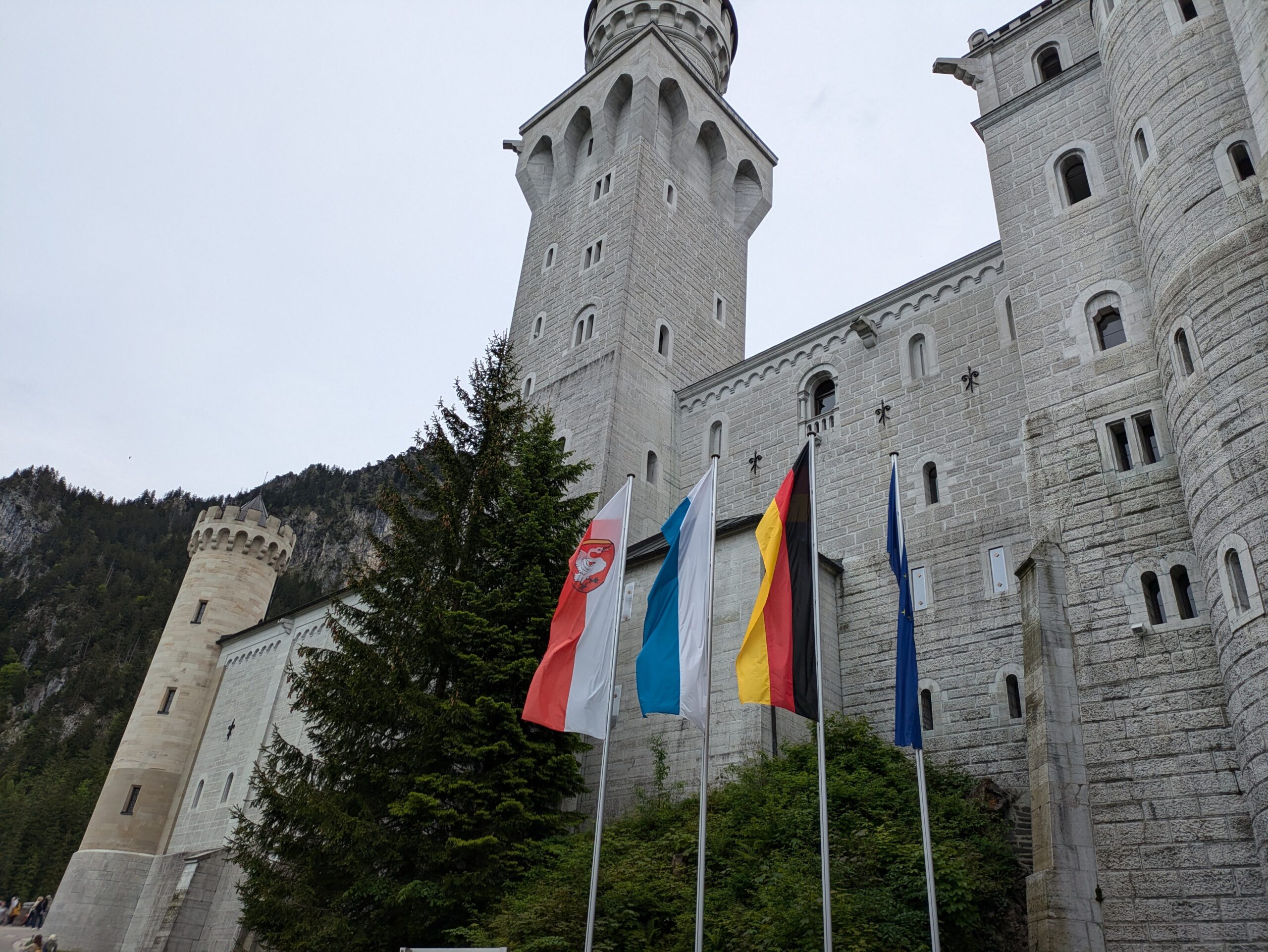
Castle Tips
- Take the shuttle bus (for a fee) up the road to the castle. You’ll be dropped off a short walking distance from the bridge and the castle. If you’re part of a guided Globus tour, all of this is taken care of. You don’t have to handle any of the details.
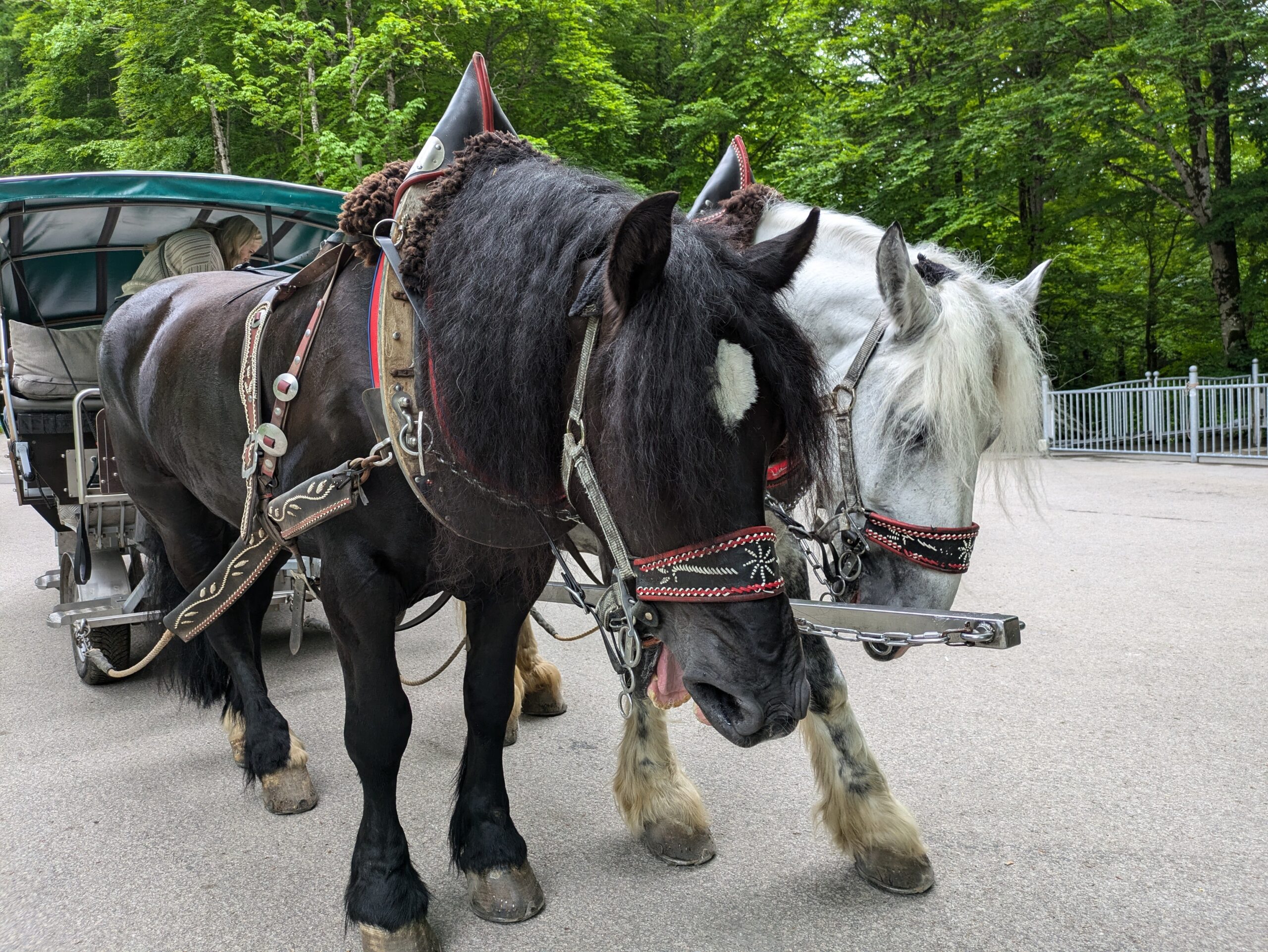
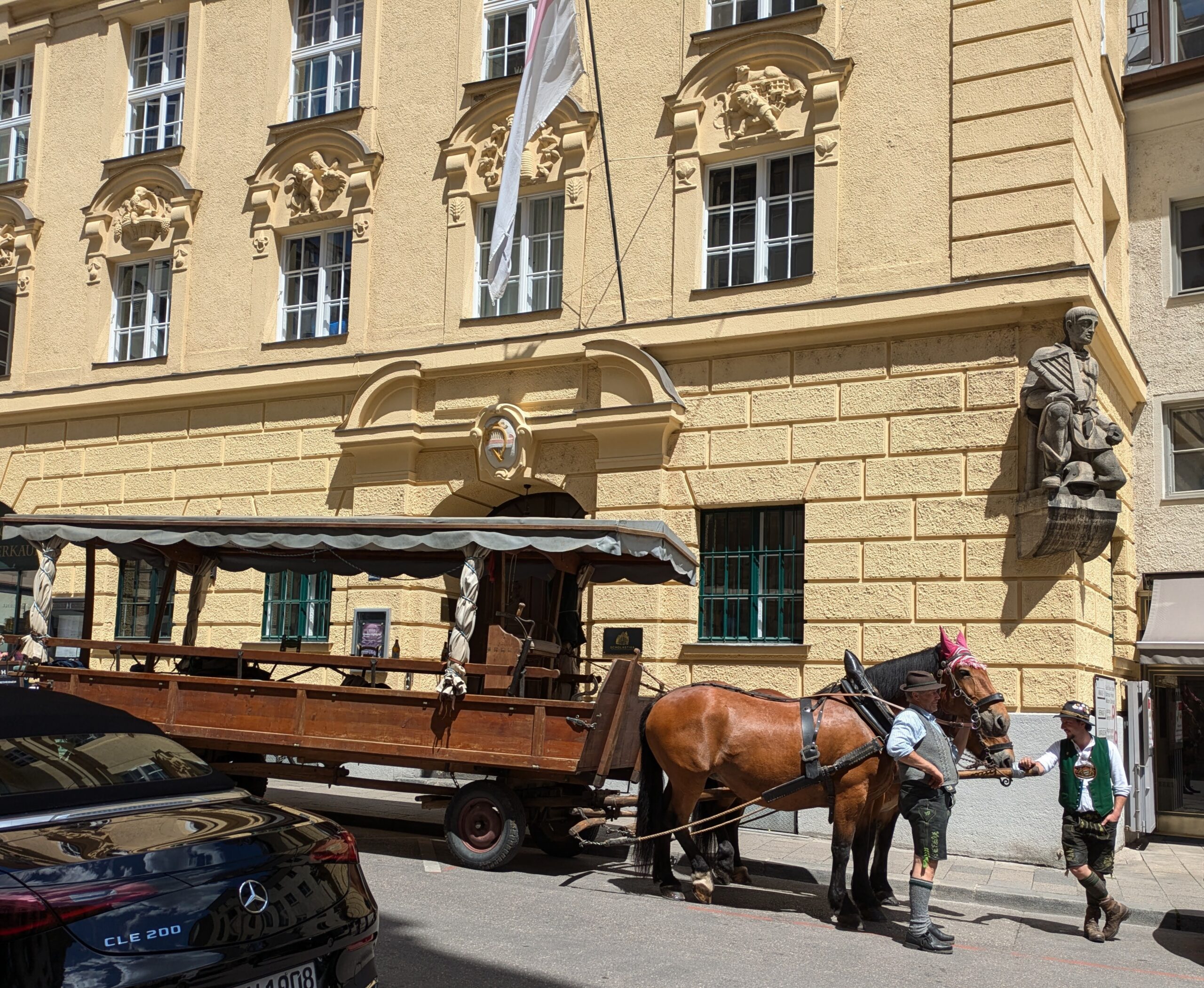
- There’s a horse-drawn carriage (for a fee) available to get down the hill afterwards if you don’t want to walk. It’s a bit of an incline, but not terrible.
- Wear your walking shoes and be prepared for lots of stairs in the castle. It’s doable, but it definitely gave my knees a workout.
- Put away your camera and phone. No photos are allowed inside the castle.
Hohenschwangau Castle
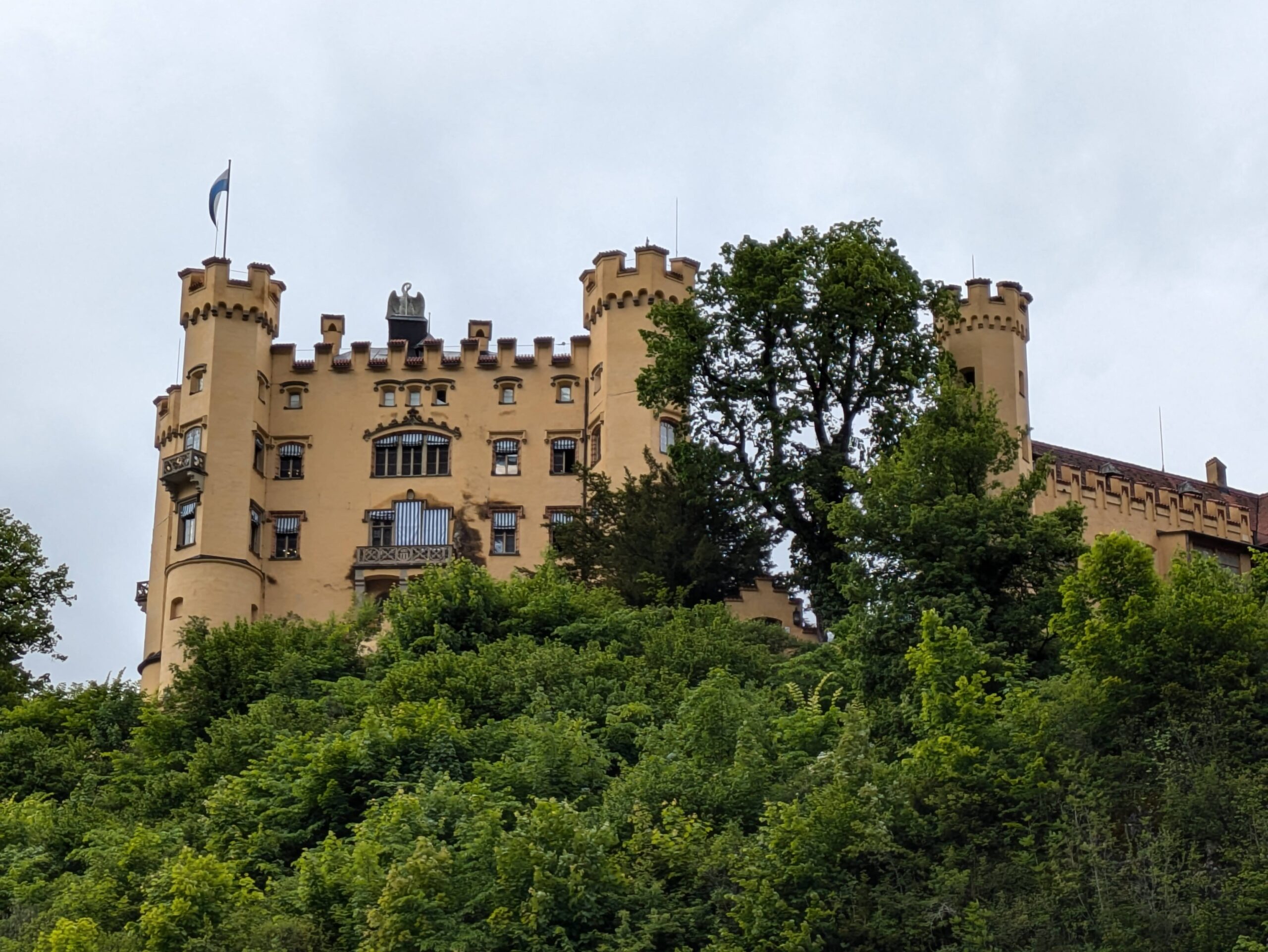
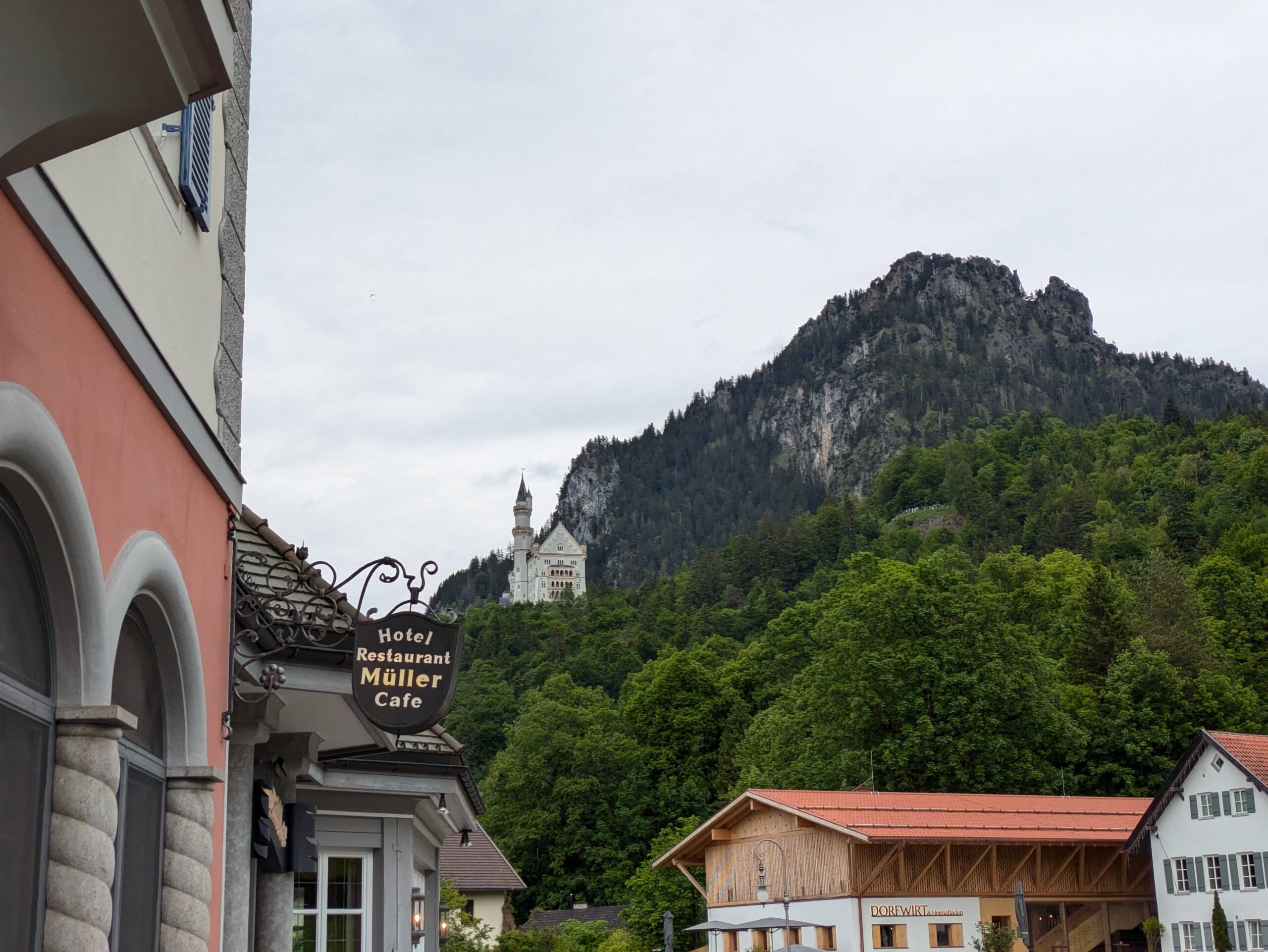
Hohenschwangau Castle is nearby, but not part of the Globus tour (though there’s plenty of time to check it out if you like). Built in 1837 by King Maximilian II of Bavaria (King Ludwig’s father), it overlooks the Mueller hotel. It was Ludwig’s childhood residence.
Lake Alpsee
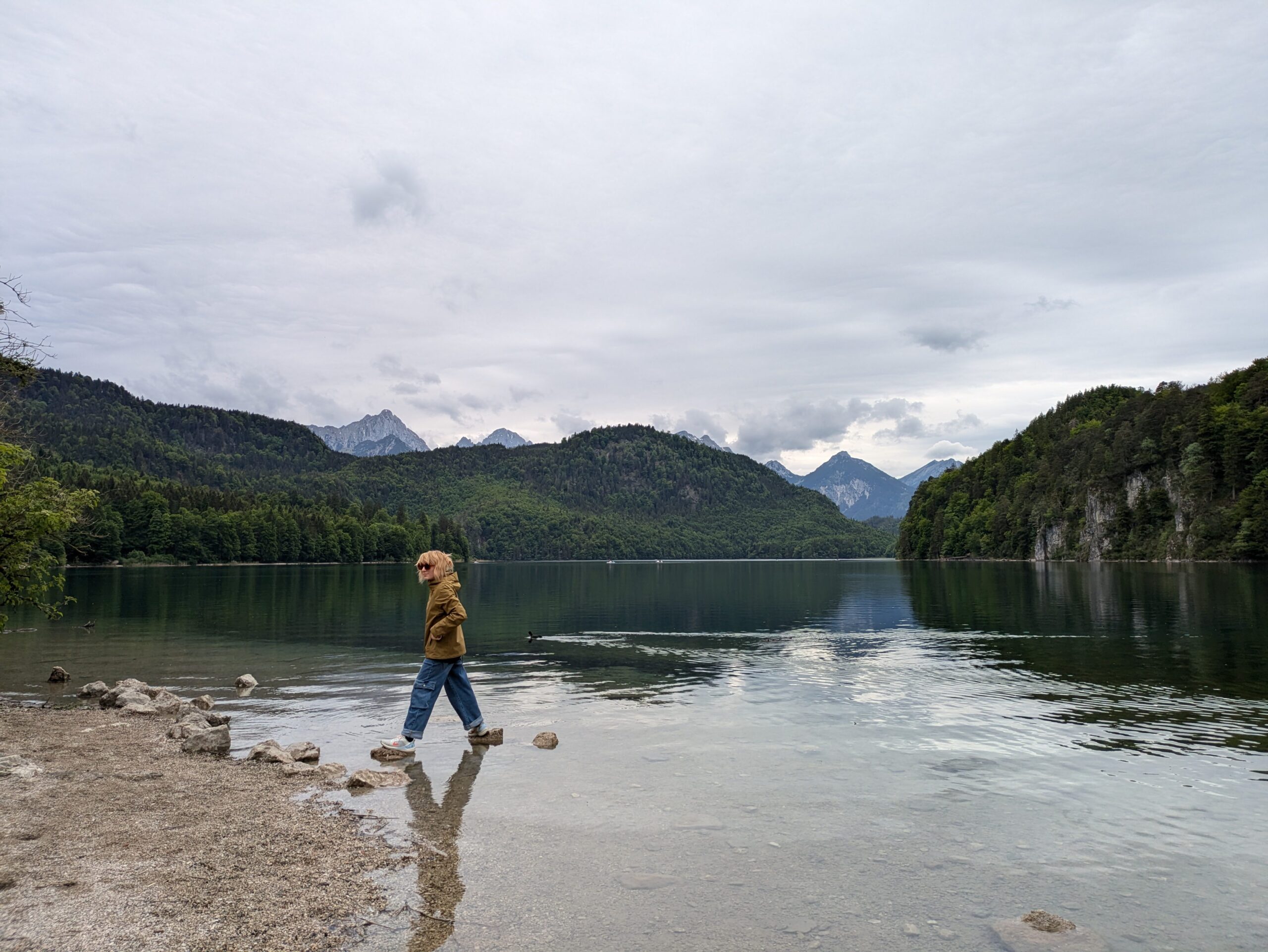
Lake Alpsee is a postcard-perfect setting, complete with a backdrop of the Bavarian Alps. We stopped for a look on our way back to the hotel after the castle.
Hotel in Schwangau
Mueller Hohenschwangau
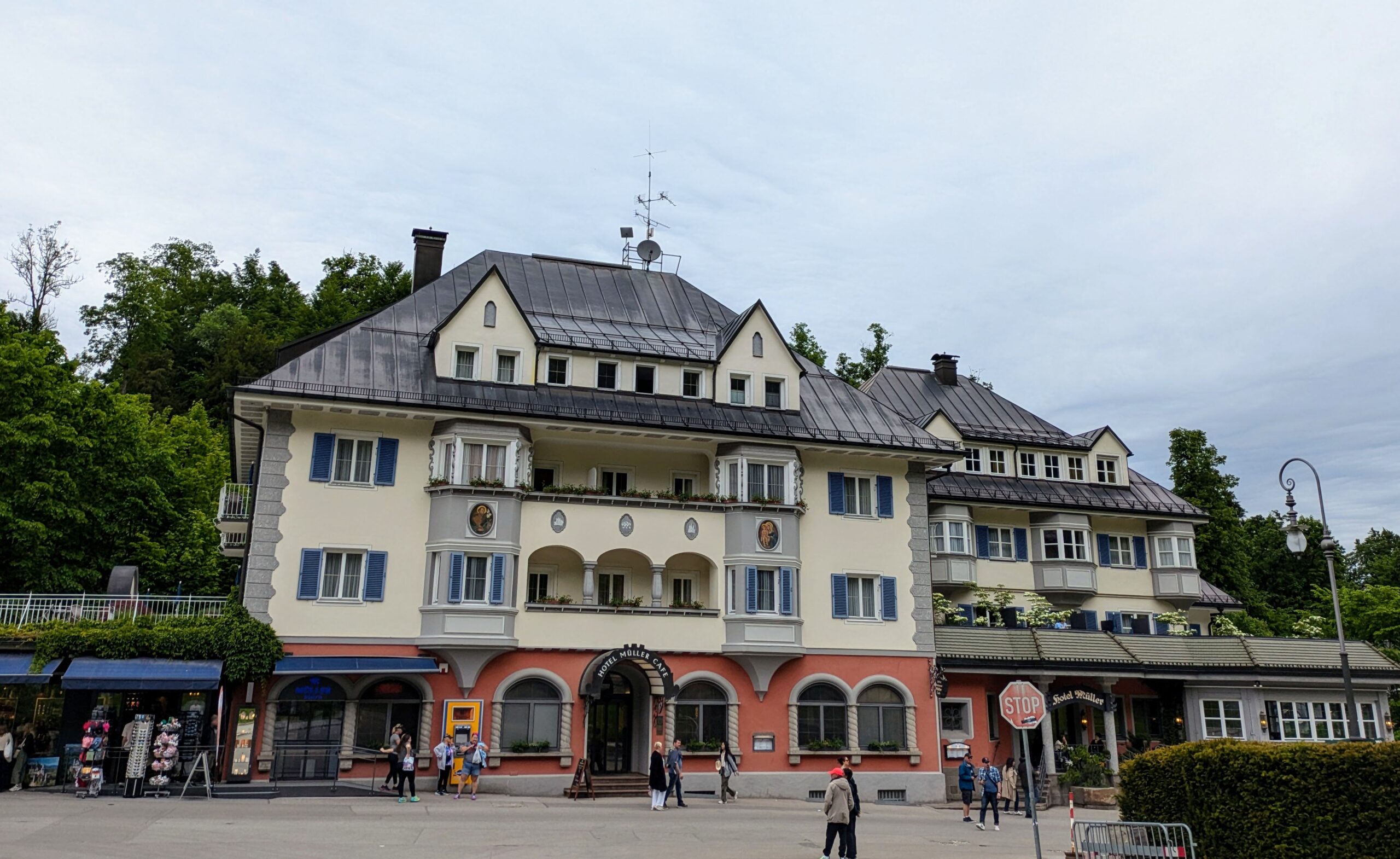
With views of Neuschwanstein Castle, maypoles and horse-drawn carriages, Mueller Hohenschwangau has spacious rooms with extra seating, antique furnishings and a wonderful restaurant and breakfast buffet.
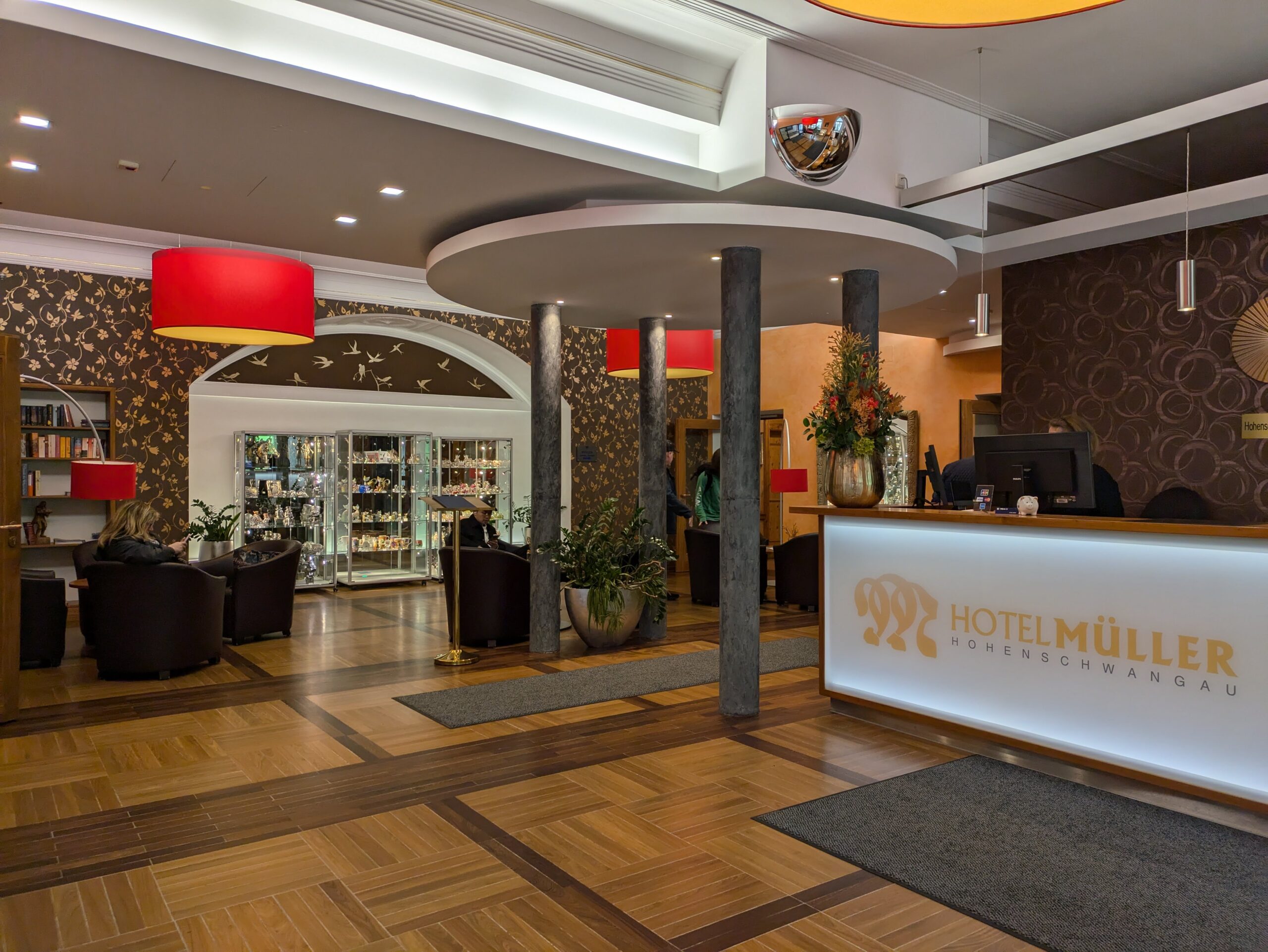
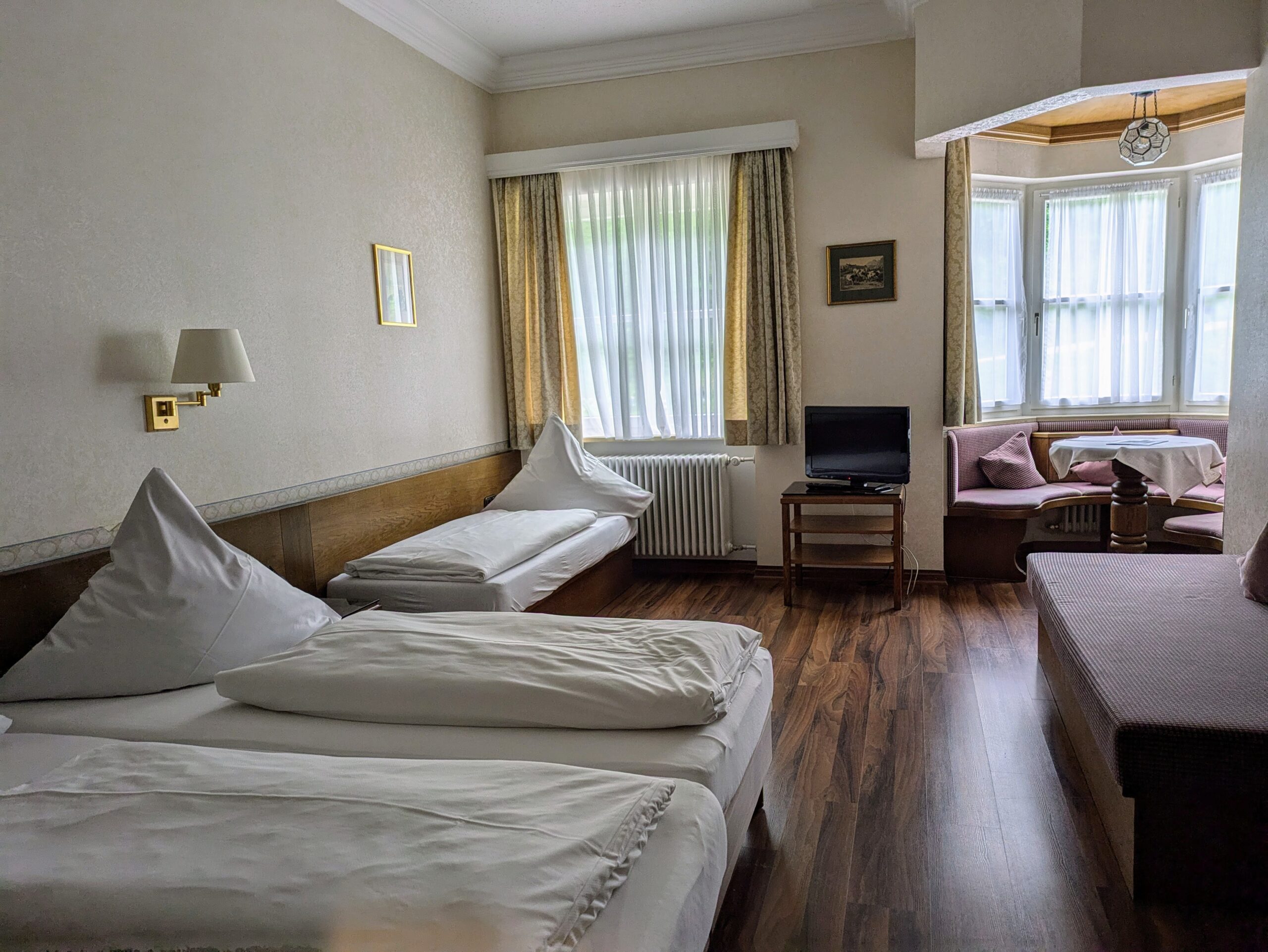
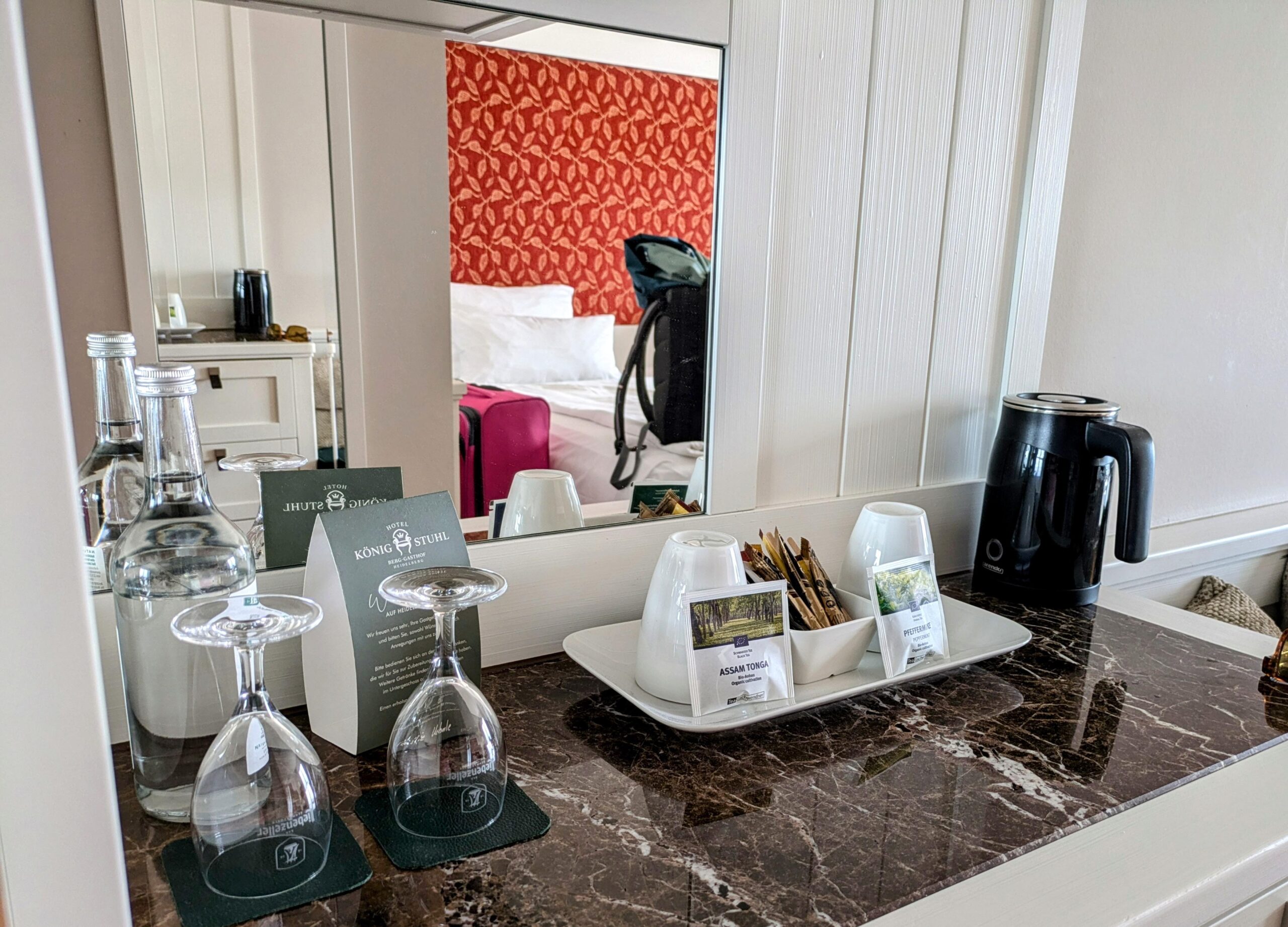
I have to give a shoutout to the hospitality teams at German hotels. While nearly all American hotels have a coffee service area in the room, they rarely offer tea. All, I repeat all, of the European hotels we visited had tea as well as coffee. And quite wonderful tea, at that. Ronnefeldt, Eilles and Gschwendner are three of my favorites.
Dining in Schwangau
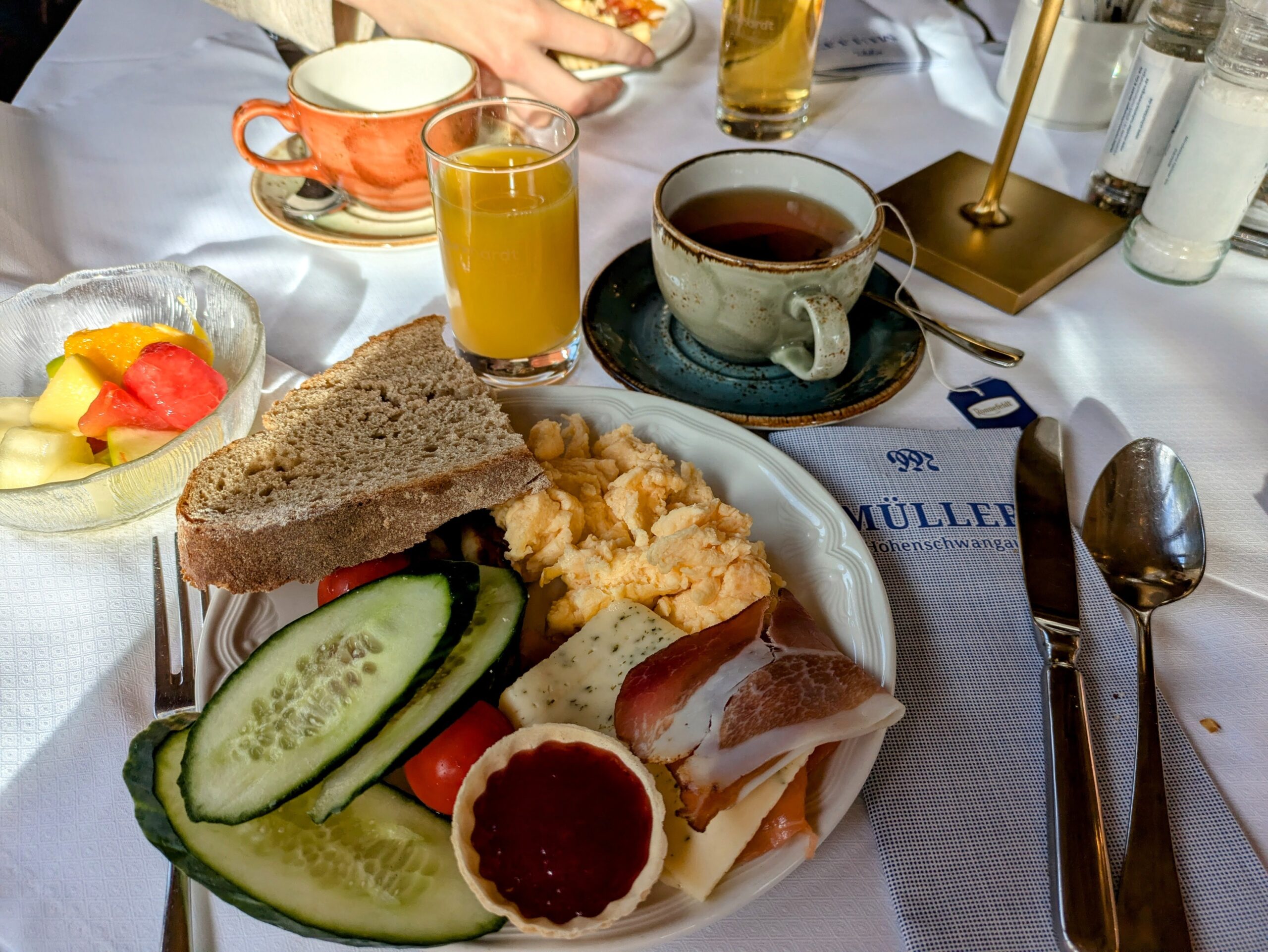
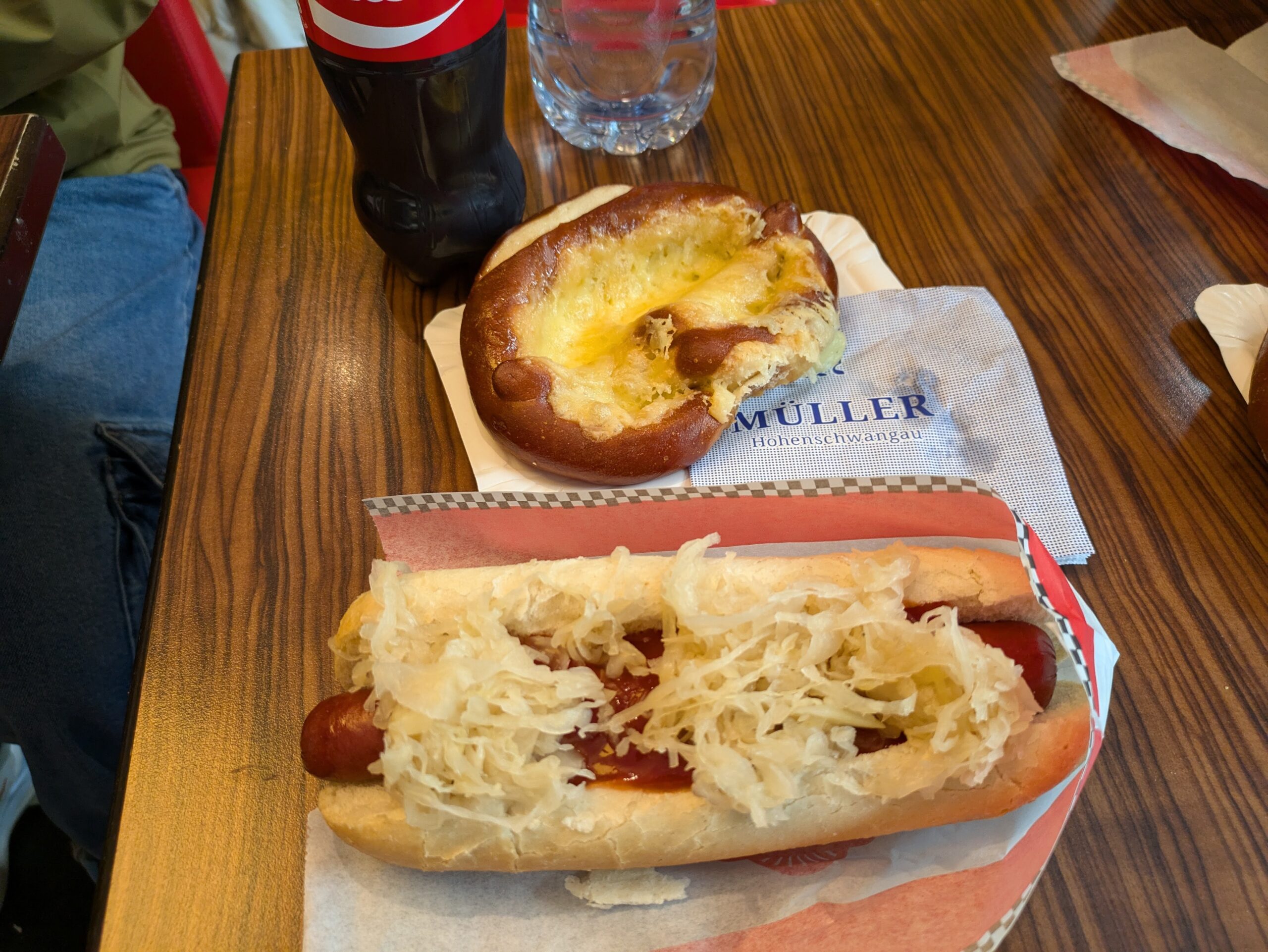
The Mueller Hotel’s restaurant offers the perfect view of Neuschwanstein as you dine. We chose beef stroganoff with potato cakes, rump steak and an elderberry spritz. For vegetarians, I recommend the spinach dumpling with tomato ragout. The hotel’s casual Bistro serves cappuccino, desserts, sandwiches, pretzels and hot dogs.
Oberammergau
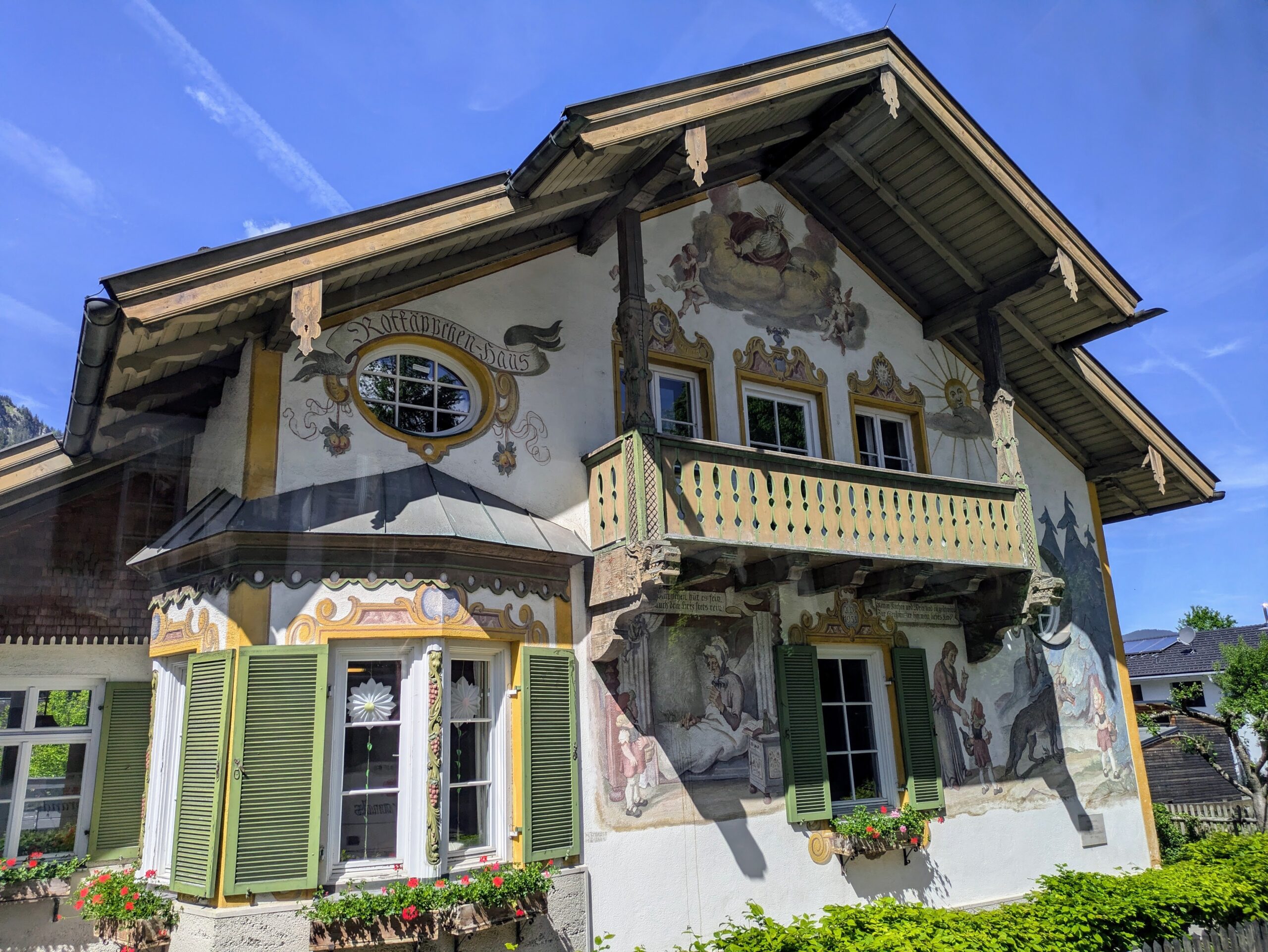
Oberammergau, a small Bavarian village with geranium-filled window boxes and decorative murals on the sides of houses, was a quick stop on the way to Munich. Globus drivers are only allowed to drive for about two hours before taking a required break, which gives travelers a chance to stretch their legs (and take a potty break if needed).
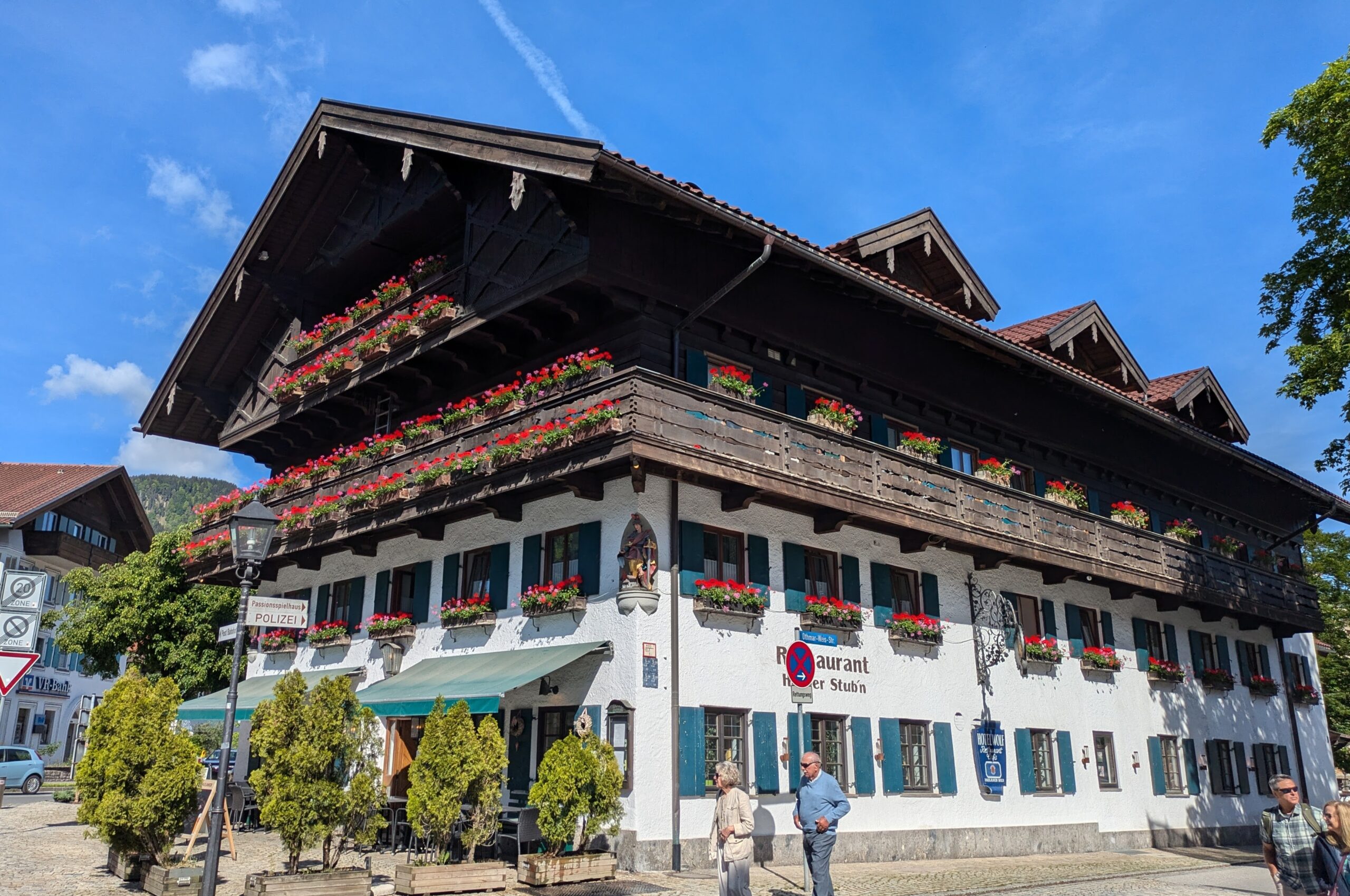
The town is famous for its outdoor auditorium where the Passion Play is performed every 10 years. The play originated as a thanks for sparing the town from the plague (this wasn’t the year for the production). The whole town gets involved in the summer-long performance season. Local residents are used as actors, and guests come from around the world.
Munich
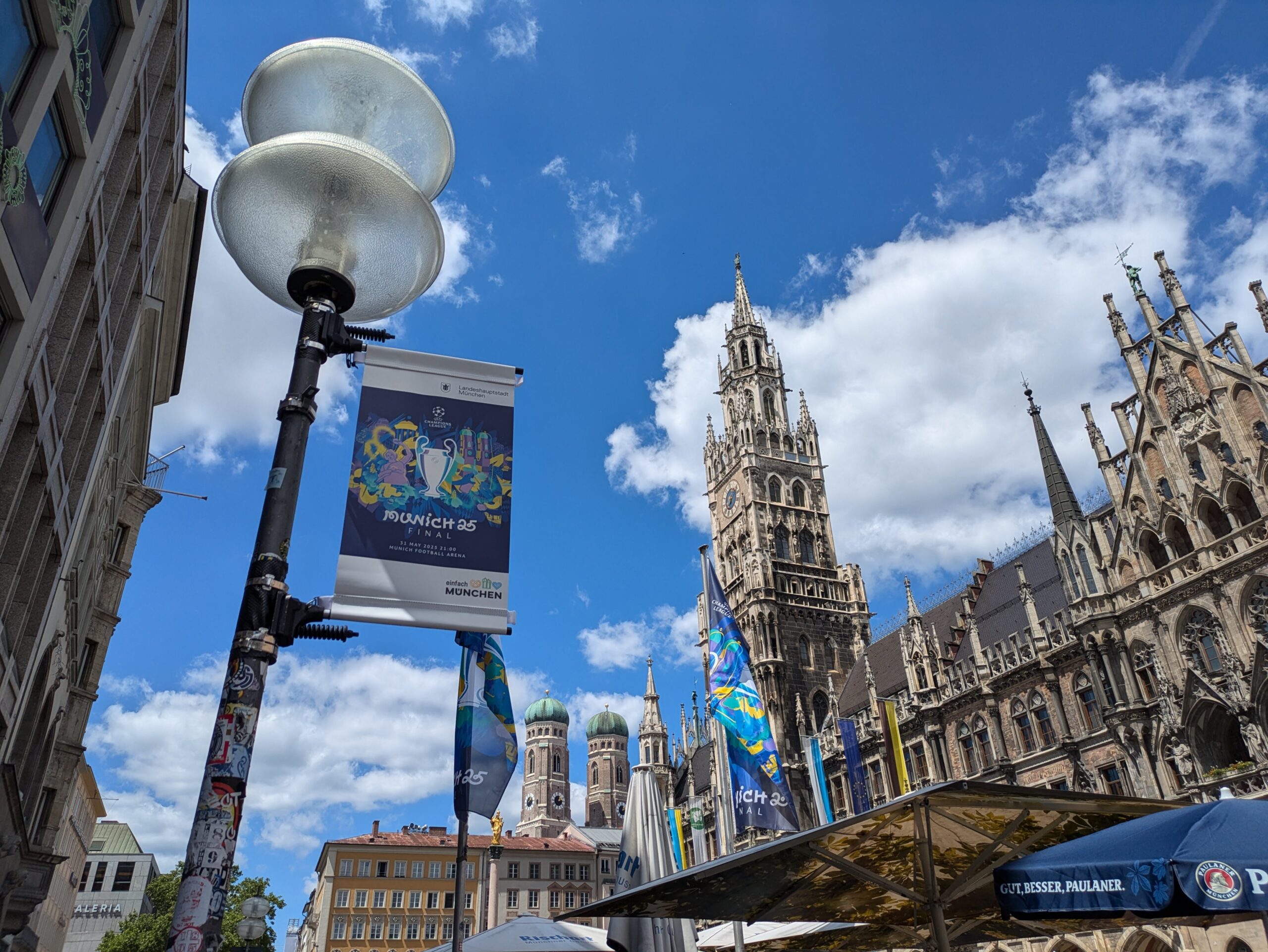
Our day in Munich started with a bus tour around the city. A local guide led the way with entertaining stories about the city. Sites along the tour route included BMW headquarters, the Olympic Stadium and Tower (built for the 1972 Olympics) and the Isar River.
Highlights of Munich
Schloss Nymphenburg
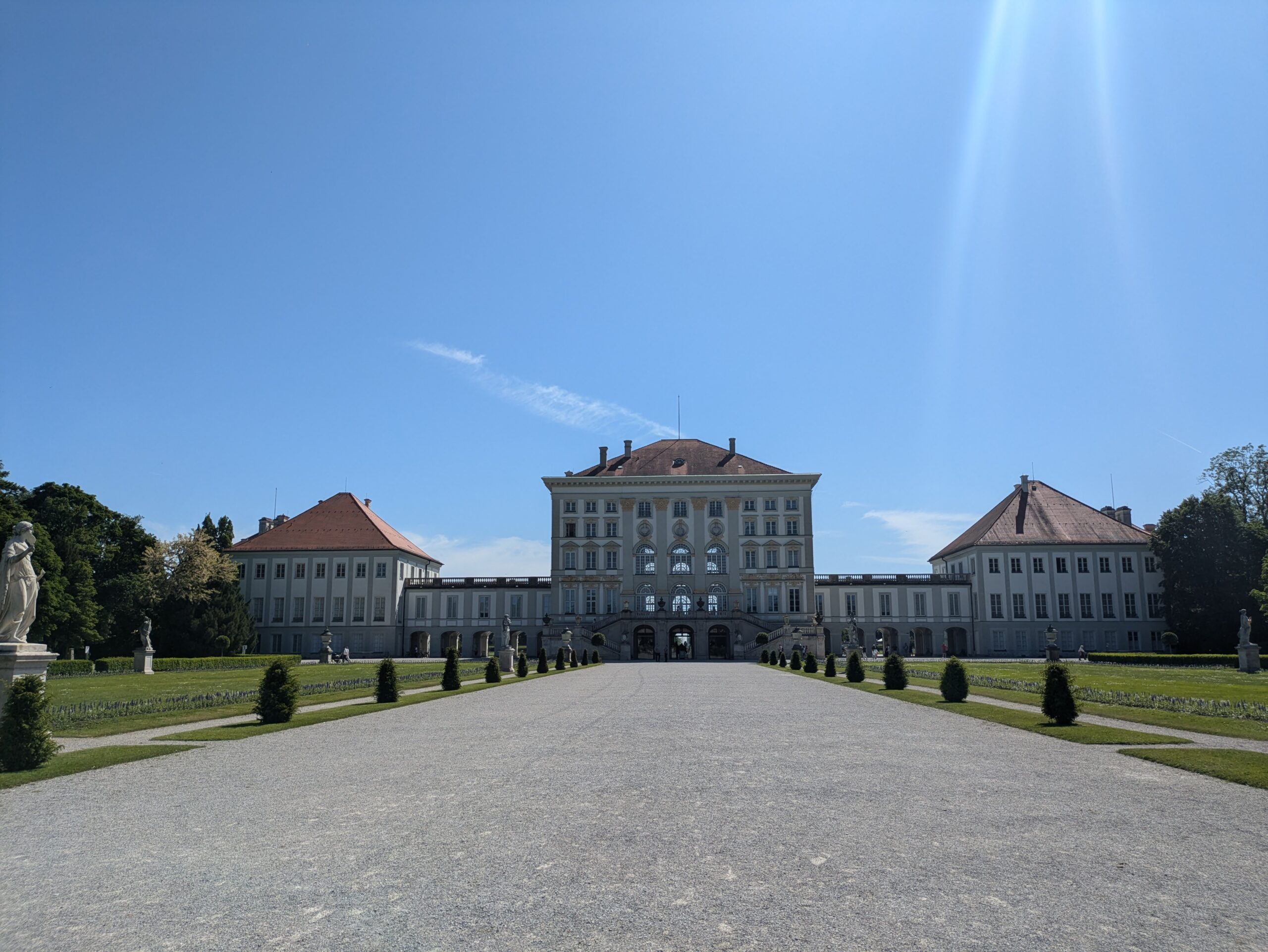
We spent some time walking around the grounds at Schloss Nymphenburg, which was commissioned by Ferdinand Maria and Henriette Adelaide of Savoy after the birth of their son, Maximilian II Emanuel, in 1667. The palace served as a summer residence for the rulers of Bavaria. King Ludwig II was born there in 1845. Today, it’s a home and chancery for the head of the House of Wittelsbach, Franz, Duke of Bavaria.
Marienplatz Square
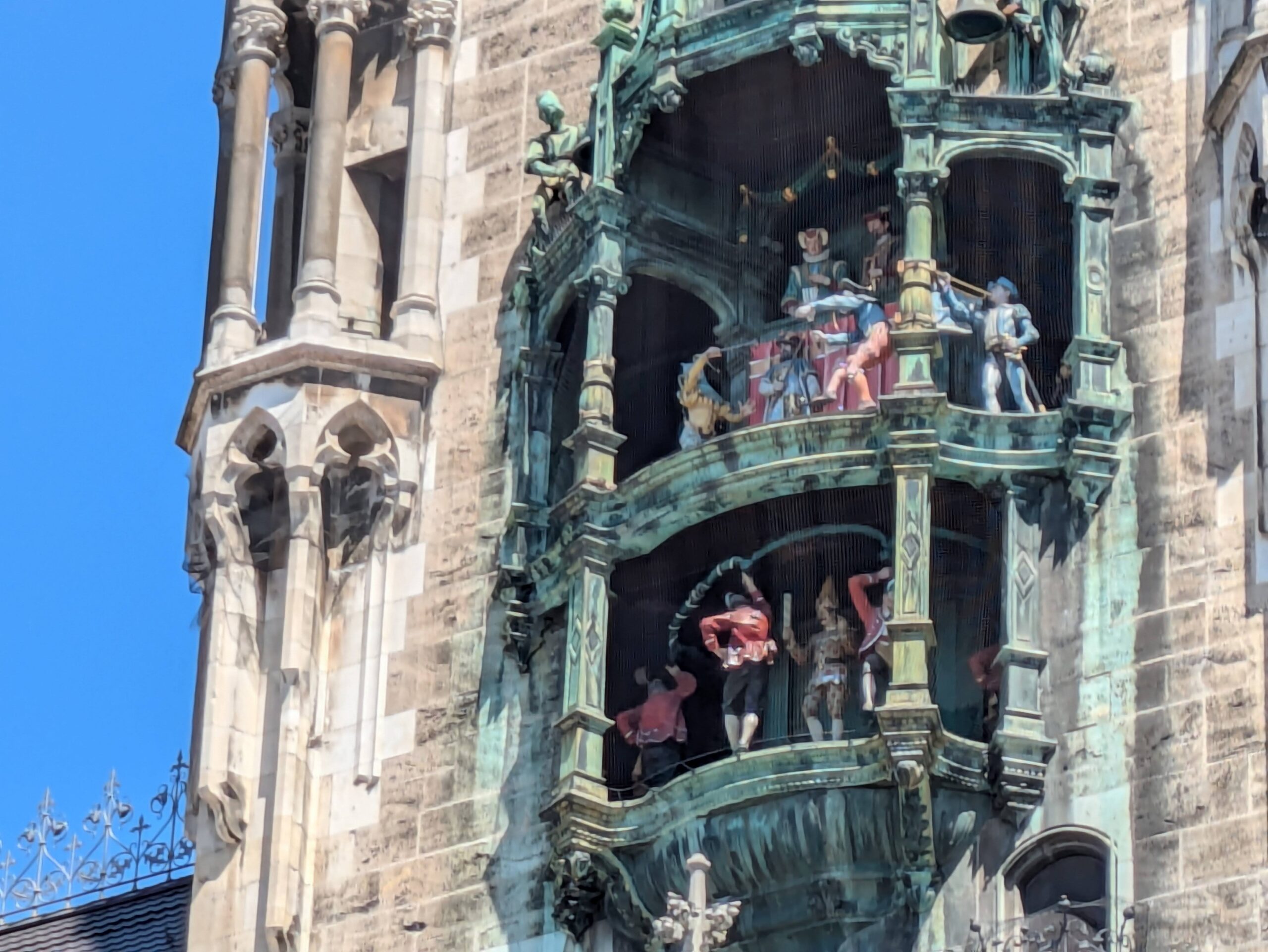
We ended our local tour by watching the historic Rathaus-Glockenspiel clock in Marienplatz Square, which has been the main square since 1158. Historic scenes from the 16th century, re-enacted by life-size characters, revolve around the clock at designated times. The show takes place daily at 11 a.m. and noon, and then again at 9 p.m. From March to October, it also chimes at 5 p.m.
The optional excursion in Munich is a visit to Dachau, a former concentration camp and now a memorial. We chose not to participate and instead explored sites around town on our own.
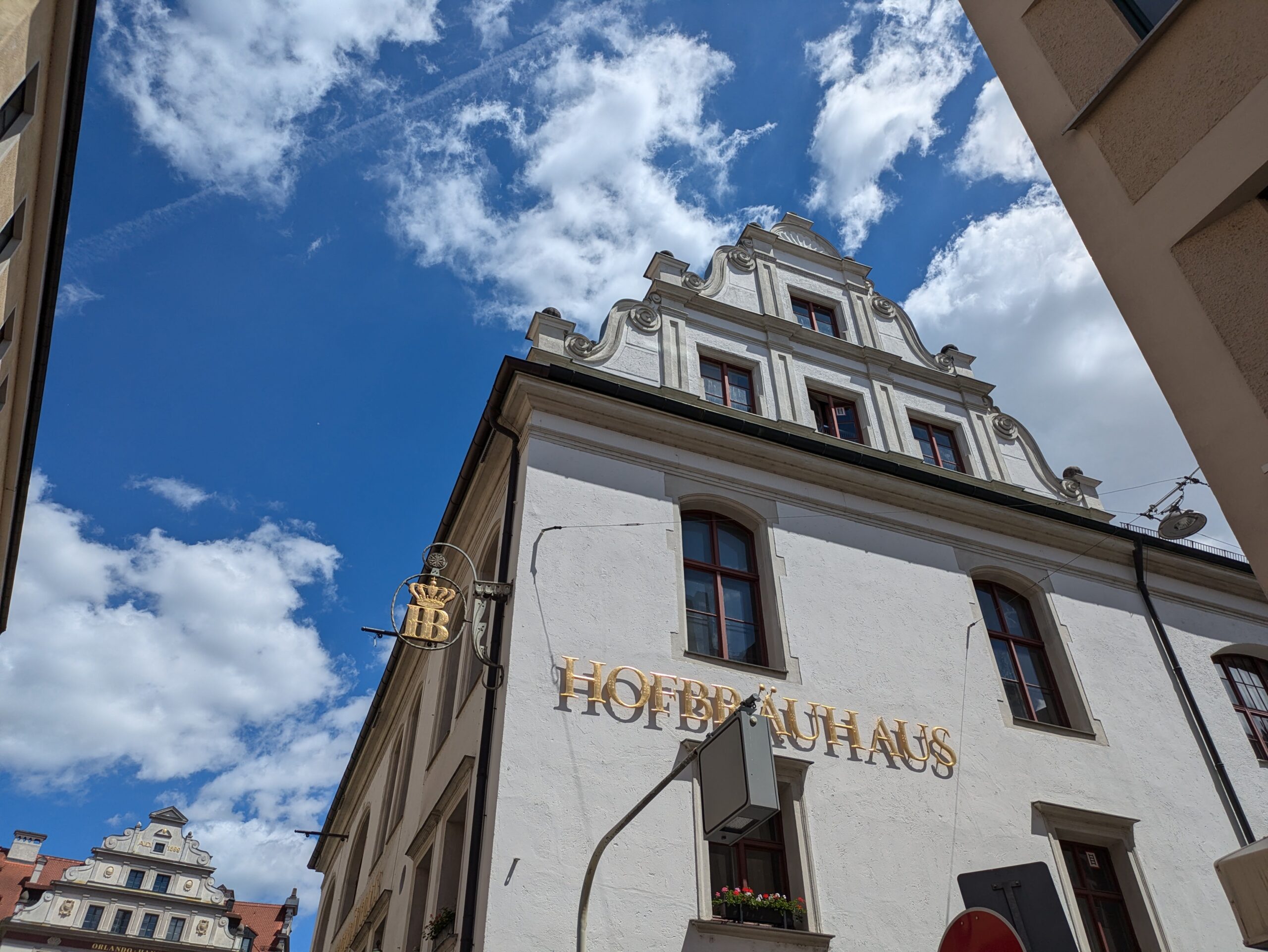
While on our own in Munich, we checked out …
- Dating to 1589, Hofbräuhaus Brewery is the most famous brewhouse in Germany.
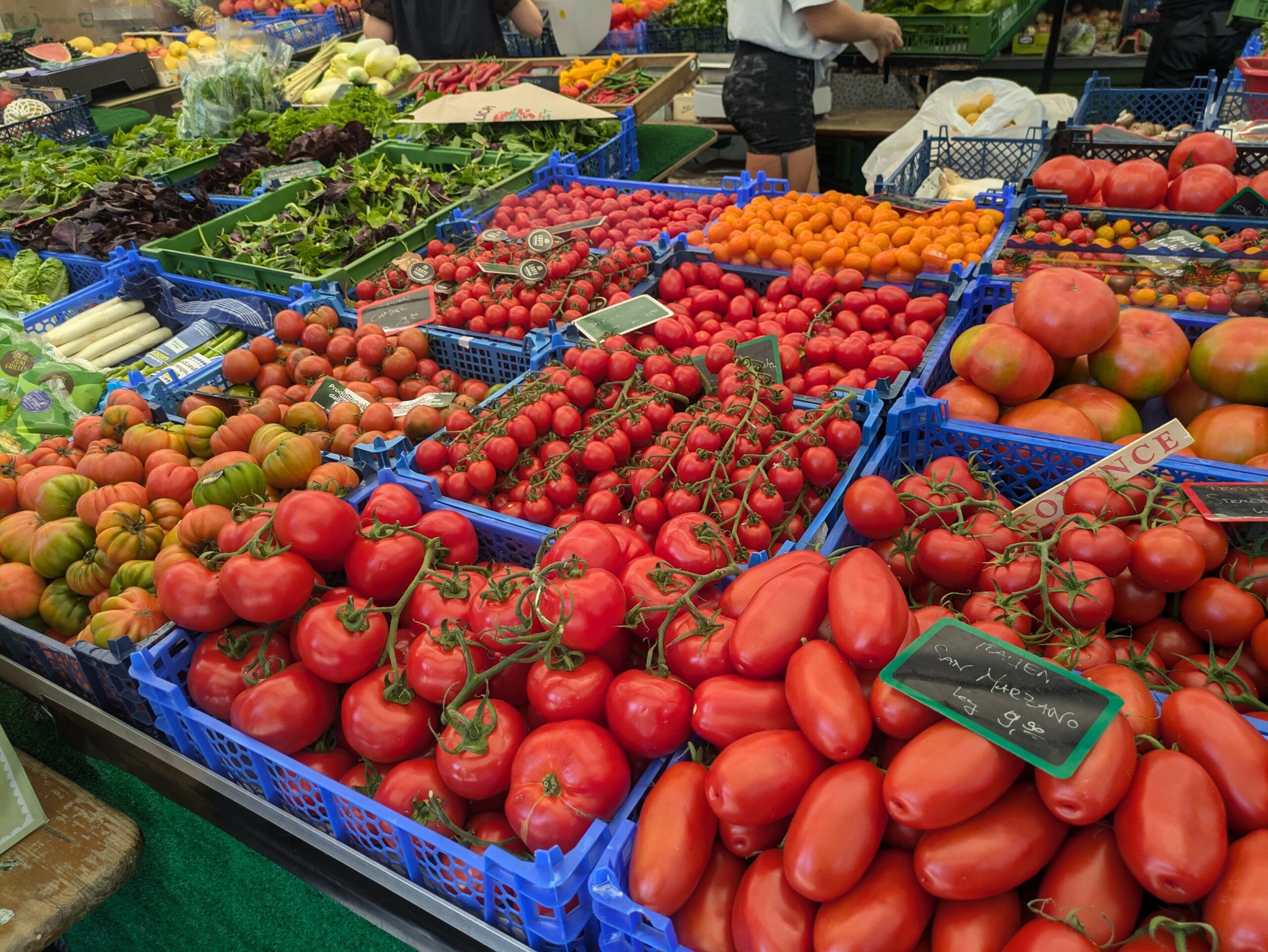
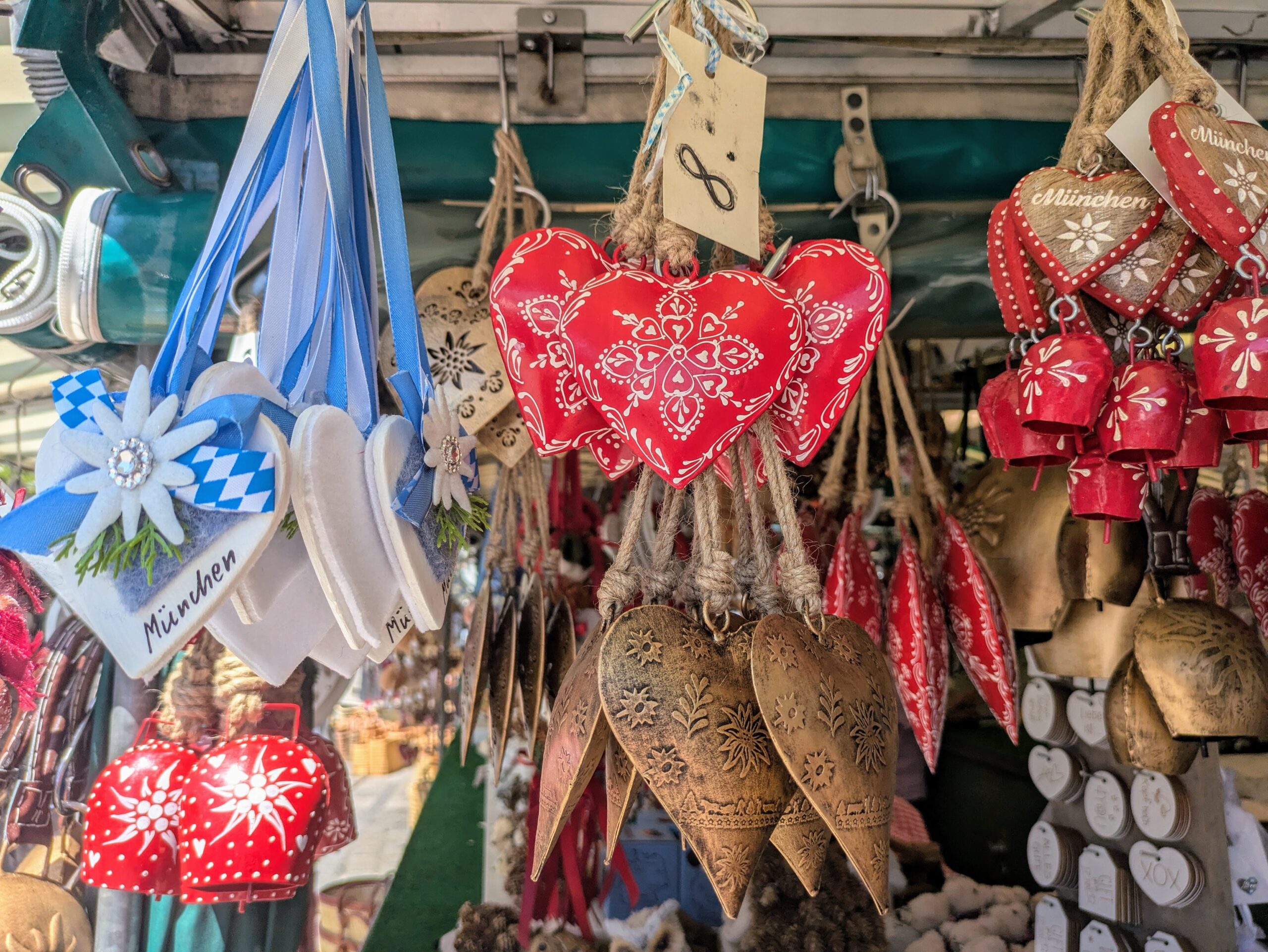
- Viktualienmarkt, the Munich Farmers Market, has more than 140 stalls spread out over 240,000 square feet. You can find everything from fruits and vegetables to wine, cheese, meat, flowers, gifts and more. We had the most amazing strawberries ever grown.
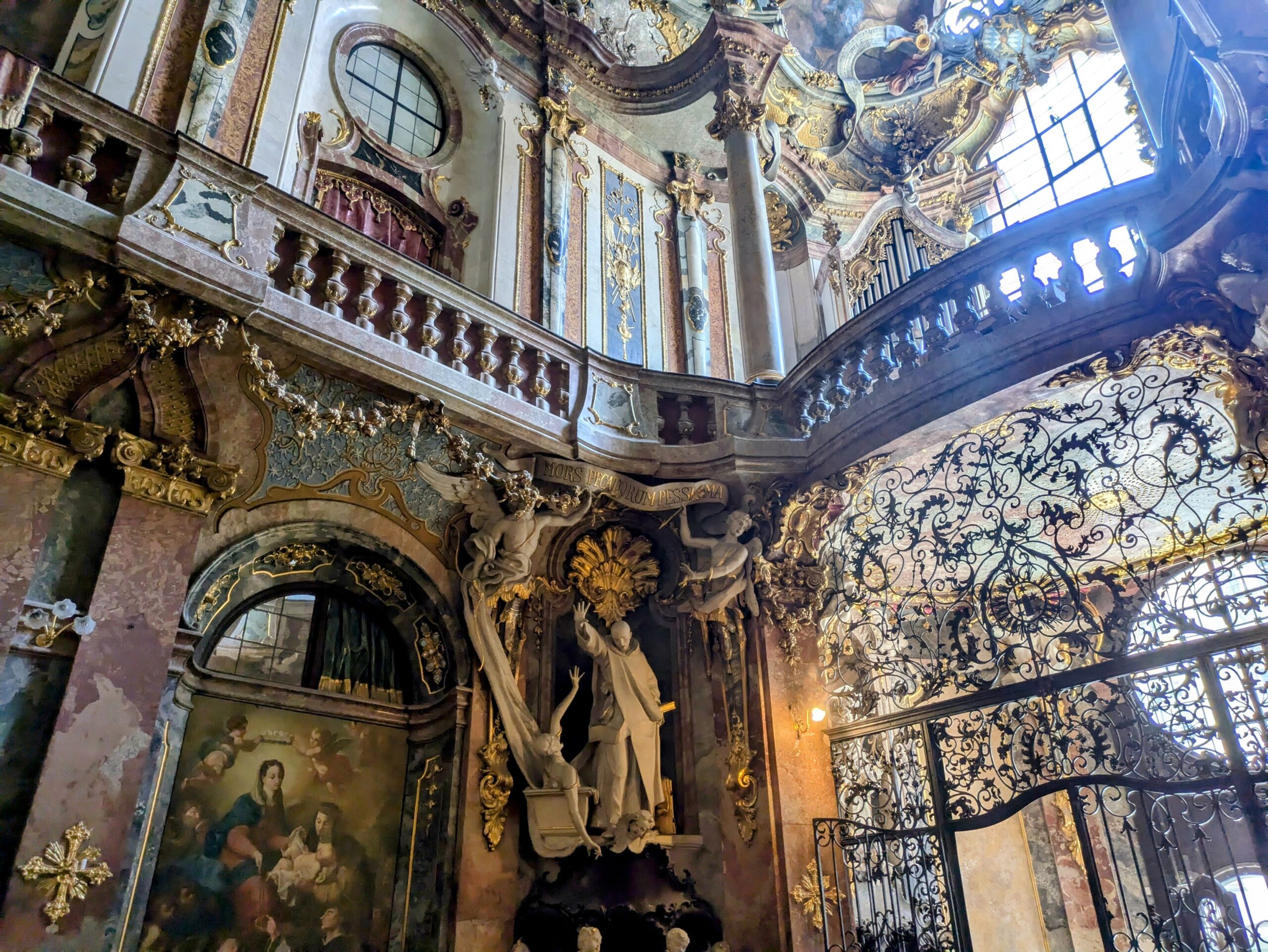
- Asamkirche is a beautifully Baroque and massively ornate structure built between 1733 and 1746 as a private chapel. It’s small compared to many of the other churches we visited, which makes it seem all the more elaborate.
- Munich Residenz is an opulent palace (130 rooms) that opened in 1385 as a castle. From 1508 to 1918, it served as the seat of government and residence of Bavarian dukes, kings and electors. Most of the structure was destroyed during WWII and was gradually reconstructed. Renaissance, Baroque, Rococo and Neoclassicism art and architecture can be found throughout.
Hotel in Munich
H4 Hotel Munich Messe
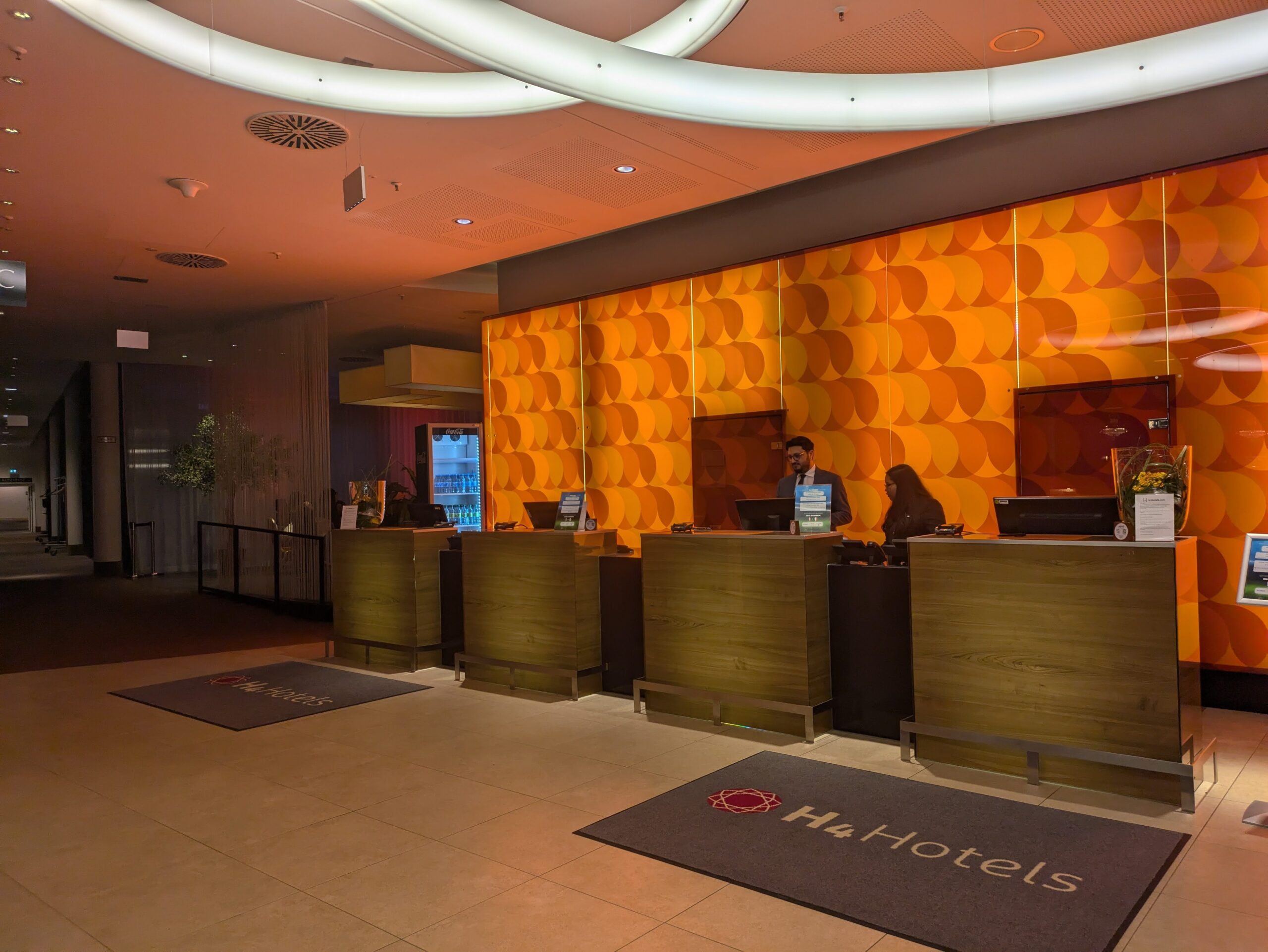
While quite nice (and offering another amazing breakfast buffet), the H4 Hotel Munich Messe was a bit out of the city center. Normally, the Globus group stays at a hotel in the city: however, a major UEFA European football (soccer in American-speak) tournament was underway in Munich, so we were booked at a different hotel. This can happen while traveling, so just be open to possible changes.
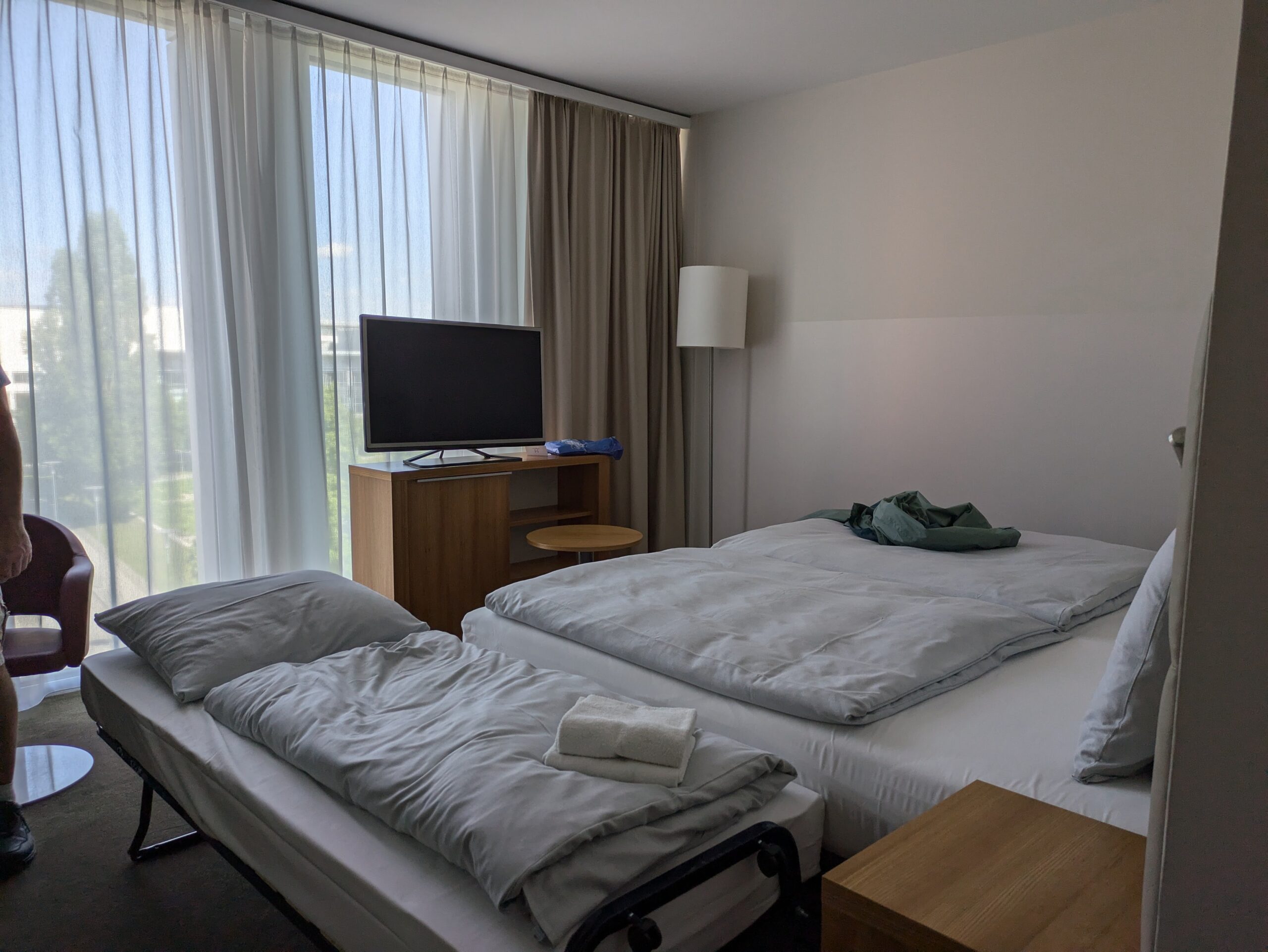
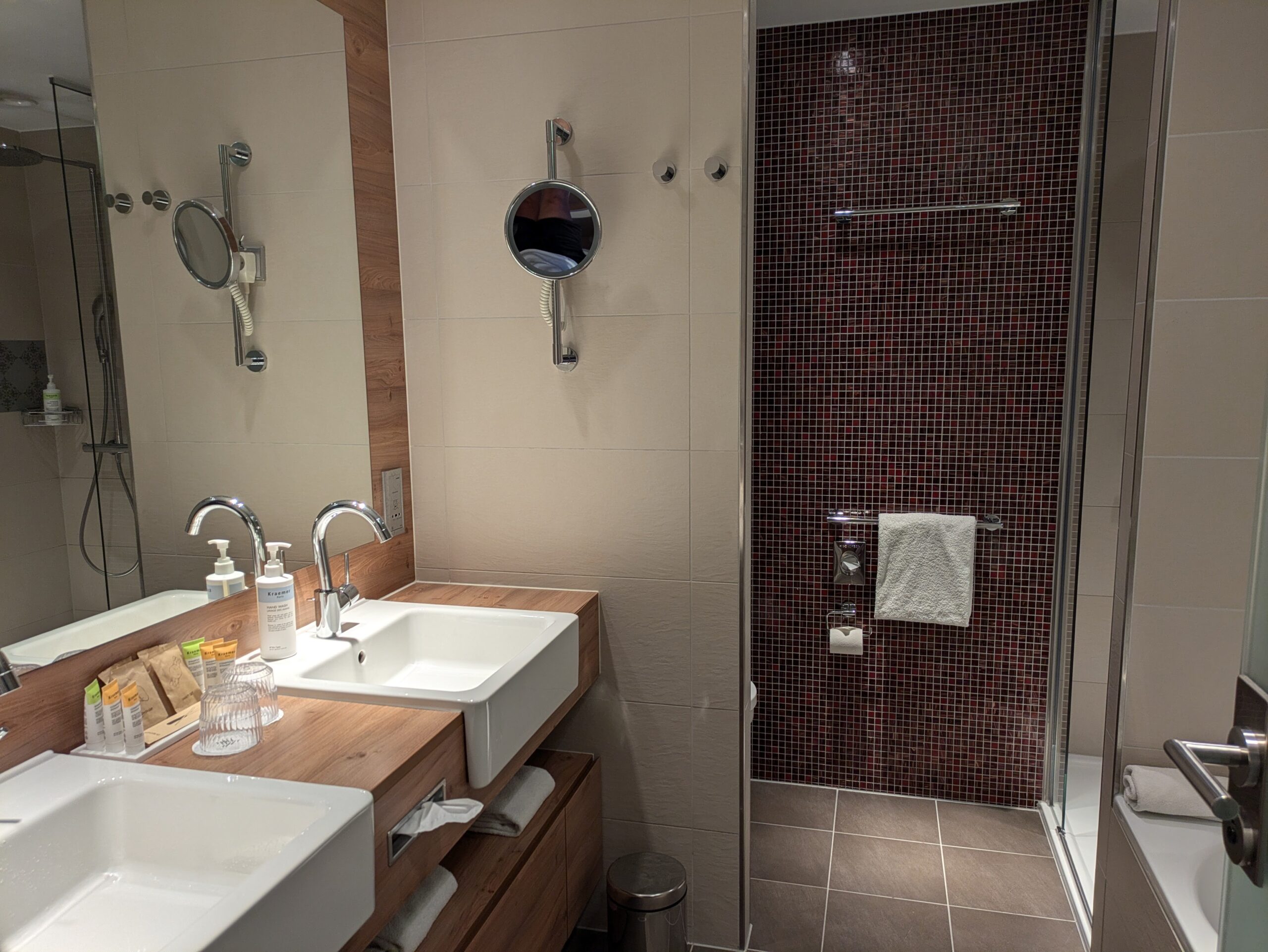
Our room at the H4 Hotel Munich Messe was comfortable and welcoming with an elegant bathroom. Like other German hotels on this tour, the larger bed was a set of twin beds pushed together. I loved that each person has their own blanket (rather than one large blanket covering the whole bed). I’m not sure if that’s a European thing or a German thing, but I approve. The third bed was a cot; I was told that it was comfortable.
Dining in Munich
Lowenbraukeller
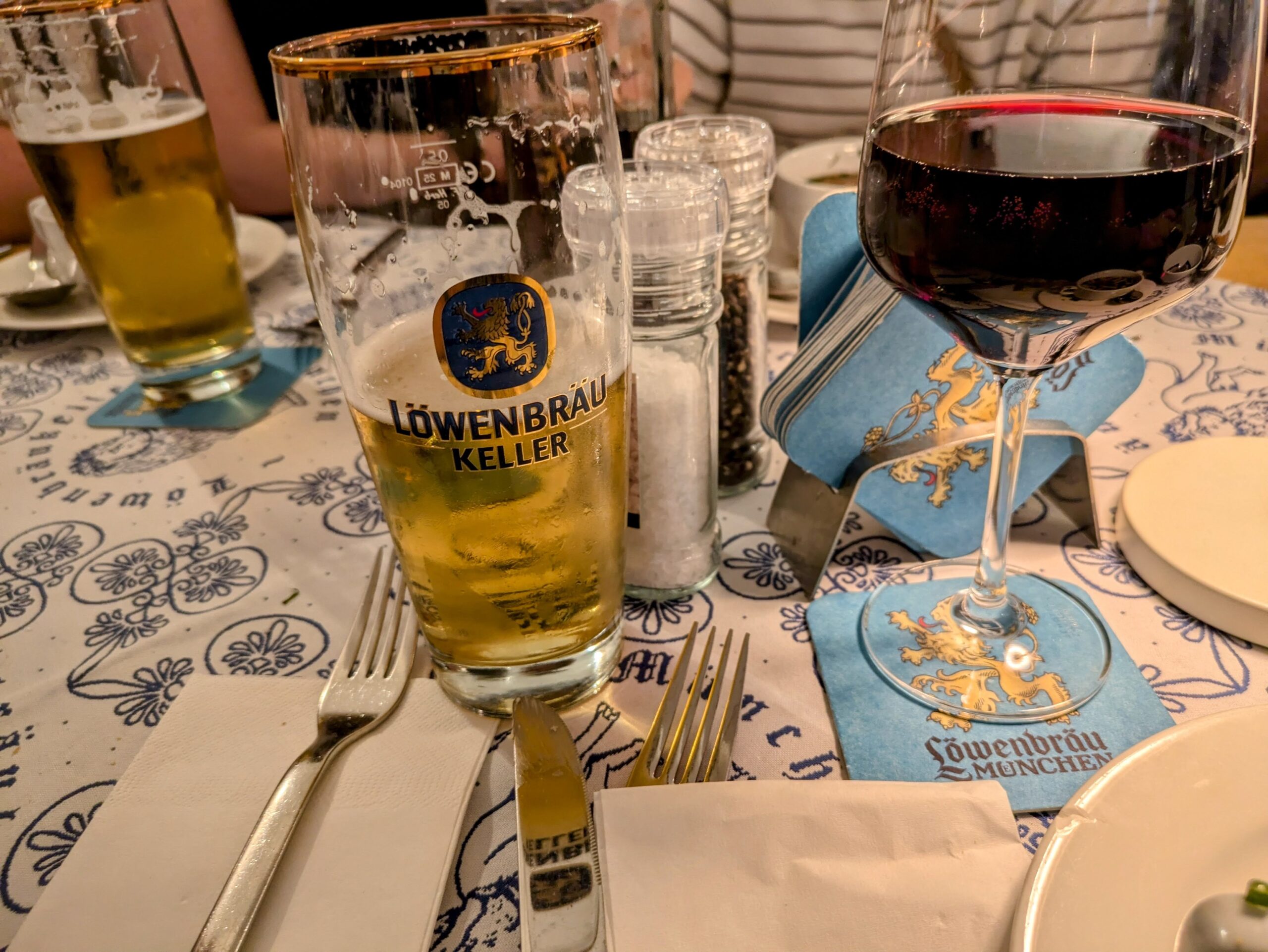
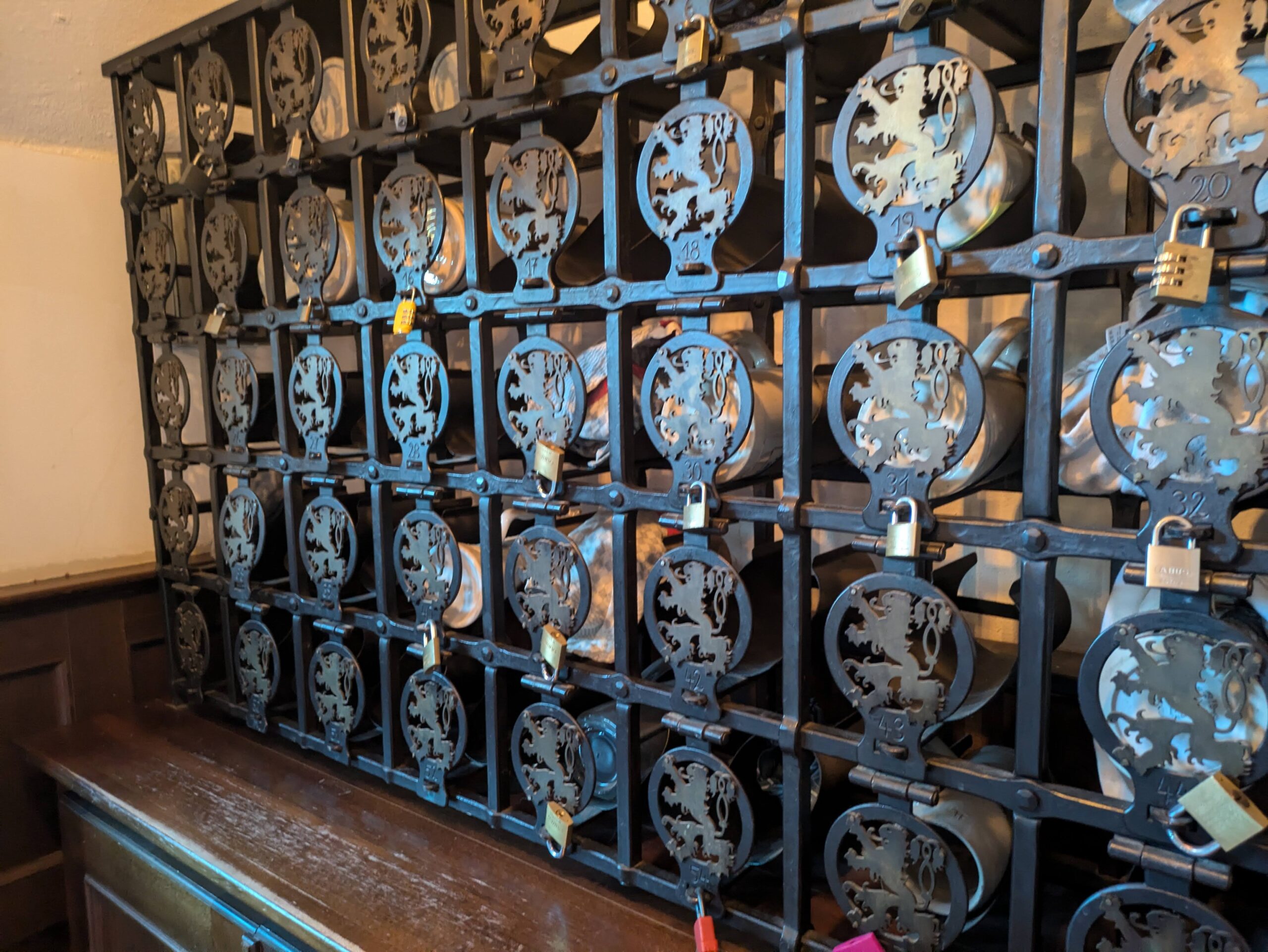
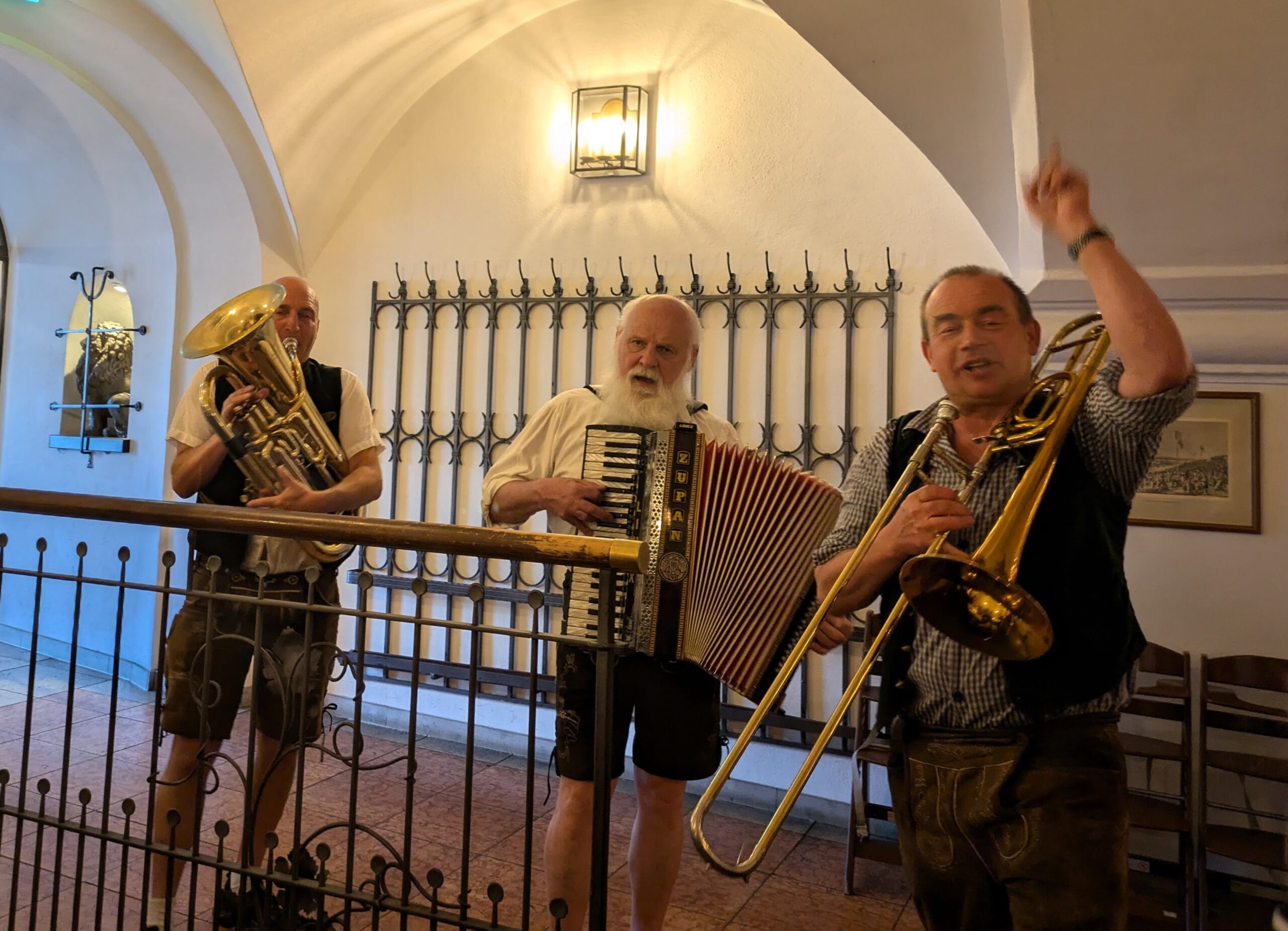
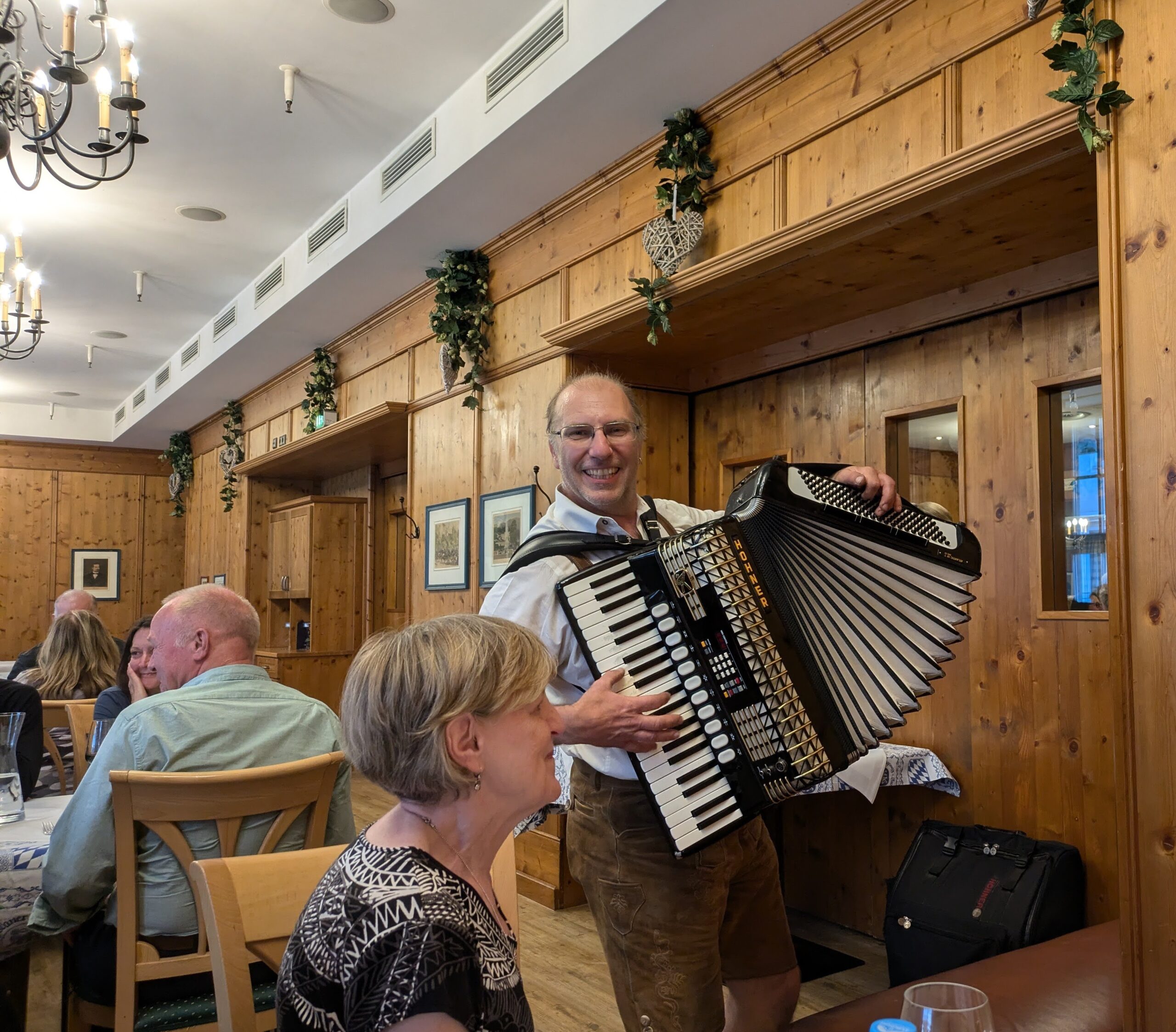
The Bavarian Brews and Bites dining experience, at Lowenbraukeller (Lion’s Brewery), is an optional excursion on the Globus tour. Enjoy an Oompa band (complete with an accordion, alpenhorn and a heartwarming rendition of “Take Me Home, Country Roads”) while dining on pancake soup (beef bouillon with pancake strips), apple strudel, Lowenbrau beer (very much NOT what you had in college) and chicken with rice. Check out the beer stein lockers. Locals can “rent” a locker to keep their own stein in.
Rischart Café
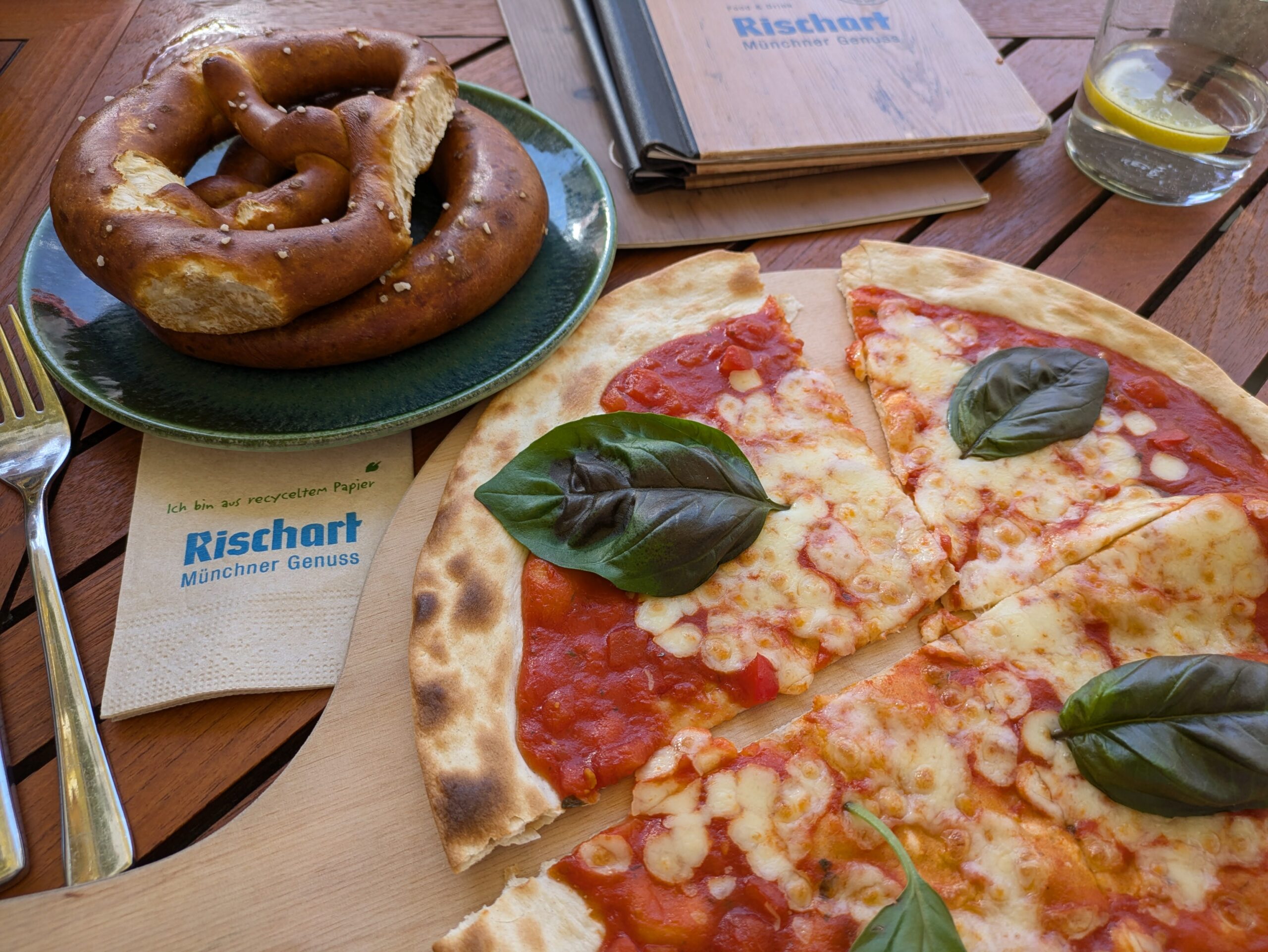
Rischart Café, in Marienplatz Square, is a fun and lively open-air dining area. It was a terrific people-watching spot, especially with all the soccer fans milling about. We had pizza, a pretzel and yet more weisswurst.
Zum Franziskaner
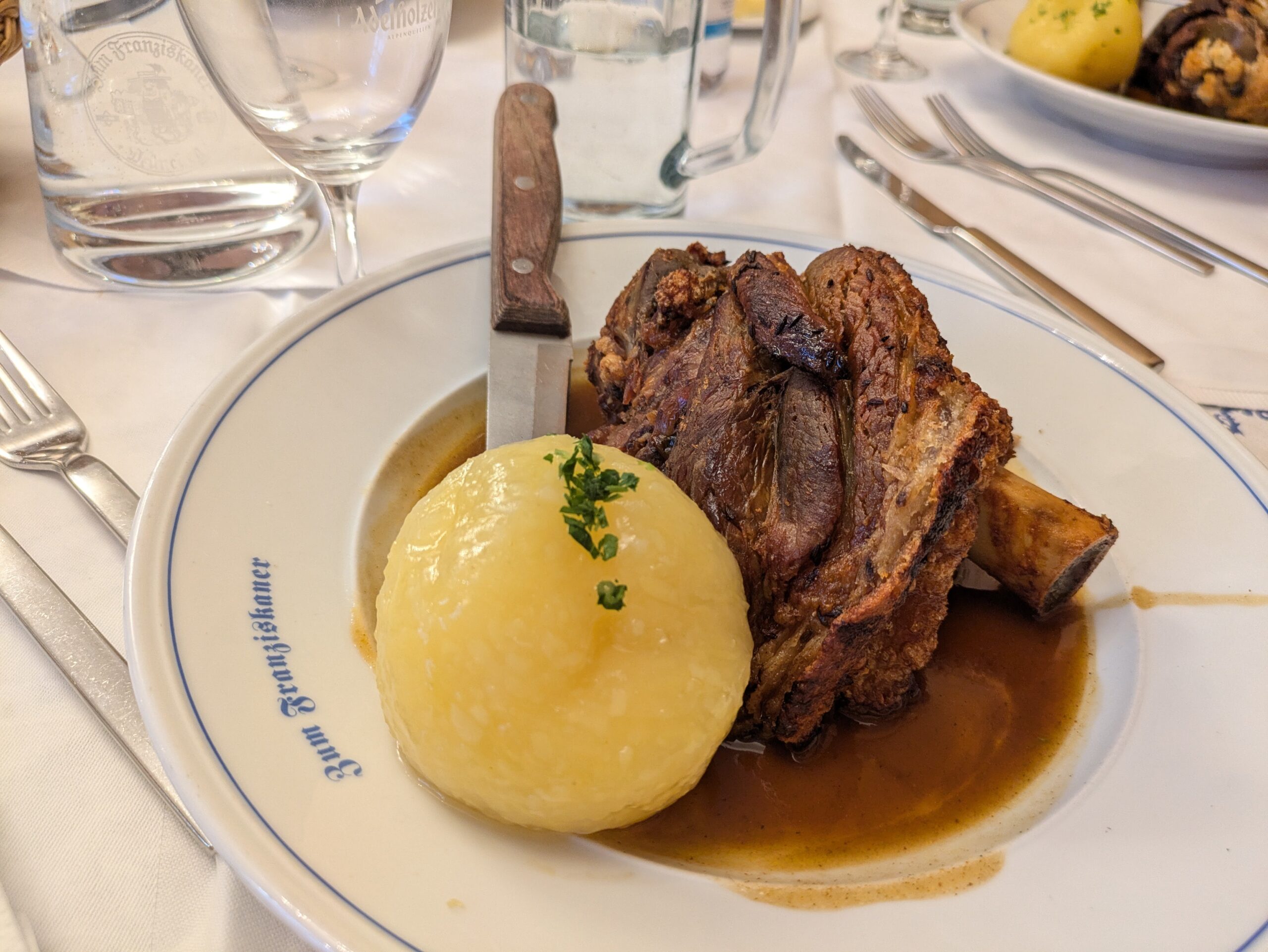
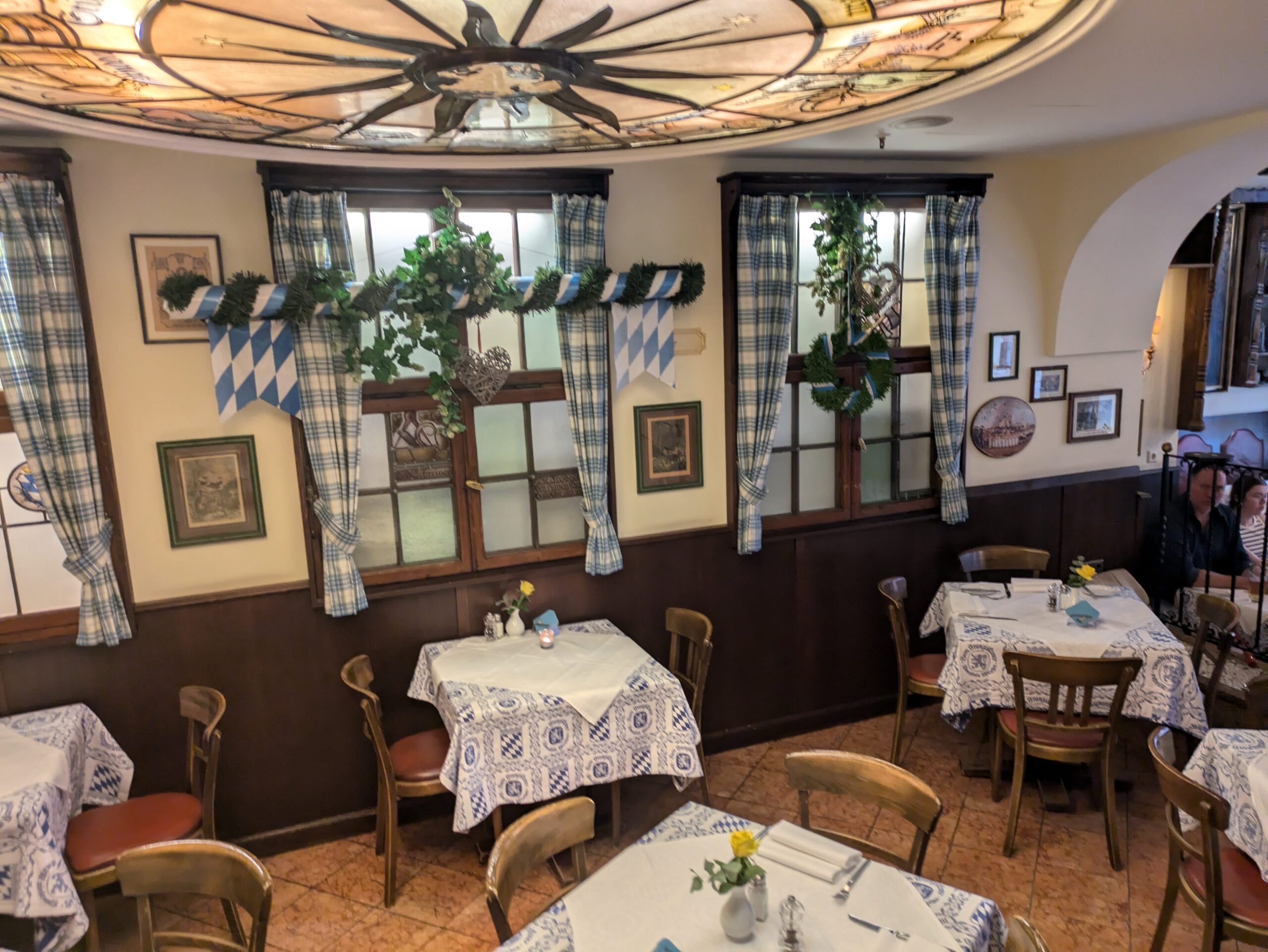
Zum Franziskaner (At the Franciscan) was our last Globus dinner with the whole group. This was another delicious and lively experience (and, yes, more accordions). Enjoy a big basket of brot (bread) and menu choices like sliced chicken breast with mushroom sauce, spaetzle, roast pork with gravy and a potato dumpling. Franziskaner weiss bier (wheat beer) was the beverage of choice here. For dessert, I chose the stewed plum compote with sorbet.
Germany Travel Tips
- I recommend getting a few Euros from a local ATM once you’ve arrived (but not at the airport, fees are apparently more there). Many restaurants and businesses accept credit cards, but having a small amount of local currency is a good idea.
- Like most European countries, you’ll need coins for public restrooms. There’s usually a kiosk, but sometimes there’s a real live person tending to the task of coin collection. This is another reason for having local currency on hand. Some restroom kiosks accept credit cards, but most did not. That being said, all of them were clean and well-maintained.
- Most Germans speak English, but it’s nice (and considerate) to know a few German phrases, such as “danke” (thank you) and “bitte” (please).
- All of the hotels on this tour had hair dryers.
- European hotels don’t necessarily have washcloths (there are lots of towels). I had read this beforehand, so I purchased a package of compressed washcloths. All you have to do is run water over the tiny square and it expands into a cloth (like magic!) They’re tiny enough to fit into a suitcase with no extra bulk. One cloth could have been used for more than a day, but we were rarely in a hotel for more than one night. This option eliminated carrying around a wet shower pouff or fabric cloth. Simply use and toss.
After we bid “Auf wiedersehen” to our Globus tour, we headed west to Heidelberg for the second half of our German adventure. Read all about that here.





















[…] and photos (Oh, sooooo many photos) from a recent visit to Germany. It’s hard to put two weeks of German exploration from Berlin to Dresden, Rothenburg ob der Tauber, Schwangau, Munich, Heidelberg and back to Berlin […]